
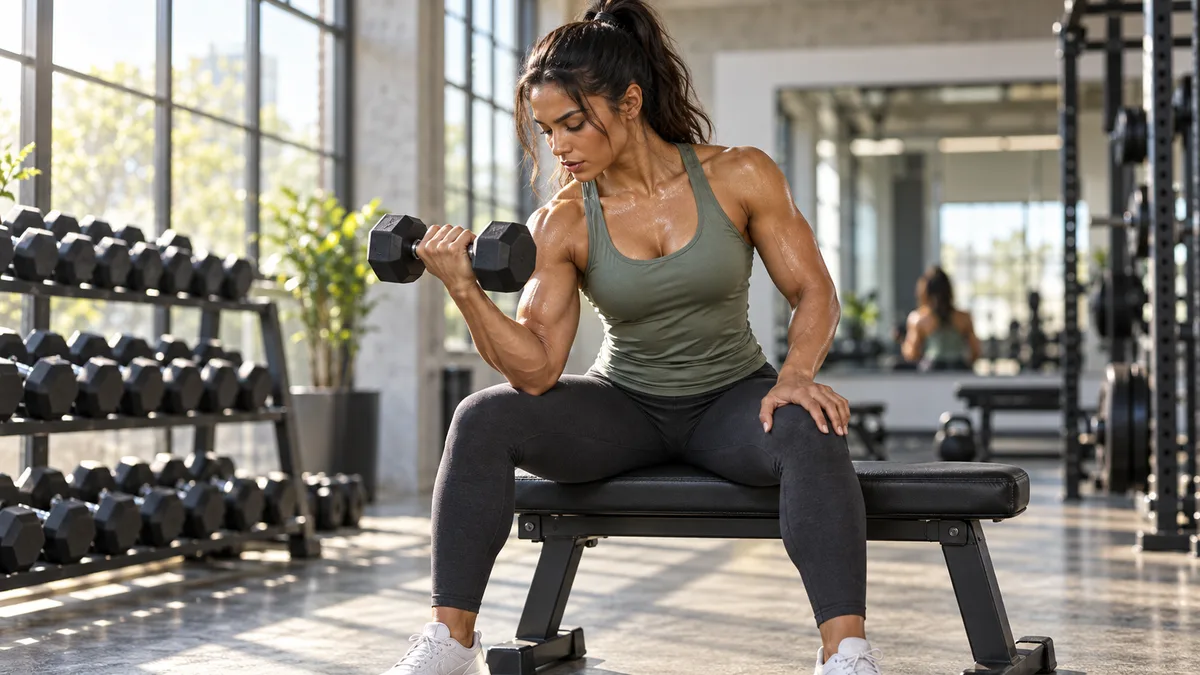
You own a pair of dumbbells. You have access to a bench. So why do your arms still feel like an afterthought in your training? A bench isn’t just for chest presses. It’s secretly one of the best tools for building sculpted, strong arms that actually look and feel different in a tank top.
This arm dumbbell workout for women uses a simple bench to unlock angles, stability challenges, and muscle engagement that standing exercises simply can’t match. Whether you train at a gym or have a basic home setup, you’re about to get a serious upgrade.
No fluff, no filler, no 2-pound pink dumbbells held at weird angles. Just real exercises, real results, and a routine you can start today.
Why a Bench Completely Changes Your Arm Workout
Standing dumbbell curls are great. Nobody’s arguing that. But the moment you add a bench to the equation, you introduce new planes of motion, better isolation, and reduced cheating. That last point matters more than you think.
Ever caught yourself swinging your entire body just to get that last bicep curl up? Yeah, we all have. A bench removes that temptation. When your back presses flat against an incline or your arm drapes over a preacher-style angle, the target muscle does ALL the work. No momentum bailouts.
Research from the American Council on Exercise (ACE) has shown that exercises like the concentration curl (which you can do seated on a bench) rank among the highest for bicep activation. That’s not a coincidence. Isolation and stability equal results.
Bench Benefits at a Glance
- Better muscle isolation: the bench stabilizes your torso so your arms handle the full load
- Access to incline and decline angles: these target different portions of the biceps and triceps
- Reduced injury risk: less compensatory swinging means less strain on your lower back
- Progressive overload made easier: you can track strength gains more accurately without momentum masking your progress
Equipment You’ll Need
This workout keeps things minimal on purpose. You need:
- An adjustable bench (or a flat bench, though adjustable gives you more options)
- Two pairs of dumbbells, one moderate set and one lighter set. For most women, that’s somewhere between 5-15 lbs depending on your experience level.
That’s it. No cable machines, no resistance bands, no fancy attachments. If you already follow a full body dumbbell workout plan, you likely have everything you need sitting in your living room right now.
The 8 Best Arm Dumbbell Exercises Women Can Do on a Bench
Here’s where the real work begins. Each of these exercises uses the bench strategically, not as a seat to scroll your phone on between sets (guilty), but as an actual tool for better muscle engagement.
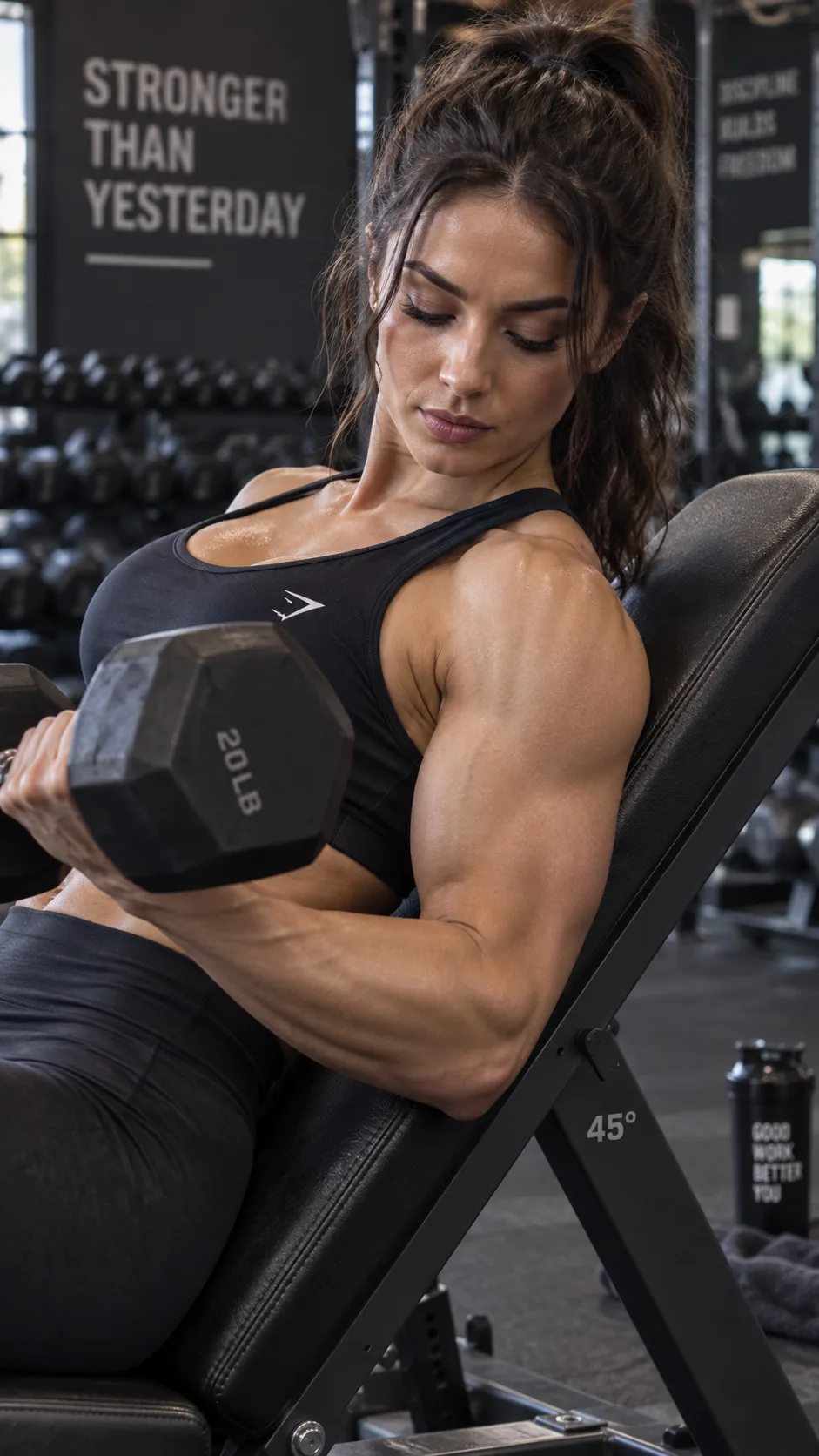
1. Incline Dumbbell Curl
Set your bench to a 45-degree angle, sit back, and let your arms hang straight down with a dumbbell in each hand. Curl both dumbbells up toward your shoulders, squeeze at the top, then lower slowly.
Why it works: The incline position stretches the long head of the bicep at the bottom of the movement. This creates a bigger range of motion than standing curls, which means more muscle fibers get recruited. You’ll feel the difference after your first set.
Reps: 3 sets of 10-12
2. Seated Concentration Curl
Sit on the edge of the bench with your legs spread. Brace the back of your working arm against your inner thigh. Curl the dumbbell up with zero body movement.
Why it works: This exercise scored the highest for bicep activation in the ACE study mentioned earlier. Your thigh acts as a brace, eliminating every possible cheat. It’s just you, the dumbbell, and pure bicep contraction.
Reps: 3 sets of 10-12 per arm
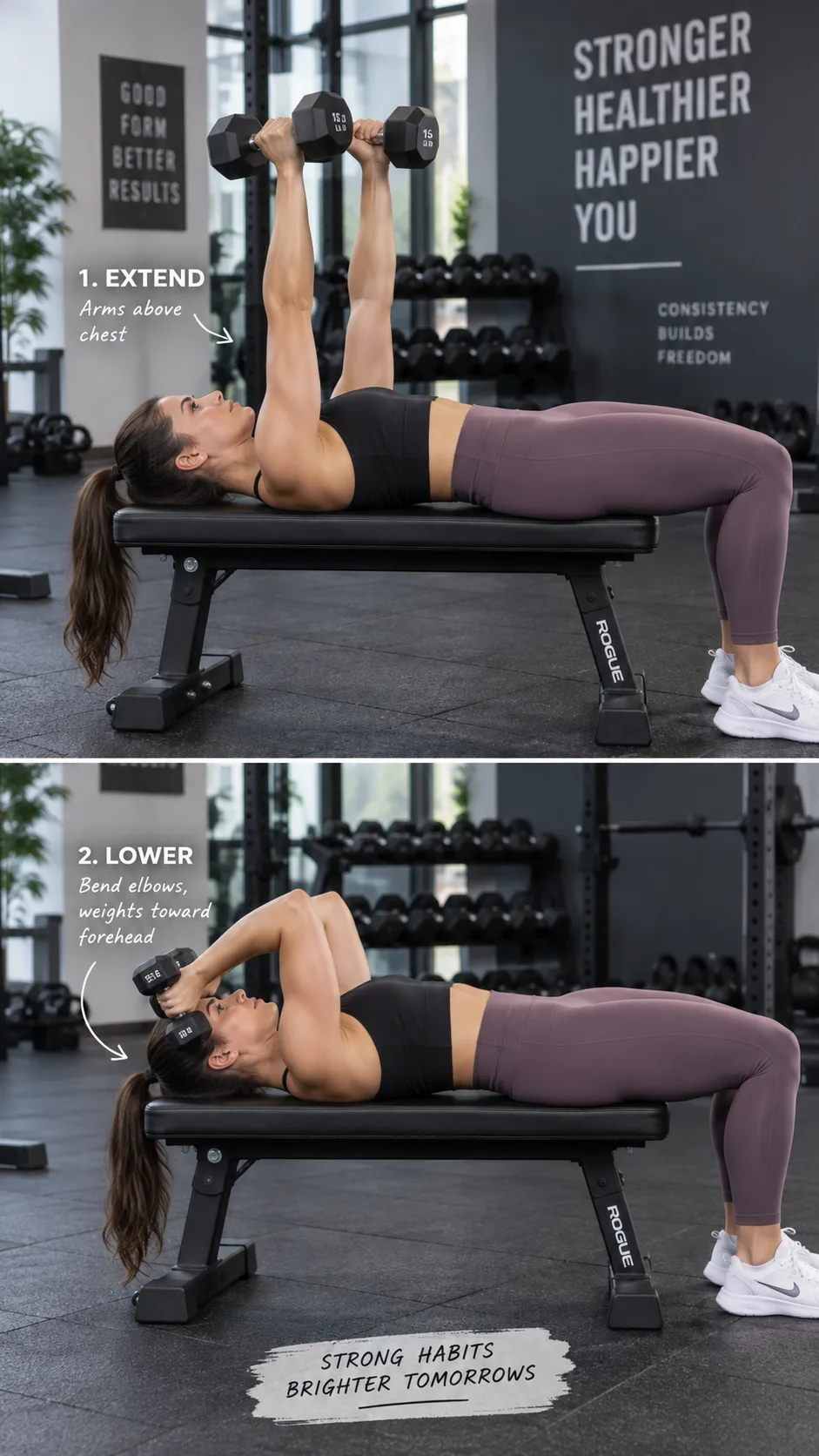
3. Lying Dumbbell Tricep Extension (Skull Crusher)
Lie flat on the bench, hold both dumbbells above your chest with straight arms, then bend only at the elbows to lower the weights toward your forehead. Extend back up.
Why it works: Skull crushers isolate all three heads of the tricep beautifully. The bench gives you a stable platform so your core doesn’t have to compensate. And yes, they’re called skull crushers because you should not actually crush your skull. Keep control of the weight.
Reps: 3 sets of 10-12
4. Incline Tricep Kickback
Set the bench to about 45 degrees and lie face down on it with a dumbbell in each hand. With your upper arms parallel to your body, extend the dumbbells straight back by straightening your elbows.
Why it works: Most people butcher standing kickbacks with horrible form. Lying face down on the incline bench forces perfect alignment and constant tension on the triceps throughout the entire rep. It genuinely changes how this exercise feels.
Reps: 3 sets of 12-15
5. Seated Overhead Tricep Extension
Sit upright on the bench, hold one dumbbell with both hands behind your head, and extend it overhead. Lower it back behind your head with control.
Why it works: The overhead position places the long head of the tricep under a deep stretch, which matters for complete tricep development. The bench supports your back and keeps you from arching excessively, something that happens constantly when people do this standing.
Reps: 3 sets of 10-12
6. Incline Hammer Curl
Same setup as the incline dumbbell curl, but this time keep your palms facing each other (neutral grip) throughout the movement. Curl up, squeeze, lower slowly.
Why it works: Hammer curls target the brachialis and brachioradialis, muscles that sit underneath and alongside the bicep. Training them adds width and thickness to your upper arm. The incline angle amplifies the stretch and makes every rep count.
Reps: 3 sets of 10-12
7. Single-Arm Preacher Curl (Using the Bench)
Set your bench to an incline angle. Stand or kneel behind it and drape one arm over the top of the bench pad. This mimics a preacher curl station. Curl the dumbbell up, pause at the top, lower with a 3-second negative.
Why it works: The bench pad prevents you from using your shoulder to cheat the weight up. That slow negative absolutely destroys the muscle fibers, in the best possible way. This exercise alone can transform the shape of your biceps.
Reps: 3 sets of 8-10 per arm
8. Lying Single-Arm Tricep Extension
Lie flat on the bench with one dumbbell in one hand, arm extended straight above your shoulder. Bend at the elbow to lower the dumbbell across your body toward the opposite shoulder, then press back up.
Why it works: The cross-body angle hits the tricep from a slightly different vector than standard skull crushers. Working one arm at a time also exposes and corrects any strength imbalances between your left and right sides.
Reps: 3 sets of 10-12 per arm
The Complete Bench Arm Workout Routine
Now let’s put those exercises into a structured routine you can follow from start to finish. This workout takes roughly 30-40 minutes and hits both biceps and triceps thoroughly.
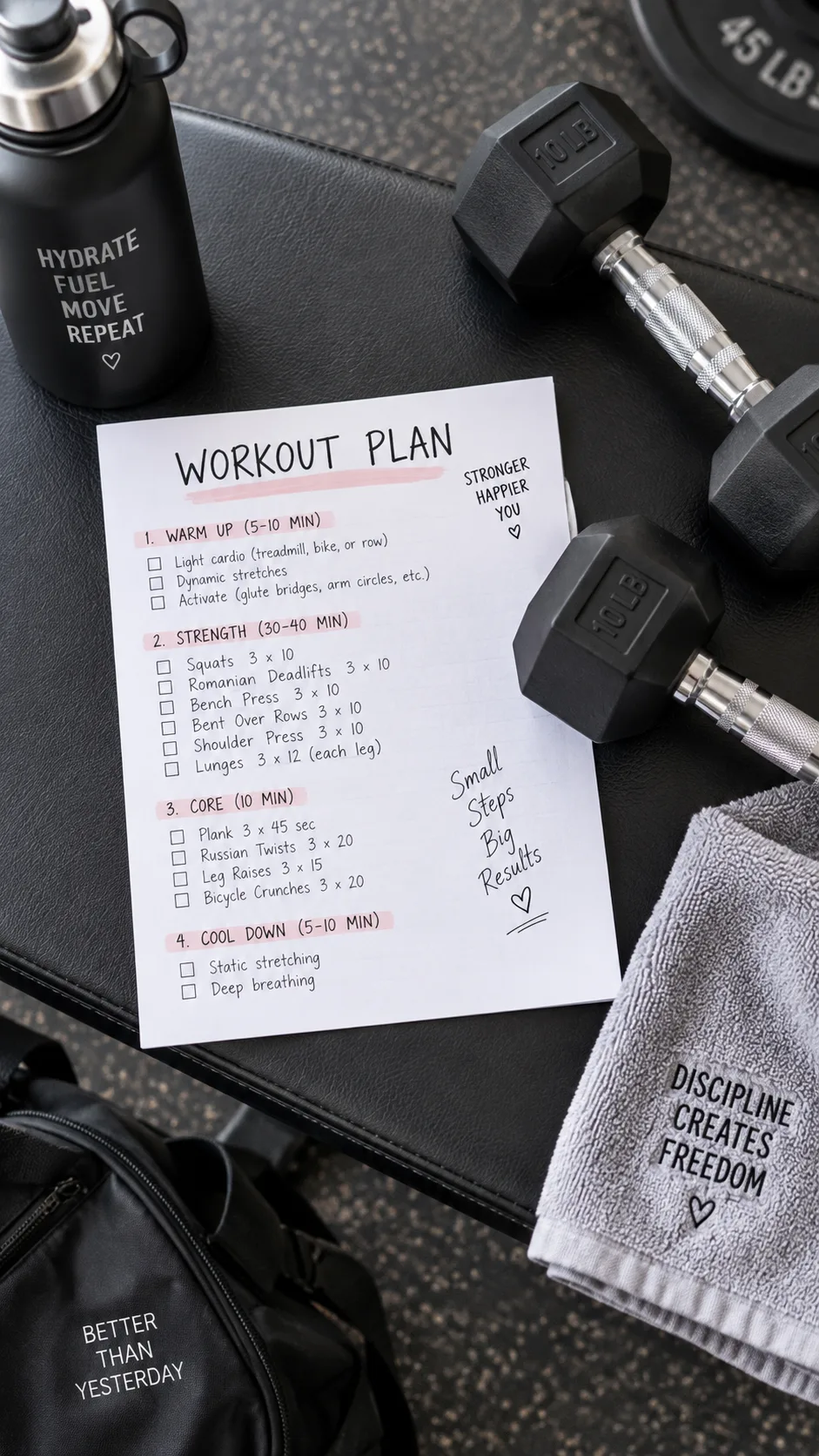
- Incline Dumbbell Curl, 3 x 10-12
- Lying Dumbbell Tricep Extension (Skull Crusher), 3 x 10-12
- Seated Concentration Curl, 3 x 10-12 per arm
- Incline Tricep Kickback, 3 x 12-15
- Incline Hammer Curl, 3 x 10-12
- Seated Overhead Tricep Extension, 3 x 10-12
- Single-Arm Preacher Curl (Bench), 3 x 8-10 per arm
- Lying Single-Arm Tricep Extension, 3 x 10-12 per arm
Rest 45-60 seconds between sets. If you want to save time, superset a bicep exercise with a tricep exercise (do them back to back). This also gives each muscle group a natural rest while the other works.
You don’t need to do all eight exercises every single session. Pick 4-6 (two or three for biceps, two or three for triceps) and rotate exercises each week. Variety prevents plateaus and keeps things interesting.
How Heavy Should You Go?
This is the question that trips up so many women, and it’s worth addressing directly: you should lift heavier than you think. The idea that heavy weights make women “bulky” has been debunked repeatedly by exercise science. The National Strength and Conditioning Association (NSCA) confirms that resistance training builds lean muscle, increases metabolic rate, and improves bone density in women without excessive hypertrophy.
Choose a weight where the last 2-3 reps of each set feel genuinely challenging. If you finish 12 reps and feel like you could easily do 8 more, it’s too light. That “comfortable” weight does very little for muscle definition.
A good starting point for most women:
- Bicep exercises: 8-12 lbs per dumbbell
- Tricep exercises: 5-10 lbs per dumbbell (triceps often need a slightly lighter load for isolation movements)
Increase the weight by 1-2 lbs whenever you can complete all prescribed reps with solid form for two consecutive sessions. That’s progressive overload in action, and it’s how you actually build defined arms.
Common Mistakes That Sabotage Your Results
Even the best arm dumbbell workout on a bench won’t deliver results if you make these errors. I’ve seen every single one of these happen in gyms, and committed most of them myself at various points.
Mistake #1: Going Too Fast
Speed is the enemy of arm definition. When you rush through reps, momentum steals tension from the muscle. Slow down your negatives (lowering phase) to at least 2-3 seconds. That’s where a huge portion of muscle growth actually happens. A study published in the Journal of Strength and Conditioning Research found that increased time under tension significantly boosted muscle activation.
Mistake #2: Ignoring the Triceps
Here’s a fact that surprises many people: your triceps make up roughly two-thirds of your upper arm mass. If you want arms that look toned and defined, you absolutely cannot skip tricep work. Many women focus almost exclusively on bicep curls and wonder why their arms don’t change. Balance your training. This routine already does that for you.
Mistake #3: Using the Same Weight Forever
Your muscles adapt. That 8-pound dumbbell that challenged you three months ago probably feels like a paperweight now. Track your weights and increase them regularly. Progressive overload isn’t optional. It’s the fundamental driver of muscle growth.
Mistake #4: Skipping the Full Range of Motion
Half reps produce half results. Fully extend your arm at the bottom of every curl. Fully straighten your elbow at the top of every tricep extension. The bench gives you the support to do this safely, so use it.
How Often Should You Train Arms?
For most women looking to build stronger, more defined arms, two dedicated arm sessions per week hits the sweet spot. This frequency gives you enough training volume to stimulate growth while allowing 48-72 hours of recovery between sessions.
You can also combine this bench arm workout with your upper body training days. If you’re already following an upper body dumbbell workout plan, tack on 2-3 of these bench arm exercises at the end for extra arm volume.
On your non-arm days, don’t neglect the rest of your body. Balanced programming matters. Strong arms look even better when they’re attached to a strong back and solid core. If you want some ideas for that, check out this arm workout for women with weights guide that covers more comprehensive approaches.
Nutrition Tips That Support Arm Definition
Training builds the muscle. Nutrition reveals it. You can’t out-train a poor diet, and arm definition specifically requires two things: adequate protein intake and a reasonable body fat level.
Aim for approximately 0.7-1 gram of protein per pound of bodyweight daily. This recommendation comes from the International Society of Sports Nutrition and supports muscle repair and growth. Good sources include chicken, fish, Greek yogurt, eggs, tofu, and legumes.
You don’t need to starve yourself or follow some extreme diet. A modest calorie deficit (if fat loss is your goal) combined with high protein intake will reveal the muscle you’re building with this workout over time. Patience and consistency beat perfection every single time.

Progression: What Happens After You Master This Workout?
Once this routine starts feeling manageable (and it will after 4-6 weeks of consistent training) you have several options to keep progressing:
- Increase the weight: the simplest and most effective approach
- Add drop sets: after your last set, immediately reduce the weight by 30-40% and rep to failure
- Slow the tempo: try a 4-second negative on every rep for a week and watch your muscles scream
- Add pauses: hold the contracted position for 2 seconds at the top of each rep
- Increase total sets: bump from 3 sets to 4 for your weakest exercises
The goal is always to make the workout slightly harder over time. Your body responds to challenge, not comfort. Keep pushing, keep tracking, and your arms will respond.
Final Thoughts: Your Bench Is More Powerful Than You Realize
A bench and a pair of dumbbells. That’s all this workout requires, and that’s all you need to build arms you’re genuinely proud of. The exercises above target every major muscle in your upper arms from multiple angles, with the bench providing the stability and isolation that standing exercises often lack.
Start with the routine as written, focus on form over ego, increase weights progressively, and stay consistent. That simple formula beats any complicated program or expensive equipment.
Your arms are capable of so much more than you’re currently asking of them. Grab those dumbbells, set up your bench, and prove it to yourself. Start today.
