
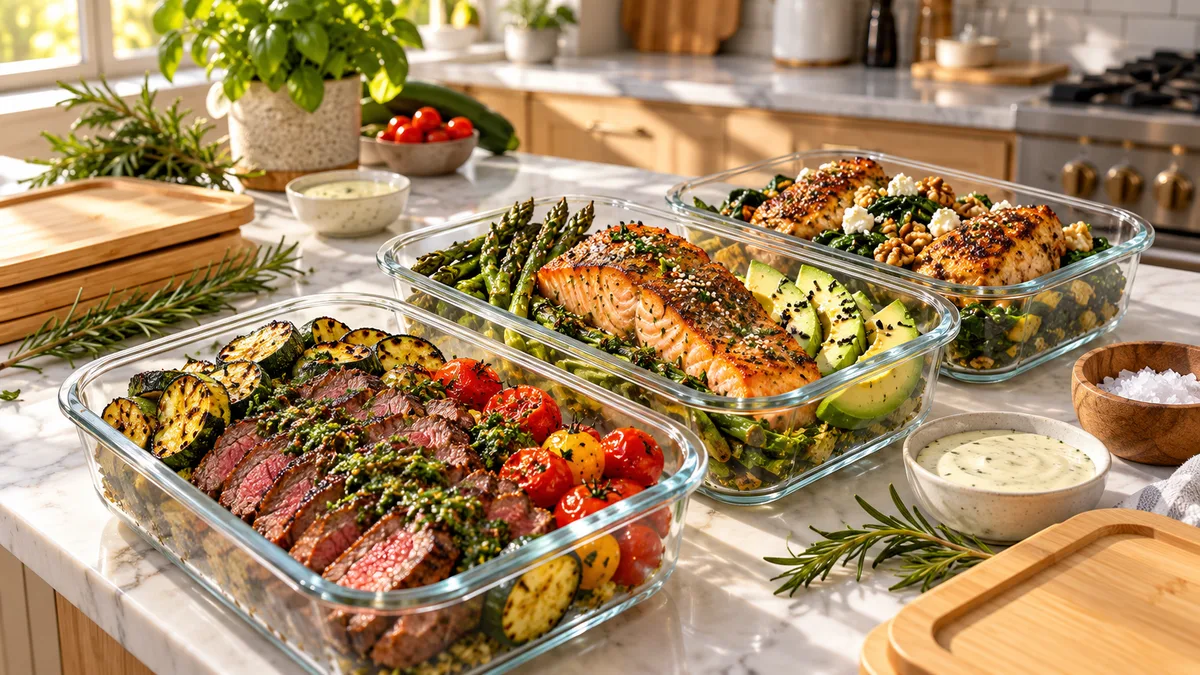
You open your office refrigerator at noon on Wednesday, and your heart sinks. Three identical glass containers stare back at you: pale chicken breast, mushy steamed broccoli, and dry cauliflower rice. You force down the bland food anyway, then head straight to the breakroom forty-five minutes later hunting for pretzels or candy.
Most people fall straight into this meal prep trap. They cut carbohydrates, strip out fat because of old diet culture habits, skip the seasonings, and end up ravenous by midweek. Life is too short to spend your lunch break eating dry chicken that tastes like cardboard.
Low carb eating should never feel like self-punishment. When you balance your plate, add punchy homemade sauces, and introduce crunch and acidity, low carb meals keep you satisfied far longer than high carb lunches. This system gives you an efficient routine for your weekly prep. You will finish cooking in under 90 minutes on Sunday, stay completely full during busy workdays, and never suffer through repetitive meals.
Why most low carb meal prep fails (and how to fix it)
Most people do not abandon low carb meal plans because they lack willpower. They quit because their food tastes awful and leaves them hungry. Three common tactical mistakes ruin weekly meal prep before Thursday arrives.
Mistake 1: Cutting carbs and fat at the same time
Carbohydrates supply fast energy. When you remove them, your body needs another steady fuel source. If you cut carbs while restricting fat with skinless poultry and oil-free dressings, you run your engine on empty. You end up with brain fog, afternoon energy crashes, and intense sugar cravings. Wholesome dietary fats stimulate cholecystokinin (CCK) and peptide YY, the gut hormones that tell your brain you have had enough to eat. Cook with olive oil, eat avocados, use butter, and choose flavorful cuts of meat.
Mistake 2: The monotony of the single-recipe batch
Cooking eight portions of one casserole sounds efficient on Sunday afternoon. By Thursday, your brain hates the sight, smell, and texture of that food. Humans naturally crave sensory variety, a psychological phenomenon researchers identify as sensory-specific satiety. You do not have to cook five individual recipes from scratch to fix this. You just need a component prep system that creates different flavor combinations from the same core ingredients.
Mistake 3: The microwave steam trap
Some vegetables hold their crunch in the fridge for days, while others turn into soggy, sulfurous mush within forty-eight hours. Steaming wet broccoli florets in a plastic container guarantees a rubbery disaster by Wednesday. Instead, pick sturdy vegetables, roast them at high heat to bring out their natural sweetness, and pack all dressings in separate containers to protect crisp textures all week long.
The satiety formula: how to stay full for hours
A large bowl of pasta leaves you hungry two hours later, but a steak keeps you focused all afternoon. Digestion speed and gut hormones explain this difference. Build every meal prep container around three straightforward nutritional rules to shut down hunger completely.
- Anchor every box with 35 to 45 grams of protein: The body burns significant metabolic energy just digesting protein. Research from the Harvard T.H. Chan School of Public Health shows that ample dietary protein keeps blood sugar stable and protects lean muscle tissue. Target at least 35 grams in each serving to stimulate muscle protein synthesis and quiet ghrelin, your main hunger hormone.
- Load up on fibrous vegetables: Fiber draws water and expands in your stomach, stretching the stomach lining to signal fullness through your vagus nerve. Aim for 8 to 12 grams of fiber per meal by adding broccoli, asparagus, Brussels sprouts, cabbage, or ground flaxseed.
- Include 15 to 20 grams of quality fats: Dietary fat slows gastric emptying, which meters out your digestion over four to six hours. Skip industrial seed oils. Dress your meals with extra virgin olive oil, fresh avocado, pasture-raised eggs, aged cheeses, or sesame tahini.
To preserve muscle while trimming down, explore our detailed guide to meal prep for the week high protein strategies for practical macro targets.
The component prep method: beat meal boredom for good
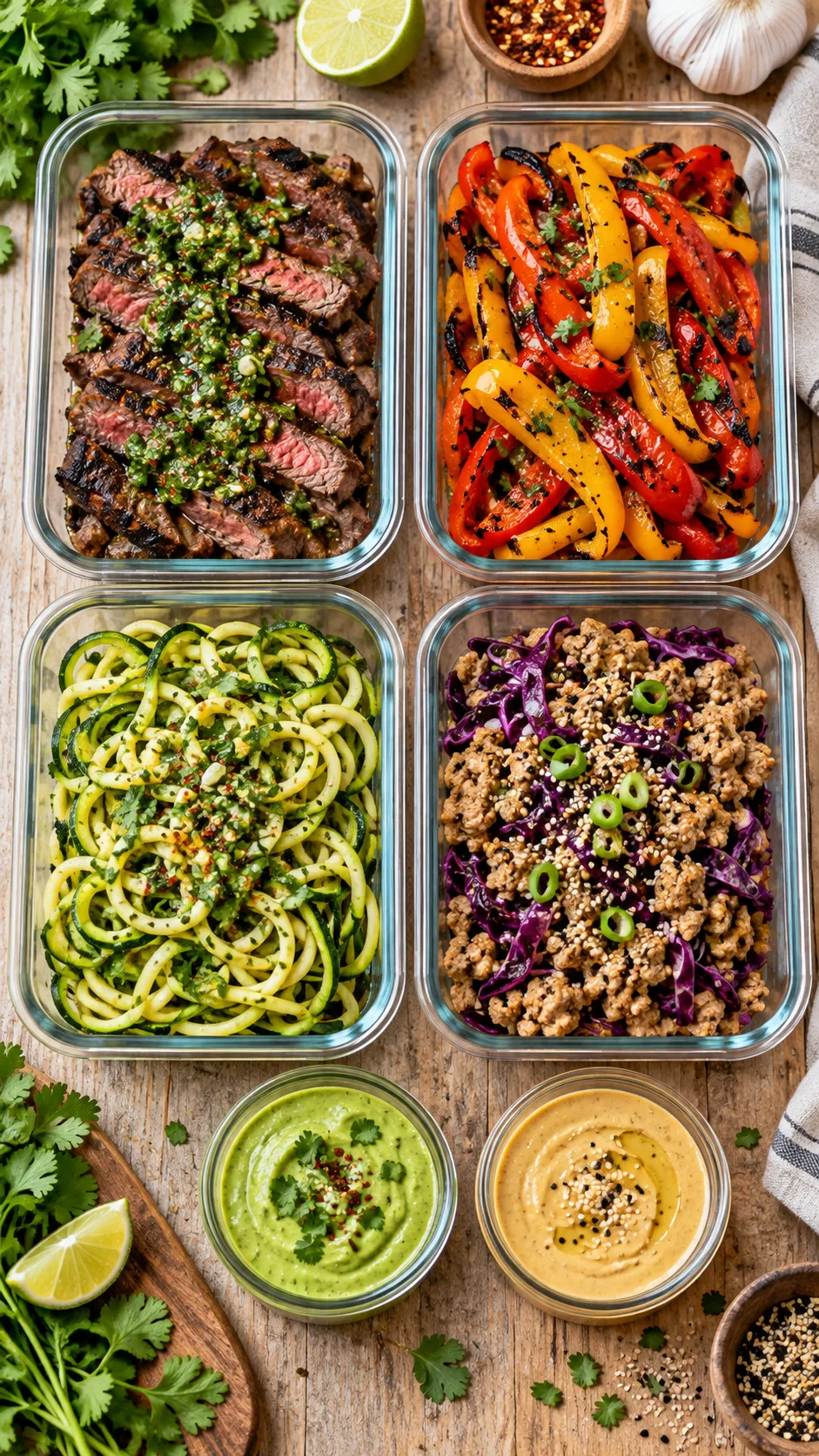
Ditch the giant casseroles that taste flat by Wednesday. Switch to component meal prep instead. You cook two seasoned proteins, roast trays of hearty vegetables, and blend two punchy sauces. Mixing and matching these parts creates completely different meals each day.
Try this weekly flavor lineup:
- Protein A: Citrus-marinated flank steak
- Protein B: Garlic-ginger ground pork (or ground turkey, featured in our ground turkey meal prep variations)
- Vegetable Base 1: Blistered green beans with toasted garlic
- Vegetable Base 2: Roasted cumin cauliflower and poblano peppers
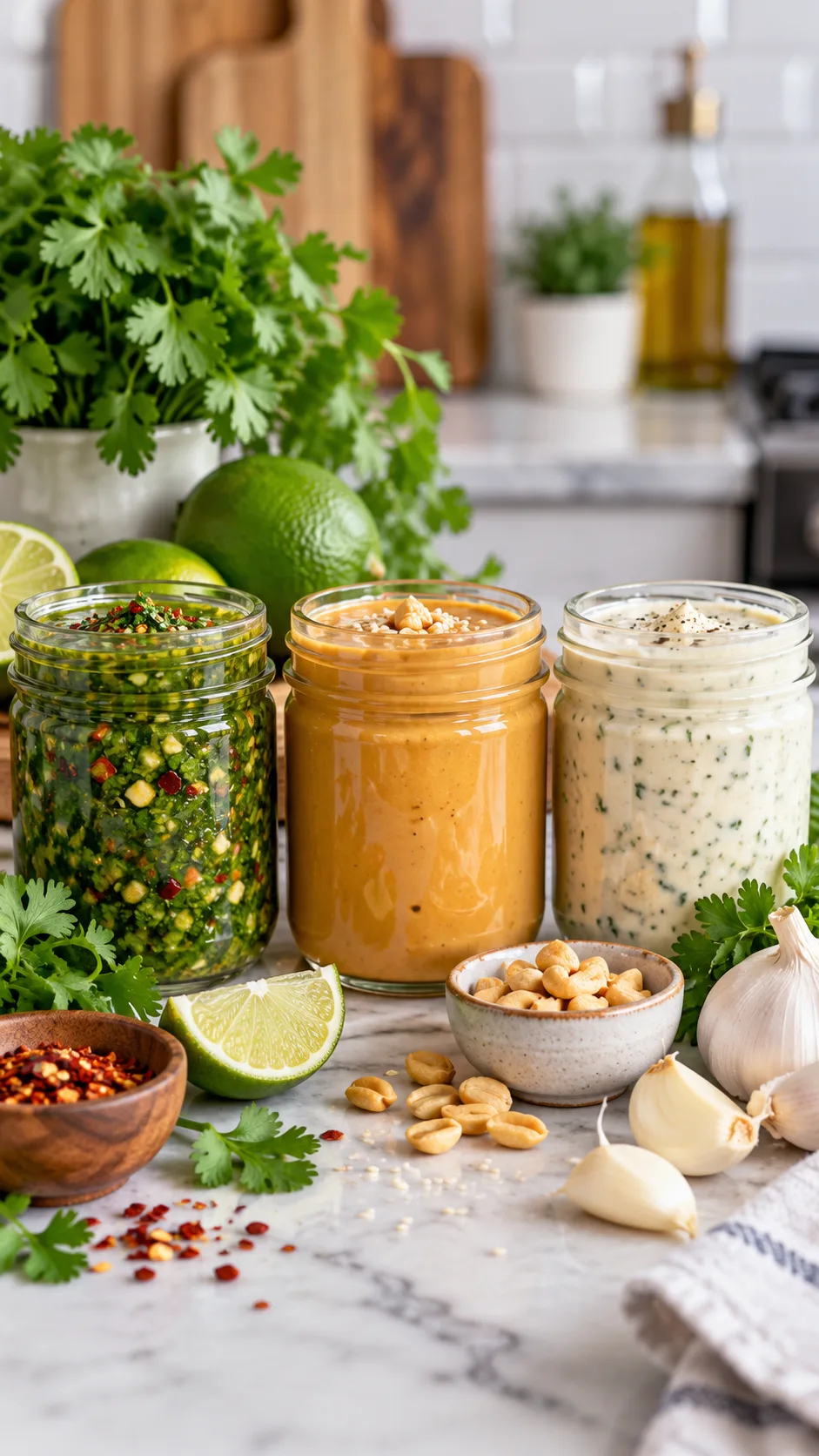
- Sauce 1: Argentinian chimichurri packed with fresh herbs and vinegar
- Sauce 2: Creamy Thai peanut sauce with lime and chili
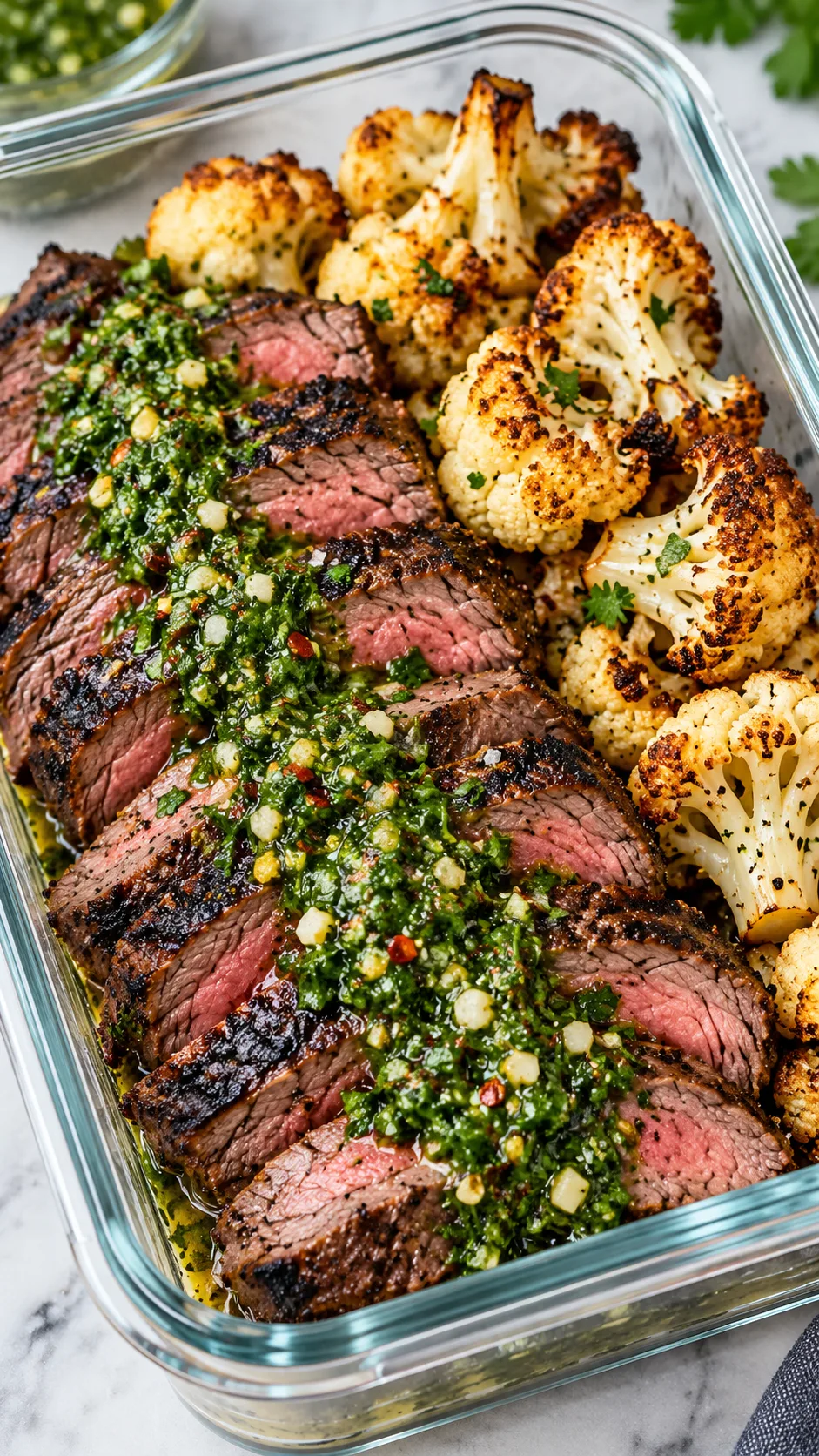
Notice the variety you gain without spending extra time at the stove. On Monday, pair sliced flank steak with roasted cauliflower and chimichurri for a classic steakhouse meal. On Tuesday, combine ground pork with blistered green beans and spicy peanut sauce for a bold stir fry bowl. You never repeat a flavor combination, yet you only cooked for ninety minutes on Sunday.
The 90-minute Sunday batch cook: full recipes
Grab your cutting board, sharpen your knife, and preheat your oven. These reliable recipes produce eight hearty low carb lunches and dinners for the week ahead.
Protein 1: Flank steak with fresh herb chimichurri
Flank steak delivers deep beef flavor, reheats without getting tough, and supplies dense protein with very little prep time.
Ingredients:
- 2 lbs flank steak
- 2 tbsp avocado oil
- 1 tbsp coarse sea salt
- 1 tsp freshly ground black pepper
- 1 tsp smoked paprika
- 1 cup flat-leaf Italian parsley, finely minced
- 1/4 cup fresh oregano leaves, minced
- 4 cloves garlic, grated
- 1/3 cup extra virgin olive oil
- 3 tbsp red wine vinegar
- 1/2 tsp crushed red pepper flakes
Execution: Pat the steak dry with paper towels. Coat the meat with avocado oil, sea salt, black pepper, and smoked paprika. Set a large cast-iron skillet over high heat until it smokes lightly. Sear the steak for 4 to 5 minutes per side to build a deep crust, pulling it when the center reaches 130°F for medium-rare. Rest the steak on a board for 10 minutes, then slice thinly against the grain. In a small bowl, whisk together the parsley, oregano, garlic, olive oil, red wine vinegar, and pepper flakes. Keep the chimichurri off the hot meat during packing; store it in a separate jar to maintain its bright green color and sharp acidity.
Protein 2: Firecracker sesame ground pork bowls
Ground pork stays juicy during reheating, keeps grocery costs low, and soaks up aromatics fast.
Ingredients:
- 2 lbs ground pork (or 90/10 ground beef)
- 2 tbsp toasted sesame oil
- 1 medium yellow onion, finely diced
- 5 cloves garlic, minced
- 2 tbsp fresh ginger, grated
- 1/3 cup tamari or coconut aminos
- 2 tbsp sriracha or chili garlic paste
- 1 tbsp unseasoned rice vinegar
- 1 head green cabbage, shredded thin
- 4 green onions, sliced
Execution: Heat a wide wok or heavy skillet over medium-high heat. Pour in the sesame oil, then add the onion, garlic, and ginger. Sauté for 2 minutes until fragrant. Add the ground pork, crumbling the meat with a wooden spoon until browned. Whisk the tamari, sriracha, and rice vinegar in a cup, then pour it over the pork. Fold in the shredded cabbage and cook for exactly 3 minutes so it retains a crisp bite. Pull the pan from the burner and scatter the sliced green onions over the top.
Vegetable bulk: roasted cumin cauliflower and peppers
Cauliflower absorbs spice blends readily. Roasting it hot draws out excess moisture and prevents mushy vegetables later in the week.
Ingredients:
- 2 large heads of cauliflower, cut into bite-size florets
- 2 red bell peppers, sliced into strips
- 2 poblano peppers, sliced into strips
- 3 tbsp avocado oil
- 1 tbsp ground cumin
- 1 tbsp garlic powder
- 1 tsp coarse kosher salt
Execution: Heat your oven to 425°F (220°C). Spread the florets and sliced peppers across two rimmed baking sheets. Give the vegetables plenty of space so they brown instead of steam. Coat them with the avocado oil and season thoroughly with cumin, garlic powder, and salt. Toss with your hands to distribute the oil and spices. Roast for 22 to 25 minutes, stirring once halfway through, until the edges turn crisp and browned. Let the vegetables cool to room temperature before portioning them into your storage containers.
Sauces: the secret to flavor variety
Sauces make or break a low carb diet. Store-bought dressings often contain corn syrup, cane sugar, and soybean oil. Making your own takes three minutes and turns basic proteins into memorable lunches.
1. Jalapeno-lime avocado crema
Combine 1 ripe avocado, 1/2 cup sour cream (or full-fat Greek yogurt), 1 stemmed jalapeño, a handful of cilantro, juice from 2 limes, and 1/2 teaspoon salt in a blender. Puree until smooth. This creamy sauce balances charred beef and spicy pork exceptionally well.
2. Five-minute spicy peanut sauce
Whisk together 1/3 cup unsweetened peanut butter, 2 tablespoons tamari, 1 tablespoon toasted sesame oil, 1 tablespoon sriracha, 1 tablespoon lime juice, and 2 to 3 tablespoons warm water to reach a pourable texture. This sauce delivers satisfying fats and pairs naturally with cabbage and ground meats.
3. Garlic and sun-dried tomato pesto
Pulse 1 cup fresh basil, 1/3 cup oil-packed sun-dried tomatoes, 1/4 cup toasted walnuts, 2 garlic cloves, 1/2 cup grated parmesan cheese, and 1/3 cup extra virgin olive oil in a food processor. Drizzle this rich sauce over sliced steak or roasted chicken breast.
The Sunday prep schedule (under 90 minutes)
Cooking recipes one after another turns meal prep into an exhausting marathon. If you finish one dish, wash dishes, and then start the next, you burn three hours of your weekend. Run your kitchen like a line cook by running multiple steps at once:
- Minutes 0 to 10: Start the vegetables. Heat your oven to 425°F. Chop the cauliflower and peppers, toss them in oil and spices, spread them across your baking sheets, and slide them into the oven. Set a timer for 22 minutes.
- Minutes 10 to 25: Prep aromatics and mix sauces. While the vegetables roast, chop the herbs, garlic, and onions. Blend your chimichurri and whisk your peanut sauce. Pour the sauces into small condiment cups.
- Minutes 25 to 45: Cook the pork. Pull the roasted vegetables out to cool on your counter. Heat your wok or skillet on medium-high. Brown the ground pork, stir in the cabbage and sauce, and transfer the finished mixture to a bowl to cool.
- Minutes 45 to 65: Sear the beef. Heat a cast-iron skillet on high. Sear the seasoned flank steak. While the steak rests on the cutting board, wash your pans. Slice the rested meat into thin strips.
- Minutes 65 to 80: Let everything cool. Never seal hot food inside airtight containers. Let the meat and roasted vegetables sit uncovered for 15 minutes. Trapped steam forms condensation that turns vegetables mushy and speeds up bacterial growth.
- Minutes 80 to 90: Pack the containers. Distribute the meat and roasted vegetables evenly into your glass containers. Drop in your sauce cups, latch the lids, and stack the containers in your refrigerator.
For more planning templates for weekday lunches, review our guide to healthy lunch meal prep for the week.
Smart low carb swaps that satisfy
Most diet swaps fall flat because people treat them like direct duplicates. Raw zucchini does not taste like egg fettuccine, and steamed cauliflower will never fool someone craving mashed potatoes. When prepared properly, however, these alternatives taste fantastic on their own merits.
| Standard High Carb Base | Smart Low Carb Alternative | Preparation Tip |
|---|---|---|
| White or brown rice | Pan-blistered cauliflower rice | Dry-saute the riced cauliflower in a dry, hot skillet first to cook out moisture. Add cooking oil only during the final minute. |
| Wheat pasta | Hearts of palm noodles | Rinse well under cold water and simmer directly in your sauce for 8 minutes. They maintain an al dente bite without softening into mush. |
| Flour tortillas | Butter lettuce leaves or egg wraps | Pack the wraps separately and assemble your roll right before eating so the leaves stay crisp. |
| Mashed potatoes | Celeriac and cauliflower mash | Simmer celery root with cauliflower, drain the water thoroughly, and blend with cream cheese, sea salt, and roasted garlic. |
Food safety, storage, and reheating tactics
Careful cooking means nothing if your storage methods ruin the food before Thursday. Use standard commercial kitchen habits to keep meals fresh all week.
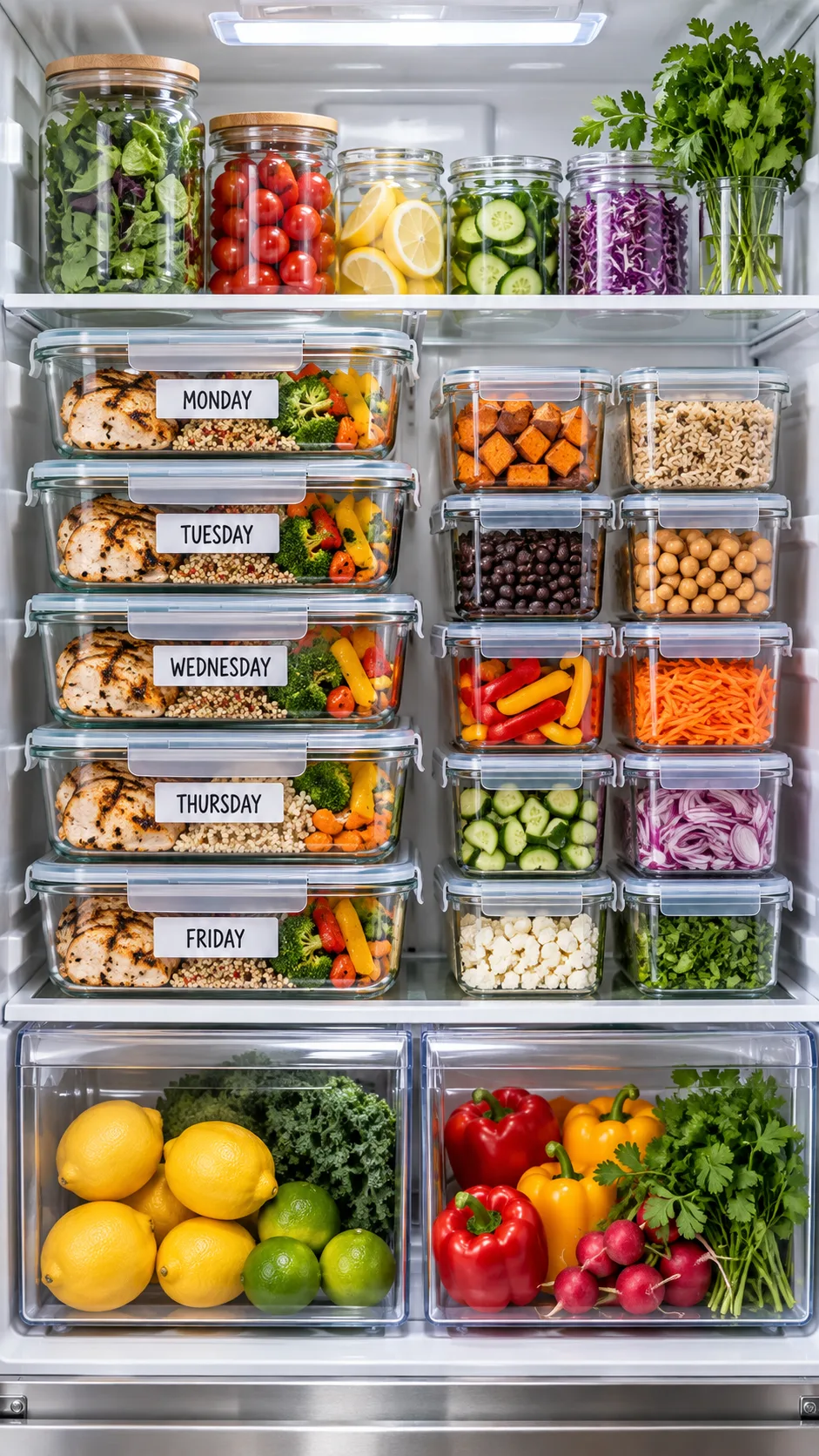
Switch to borosilicate glass containers
Plastic containers trap bacteria, absorb old cooking odors, discolor quickly, and can leach chemicals under high heat. Borosilicate glass containers with latching lids solve every one of these problems. Glass warms food evenly, washes clean in the dishwasher, and handles both microwave and conventional oven heat without degrading.
Follow the 4-day refrigeration rule
The USDA Food Safety and Inspection Service recommends eating cooked leftovers within 3 to 4 days. A Sunday prep session keeps meals safe and flavorful through Thursday afternoon. For Friday and Saturday meals, freeze those portions right away on Sunday night. Cooked beef strips and ground pork hold up exceptionally well in the freezer. Move your Friday portion to the refrigerator on Wednesday evening so it thaws evenly.
Reheat your meals properly
Running a microwave at full power for two minutes produces rubbery meat, cold pockets, and scorched corners. Use this simple sequence instead:
- Take out the sauce container: Keep chilled sauces like chimichurri and crema cold. Microwaving destroys fresh herb flavors.
- Add moisture: Splash a teaspoon of water or bone broth over the meat and vegetables, then place a damp paper towel across the top.
- Use medium power: Microwave for 90 seconds at 70 percent power, stir the contents, and heat for another 45 seconds. Your food will heat through without drying out.
For meal plans designed around ketosis, check out our walkthrough for keto meal prep for the week.
Emergency low carb snacks to keep at work
Unexpected schedule disruptions happen. Meetings run long, workouts burn more calories than planned, or traffic stalls your evening drive. Keep shelf-stable snacks in your desk drawer or workout bag so hunger never drives you toward vending machines:
- Biltong or sugar-free jerky: Look for brands without added sugars. Traditional vinegar-cured biltong provides 16 grams of protein and zero carbohydrates per ounce while staying tender.
- Macadamia nuts and walnuts: These nuts have minimal net carbs and provide healthy fats. Portion them into 1.5-ounce bags ahead of time to keep total calories in check.
- Pork rinds: If you miss chips or pretzels, pork rinds provide intense crunch with zero carbs.
- Canned mackerel or sardines in olive oil: These fish provide omega-3 fatty acids and high-quality protein, curbing acute hunger immediately. Keep an eating utensil at your desk.
Frequently asked questions
How many net carbs should I eat per meal?
For a strict ketogenic approach, target 5 to 10 grams of net carbs (total carbs minus fiber) per meal. If you follow a moderate low carb routine, 15 to 25 grams of net carbs per meal gives you steady fat loss while leaving room for berries, squashes, and root vegetables.
Can vegetarians use this low carb prep system?
Yes. Replace the meat with extra-firm tofu (press the water out, cube it, and bake at 400°F until crisp), tempeh, lupini beans, hemp seeds, and pasture-raised eggs. Incorporate plenty of olive oil, avocado, pumpkin seeds, and aged cheeses to maintain satiety.
How do I keep zucchini noodles from turning watery?
Never cook zucchini noodles during Sunday prep. Toss raw spiralized zucchini with salt in a colander for 20 minutes to draw out surface water, dry the strands thoroughly with paper towels, and store them completely raw in your containers. During weekday reheating, the trapped steam warms the noodles to an al dente texture in about sixty seconds.
Stop dieting and start eating well
Low carb eating never requires bland poultry, watery vegetables, or constant hunger. When you build meals around protein, roast vegetables until caramelized, and make punchy sauces, meal prep becomes an enjoyable habit.
You save hours of rushed cooking on weeknights, cut out expensive takeout orders, maintain steady energy throughout the afternoon, and meet your health goals comfortably. Choose your two proteins from the guide above, grab your glass dishes, and spend ninety minutes in your kitchen this Sunday. Your Thursday self will appreciate the effort.
