

Colonoscopy prep can leave you hungry and cranky, but your food choices can make the day before much easier. A sensible colonoscopy prep food plan helps the bowel prep do its job and may reduce the chance that you need another procedure.
The goal is simple: empty your colon completely so your doctor can see clearly. What you eat in the days before the test matters almost as much as the prep solution, which nobody drinks for pleasure.
Your clinic’s written instructions always take priority. Doctors use different prep schedules, and your medications, health conditions, and procedure time can change your plan.
This guide covers what to eat before a colonoscopy, which foods to avoid, and how to get through the clear-liquid day with your patience mostly intact.
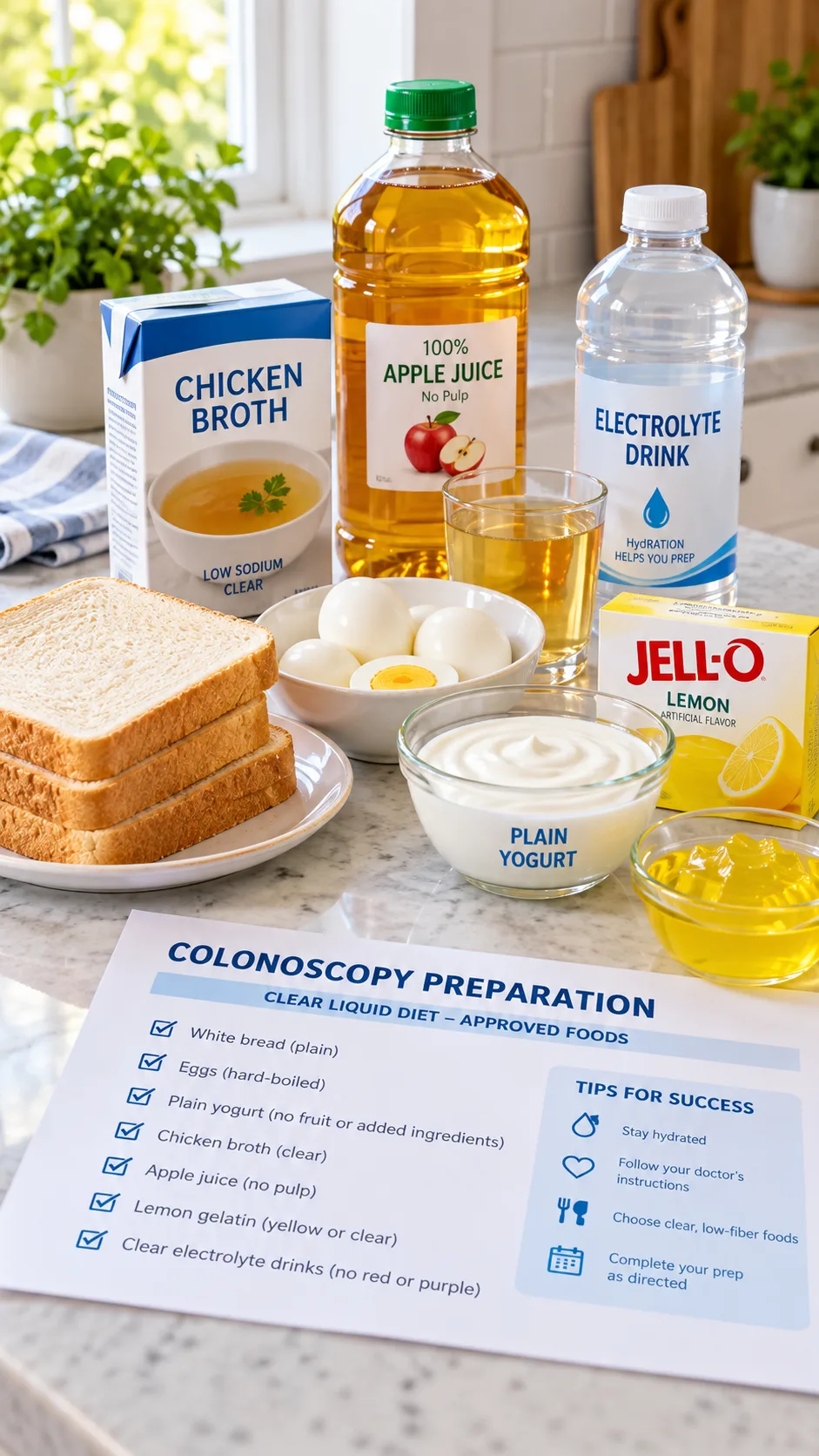
Why colonoscopy prep food matters
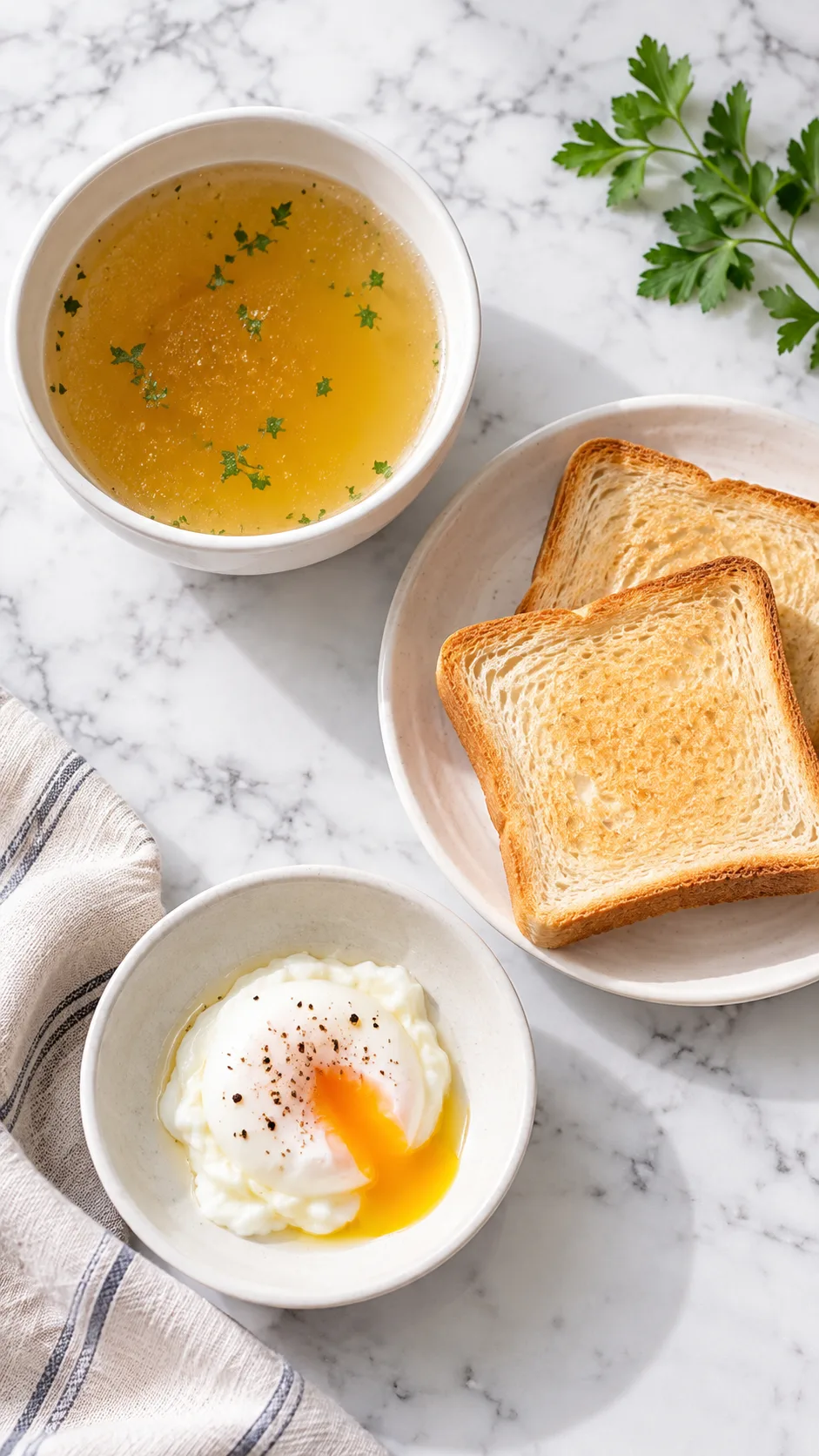
Your doctor needs a clear view of your colon lining. Food particles, fiber, seeds, and stool can get in the way, hide polyps, or force your doctor to spend more time washing and suctioning during the test.
A poor prep can make your doctor stop early or ask you to repeat the colonoscopy sooner. Most people would rather not schedule this twice.
The American Society for Gastrointestinal Endoscopy explains that bowel cleansing helps doctors find polyps and other changes in the colon. Your prep medicine does most of the work, but the right food choices make its job easier.
In the days before a colonoscopy, you temporarily cut back on fiber. That leaves less material moving through your digestive tract. Clear liquids and the prep solution then clear out what remains.
Your colonoscopy prep timeline: What to eat and when
Your office may ask you to change your diet one day, two days, or several days before the procedure. Follow that schedule closely, especially if constipation affects you or you take medications that slow digestion.
Many people follow a low-fiber diet for two to three days before colonoscopy prep, then switch to clear liquids the day before. Your doctor may give you a different schedule, so read your paperwork before you plan meals.
Three days before your colonoscopy: Start cutting back on fiber
If your clinic asks you to follow a low-residue or low-fiber diet, skip foods that leave a lot of roughage behind. Fiber usually helps digestion, but before a colonoscopy it adds bulk inside your colon.
Choose plain foods that digest easily. You do not need to live on joyless air. Just give kale, popcorn, and multigrain bread a short break.
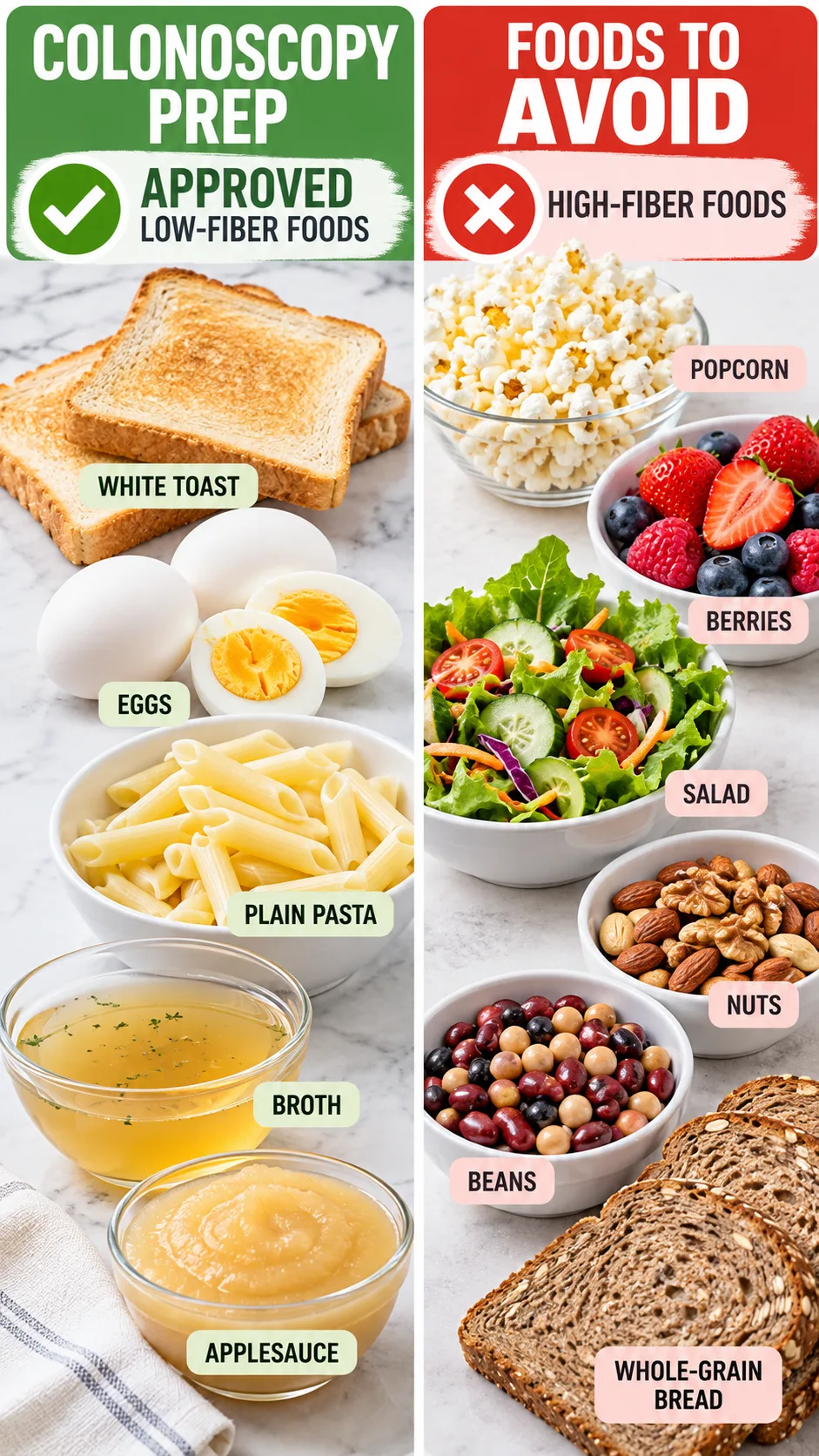
Good low-fiber foods to eat before a colonoscopy include:
- White bread, plain bagels, English muffins, and white rolls
- White rice, regular pasta, plain noodles, and refined cereals
- Eggs, chicken, turkey, fish, and tender lean meat
- Plain tofu without seeds or whole grains
- Mashed or peeled potatoes without skins
- Well-cooked carrots, green beans, squash, or peeled zucchini
- Bananas, applesauce, canned peaches, and canned pears without skins
- Plain yogurt, cottage cheese, milk, and cheese if your clinic allows dairy
- Broth-based soups without vegetables, beans, corn, or noodles from whole grains
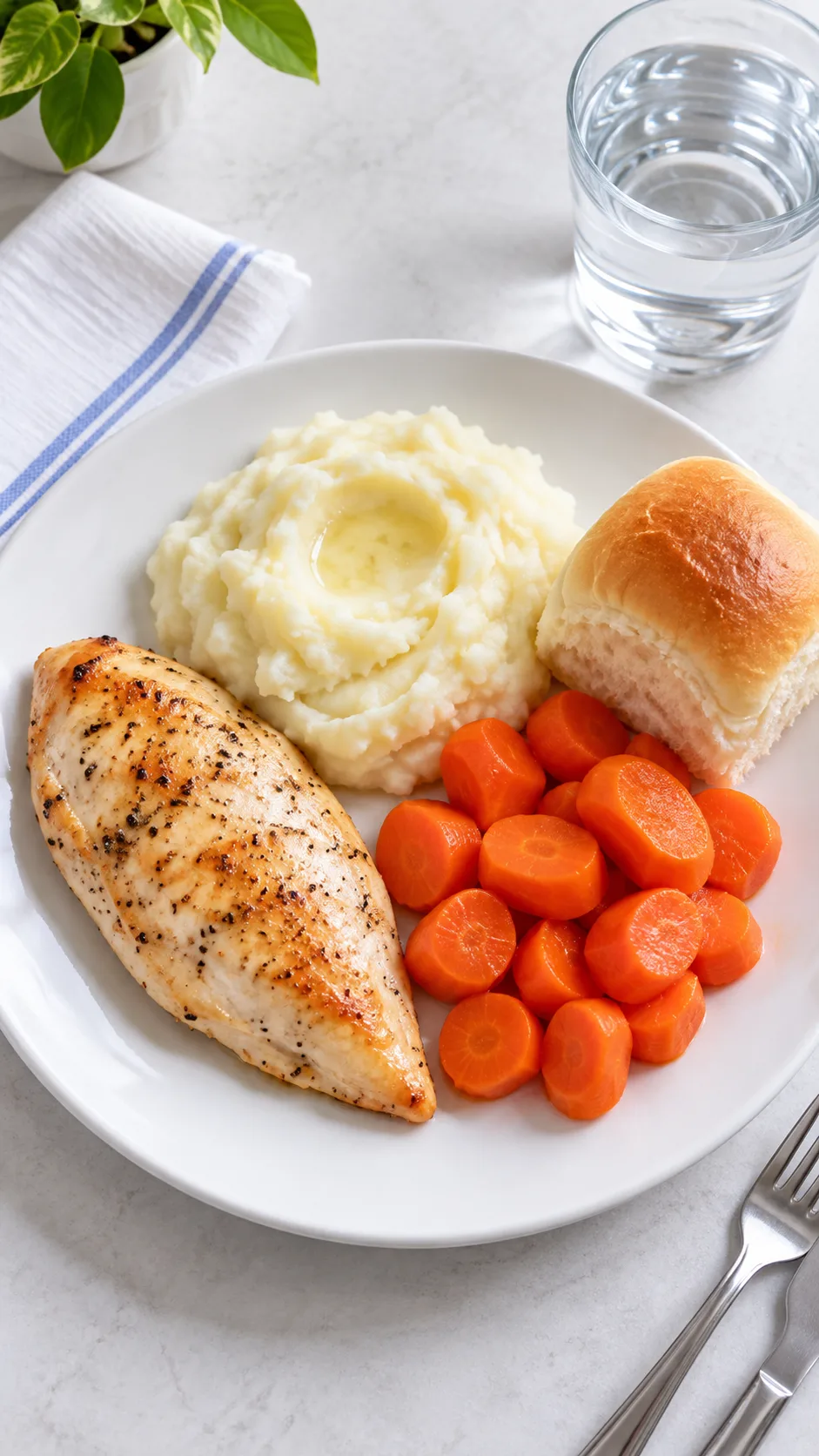
Keep meals simple. Scrambled eggs with white toast, a turkey sandwich on white bread, or baked fish with mashed potatoes can get you through this stage comfortably.
Two days before: Keep meals small and simple
Continue the low-fiber plan unless your instructions tell you otherwise. Smaller meals may feel better than one large meal, especially if you deal with constipation, bloating, reflux, or slow digestion.
Drink plenty of water through the day. Water helps the prep work, supports your blood pressure, and makes frequent bathroom trips a little easier.
If you manage blood sugar concerns, you may find our prediabetic diet guide helpful for everyday meals. During colonoscopy week, though, your procedure team’s temporary food instructions come before your usual eating routine.
The day before: Clear liquids take over
Most colonoscopy instructions require clear liquids only on the day before your procedure. Clear liquids keep you hydrated while leaving little or no residue in your digestive tract.
“Clear” means you can see through the liquid when you hold it in a glass. Skip anything creamy, cloudy, pulpy, or opaque.
Your doctor may tell you to start the bowel prep solution that afternoon or evening. Many practices use split-dose prep. You drink part of the solution the evening before and the rest several hours before your appointment.
The National Institute of Diabetes and Digestive and Kidney Diseases tells patients to follow their provider’s diet and bowel-prep directions carefully. The advice sounds obvious, but the details matter more than any “cleansing” trick on social media.
What can you drink on a clear liquid diet before a colonoscopy?
Clear liquids do not mean you must drink plain water all day. You need fluids, calories, sodium, and enough variety to get through the day.
Choose drinks that you can see through and that contain no pulp, dairy, or solid bits. Avoid red and purple liquids because they can resemble blood or stain the colon lining during the exam.
Usually allowed clear liquids include:
- Water, still or sparkling
- Clear broth or bouillon
- Apple juice and white cranberry juice
- White grape juice without pulp
- Lemonade without pulp
- Clear sports drinks and electrolyte drinks in colors your clinic permits
- Tea or black coffee without milk, cream, nondairy creamer, or powdered additives
- Clear soda, ginger ale, and lemon-lime soda
- Plain gelatin in yellow, green, or orange colors
- Ice pops without fruit pieces, dairy, or red and purple dye
- Hard candy in colors your clinic allows
Broth often helps because it gives you salt and a savory break from sweet drinks. Stock chicken broth, lemon gelatin, apple juice, and an electrolyte drink before prep day so you do not need a last-minute grocery run.
Read every label. Some drinks that look clear contain cloudy juice, red or purple dye, pulp, or added fiber that can disrupt your prep.
What about coffee before a colonoscopy?
Most clinics allow black coffee on the clear-liquid day, but skip milk, cream, oat milk, almond milk, and creamer. They make coffee cloudy and can leave residue, even if you only add a small splash.
Some offices ask patients to stop all liquids a few hours before arrival. Ask your team for the exact cutoff time, especially if you have an early-morning procedure.
Foods to avoid before a colonoscopy
The avoid list may look long, but you only follow it for a short time. Focus on foods with skins, seeds, nuts, whole grains, tough fibers, and ingredients that linger in the digestive tract.
Avoid these foods for the number of days your doctor specifies:
- Raw vegetables, salads, cabbage, broccoli, cauliflower, and leafy greens
- Beans, lentils, chickpeas, peas, and hummus
- Brown rice, quinoa, wild rice, oats, bran, and whole-grain bread
- Nuts, nut butters with chunks, seeds, trail mix, and popcorn
- Berries, grapes, raisins, dried fruit, and fruits with skins or seeds
- Corn, including corn chips and popcorn
- Tomatoes, especially those with skins and seeds
- Spicy meals, fried foods, and heavy greasy food if they upset your stomach
- Red or purple gelatin, red or purple sports drinks, and red or purple ice pops
Skip alcohol when your prep period starts unless your healthcare team tells you otherwise. Alcohol can dehydrate you, irritate your stomach, and make prep harder to tolerate.
Do not use the low-fiber days as an excuse for a huge steakhouse meal before the fast. Large, fatty meals can sit heavily in your stomach and worsen nausea once you start the laxative solution.
A simple colonoscopy prep food menu you can follow
Use this sample menu for ideas, then adjust it for your doctor’s directions, allergies, cultural preferences, and medical needs.
Sample menu for two days before your colonoscopy
- Breakfast: Scrambled eggs, white toast, and applesauce.
- Lunch: Turkey or chicken sandwich on white bread with plain yogurt.
- Snack: Banana, pudding, or plain crackers.
- Dinner: Baked fish or chicken, mashed potatoes without skins, and well-cooked peeled carrots.
- Drinks: Water, tea, coffee with approved additions, or a simple electrolyte drink.
Choose moderate portions and chew well. You do not need a gourmet menu. You need food that leaves less work for your digestive system.
Sample clear-liquid menu for the day before
- Morning: Tea or black coffee, apple juice, and yellow gelatin.
- Midmorning: Water and a clear electrolyte drink.
- Lunch: Warm chicken or vegetable broth, white grape juice, and an approved ice pop.
- Afternoon: Lemonade without pulp, hard candy, and plenty of water.
- Evening: Clear broth, gelatin, then your prep solution exactly as directed.
Drink liquids throughout the day instead of trying to gulp down a gallon at dinner. Your body handles steady fluids better, and your stomach may complain less when prep time arrives.
How to make the bowel prep less miserable
The colonoscopy prep drink rarely tastes good. A few practical adjustments can make it easier to manage, and you need to drink the full prescribed amount safely.
Follow the mixing instructions exactly. Do not add random ingredients unless your clinic approves them. Even healthy extras can interfere with the prep or leave residue.
Try these prep-day comfort moves:
- Chill the prep solution well before you drink it.
- Use a straw and place it toward the back of your tongue.
- Take clear-liquid chasers that your clinic allows between sips.
- Apply petroleum jelly or zinc oxide around the anus before frequent bowel movements start.
- Use soft toilet paper, fragrance-free wipes if your clinic allows them, or a bidet.
- Stay near a bathroom after you begin the prep.
- Wear loose, comfortable clothes and keep a charger, book, podcast, or show nearby.
Stay close to home after you start the laxative. Your colon will quickly object to travel plans.
Call your doctor if you vomit repeatedly, cannot keep the prep down, feel faint, develop severe abdominal pain, or do not have bowel movements after starting the solution. Your clinic can tell you if you need a different plan.
Special situations: Diabetes, constipation, GLP-1 medicines, and more
Some people need extra planning before a colonoscopy. Never stop, skip, or change prescription medication without direct instructions from the clinician who manages your care or performs your procedure.
If you have diabetes
The clear-liquid day can complicate blood sugar management because many permitted drinks contain sugar. Your healthcare team may ask you to check your glucose more often and adjust insulin or other diabetes medications.
Keep glucose tablets or a clear sugary drink your team permits nearby if they tell you to use them for low blood sugar. Tell the endoscopy team about your diabetes when you confirm your appointment.
If you take GLP-1 medication such as Ozempic or Mounjaro
GLP-1 medicines can slow stomach emptying and affect procedure planning. Your anesthesia team or prescribing clinician may give you special directions about when to hold your medication before the colonoscopy.
Do not guess. Review your medication plan early, and read our everyday guide on what to eat on GLP-1 medications for practical meal ideas outside your procedure prep window.
If you deal with constipation
Tell your doctor before prep day if constipation affects you regularly. Your clinician may ask you to start food changes earlier, follow a longer prep schedule, or take another product.
Do not add laxatives on your own because a friend recommends them. Your doctor needs to consider your kidney health, heart health, medication list, and the exact bowel-prep product you use.
If you have kidney, heart, or liver problems
Fluid and electrolyte choices matter more if you have kidney disease, heart failure, liver disease, or a history of electrolyte problems. Your care team may select a specific prep and give you personal fluid directions.
The Mayo Clinic’s colonoscopy overview also asks patients to discuss medications and health conditions before the test. A quick call before your prep date can prevent confusion later.
Common colonoscopy prep food questions
Can you eat eggs before a colonoscopy?
Yes, most low-fiber colonoscopy diets allow eggs until your clear-liquid cutoff begins. Scrambled, boiled, or plain omelet-style eggs usually work well if you skip vegetables, seeds, and high-fiber add-ins.
Can you eat yogurt before a colonoscopy?
Many clinics allow plain yogurt during the low-fiber days before clear liquids begin. Stop eating it when your instructions move you to clear liquids only, because yogurt does not count as clear.
Can you eat chicken before a colonoscopy?
Yes. Plain baked, grilled, poached, or roasted chicken usually fits a low-fiber diet before colonoscopy prep. Skip breading, spicy sauces, seeds, vegetable-heavy sides, and greasy fried versions.
Can you eat peanut butter before a colonoscopy?
Ask your clinic. Some instructions allow smooth peanut butter during the early low-fiber phase, while others tell patients to avoid all nut products. Chunky peanut butter does not belong on your prep menu because the pieces can leave residue.
Can you drink alcohol the day before a colonoscopy?
No. Skip alcohol during your prep period because it can dehydrate you and worsen nausea. Save any celebratory drink until your doctor says you can return to normal food and beverages.
When do you stop drinking before a colonoscopy?
Your clinic will give you a specific time. Many centers allow clear liquids until a few hours before arrival, but anesthesia rules and appointment times vary. Follow your own instructions instead of an internet timetable.
Final checklist for colonoscopy prep success
Good colonoscopy prep comes down to planning, hydration, and following the schedule your medical team gave you. Your food choices help the prep solution clear your colon, which helps your doctor complete a thorough exam.
- Start your low-fiber diet on the day your clinic specifies.
- Avoid seeds, nuts, popcorn, raw vegetables, beans, and whole grains.
- Switch to clear liquids exactly when your instructions tell you to.
- Skip red and purple food coloring unless your clinic says otherwise.
- Drink the entire bowel prep exactly as prescribed.
- Call your care team when symptoms, medications, or instructions confuse you.
One uncomfortable day can support a test that finds polyps early and protects your long-term health. Stock the right foods, keep the broth warm, claim the bathroom, and remember that prep day ends.
