
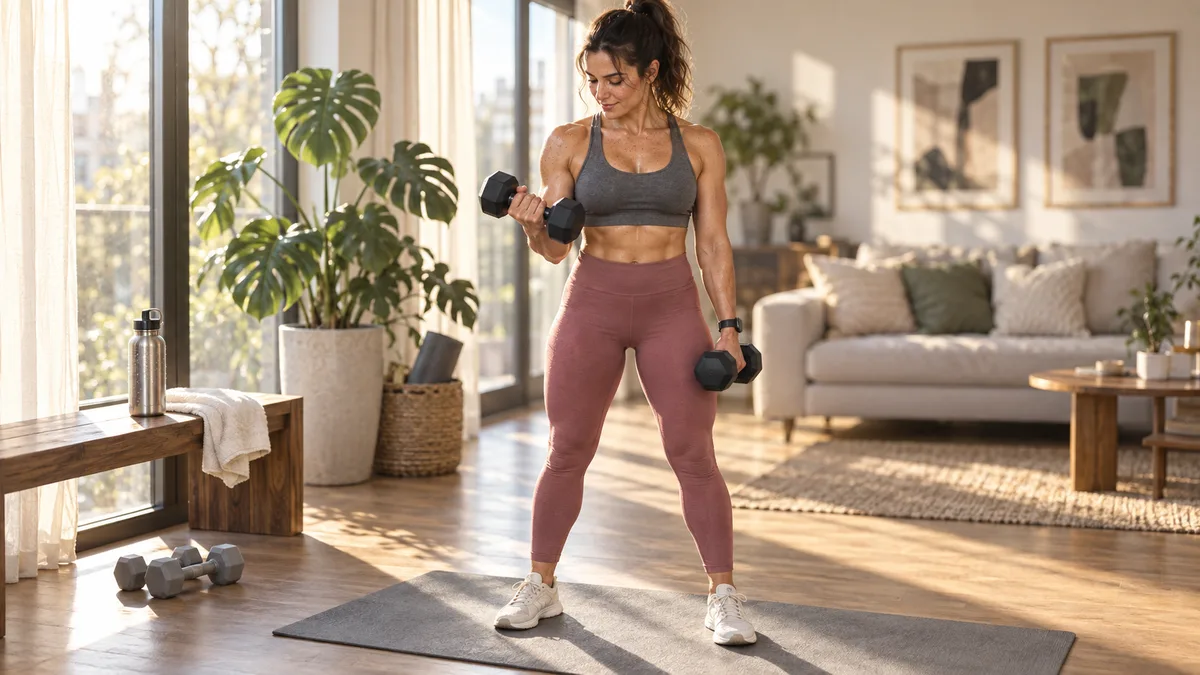
You don’t need a gym membership, a rack of fancy machines, or two hours of free time to build real, visible strength. You need a pair of dumbbells, about 30 minutes, and a plan that actually works. That’s it.
If you’ve been stuck on the cardio hamster wheel — running, cycling, stepping your way through endless sessions and wondering why your body barely changes — this is your exit ramp. A dumbbell full body workout gives women faster results in less time, and you can do the whole thing in your living room while your coffee brews.
I spent years thinking more cardio meant better results. Spoiler: it didn’t. The moment I picked up dumbbells and committed to a structured full body routine, everything shifted — my energy, my shape, my confidence. So let me walk you through the exact approach that changed my training for good.
Why a Dumbbell Full Body Workout Beats Endless Cardio for Women
Here’s a truth that the fitness industry doesn’t love to advertise: cardio alone is a terrible strategy for changing your body composition. It burns calories in the moment, sure, but it doesn’t build the lean muscle that keeps your metabolism elevated for hours afterward.
Strength training with dumbbells creates what researchers call excess post-exercise oxygen consumption (EPOC) — basically, your body continues burning calories long after you’ve put the weights down. A 2018 study published in the Journal of Strength and Conditioning Research confirmed that resistance training elevates metabolic rate for up to 72 hours post-workout. Cardio? Not so much.
And here’s the thing women specifically need to hear: lifting dumbbells will NOT make you bulky. Women produce roughly 15-20 times less testosterone than men. What it WILL do is give you defined arms, a stronger back, lifted glutes, and the kind of functional strength that makes everyday life easier. Sound good?
The Efficiency Factor
A well-designed dumbbell full body workout hits every major muscle group in a single session. That means you train 3 times per week instead of splitting body parts across 5-6 days. For busy women — which, let’s be honest, is basically all women — this is a game-changer.
You also get compound movements that work multiple joints and muscles simultaneously. A single dumbbell squat to press engages your quads, glutes, core, shoulders, and triceps. Try getting that kind of efficiency from a treadmill. 🙂
What You Need to Get Started
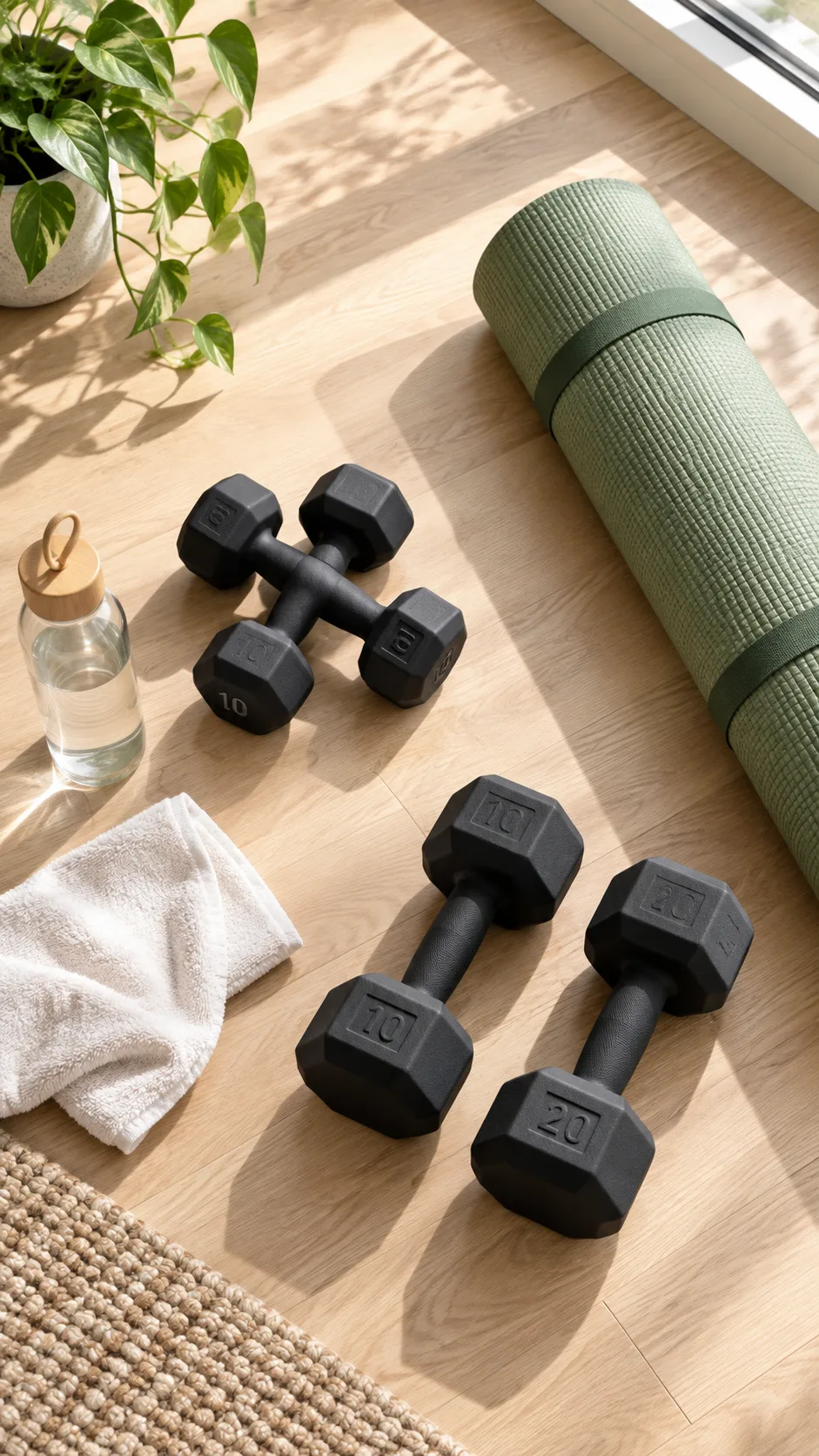
The barrier to entry here is beautifully low. You don’t need a home gym that looks like it belongs on Instagram. Here’s your minimalist equipment list:
- Two sets of dumbbells — a lighter pair (5-10 lbs) and a heavier pair (12-25 lbs), depending on your current strength level
- A workout mat — optional but great for floor exercises
- A flat bench or sturdy chair — for supported rows and step-ups
- Space — roughly 6 feet by 6 feet of clear floor
If you’re brand new to lifting, start lighter than you think you should. Ego has no place in effective training. You can always increase the weight — you can’t un-pull a muscle. For a broader look at dumbbell programming, check out this full body dumbbell workout plan that covers free weight basics.
The Complete Dumbbell Full Body Workout Routine
This routine targets your upper body, lower body, and core in one efficient session. Perform it 3 times per week with at least one rest day between sessions. Each exercise uses a rep range designed for building both strength and muscle tone.
Warm-Up (5 Minutes)
Never skip this. Cold muscles and heavy weights are a recipe for injury. Spend 5 minutes on:
- Arm circles (30 seconds each direction)
- Bodyweight squats (15 reps)
- Hip circles (10 each side)
- Inchworms (5 reps)
- Light dumbbell halos (10 each direction)
Exercise 1: Goblet Squat
Targets: Quads, glutes, core
Sets: 3 | Reps: 12
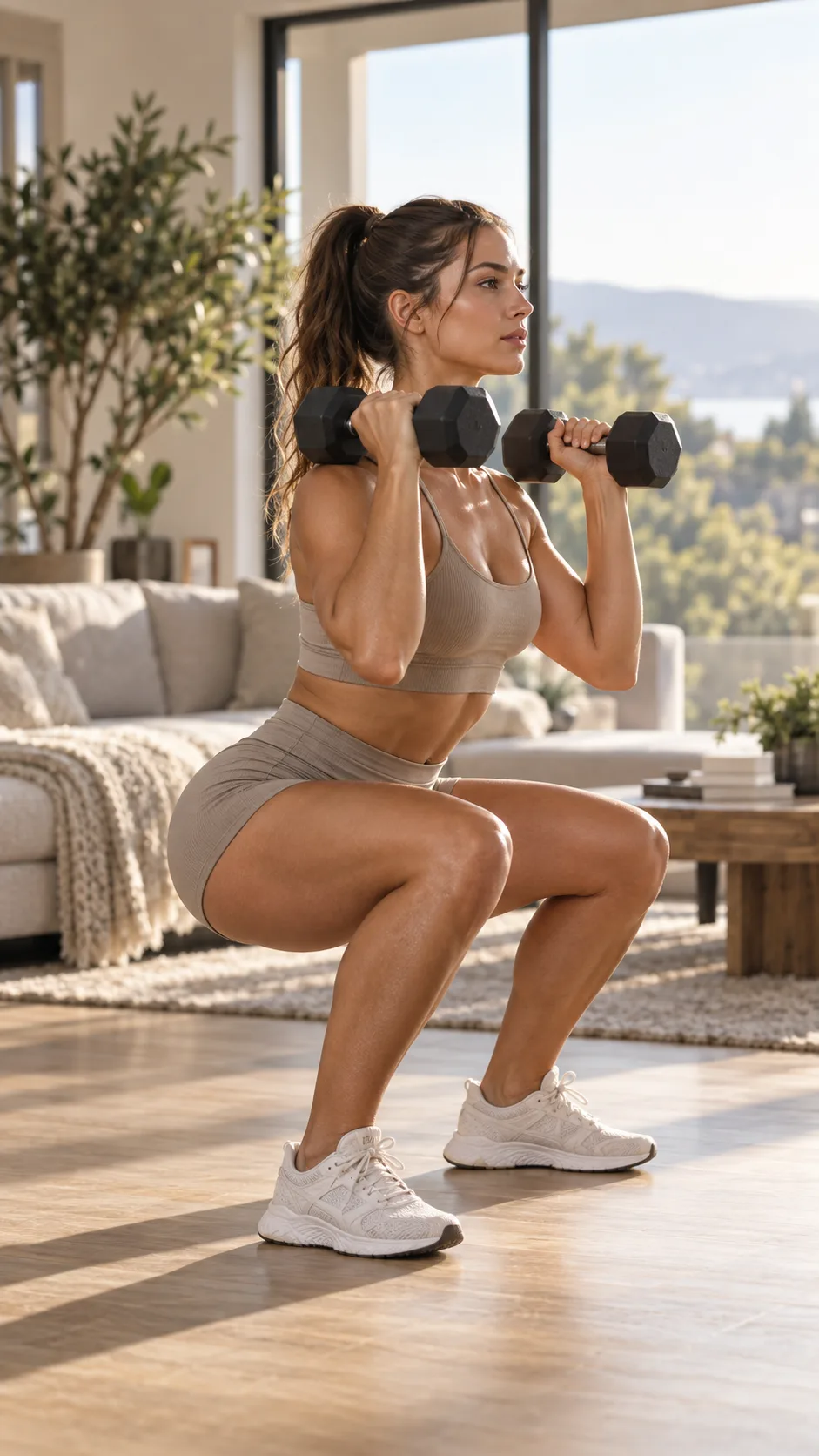
Hold one heavier dumbbell vertically at chest height, elbows pointing down. Push your hips back and squat until your thighs hit parallel. Drive through your heels to stand. Keep your chest proud the entire time — the moment you round forward, you lose core engagement.
Exercise 2: Dumbbell Romanian Deadlift
Targets: Hamstrings, glutes, lower back
Sets: 3 | Reps: 10
Hold both dumbbells in front of your thighs with a slight bend in your knees. Hinge at the hips, sliding the weights down your shins until you feel a deep stretch in your hamstrings. Squeeze your glutes hard to return to standing. This exercise alone will transform how your legs and glutes look — trust the process.
Exercise 3: Dumbbell Overhead Press
Targets: Shoulders, triceps, core
Sets: 3 | Reps: 10
Start with dumbbells at shoulder height, palms facing forward. Press straight overhead until your arms fully extend, then control the weight back down. Brace your core throughout — if you find yourself arching your back, the weight is too heavy.
Exercise 4: Bent-Over Row
Targets: Upper back, lats, biceps
Sets: 3 | Reps: 12 each side
Place one hand and knee on a bench. Hold a dumbbell in the opposite hand and pull it toward your hip, squeezing your shoulder blade at the top. Lower with control. This is one of the best exercises for improving posture — something most women who sit at desks desperately need. For more upper back focused movements, this upper back workout for women has some excellent complementary moves.
Exercise 5: Reverse Lunge
Targets: Quads, glutes, balance
Sets: 3 | Reps: 10 each leg
Hold a dumbbell in each hand at your sides. Step one foot back and lower your back knee toward the floor. Push through your front heel to return to standing. Reverse lunges put less stress on your knees than forward lunges — your joints will thank you.
Exercise 6: Dumbbell Floor Press
Targets: Chest, triceps, anterior shoulders
Sets: 3 | Reps: 12
Lie on your back with knees bent. Hold dumbbells above your chest, then lower your elbows to the floor. Pause briefly, then press back up. The floor limits your range of motion, which actually makes this safer for shoulders than a full bench press — perfect for home training.
Exercise 7: Dumbbell Plank Row (Renegade Row)
Targets: Core, back, shoulders
Sets: 3 | Reps: 8 each side
Get into a plank position with hands gripping dumbbells. Row one dumbbell to your hip while keeping your hips completely square to the floor. This exercise humbles even experienced lifters. If your hips sway like a pendulum, drop to a lighter weight or widen your stance.
Exercise 8: Dumbbell Glute Bridge
Targets: Glutes, hamstrings
Sets: 3 | Reps: 15
Lie on your back, feet flat on the floor, and place one heavy dumbbell across your hips. Drive through your heels and squeeze your glutes at the top for a full two-second hold. Lower slowly. The pause at the top is non-negotiable — it’s where the magic happens.
How to Progress Over Time
Here’s where most women go wrong: they pick up the same weights week after week and wonder why progress stalls. Progressive overload is the single most important principle in strength training. Without it, your body has zero reason to adapt.
You don’t need to add weight every session. Here’s a simple progression framework:
- Add reps first — if the program calls for 10 reps and you can do 12 with good form, you’ve outgrown that weight
- Then add weight — increase by the smallest increment available (usually 2.5-5 lbs)
- Slow down the tempo — a 3-second lowering phase makes any weight dramatically harder
- Reduce rest periods — cutting from 90 seconds to 60 seconds between sets increases training density
Track your workouts in a notebook or phone app. The Strong app works great for this. If you’re not logging what you lift, you’re guessing — and guessing doesn’t build muscle.
Common Mistakes Women Make with Dumbbell Workouts
I’ve made most of these myself, so consider this a judgment-free zone. Learn from my mistakes so you don’t repeat them.
Going Too Light for Too Long
Those 3-pound pastel dumbbells look cute. They also do almost nothing for a healthy adult woman. If you can complete your set and immediately text someone without breathing hard, the weight is too light. Your last 2-3 reps should feel genuinely challenging.
Skipping Lower Body Work
I get it — arm day feels more immediately rewarding than leg day. But your legs and glutes contain the largest muscles in your body. Training them produces the biggest hormonal response and burns the most calories. Ever wonder why you feel completely wiped after squats? That’s exactly why they work so well.
Neglecting Recovery
More is not always better. Your muscles grow during rest, not during the workout itself. According to the American College of Sports Medicine, beginners should allow 48 hours between full body sessions for adequate recovery. Sleep 7-9 hours, eat enough protein (around 0.7-1g per pound of bodyweight), and take your rest days seriously.
Sample Weekly Schedule
Structure removes decision fatigue. Here’s a simple weekly layout that balances training and recovery:
- Monday: Dumbbell Full Body Workout
- Tuesday: Active recovery — walk, yoga, light stretching
- Wednesday: Dumbbell Full Body Workout
- Thursday: Rest or light cardio (20-minute walk)
- Friday: Dumbbell Full Body Workout
- Saturday: Optional — something fun (hiking, swimming, dancing)
- Sunday: Full rest
Notice how cardio isn’t the main event anymore? It plays a supporting role — exactly where it belongs for body composition goals. If you eventually want to expand into a more structured gym split, this full week gym workout plan lays out a solid 7-day schedule.
Nutrition: The Part Nobody Wants to Talk About
You cannot out-train a bad diet. I know, I hate that sentence too. But it’s annoyingly accurate.
Protein is your top priority. It repairs muscle tissue and keeps you feeling full between meals. Aim for a palm-sized portion of protein at every meal — chicken, fish, eggs, Greek yogurt, tofu, or legumes all count. The USDA’s nutrition resources offer solid science-backed guidelines if you want to go deeper.
You don’t need to count every calorie or weigh your broccoli. Just eat enough to fuel your workouts, prioritize whole foods, and don’t slash calories so aggressively that you feel terrible. FYI — undereating is just as counterproductive as overeating when you’re trying to build strength.
How Long Before You See Results?
Real talk: you’ll FEEL different within 2 weeks. Exercises that once felt impossible start feeling manageable. Your grip gets stronger. You stop dreading your sessions.
Visible changes typically show up around weeks 4-8. Your arms look a little more defined. Your jeans fit differently around your glutes. Your posture improves because your back muscles actually engage properly now.
By the 12-week mark? That’s when other people start noticing. And honestly, that external validation — while not the point — feels pretty great. The internal shift matters more though. Feeling strong changes how you carry yourself through the world.
Adapting the Workout for Different Fitness Levels
Complete Beginners
Start with 2 sets instead of 3 and use lighter weights. Focus entirely on nailing proper form before adding intensity. There is zero shame in using 5-pound dumbbells — everyone starts somewhere. If you need an even gentler starting point, this NHS guide to strength exercises breaks things down beautifully.
Intermediate Lifters
Add a fourth set to your compound movements (squats, deadlifts, rows). Incorporate supersets — pairing two exercises back-to-back with no rest — to increase workout density. Consider investing in adjustable dumbbells so you can progress without buying an entire rack.
Advanced
Slow your tempo to 4 seconds on the lowering phase. Add pause reps (hold the hardest position for 2-3 seconds). Introduce single-leg variations like Bulgarian split squats with dumbbells. At this level, you might also benefit from a more targeted split — IMO a structured bodybuilding program for women could be your next logical step.
Why This Works Better Than What You’ve Been Doing
Most women’s fitness advice revolves around burning calories. Eat less, move more, repeat until you’re exhausted and cranky. That approach treats your body like a math equation, and it ignores the most powerful tool in your arsenal: muscle.
Building lean muscle through a dumbbell full body workout doesn’t just change how you look. It changes your resting metabolic rate, your bone density, your joint stability, and your mental resilience. Every rep is an investment that pays compound interest.
You don’t need to run for an hour. You don’t need complicated equipment. You don’t need anyone’s permission to pick up something heavy and put it back down again. You just need consistency and a plan.
Final Thoughts: Your Strength Journey Starts Now
A dumbbell full body workout gives women everything they need to build real strength at home — in 30 minutes, 3 times a week. No gym required. No cardio marathon required. Just progressive resistance, proper form, adequate recovery, and a little patience.
Grab those dumbbells. Start with the routine above. Track your progress. And six weeks from now, you’ll look back at today and wonder why you didn’t start sooner.
Your body was built to be strong. It’s time you gave it the chance to prove it.
