
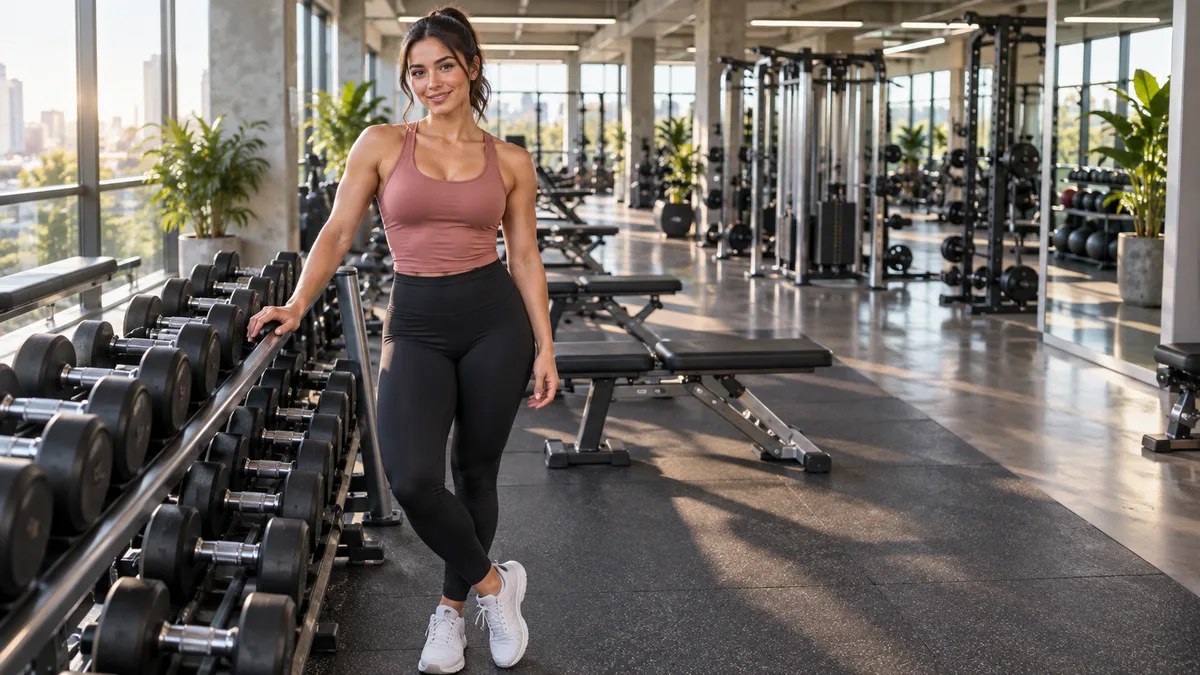
You walked into the gym, looked around at all the machines and free weights, and thought: “What am I supposed to do with any of this?” Same. That was me three years ago, standing near the stretching mats pretending to warm up while secretly Googling exercises on my phone.
Here’s the truth nobody tells you. Most women don’t quit the gym because they’re lazy. They quit because they have no plan. They wander from machine to machine, copy whatever the person next to them does, and leave feeling like they wasted 45 minutes. Sound familiar?
This article hands you a complete 4-week beginner gym routine designed specifically for women who want to stop guessing and start progressing. No fitness degree required. No complicated periodization charts. Just a clear, week-by-week workout plan you can screenshot and take with you.
Why most beginner gym plans fail women
Most generic “beginner workout plans” you find online were written for men and then slapped with a pink color scheme. They don’t account for how women typically want to train, what movements feel comfortable on day one, or how intimidating a barbell can look when you’ve never touched one.
A good gym routine for women considers three things: building foundational strength, creating a habit that sticks, and being enjoyable enough that you actually come back tomorrow. If your plan makes you dread every session, it’s a bad plan. Period.
Research from the American College of Sports Medicine shows that beginners see the fastest strength gains in their first 8 to 12 weeks. That means your body is literally PRIMED for results right now. You just need a roadmap.
Before you start: the quick setup
What you’ll need
- 3 days per week, that’s it. Monday/Wednesday/Friday works great, but pick whatever suits your schedule.
- 45 to 50 minutes per session, including warm-up and cool-down.
- A pair of comfortable training shoes (not running shoes, they have too much cushion for lifting).
- A water bottle and a towel. Gyms appreciate towel people.
The golden rules for these 4 weeks
- Start lighter than you think you should. Your ego will recover. Your pulled muscle won’t recover as fast.
- Focus on form first, weight second. Every single time.
- Rest 60 to 90 seconds between sets unless stated otherwise.
- Write down your weights. Seriously. You WILL forget what you lifted last Tuesday.
If you want a machine-focused alternative to ease into things, check out the beginner machine formula that stops random workouts. Machines can feel way less intimidating on your first few visits.
Week 1: Learning the basics (full body focus)
Week one keeps things simple. You’ll do 3 full-body sessions using mostly machines and bodyweight exercises. The goal here isn’t to destroy yourself. It’s to learn movement patterns and get your muscles used to working under load.
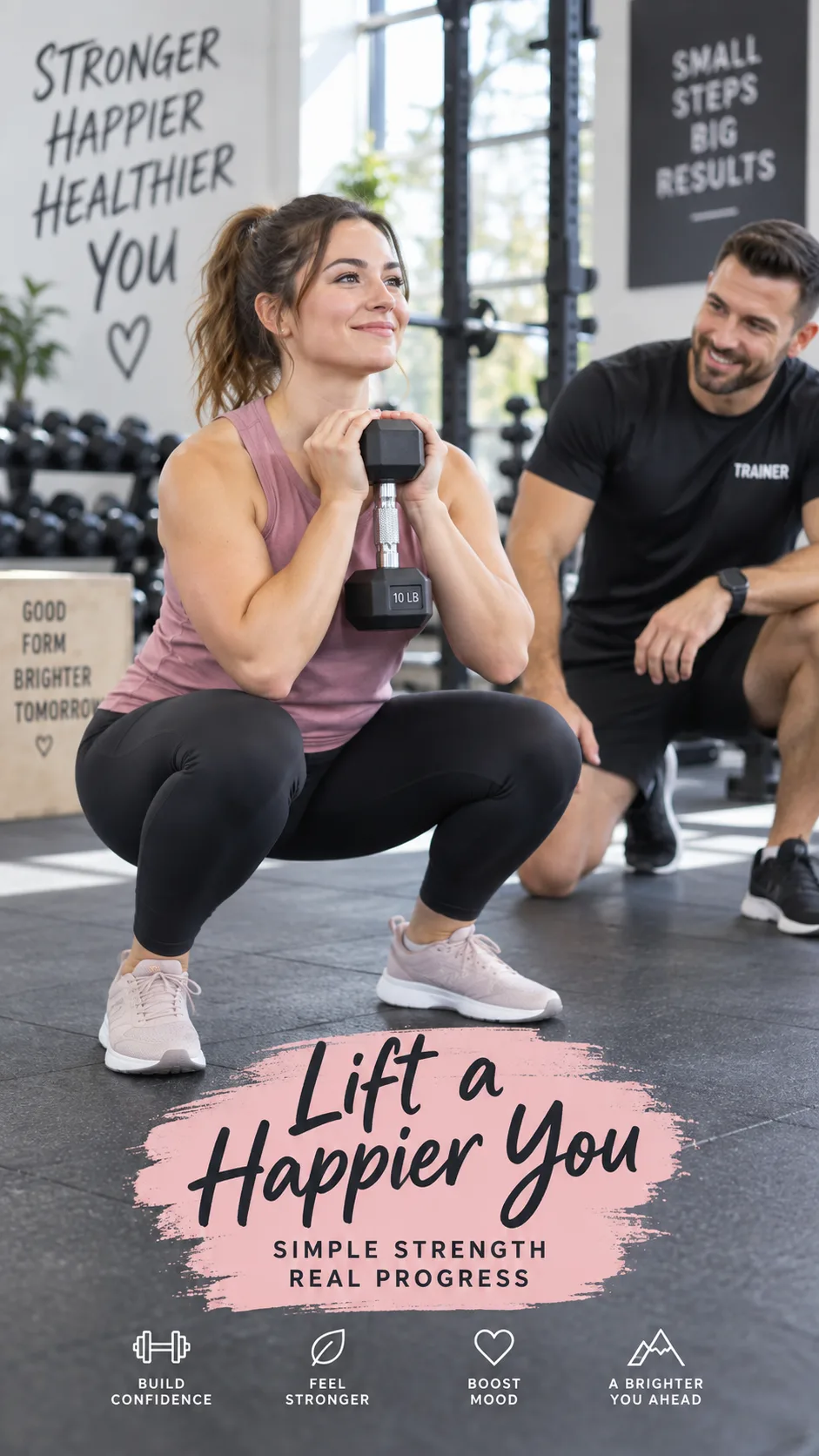
Week 1 workout (repeat 3x)
- Goblet Squat — 3 sets of 10 reps
- Lat Pulldown (machine) — 3 sets of 10 reps
- Dumbbell Romanian Deadlift — 3 sets of 10 reps
- Seated Chest Press (machine) — 3 sets of 10 reps
- Plank Hold — 3 sets of 20 to 30 seconds
- Glute Bridge — 3 sets of 12 reps
Quick tip: If the goblet squat feels awkward, practice bodyweight squats to a bench first. Sit down, stand up. That’s literally the movement. You already do it dozens of times a day.
Expect some soreness by Wednesday. That’s called DOMS (delayed onset muscle soreness), and it’s completely normal. It doesn’t mean you broke anything. It means your muscles got a new stimulus and they’re adapting. Drink water, eat protein, and keep moving.
Week 2: Adding variety (upper/lower split introduction)
Now that your body knows what a gym session feels like, we’ll split things up. You’ll alternate between an upper body day and a lower body day, with one full-body session at the end of the week. This lets you give each muscle group a bit more attention.
Day 1, upper body
- Dumbbell Shoulder Press — 3 sets of 10 reps
- Seated Cable Row — 3 sets of 12 reps
- Incline Dumbbell Chest Press — 3 sets of 10 reps
- Face Pulls (cable) — 3 sets of 15 reps
- Bicep Curls — 2 sets of 12 reps
- Tricep Pushdowns — 2 sets of 12 reps
Day 2, lower body
- Leg Press — 3 sets of 12 reps
- Walking Lunges — 3 sets of 10 per leg
- Leg Curl (machine) — 3 sets of 12 reps
- Hip Thrust (bodyweight or barbell) — 3 sets of 12 reps
- Calf Raises — 3 sets of 15 reps
Day 3, full body
- Goblet Squat — 3 sets of 12 reps (increase weight from week 1)
- Lat Pulldown — 3 sets of 10 reps
- Dumbbell Romanian Deadlift — 3 sets of 10 reps
- Push-Ups (knees or full) — 3 sets of as many as you can
- Dead Bug — 3 sets of 8 per side
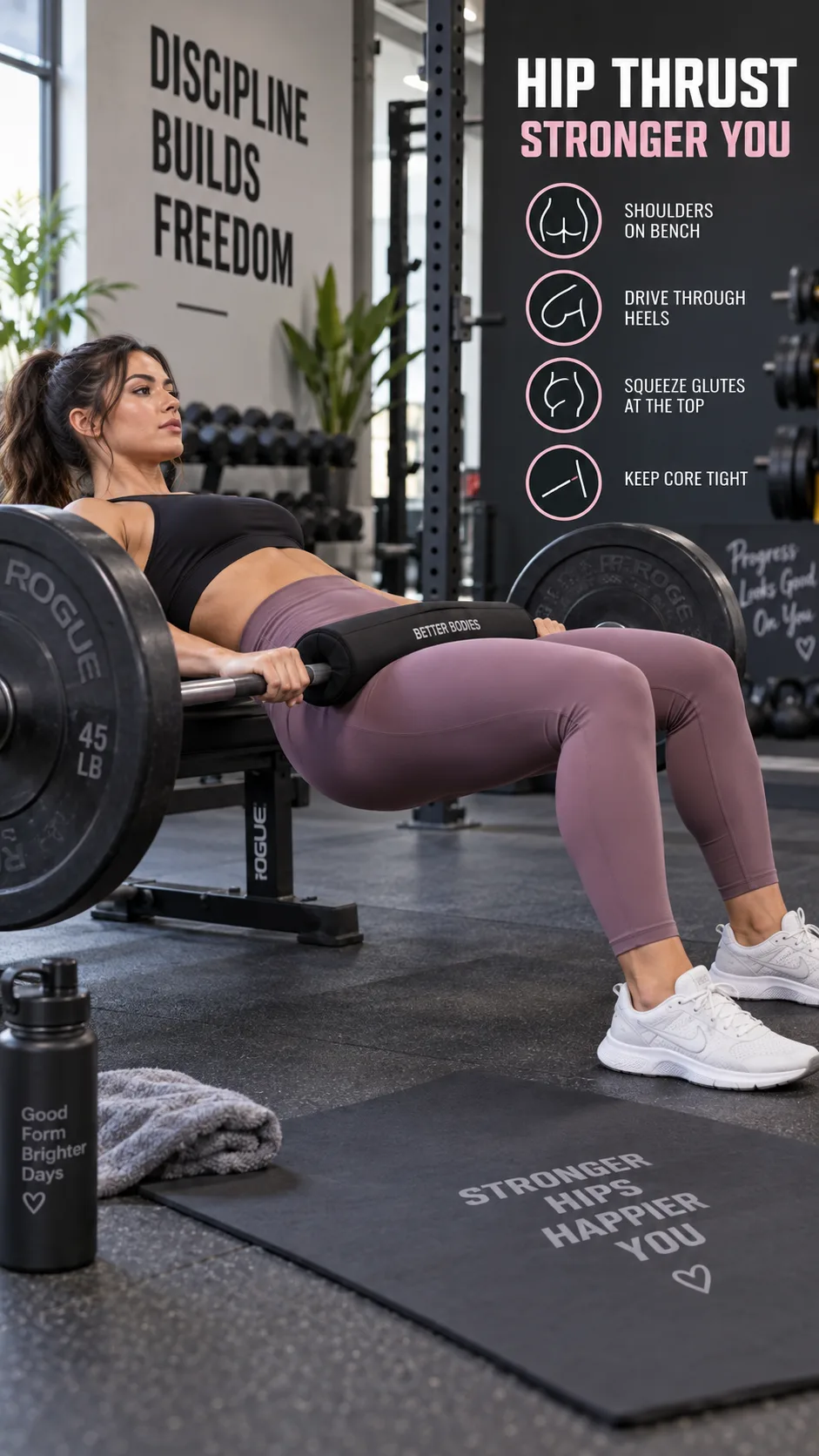
Ever wondered why hip thrusts show up in almost every women’s workout plan? Because they target your glutes more effectively than almost any other exercise. If you want a full routine focused on legs and glutes, this dedicated leg and glute plan goes way deeper.
Week 3: Building confidence (progressive overload begins)
This is where things get exciting. You’ll keep the same upper/lower structure from week 2, but now you’ll start applying progressive overload, the single most important concept in strength training.
Progressive overload simply means doing slightly more than last time. Add 2 to 5 lbs to your weights. Do one extra rep. Hold your plank five seconds longer. Small jumps compound into massive results over months. This principle works whether you’re a complete beginner or an advanced lifter.
Week 3 adjustments
- Increase weights by 2 to 5 lbs on every exercise where week 2 felt manageable.
- If you can’t increase weight, add 1 to 2 reps per set instead.
- Swap bodyweight hip thrusts for barbell hip thrusts if you feel ready.
- Add a 4th optional session, a 20-minute walk on the treadmill at an incline. Active recovery helps soreness more than sitting on the couch.
Important: If a weight feels too heavy and your form breaks down, drop it back. Nobody at the gym cares what number is on your dumbbell. They’re too busy looking at themselves in the mirror. Trust me on this one 🙂
Week 4: Putting it all together
Welcome to your final week. And this is where most beginners realize they’re not beginners anymore. You know your way around the gym floor. You have favorite machines. You might even have a spot you like to set up in. That’s growth.
Day 1, upper body (progression)
- Dumbbell Shoulder Press — 4 sets of 8 reps (heavier weight)
- Single-Arm Dumbbell Row — 3 sets of 10 per arm
- Chest Fly (cable or dumbbell) — 3 sets of 12 reps
- Face Pulls — 3 sets of 15 reps
- Hammer Curls — 2 sets of 12 reps
- Overhead Tricep Extension — 2 sets of 12 reps
Day 2, lower body (progression)
- Barbell Squat or Smith Machine Squat — 4 sets of 8 reps
- Bulgarian Split Squat — 3 sets of 10 per leg
- Leg Curl — 3 sets of 12 reps
- Barbell Hip Thrust — 4 sets of 10 reps
- Calf Raises — 3 sets of 15 reps
Day 3, full body finisher
- Deadlift (dumbbell or barbell) — 3 sets of 8 reps
- Incline Push-Ups or Full Push-Ups — 3 sets of max reps
- Lat Pulldown — 3 sets of 10 reps
- Walking Lunges — 3 sets of 12 per leg
- Plank — 3 sets of 30 to 45 seconds
- Glute Bridge (weighted) — 3 sets of 15 reps
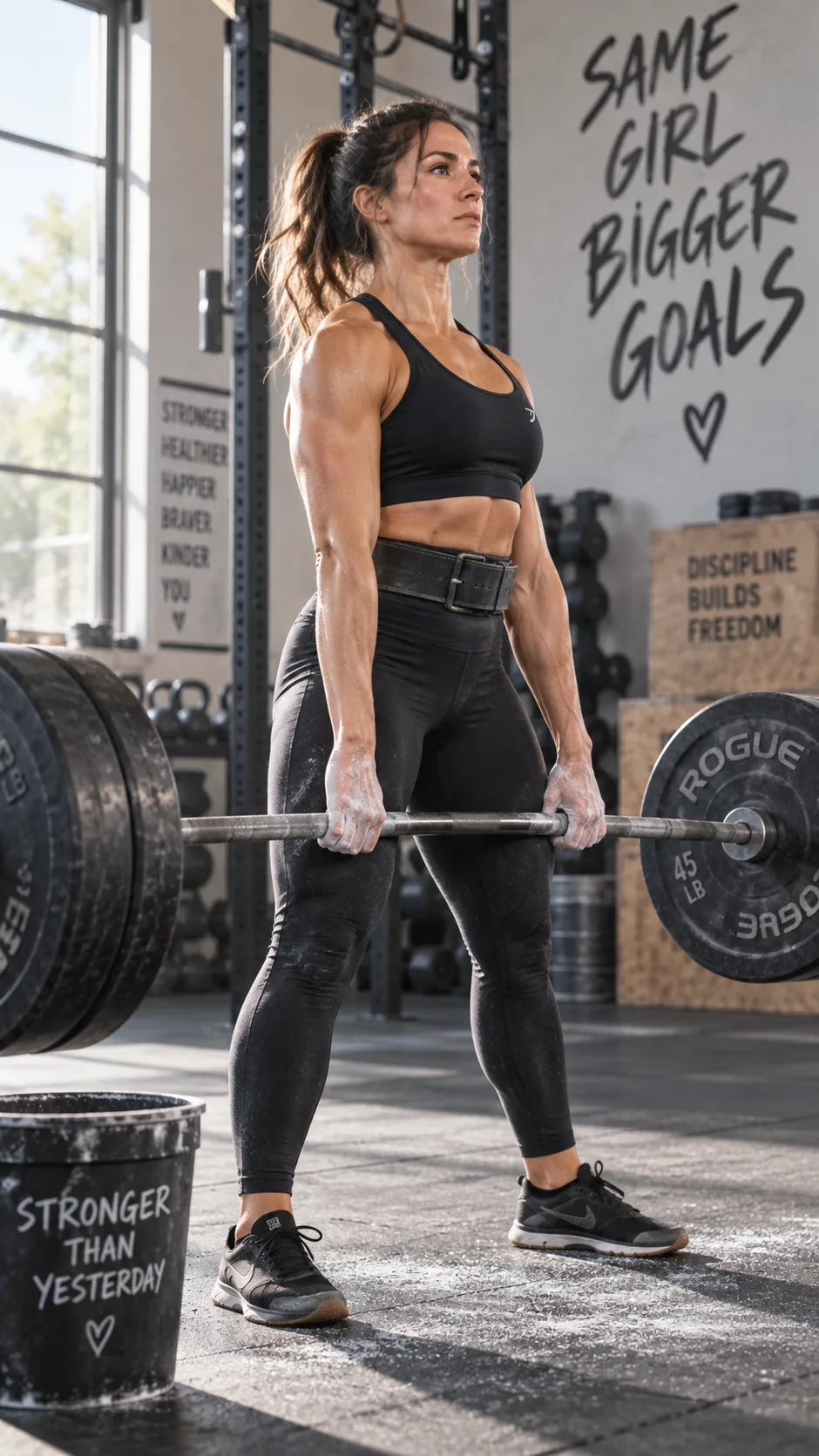
Notice how we’ve gone from 3 sets of 10 on basic machines in week 1 to 4 sets of 8 with heavier loads and compound movements in week 4? That’s progressive overload in action. Your body adapted, and you rose to meet it.
Nutrition: The part nobody wants to hear about
You can follow the best beginner women’s workout plan on the planet, but if you eat like a college student during finals week, your results will be… limited. You don’t need a complicated meal plan. You need a few fundamentals.
- Protein: Aim for roughly 0.7 to 1 gram per pound of bodyweight daily. Chicken, fish, eggs, Greek yogurt, tofu, and protein shakes all count.
- Calories: Eat enough to fuel your training. Undereating kills your energy and your progress.
- Hydration: Drink at least half your body weight in ounces of water. More on training days.
- Sleep: 7 to 9 hours. Your muscles grow while you sleep, not while you lift. The Sleep Foundation backs this up: quality sleep directly impacts recovery and performance.
In my experience, the biggest game-changer for new lifters is simply eating enough protein. Most women drastically undereat protein without realizing it. Track it for a week and you’ll probably see what I mean.
Common mistakes beginner women make at the gym
I’ve watched (and personally committed) every one of these. Learn from my suffering.
- Only doing cardio. The treadmill is fine, but strength training transforms your body composition faster. Combine both.
- Avoiding weights because “I don’t want to get bulky.” You won’t. Women don’t produce enough testosterone to accidentally look like a bodybuilder. That takes YEARS of intentional effort and often specific nutrition protocols. For more on what intentional muscle building looks like, read about structured bodybuilding plans for women.
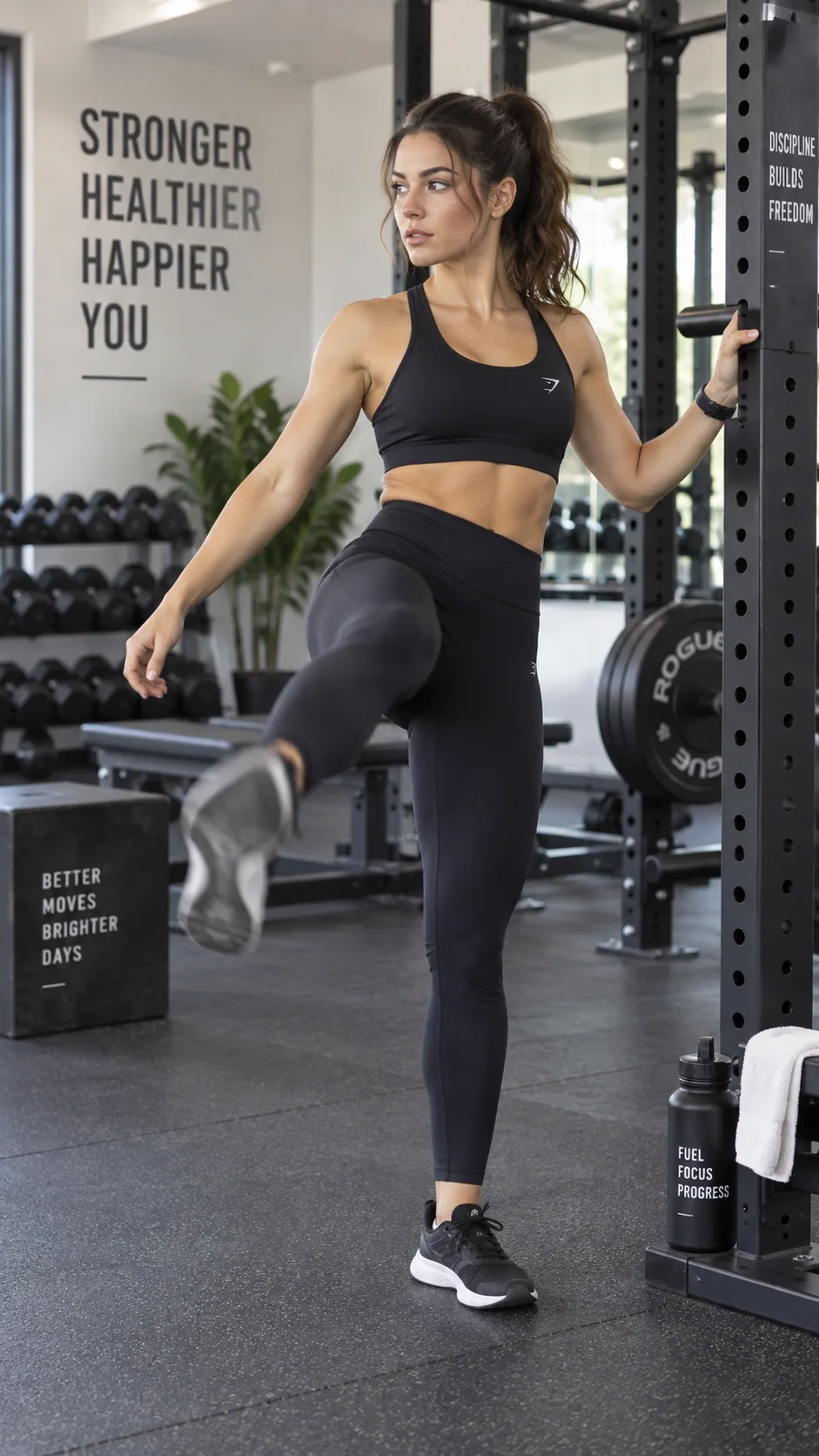
- Skipping warm-ups. Five minutes on the bike or a quick dynamic stretch routine saves you from injuries that sideline you for weeks.
- Comparing yourself to the woman who’s been training for 5 years. She started exactly where you’re standing. Give yourself the same grace.
- Changing your routine every single week. Consistency with one program beats program hopping every time. Stick with this plan for the full 4 weeks before switching anything.
What happens after week 4?
You have options. Good ones. After completing this beginner phase, your body can handle more volume, more intensity, and more variety. Here’s what I’d recommend:
- Move to a structured 4-day split like upper/lower or push/pull/legs. The National Strength and Conditioning Association recommends gradually increasing training frequency as you build a base.
- Keep a training log. Apps like Strong or a simple notebook work great. Track every set, every rep, every weight.
- Set a tangible goal. “Get fit” means nothing. “Squat my bodyweight by month 6” gives you something to chase.
- Consider hiring a coach for one session to check your form on the big lifts (squat, deadlift, bench press). Worth every penny.
If you want a ready-made weekly plan to follow after this 4-week intro, this weekly weight training schedule picks up right where you’ll leave off.
Quick FAQ: Gym routine women workout plans for beginners
How many days per week should a beginner woman work out?
Three days per week delivers excellent results for beginners. You get enough stimulus to build strength and enough rest days to recover. As you progress past the beginner phase, you can bump it to four.
Should I do cardio on my rest days?
Light cardio like walking, swimming, or gentle cycling can help with recovery. Avoid intense HIIT sessions on rest days, because that defeats the purpose of resting.
How long before I see results?
You’ll feel stronger within 2 weeks. You’ll notice visual changes around weeks 6 to 8. Others will start commenting around week 12. Patience pays off here.
Can I do this plan at home?
Parts of it, yes, but this plan was designed for a gym environment with access to machines, cables, and dumbbells. For a home-friendly alternative, bodyweight and resistance band programs can bridge the gap until you get gym access.
The bottom line
Starting a gym routine as a beginner woman doesn’t require a personal trainer, a $200 supplement stack, or some secret knowledge. It requires a clear plan, consistency, and the willingness to show up even when you’d rather binge Netflix.
This 4-week plan gives you the structure to walk into any gym and know exactly what to do. Week 1 builds your foundation. Week 2 introduces variety. Week 3 pushes your limits. Week 4 proves you can handle more than you ever expected.
Screenshot the workouts. Write your weights in a notebook. Show up three times a week. Four weeks from now, you’ll look back and wonder why you ever felt intimidated by a squat rack. Now go. Your first session is waiting.
