
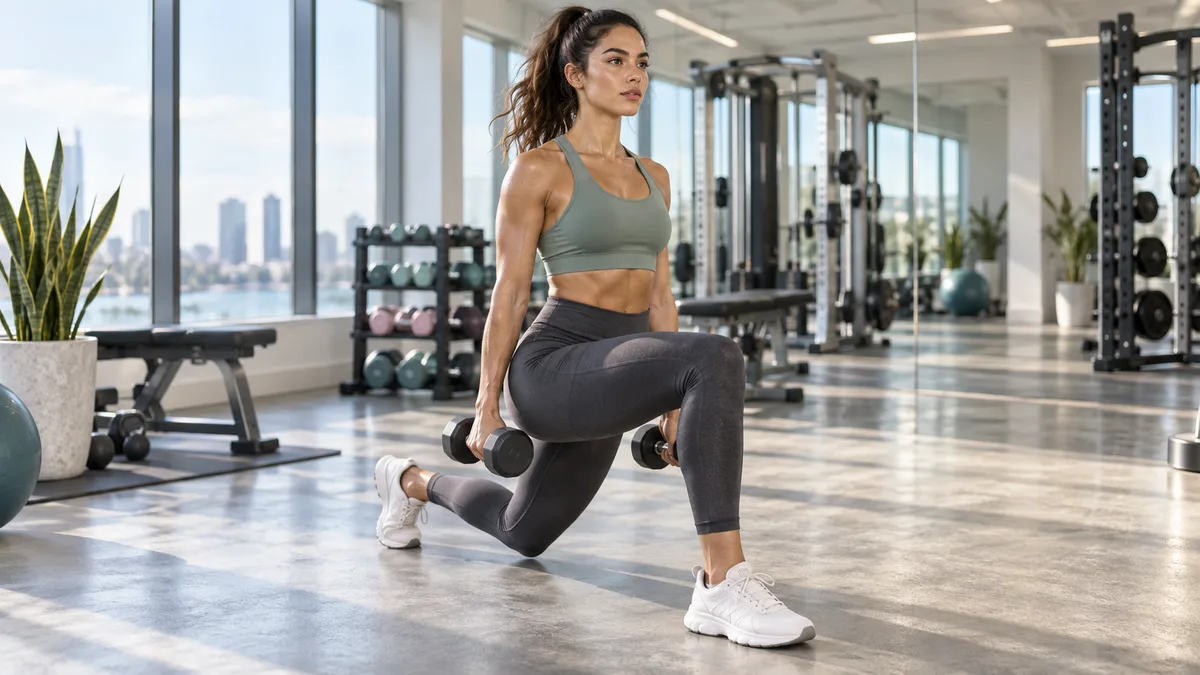
Let me get one thing straight: you don’t need to squat 200 pounds to get the legs you want. If you’ve ever scrolled through fitness content and felt overwhelmed by programs promising “massive gains” when all you really want is lean, defined legs, you’re not alone. Not even close.
I spent years doing the wrong kind of leg training for my goals. Heavy, low-rep powerlifting sets that left me waddling for days but never gave me that toned, athletic look I was after. Sound familiar? The truth is, building lean legs as a woman requires a completely different strategy than chasing raw strength or size.
This guide breaks down exactly how to train your legs at the gym for definition, shape, and muscle tone without accidentally turning yourself into a powerlifter. We’re talking smart exercise selection, the right rep ranges, and a routine you can stick with long term.
Why women won’t “bulk up” from leg training (but still worry about it)
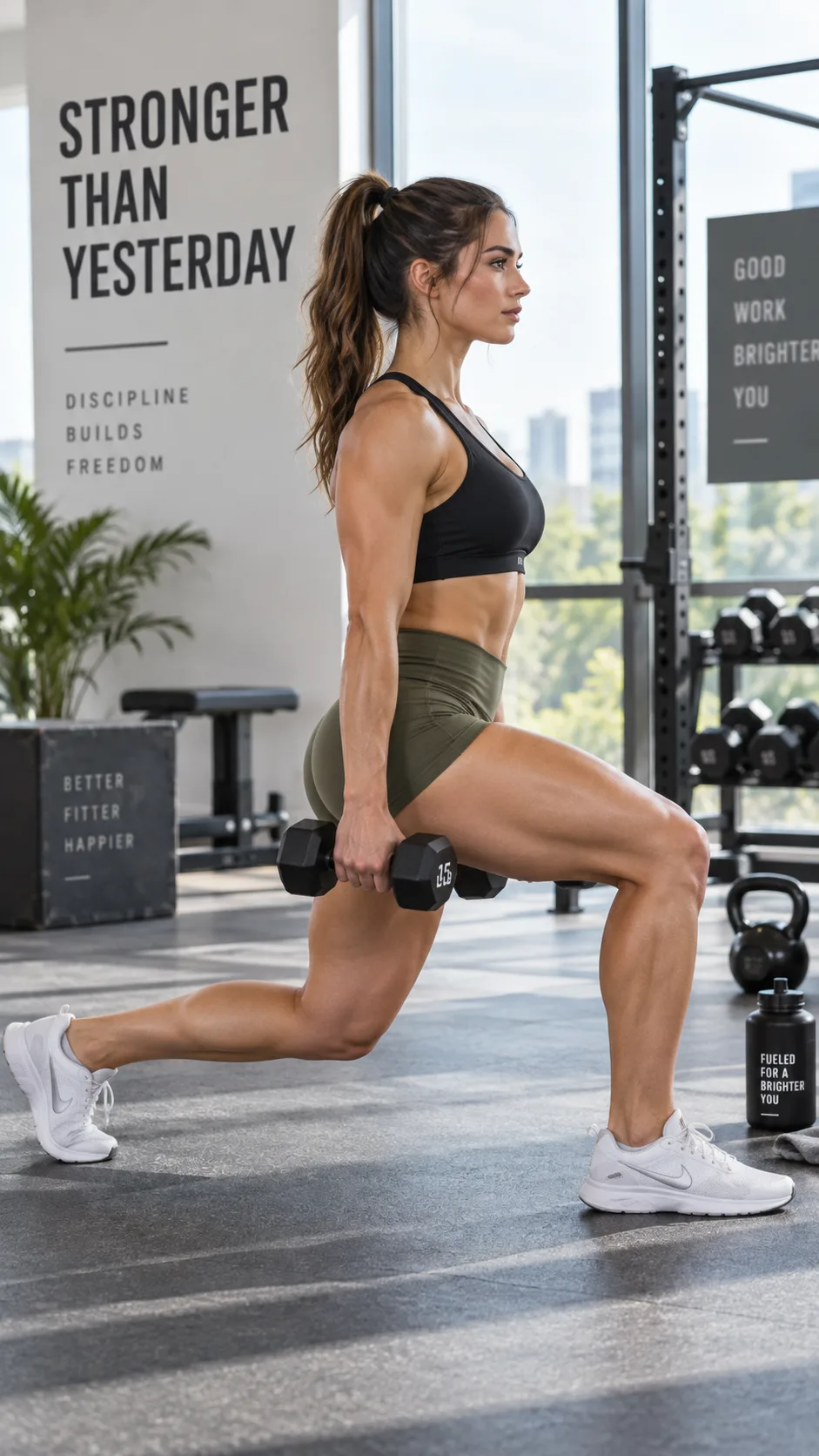
Can we address the elephant in the weight room? The fear of getting bulky is the single biggest myth holding women back from effective leg training. Women produce roughly 15 to 20 times less testosterone than men, according to research published in the Journal of Applied Physiology. That hormone is the primary driver of significant muscle hypertrophy.
So why do some women feel like their legs get “bigger” when they start training? Usually it comes down to one of two things: temporary muscle inflammation (your muscles hold water after a tough workout) or they’re building muscle underneath a layer of body fat that hasn’t shifted yet. Neither means you’re bulking up.
The women you see with truly massive, bodybuilder-level legs? They spent YEARS pursuing that look on purpose, often with extremely high training volumes, specific nutrition protocols, and sometimes pharmaceutical assistance. You’re not going to accidentally end up there. I promise.
The lean legs training philosophy: what works
This is the approach that finally clicked for me after years of trial and error. Lean, defined legs come from a combination of moderate resistance, higher rep ranges, controlled tempo, and strategic exercise selection. It’s not complicated, but it does require you to train differently than someone chasing a one-rep max.
The core principles
- Moderate weight, higher reps (12-20 range): This builds muscular endurance and tone without maximizing hypertrophy. You should feel the burn, but you shouldn’t be grinding through every single rep.
- Time under tension matters more than load: Slow down your reps. A 3-second lowering phase forces your muscles to work harder with less weight. Your ego might take a hit, but your legs will thank you.
- Unilateral work is your best friend: Single-leg exercises like lunges, split squats, and single-leg presses build balanced, proportionate legs and engage more stabilizer muscles.
- Don’t skip the posterior chain: Hamstrings and glutes create that long, lean leg line. Quad-dominant training alone gives you a disproportionate look.
- Include plyometrics and bodyweight finishers: These create athletic definition that pure weight training can’t replicate.
The lean legs gym workout: your complete routine
This workout targets every major muscle group in your lower body while keeping the focus on definition and shape over size. Perform it twice per week with at least 48 hours between sessions. Pair it with an upper body workout plan on alternate days for a balanced weekly split.
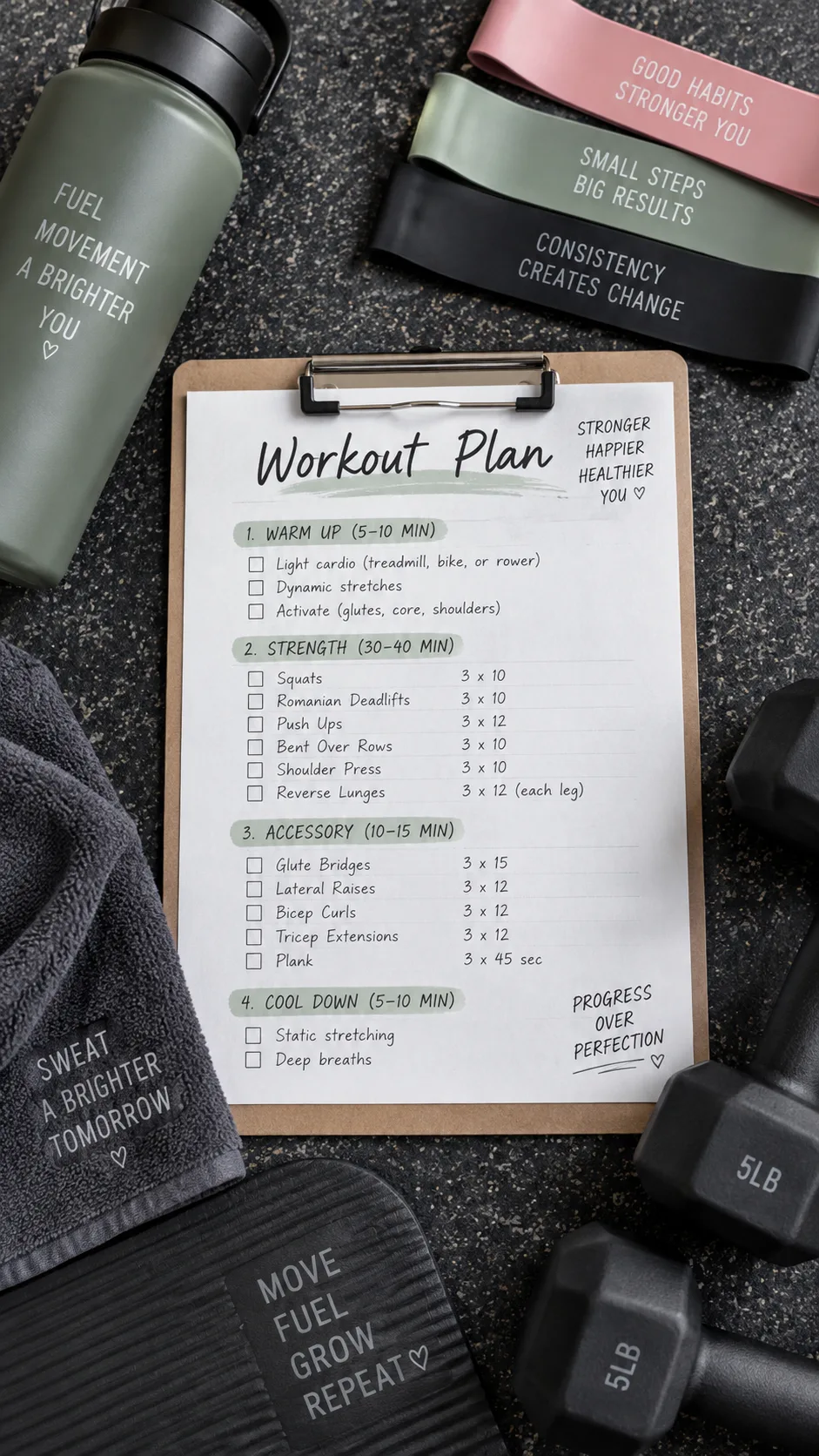
Warm-up (5-7 minutes)
Don’t skip this. Ever. Cold muscles don’t respond well to training, and you’re setting yourself up for knee and hip issues down the road.
- 5 minutes on the bike or incline treadmill walk (get blood flowing to your legs)
- 20 bodyweight squats with a 2-second pause at the bottom
- 10 lateral band walks per side
- 10 leg swings per side (front to back and side to side)
Exercise 1: Goblet squats, 4 sets x 15 reps
Why goblet squats instead of barbell back squats? Because they keep you upright, reduce spinal loading, and let you focus entirely on your quads and glutes without your lower back screaming at you. Hold a single dumbbell or kettlebell at chest height.
Cue: Lower yourself for 3 full seconds, pause for 1 second at the bottom, then drive up explosively. Keep your weight in your heels and push your knees out over your toes. Rest 60 seconds between sets.
Exercise 2: Walking lunges, 3 sets x 12 reps per leg
Walking lunges are arguably the single best exercise for lean legs. They hit your quads, glutes, and hamstrings while demanding balance and coordination. Use dumbbells at your sides. Start with 10-15 pounds and work up from there.
Cue: Take long strides to emphasize your glutes and hamstrings. Short, choppy steps shift all the work to your quads. Keep your torso tall and avoid leaning forward. Rest 60-90 seconds between sets.
Exercise 3: Romanian deadlifts (RDLs), 4 sets x 12 reps
This is your primary hamstring and glute builder. RDLs create that beautiful definition on the back of your legs that makes everything look longer and leaner. Use a barbell or dumbbells.
Cue: Hinge at your hips, not your lower back. Push your butt BACK like you’re closing a car door with it. You should feel a deep stretch in your hamstrings at the bottom. Squeeze your glutes hard at the top to lock out. Rest 60 seconds between sets.
Exercise 4: Leg press (narrow stance, high foot placement), 3 sets x 15 reps
This is where exercise selection gets strategic. A high foot placement on the leg press shifts the emphasis to your glutes and hamstrings rather than your quads. A narrow stance also engages your outer glutes. This combination creates shape without adding significant quad mass.
Cue: Use a weight that challenges you by rep 12 but lets you complete all 15 with good form. Lower the platform slowly (3 seconds down) and press through your heels. Don’t lock your knees at the top. Rest 60 seconds between sets.
Exercise 5: Bulgarian split squats, 3 sets x 10 reps per leg
I won’t pretend these are fun. Bulgarian split squats are genuinely uncomfortable, and anyone who says they enjoy them is lying to you. But they build incredible single-leg strength, improve your balance, and sculpt your quads and glutes like nothing else.
Cue: Elevate your back foot on a bench. Keep your front shin as vertical as possible. Lower until your back knee nearly touches the floor. Hold dumbbells at your sides or go bodyweight until you’ve mastered the balance. Rest 60-90 seconds between sets.
Exercise 6: Cable pull-throughs, 3 sets x 15 reps
An underrated gem for your glutes and hamstrings. Cable pull-throughs teach you the hip hinge pattern perfectly and keep constant tension on your posterior chain throughout the entire movement. They’re also much easier on your lower back than deadlift variations.
Cue: Face away from a low cable with a rope attachment between your legs. Hinge forward at the hips, then squeeze your glutes to drive your hips forward. At the top, your body should form a straight line. Rest 45-60 seconds between sets.
Exercise 7: Calf raises (standing), 4 sets x 20 reps
Calves often get neglected, but defined calves complete the lean leg look. Higher reps work best here because your calves are endurance muscles. They carry you around all day, so they need volume to respond.
Cue: Full range of motion is everything. Lower your heels below the platform for a deep stretch, then rise up on your toes as high as possible. Pause at the top for 1 second. Rest 45 seconds between sets.
Finisher: Bodyweight jump squats, 3 sets x 10 reps
End your workout with something explosive. Jump squats recruit fast-twitch muscle fibers and create that athletic, toned look that separates fit legs from just “gym” legs. These also spike your heart rate, turning the last few minutes into a mini cardio session.
Cue: Squat to parallel, then explode upward as high as you can. Land softly with bent knees. If your joints protest, swap these for pulse squats (tiny, continuous half-squats for 30 seconds). Rest 60 seconds between sets.
The nutrition piece you can’t ignore
Here’s the uncomfortable truth nobody wants to hear: you can’t out-train a bad diet when it comes to lean legs. Muscle definition requires your body fat percentage to sit within a range where your muscle shape actually shows through. For most women, that’s somewhere between 18-24%, according to the American Council on Exercise.
You don’t need to starve yourself or follow some extreme elimination diet. Focus on eating enough protein (0.7-1g per pound of bodyweight), filling half your plate with vegetables, and maintaining a slight caloric deficit if fat loss is part of your goal. That’s it. No magic foods, no detox teas, no nonsense.
One more thing: if you’re already at a healthy body fat percentage and just want more definition, you might need to eat MORE, not less. Under-eating while training hard leads to flat, depleted-looking muscles. Your body needs fuel to build and maintain the lean muscle that creates definition.
Cardio: how much is enough (and how much is too much)?
Ever wondered why marathon runners don’t usually have the most defined legs despite moving them for hours? Excessive steady-state cardio can work against your lean legs goals by promoting muscle breakdown and elevating cortisol levels.
The sweet spot for most women chasing lean, defined legs looks like this:
- 2-3 sessions of 20-30 minute HIIT or interval training per week (sprint intervals, cycling intervals, or stair sprints)
- Daily walking: 7,000-10,000 steps. Walking burns calories without stressing your recovery or eating into your muscle gains.
- Avoid: Hour-long steady-state sessions on the elliptical or treadmill multiple times per week. These eat into your recovery and can make your legs look flat over time.
If you love running and it brings you joy, keep running. Just understand that combining long-distance running with a lean legs weight program requires careful management of your overall training volume and nutrition. Something has to give.
Common mistakes that sabotage your lean legs goals
I’ve made every single one of these mistakes personally, so consider this a shortcut through my years of wasted effort 🙂
- Going too heavy, too often: If you can only manage 5-6 reps, you’re training for strength and size, not definition. Save the heavy work for one session per month at most.
- Ignoring your hamstrings: Quad-dominant leg days create thick-looking thighs without the posterior balance that makes legs look lean. Your hamstring-to-quad training ratio should be close to 1:1.
- Rushing through reps: Speed reps use momentum instead of muscle. Slow down, control every inch of the movement, and actually FEEL the muscle working.
- Skipping single-leg work: Bilateral exercises like squats and leg presses let your dominant leg compensate. Unilateral movements expose and fix imbalances while building better symmetry.
- Not training glutes specifically: Your glutes are part of your legs. Well-developed glutes create visual balance and make your legs look longer and leaner. Consider adding a dedicated glute gym workout to your weekly rotation.
How to progress without adding bulk
Progressive overload doesn’t always mean adding more weight to the bar. When your goal is lean, defined legs, you have several other tools that keep you progressing without pushing toward hypertrophy.
Smart progression strategies
- Add reps before adding weight: Can you do 15 reps comfortably? Go to 18, then 20, before increasing the load.
- Slow down the tempo: Switch from a 3-second eccentric to a 4-second eccentric. This increases time under tension dramatically without touching the weight.
- Reduce rest periods: Cutting your rest from 90 seconds to 60 seconds increases training density and metabolic stress.
- Add pauses: A 2-3 second pause at the bottom of a squat or lunge eliminates the stretch reflex and makes the same weight feel significantly harder.
- Introduce supersets: Pair two exercises back to back (like RDLs into walking lunges) to increase intensity without increasing weight.
These strategies keep your muscles challenged and adapting without pushing them into the kind of growth stimulus that adds significant size. That’s the difference between training smart and just training hard.
Sample weekly split for lean legs and total body definition
Your leg workout doesn’t exist in a vacuum. Here’s how I’d structure a full training week that prioritizes lean legs while keeping your entire body balanced and strong:
- Monday: Lean Legs Workout (the routine above)
- Tuesday: Upper body, chest and back workout for a sculpted upper body
- Wednesday: 20-30 minutes HIIT + core work
- Thursday: Lean Legs Workout (second session)
- Friday: Upper body, shoulders, arms, and accessories
- Saturday: Active recovery, walking, yoga, light cycling
- Sunday: Full rest
This split gives your legs two quality sessions per week, which research from the Journal of Sports Sciences suggests is optimal for muscle development in trained women. More than that, and you risk overtraining. Less, and you’re leaving results on the table.
How long until you see results?
Real talk: you’ll feel a difference within 2-3 weeks. Your legs will feel firmer, your balance will improve, and you’ll notice more muscle engagement during everyday activities like climbing stairs or walking uphill.
Visible definition typically shows up around the 6-8 week mark, assuming your nutrition supports your training. By 12 weeks, you’ll have noticeably leaner, more sculpted legs that look different in everything from jeans to shorts.
Patience matters here. The lean, defined look builds gradually through consistent effort, not through one brutal workout that leaves you unable to sit on a toilet for four days. Consistency beats intensity every single time.

The bottom line
Building lean, defined legs as a woman comes down to training with purpose, not just training hard. Use moderate weights, higher rep ranges, controlled tempos, and smart exercise selection. Prioritize your posterior chain. Eat enough protein. Keep your cardio strategic, not excessive.
This isn’t about doing less work. It’s about doing the RIGHT work. The routine above gives you everything you need to build the lean legs you’re after without accidentally chasing a goal you never wanted in the first place.
Now stop reading and go hit your next leg day. Your future self, the one confidently rocking shorts without a second thought, will seriously thank you for it.
