

You don’t need a gym membership, a rack of dumbbells, or a personal trainer yelling motivational quotes at you to build a strong, toned body. What you need is a smart workout plan, a little floor space, and about 30 to 45 minutes of your time. That’s it. Seriously.
I spent years thinking that “toning” required expensive equipment and complicated programming. Then I tried a structured tone body workout at home, and the results surprised me more than anything I’d achieved at the gym. My arms looked more defined, my legs felt stronger on hikes, and my core stopped feeling like a decorative accessory.
So if you’ve been waiting for permission to skip the commute and train at home, consider this your green light. Here’s exactly how to build head-to-toe strength without leaving your living room.
What does “toning” actually mean? (And why most people get it wrong)
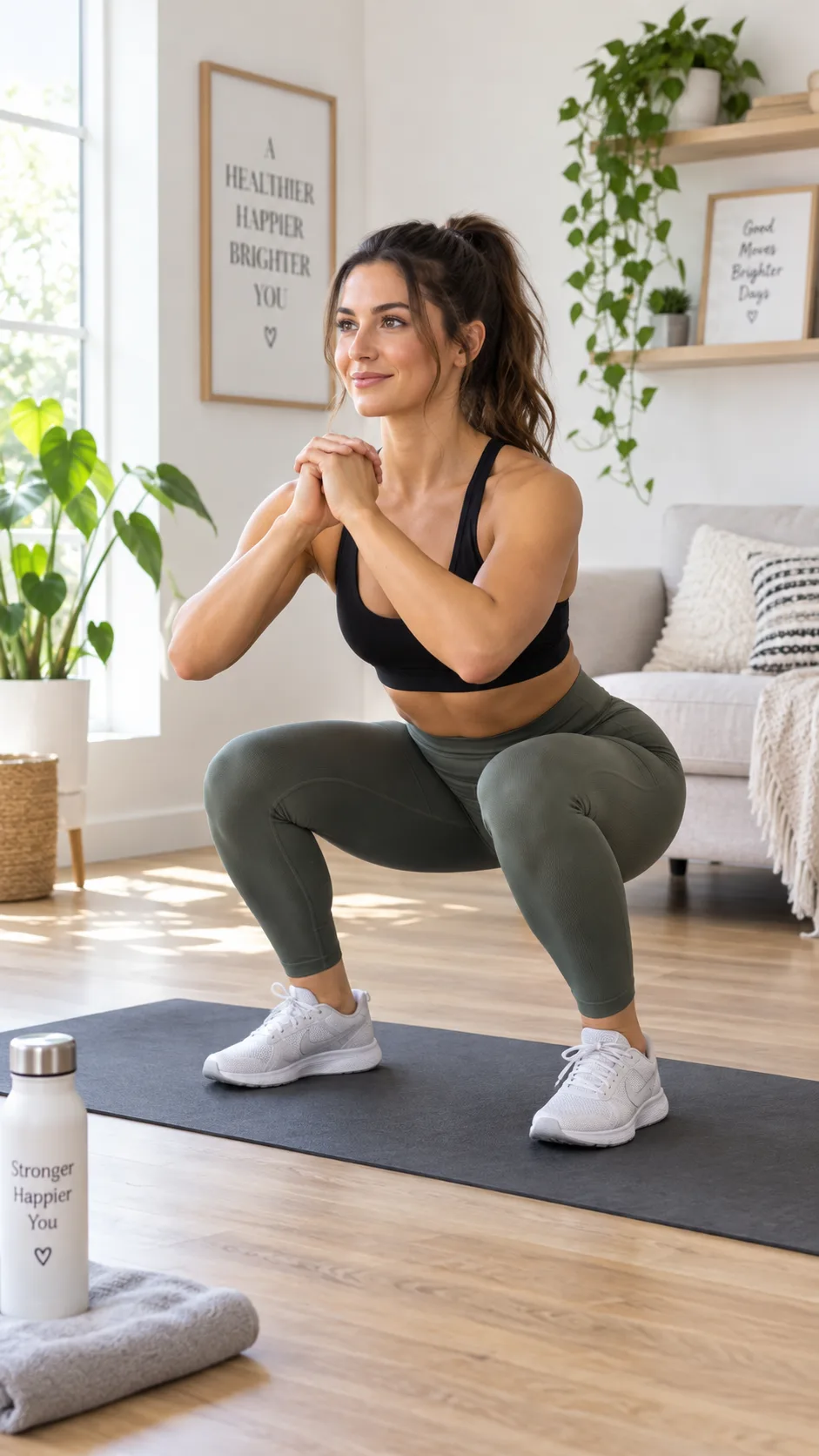
“Toning” isn’t a separate physiological process. When people say they want to “tone up,” what they really mean is they want to build lean muscle while reducing body fat so that muscle becomes visible. There’s no magical “toning zone” on any rep range chart, despite what that Instagram influencer told you.
The American Council on Exercise (ACE) confirms this. Muscle tone refers to the continuous, passive partial contraction of your muscles at rest. When someone looks “toned,” they’ve simply built enough muscle and shed enough fat for definition to show through. No secret sauce required.
So a tone body workout is really just a strength-building routine paired with smart nutrition. The good news? You can absolutely accomplish both goals with bodyweight exercises and minimal equipment at home.
Why home workouts are criminally underrated for building tone
I get it. The gym feels more “legit.” There’s something about rows of machines and clanking plates that makes you feel like you’re doing real work. But here’s what the research says: bodyweight training produces comparable muscle activation to weighted exercises for many movement patterns, especially when you manipulate tempo, volume, and intensity.
A study published in the Journal of Exercise Science & Fitness found that push-up variations can activate the pectorals and triceps at levels similar to bench pressing. Your muscles don’t care whether resistance comes from a barbell or gravity. They respond to tension, period.
The real advantages of training at home
- Zero commute time, so you reclaim 30 to 60 minutes per session that would’ve been spent driving
- No waiting for equipment because your living room floor is always available
- Consistency goes up when you remove barriers that make it easy to skip workouts
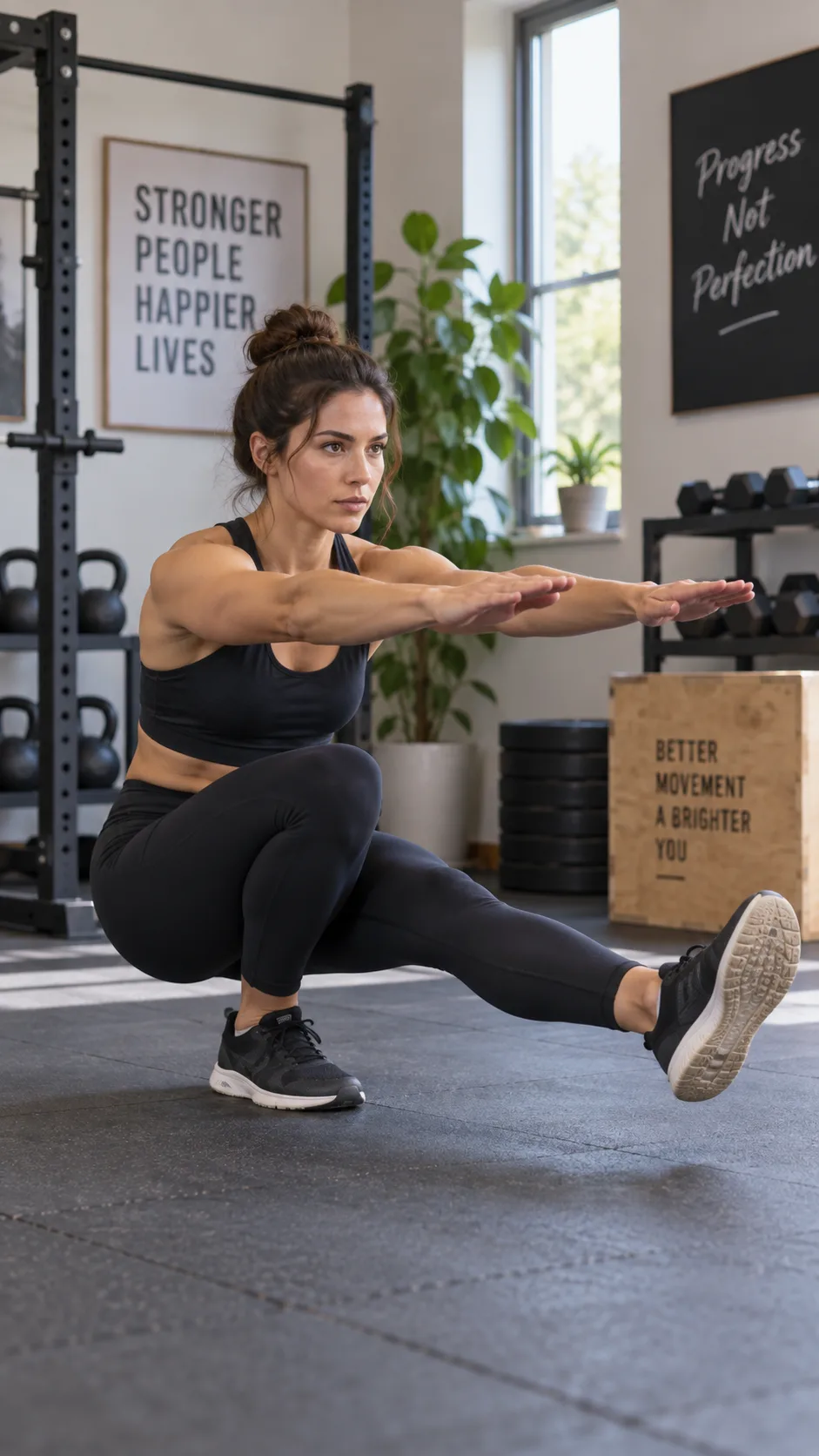
- Privacy to fail so you can try that pistol squat without an audience watching you wobble
- Cost savings since a yoga mat and a pair of resistance bands cost less than one month’s gym dues
If you’re interested in a complete no-equipment approach, check out this full body workout at home with no equipment that covers the fundamentals well.
The complete tone body workout: your head-to-toe home routine
Alright, here’s the actual workout. I designed this routine to hit every major muscle group in a single session, using only bodyweight and optional resistance bands. You’ll perform it 3 to 4 times per week with at least one rest day between sessions.
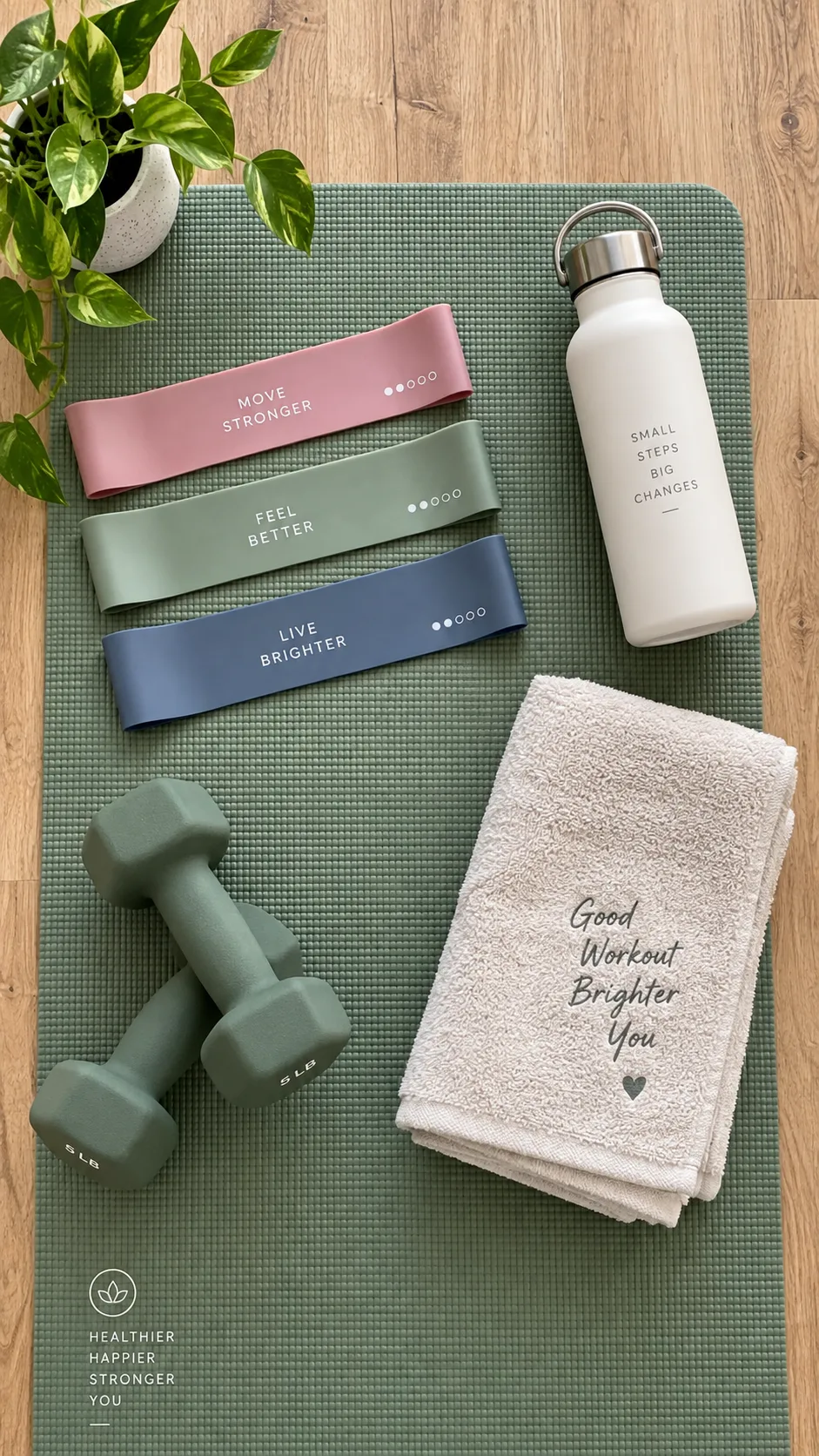
Equipment needed: A yoga mat, a sturdy chair or bench, and optionally a set of resistance bands. That’s your entire home gym.
Warm-up (5 minutes, don’t skip this)
I know, warming up feels like homework before the fun part. But cold muscles perform worse and get injured more easily. Spend five minutes on these movements:
- Arm circles for 30 seconds forward, 30 seconds backward
- Leg swings, 15 per leg, front to back
- Hip circles, 10 per direction
- Bodyweight squats, 15 reps at an easy pace
- Inchworms, 5 reps, walking your hands out to a plank and back
Block 1: Upper body strength and tone
Your upper body responds really well to bodyweight training because push-ups, dips, and rows create serious muscle tension. Ever wondered why gymnasts have such impressive upper bodies despite rarely touching a dumbbell? This is why.
- Push-up variations (3 sets of 10 to 15 reps): Start with standard push-ups. If those feel too easy, elevate your feet on a chair. Too hard? Drop to your knees. No shame in that game.
- Chair dips (3 sets of 12 reps): Place your hands on a sturdy chair behind you, lower your body until your elbows hit 90 degrees, then press back up. Your triceps will hate you. In a good way.
- Resistance band rows (3 sets of 15 reps): Loop a band around a door anchor or sturdy post, grab both ends, and row toward your ribcage. Squeeze your shoulder blades together at the top.
- Diamond push-ups (2 sets of 8 to 12 reps): Form a diamond shape with your hands under your chest. This variation shifts emphasis to your triceps and inner chest.
For a deeper focus on your arms, back, and core, this upper body strength workout guide has some excellent progressions worth exploring.
Block 2: Core activation and stability
A strong core isn’t just about visible abs. It’s the foundation that connects your upper and lower body. Every movement you perform throughout the day relies on core stability. Skip core training, and everything else suffers.
- Dead bugs (3 sets of 10 per side): Lie on your back with arms extended toward the ceiling and knees at 90 degrees. Lower your opposite arm and leg simultaneously while keeping your lower back glued to the floor.
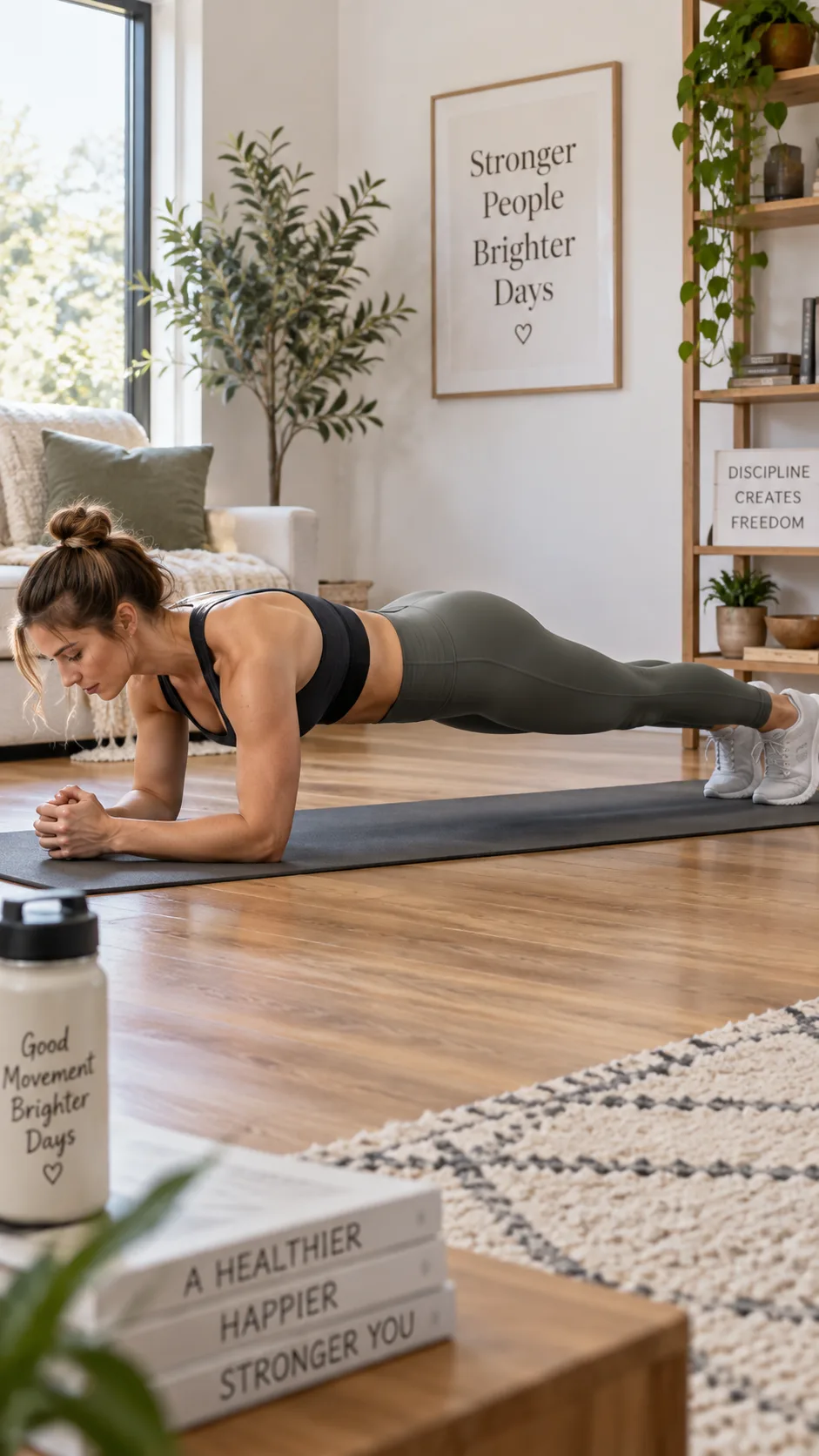
- Plank hold (3 sets of 30 to 60 seconds): Forearms on the ground, body in a straight line from head to heels. If you can hold for over 60 seconds easily, you need a harder variation.
- Bicycle crunches (3 sets of 20 reps): Twist your torso to bring your elbow toward the opposite knee. Control the movement. This isn’t a speed competition.
- Bird dogs (3 sets of 10 per side): From all fours, extend your opposite arm and leg while maintaining a neutral spine. This one looks deceptively easy until you try to do it slowly.
Block 3: Lower body power and definition
Your legs contain the largest muscle groups in your body. Training them torches calories, boosts your metabolism, and builds the kind of functional strength that makes everyday life easier. Plus, strong legs just look good. Can we be honest about that?
- Bulgarian split squats (3 sets of 12 per leg): Place one foot on a chair behind you and squat down on your front leg. This single-leg exercise builds serious quad and glute strength. It also burns like nothing else, so consider yourself warned.
- Glute bridges (3 sets of 15 reps): Lie on your back, feet flat on the floor, and drive your hips toward the ceiling. Squeeze your glutes at the top for a two-second hold. For extra challenge, try single-leg variations.
- Bodyweight lunges (3 sets of 12 per leg): Step forward, lower your back knee toward the ground, then push back to standing. Alternate legs or complete all reps on one side before switching.
- Wall sits (3 sets of 30 to 45 seconds): Slide your back down a wall until your thighs are parallel to the floor. Hold that position. Your quads will start trembling around the 20-second mark, and that’s when the real work begins.
- Calf raises (3 sets of 20 reps): Stand on the edge of a step and rise onto your toes, then lower slowly. Don’t neglect your calves. They deserve love too.
Block 4: Full-body finisher
We finish with compound movements that recruit multiple muscle groups at once. This pushes your heart rate up, burns more calories, and ensures you’ve left nothing in the tank.
- Burpees (3 sets of 8 to 10 reps): Yes, everyone hates them. Yes, they work. Drop to the floor, do a push-up, jump back up. Repeat until you question your life choices.
- Mountain climbers (3 sets of 20 reps): From a high plank, drive your knees toward your chest in an alternating pattern. Keep your hips level. Don’t let them pike up.
- Squat jumps (2 sets of 10 reps): Squat down, explode upward, land softly. These build explosive power and torch your quads.
How to make this tone body workout progressive (so you keep getting results)
Here’s where most people fail with home workouts: they do the same routine at the same intensity forever, then wonder why their body stopped changing after week three. Your muscles adapt. You need to give them a reason to keep growing.
The principle of progressive overload, which means gradually increasing the demand on your muscles, applies whether you’re in a gym or your spare bedroom. Here’s how to apply it at home:
5 ways to progress without adding weight
- Slow down your tempo. Take 3 seconds to lower and 1 second to rise. This increases time under tension dramatically.
- Add pauses. Hold the bottom position of any exercise for 2 to 3 seconds. Your muscles will scream. That’s growth knocking.
- Increase reps or sets. If you completed 3 sets of 12 last week, aim for 3 sets of 15 this week.
- Reduce rest periods. Cut your rest between sets from 60 seconds to 45, then to 30. Your cardiovascular system will thank you later.
- Progress to harder variations. Move from standard push-ups to archer push-ups, from bilateral squats to pistol squats, from regular planks to plank variations with leg lifts.
You don’t need to apply all of these at once. Pick one progression method per week and stick with it. Small, consistent increases beat dramatic jumps every time.
Nutrition: the part nobody wants to hear about (but everyone needs to)
I could write the most perfect tone body workout in history, and it still wouldn’t matter much if your nutrition is working against you. You cannot out-train a bad diet. I’ve tried. Multiple times. It doesn’t work.
Building a toned physique requires two nutritional priorities:
- Adequate protein intake. Aim for 0.7 to 1 gram of protein per pound of bodyweight daily. This gives your muscles the building blocks they need to repair and grow after your workouts.
- A slight caloric deficit or maintenance. If you need to lose body fat to reveal muscle definition, eat slightly below your maintenance calories (200 to 500 calories less). If you’re already lean, eat at maintenance.
The Harvard Health Blog offers solid, evidence-based guidance on daily protein requirements if you want to geek out on the details.
In my experience, the simplest approach is this: eat whole foods, prioritize protein at every meal, drink enough water, and stop overthinking it. Nutrition doesn’t need to be complicated. It just needs to be consistent.
How often should you do this workout?
For most people, performing this tone body workout 3 to 4 times per week hits the sweet spot. That gives you enough training stimulus to build muscle while allowing adequate recovery between sessions.
Here’s a sample weekly schedule that works well:
- Monday: Tone Body Workout
- Tuesday: Active recovery (walking, light yoga, stretching)
- Wednesday: Tone Body Workout
- Thursday: Rest or light cardio
- Friday: Tone Body Workout
- Saturday: Optional fourth session or active recovery
- Sunday: Full rest day
If you’re feeling ambitious and want to explore split training where you focus on different body parts on different days, this full body workout routine guide explains how to structure your week for maximum results without overtraining.
Common mistakes that sabotage your home tone workout
I’ve made every one of these mistakes myself, so please learn from my suffering:
1. Rushing through reps
Speed is the enemy of muscle activation. When you blast through reps at lightning speed, momentum does the work instead of your muscles. Slow down. Control every inch of every rep. Your results will improve immediately.
2. Ignoring your back and posterior chain
People love training what they can see in the mirror: chest, shoulders, quads. But your back, hamstrings, and glutes need equal attention. Neglecting them creates imbalances that lead to poor posture and eventually injury.
3. Never changing the routine
Your body adapts to any stimulus within 4 to 6 weeks. After that window, you need to change something, whether that’s the exercises, the tempo, the volume, or the intensity. Stagnation isn’t a plateau. It’s a choice.
4. Skipping the cool-down
Five minutes of stretching after your workout improves flexibility, reduces soreness, and accelerates recovery. It takes barely any time and pays enormous dividends. Just do it.
5. Expecting overnight results
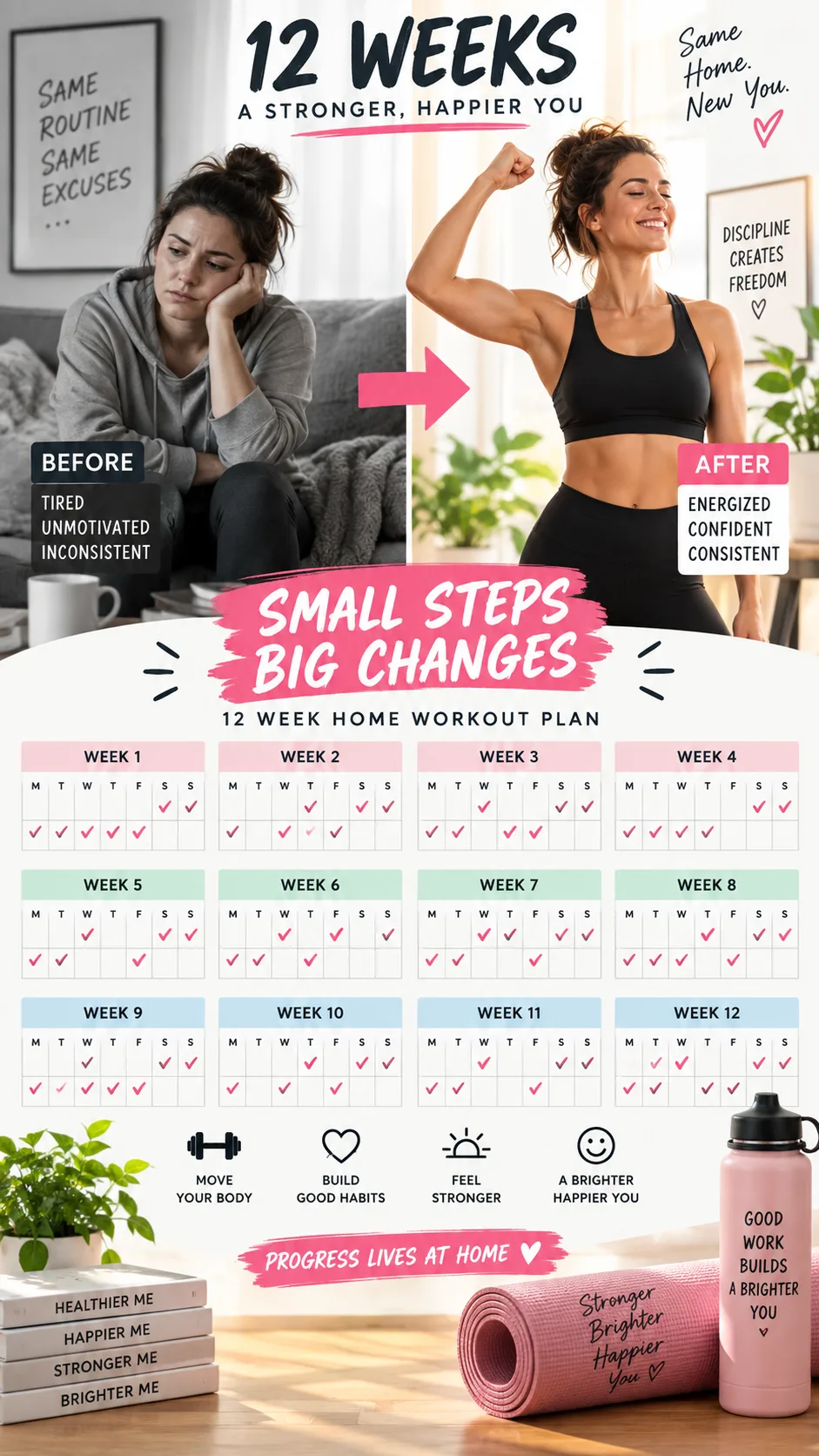
Real, visible changes in muscle tone take 8 to 12 weeks of consistent training. If someone promises you a transformation in two weeks, they’re selling you something. Stay patient, stay consistent, and trust the process.
Optional equipment that levels up your home tone workouts
Bodyweight alone can take you far. But if you want to speed up your progress or add variety, these affordable tools make a real difference:
- Resistance bands ($10 to $30): The single best investment for home training. They add variable resistance to virtually any exercise and take up zero storage space.
- A pair of adjustable dumbbells ($50 to $150): Even light dumbbells (10 to 25 lbs) unlock dozens of exercises for your shoulders, arms, and back.
- A kettlebell ($25 to $60): One kettlebell can serve as your entire gym. Swings, goblet squats, Turkish get-ups. The options are absurd.
- Pull-up bar ($20 to $40): A doorframe pull-up bar transforms your upper body training. Pull-ups and chin-ups build back and bicep strength like nothing else.
- A foam roller ($15 to $25): Not for the workout itself, but for recovery. Rolling out tight muscles after training reduces soreness and keeps you moving well.
You don’t need all of these. Start with bands, and add from there as your budget and ambition allow. Even the most equipped home gym costs less than a year of gym membership fees.
Who is this tone body workout best for?
This routine works for a surprisingly wide range of fitness levels, but it’s especially well suited for:
- Beginners who want a structured starting point without feeling overwhelmed
- Intermediate exercisers who want to maintain or build strength at home
- Busy professionals who can’t justify an hour-long gym commute
- Parents who need flexible workout times (nap time equals rep time)
- Anyone recovering from a gym burnout phase who wants a fresh approach
If you’re more advanced, you can still get tremendous results from this workout by aggressively applying those progressive overload strategies I mentioned earlier. Slowing your tempo to 4 seconds per rep will humble even experienced lifters, trust me.
Your body doesn’t care where you train
A tone body workout doesn’t require fancy equipment, a prestigious gym, or a complicated training split. It requires consistent effort, progressive challenge, and adequate nutrition. You can deliver all three from your living room floor.
Start with the routine outlined above. Perform it three times per week. Focus on controlling every rep. Eat enough protein. Sleep 7 to 8 hours. And give yourself at least 8 to 12 weeks before you judge your results.
The best workout program isn’t the one with the most exotic exercises or the most expensive equipment. It’s the one you do, consistently, week after week. And a home workout you never skip beats a gym session you keep postponing, every single time.
Now stop reading and go do your first set. Your living room is waiting.
