
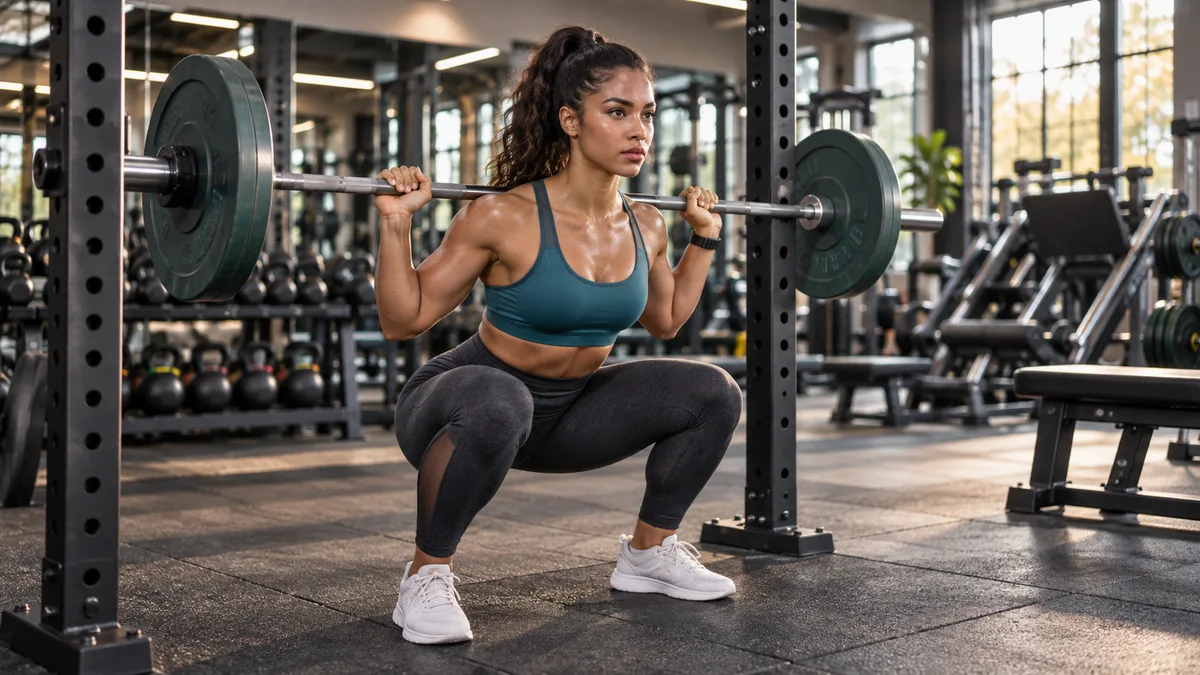
So you’ve finally decided to stop skipping leg day. Good. That’s already half the battle. Whether you walked into the gym, stared at the leg press machine like it owed you money, and quietly retreated to the treadmill, or you’ve just been doing random squats hoping for the best, this guide exists because you deserve an actual plan.
Here’s the thing: a solid leg workout at the gym for women doesn’t need to be complicated, intimidating, or three hours long. You need the right exercises, proper form, and a bit of consistency. That’s genuinely it. No secrets, no magic supplements, no influencer gatekeeping.
I’m going to walk you through a beginner-friendly routine that targets your quads, hamstrings, glutes, and calves, all using equipment you’ll actually find in a standard gym. Ready? Let’s get those legs working.
Why women should prioritize leg workouts at the gym
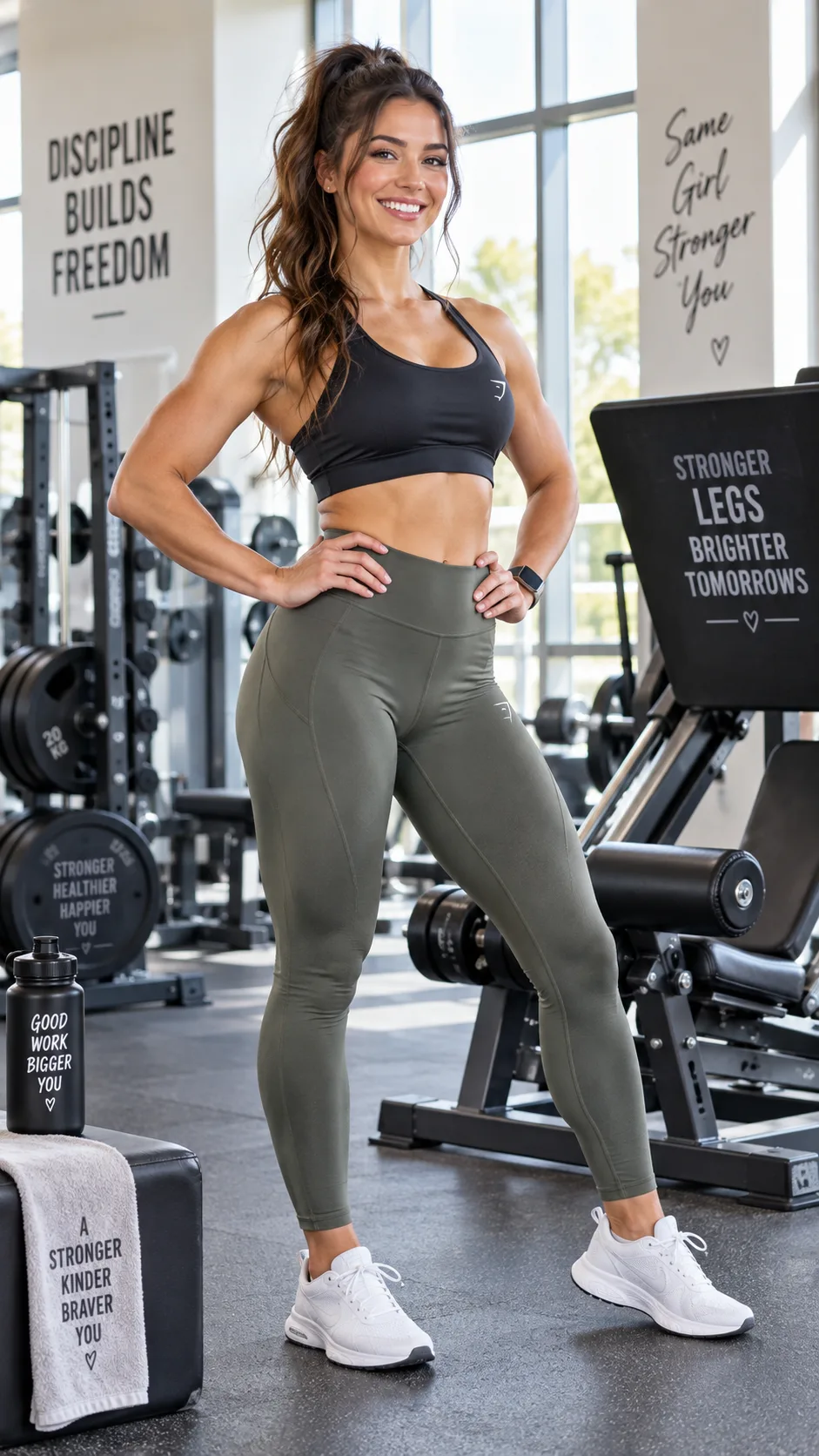
Your legs contain the largest muscle groups in your entire body: your glutes, quadriceps, and hamstrings. Training them doesn’t just build aesthetic curves (though yes, that happens too). It cranks up your metabolism, improves your posture, strengthens your joints, and makes everyday activities feel noticeably easier.
Ever noticed how climbing stairs feels like cardio when you haven’t trained your legs in weeks? That changes fast when you start a consistent leg routine. The American Council on Exercise notes that resistance training for your lower body can increase bone density, reduce injury risk, and improve functional movement patterns. All things that matter whether you’re 25 or 55.
And let’s address the elephant in the room: you will NOT get “bulky” from lifting weights. Women produce roughly 15-20 times less testosterone than men. Building massive legs requires years of intentional hypertrophy training and specific nutrition. What you WILL get? Stronger, more defined, and more confident legs. That’s a win.
Equipment you’ll use (and it’s not scary)
Walk into the weights area and everything looks like a medieval torture device. I get it. But here’s what you’ll actually need for this beginner routine, nothing exotic:
- Barbell and squat rack — your best friend for squats and hip thrusts
- Dumbbells — versatile for lunges, Romanian deadlifts, and goblet squats
- Leg press machine — guided movement, perfect for beginners
- Leg curl machine — isolates your hamstrings beautifully
- Leg extension machine — targets your quads specifically
- Cable machine — great for kickbacks and pull-throughs
- Resistance bands — optional but excellent for glute activation warm-ups
You don’t need to use ALL of these in every session. The routine below picks the most effective combination for beginners. If you’re also curious about the best leg workout for women overall, that guide breaks down more programming options.
The warm-up: don’t you dare skip this
I know, I know. Warming up feels like a waste of time when you’re pumped and ready to go. But walking in cold and immediately loading a barbell on your back? That’s a fast track to a pulled hamstring and a very boring few weeks on the couch.
5-minute dynamic warm-up
- Walking lunges (bodyweight) — 10 per leg, focus on depth and control
- Leg swings (front to back) — 15 per leg, hold onto something for balance
- Lateral leg swings — 15 per leg, opens up your hip flexors
- Bodyweight squats — 15 reps, full range of motion
- Glute bridges on the floor — 15 reps, squeeze at the top for 2 seconds
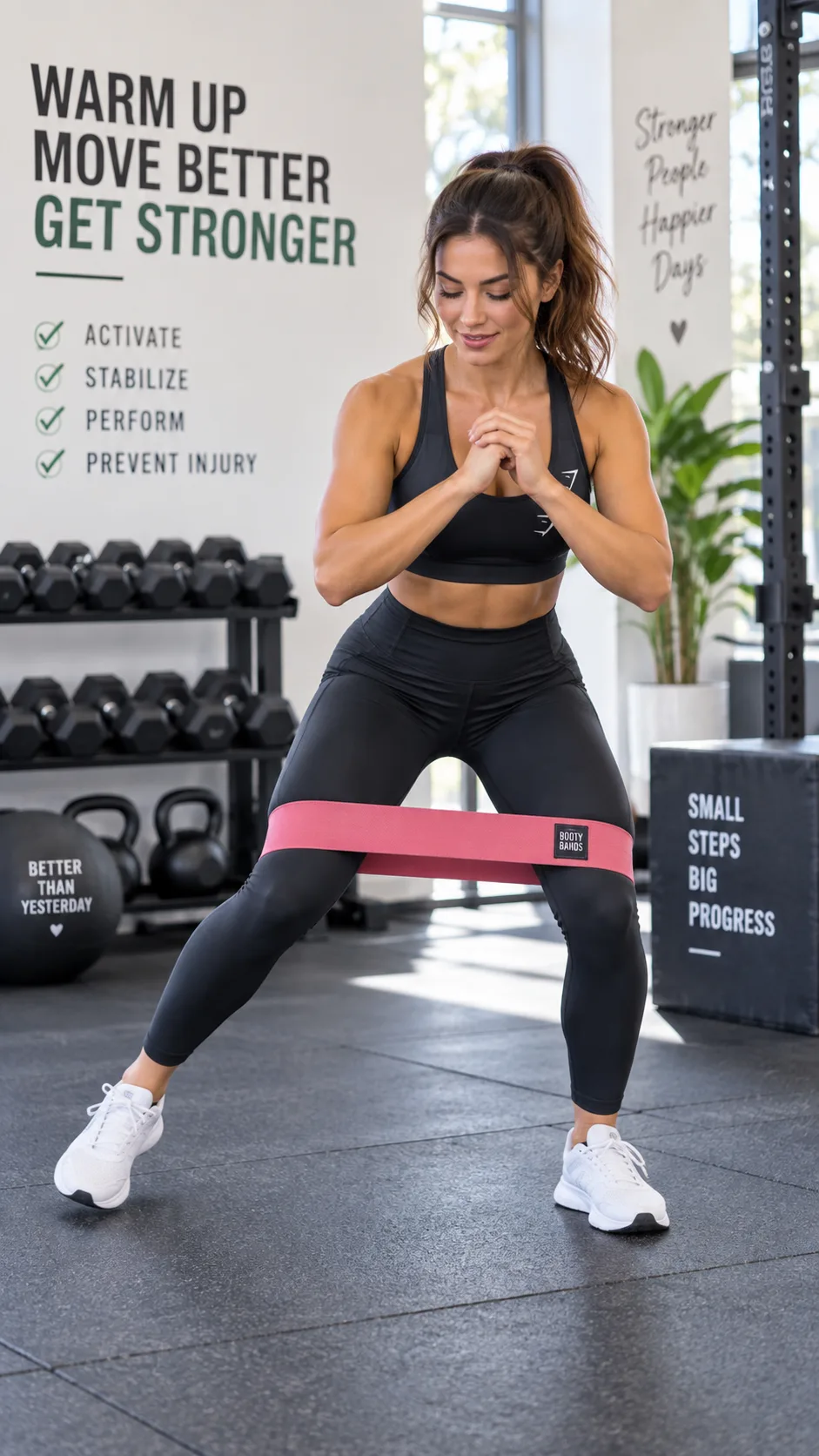
- Banded lateral walks — 10 steps each direction (if you have a resistance band)
This takes five minutes, tops. It primes your muscles, lubricates your joints, and activates your glutes so they actually fire during the workout instead of letting your quads do all the work. Your glutes are notorious for “falling asleep”, especially if you sit at a desk all day. Wake them up first.
The complete beginner leg workout routine
Here’s your full routine. Aim for 2 leg sessions per week with at least 48 hours of rest between them. Each session should take about 45-55 minutes including your warm-up. Rest 60-90 seconds between sets.
Exercise 1: Goblet squat, 3 sets x 12 reps
Why start here instead of barbell back squats? Because the goblet squat teaches you proper squat mechanics without the complexity of balancing a barbell. Hold a dumbbell vertically at your chest, feet shoulder-width apart, toes slightly turned out. Sit your hips back and down like you’re lowering into a chair.
Form cue: Push your knees out over your toes and keep your chest proud. If your heels lift off the ground, your ankle mobility needs work. Try placing small weight plates under your heels temporarily. Go as deep as comfortable while maintaining a flat back.
Start with a 15-20 lb dumbbell and increase from there. The goblet squat absolutely hammers your quads, glutes, and core at the same time.
Exercise 2: Leg press, 3 sets x 12 reps
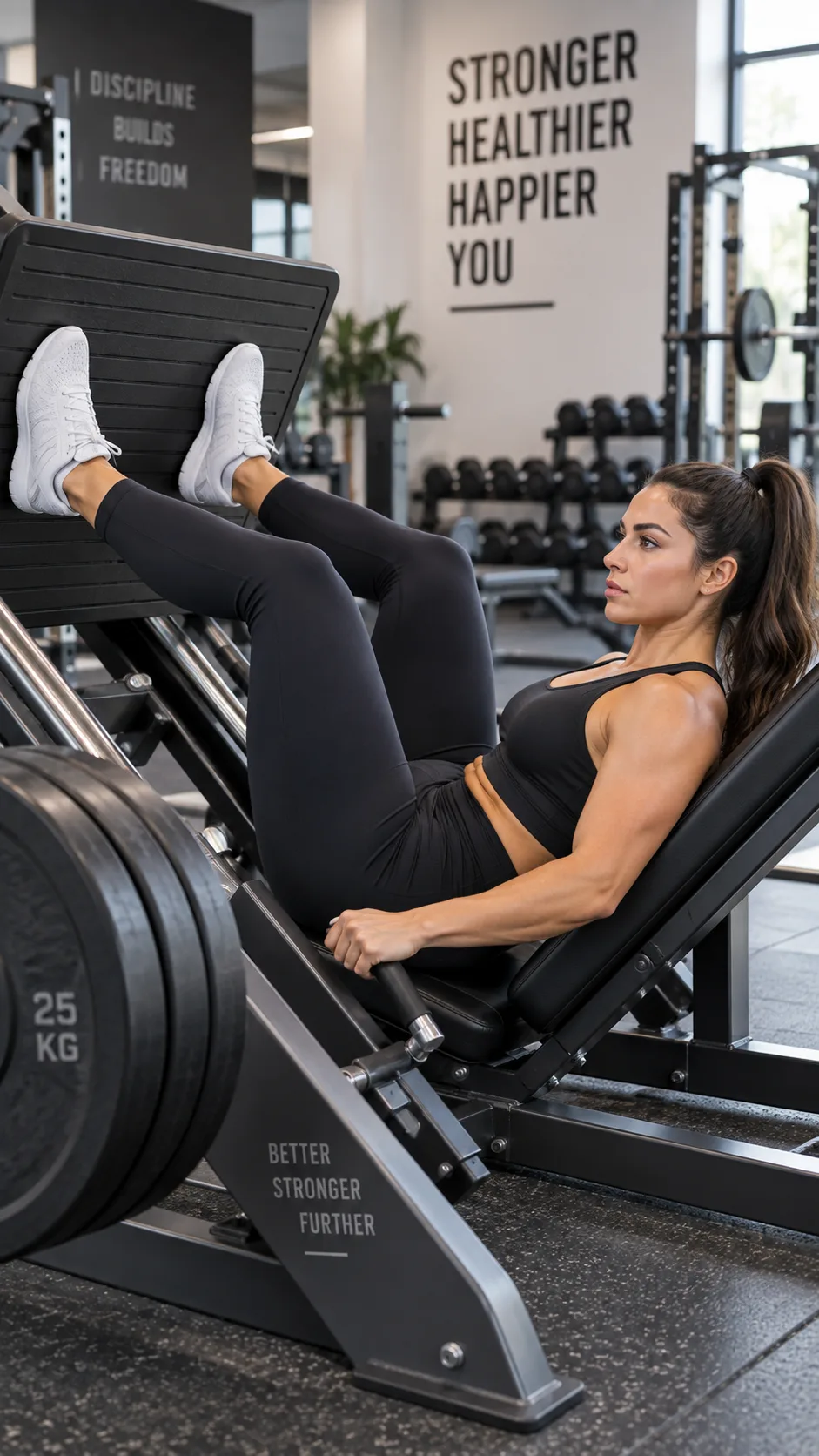
The leg press machine is a beginner’s secret weapon. It removes the balance component entirely and lets you focus purely on pushing weight with your legs. Sit in the machine, place your feet shoulder-width apart on the platform, and press upward.
Foot placement matters here. Feet higher on the platform means more hamstring and glute emphasis. Feet lower means more quad engagement. For a balanced approach, keep them right in the middle. Never lock your knees at the top. Keep a slight bend to protect your joints.
Start lighter than you think you need. Seriously. Ego lifting on the leg press is how knee injuries happen. You can always add weight next week.
Exercise 3: Romanian deadlift (RDL), 3 sets x 10 reps
If I could only recommend ONE exercise for women wanting stronger hamstrings and glutes, it would be the Romanian deadlift. It’s that effective. Hold a pair of dumbbells in front of your thighs, hinge at the hips, and lower the weights along your legs while keeping your back flat and knees slightly bent.
You should feel a deep stretch through your hamstrings as you lower. The moment you feel that stretch (usually around mid-shin level) drive your hips forward to stand back up and squeeze your glutes at the top. That’s one rep.
This exercise also strengthens your lower back and improves your posterior chain, basically everything along the back of your body. Start with 10-15 lb dumbbells and focus relentlessly on form before adding weight. The Stronger By Science guide on RDLs offers an excellent technical breakdown if you want to geek out on the biomechanics.
Exercise 4: Walking lunges, 3 sets x 10 per leg
Walking lunges build single-leg strength, balance, and coordination, things that standard bilateral exercises like squats can’t fully address. Grab a pair of dumbbells, step forward into a deep lunge, push off your front foot, and step directly into the next lunge.
The biggest mistake I see? Taking tiny baby steps. Take a GENEROUS stride so your front knee stays above your ankle, not shooting past your toes. Your back knee should kiss the ground (or get close) on every rep.
If space is limited in your gym, stationary lunges work perfectly fine. Step forward and back to the same spot. These will burn. Embrace it.
Exercise 5: Leg curl machine, 3 sets x 12 reps
Your hamstrings are the unsung heroes of your lower body, and most women under-train them dramatically. The seated or lying leg curl machine isolates them perfectly. Adjust the pad so it sits just above your ankles, and curl your heels toward your glutes in a controlled motion.
Slow the eccentric (lowering) phase down. Take 2-3 seconds to lower the weight back to the starting position. This “negative” portion of the rep actually generates more muscle-building stimulus than the curl itself. Don’t let the weight stack crash down between reps. Control it the entire time.
Exercise 6: Hip thrust, 3 sets x 12 reps
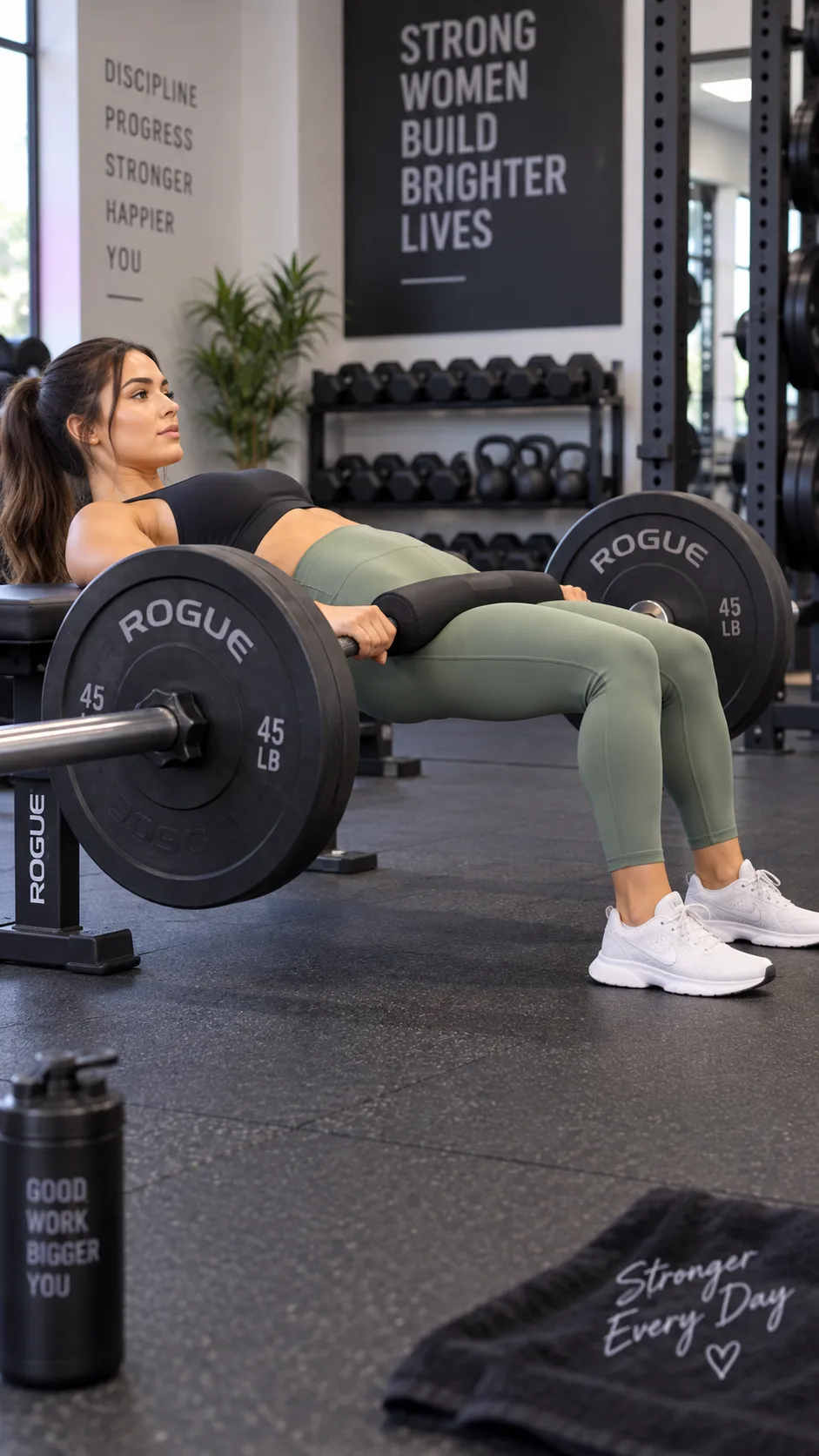
The hip thrust is the single best glute-building exercise according to research by Dr. Bret Contreras, widely known as “The Glute Guy.” Sit on the floor with your upper back resting against a bench, roll a barbell over your hips (use a pad for comfort), and drive your hips upward until your body forms a straight line from shoulders to knees.
Squeeze your glutes HARD at the top and hold for a full second. Your chin should tuck slightly. Don’t hyperextend your neck by looking at the ceiling. If a barbell feels intimidating, start with just a heavy dumbbell across your hips. It works just as well.
This exercise single-handedly transforms your glutes when done consistently. Not an exaggeration, the EMG data backs it up. If you want a comprehensive program that pairs glutes with legs well, check out this leg and glute workout gym routine designed specifically for beginners.
Exercise 7: Calf raises, 3 sets x 15 reps
Everyone forgets calves. Don’t be everyone. Stand on a step or the edge of a weight plate with the balls of your feet, let your heels drop below the platform, then push up onto your toes. Hold a dumbbell in one hand for resistance.
Calves respond best to higher rep ranges and slow, controlled movements. Pause at the top for one second, lower for two seconds. Fifteen reps should have them burning. Your calves work hard all day just walking around, so they need extra stimulus to grow.
Full routine summary
Here’s your complete workout at a glance for easy reference at the gym:
- Goblet Squat — 3 x 12
- Leg Press — 3 x 12
- Romanian Deadlift — 3 x 10
- Walking Lunges — 3 x 10 per leg
- Leg Curl Machine — 3 x 12
- Hip Thrust — 3 x 12
- Calf Raises — 3 x 15
Total sets: 21. Total time: approximately 45-55 minutes. Frequency: twice per week. Rest between sets: 60-90 seconds.
How to progress week over week
Here’s where most beginners stall: they do the same weight, same reps, same everything for months and wonder why nothing changes. Progressive overload is non-negotiable. Your muscles adapt quickly, and you need to challenge them consistently to keep seeing results.
The simple progression method
Use the “double progression” approach. Pick a weight that lets you complete all prescribed reps with good form. Once you can complete every set at the top of the rep range (e.g., 12 reps on all 3 sets), increase the weight by the smallest increment available, usually 5 lbs, and work back up to hitting all reps again.
For example: you goblet squat 20 lbs for 3 sets of 12. Next session, try 25 lbs. Maybe you only get 12, 10, and 9. That’s perfectly fine. Stick with 25 lbs until you hit 12 across all three sets, then bump up to 30 lbs.
Track your workouts. Use a simple notes app on your phone. Write down the exercise, weight, and reps for every set. You’d be amazed how motivating it feels to see those numbers creep up week after week. The Journal of Strength and Conditioning Research has confirmed that progressive overload remains the most reliable driver of strength gains across all experience levels.
Common mistakes that sabotage your progress
I’ve watched hundreds of women (and men, let’s be real) make these errors in the gym. Avoid them and you’ll progress faster than 90% of people around you:
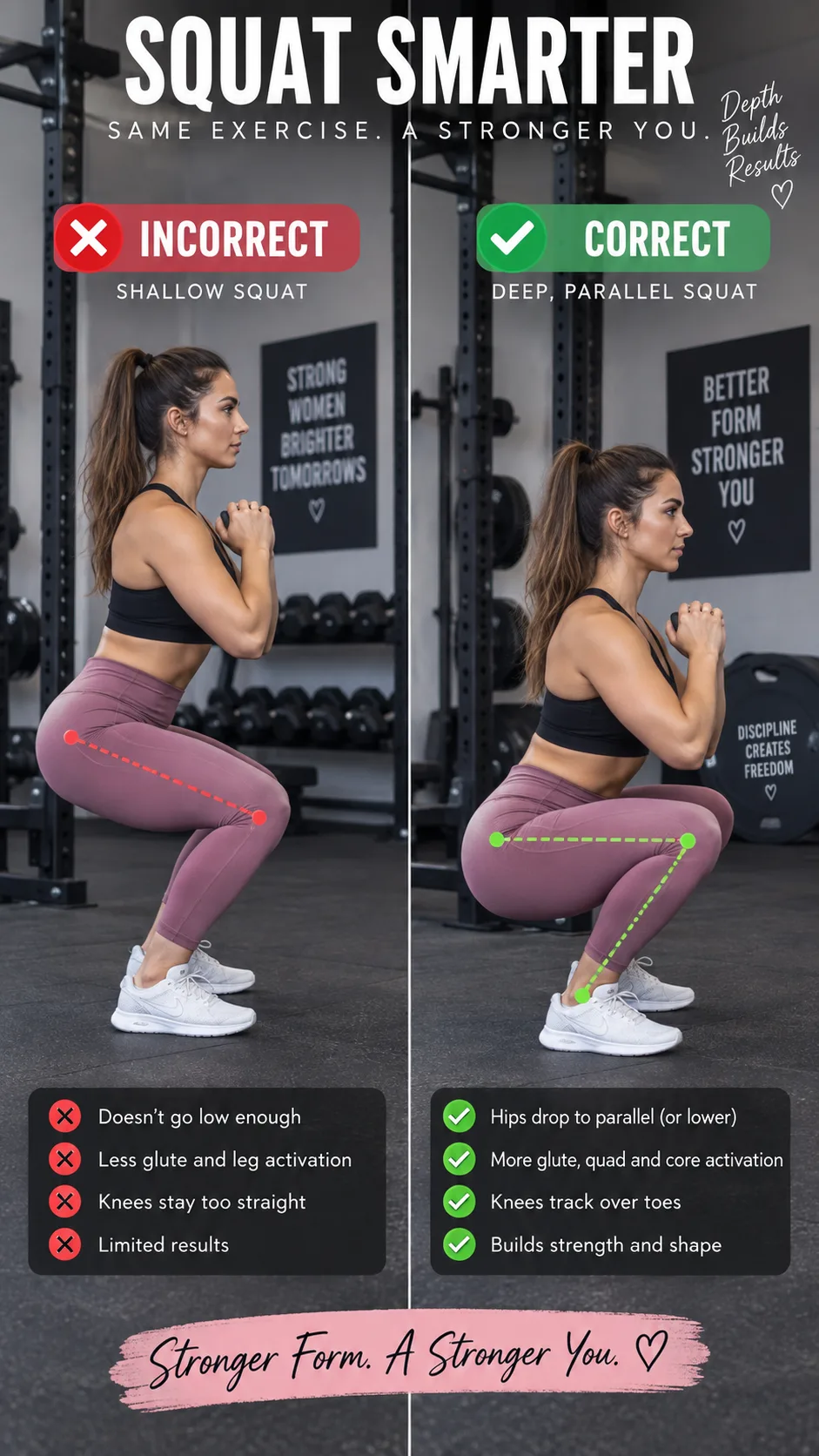
- Not going deep enough on squats — Half-reps produce half-results. Aim for at least parallel (thighs parallel to the floor). Your glutes barely activate above that depth.
- Rushing through reps — If you’re swinging weights around like you’re conducting an orchestra, the weight is too heavy. Control every inch of every rep.
- Skipping hamstring work — Quad-dominant leg days create muscle imbalances that lead to knee pain. Balance your pushing (squats, leg press) with pulling (RDLs, leg curls).
- Not eating enough protein — Your muscles need fuel to rebuild. Aim for 0.7-1 gram of protein per pound of bodyweight daily. That’s roughly 100-140 grams for a 140 lb woman.
- Training legs only once per week — Research consistently shows that hitting each muscle group twice per week produces superior results compared to once. This applies to every muscle group, not just legs.
What about soreness? Is it normal?
After your first leg session, you will probably waddle for two days. That’s called DOMS (Delayed Onset Muscle Soreness), and it peaks roughly 24-48 hours after training. Completely normal, especially in the first couple of weeks.
The good news? DOMS decreases significantly as your body adapts. By week three or four, you’ll barely notice it. Light walking, gentle stretching, and staying hydrated all help reduce soreness between sessions.
One thing to pay attention to, though: sharp, sudden pain during an exercise is NOT normal. That’s your body telling you something’s wrong. Stop immediately, reassess your form, and reduce the weight. There’s a massive difference between the productive burn of hard work and actual pain signaling an injury.
How long until you see results?
Let’s keep expectations honest. You’ll FEEL stronger within 2-3 weeks as your nervous system adapts to the new movements. Visible changes to your legs and glutes typically show up around the 6-8 week mark with consistent training and adequate nutrition.
After 3-6 months of dedicated training, the transformation can be genuinely dramatic. Your legs will look more toned, your glutes will lift and round, and you’ll move through life with noticeably more power and confidence. Is there anything better than taking stairs two at a time without breaking a sweat? I think not.
If you enjoy training at home on your non-gym days, you might also want to try a lower body dumbbell workout to keep the momentum going without needing a full gym setup.
Sample weekly split for beginners
Wondering how this leg routine fits into your overall week? Here’s a practical sample split:
- Monday: Leg Workout A (this routine)
- Tuesday: Upper Body
- Wednesday: Rest or light cardio/yoga
- Thursday: Leg Workout B (same routine, aim to beat last session’s numbers)
- Friday: Upper Body
- Saturday: Active recovery, walking, swimming, or general movement as recommended by the NHS
- Sunday: Full rest
This gives you the optimal training frequency while allowing proper recovery. Remember, your muscles grow during REST, not during the workout itself. Sleep 7-9 hours, eat your protein, drink your water. The basics matter more than any fancy supplement ever will.
Final thoughts: just start
Here’s the most honest advice I can give you: the perfect routine you never do loses to the imperfect routine you show up for consistently. This beginner leg workout gives you everything you need to build serious strength and shape in your legs and glutes, but only if you actually do it.
Print this routine out. Screenshot it. Save it. Walk into the gym with a plan, execute it with intention, and track your progress. You’ll surprise yourself within a few weeks with how strong you actually are.
Your legs carry you through every single day. They deserve your attention, your effort, and some quality time with a squat rack. Now stop reading and go train.
