
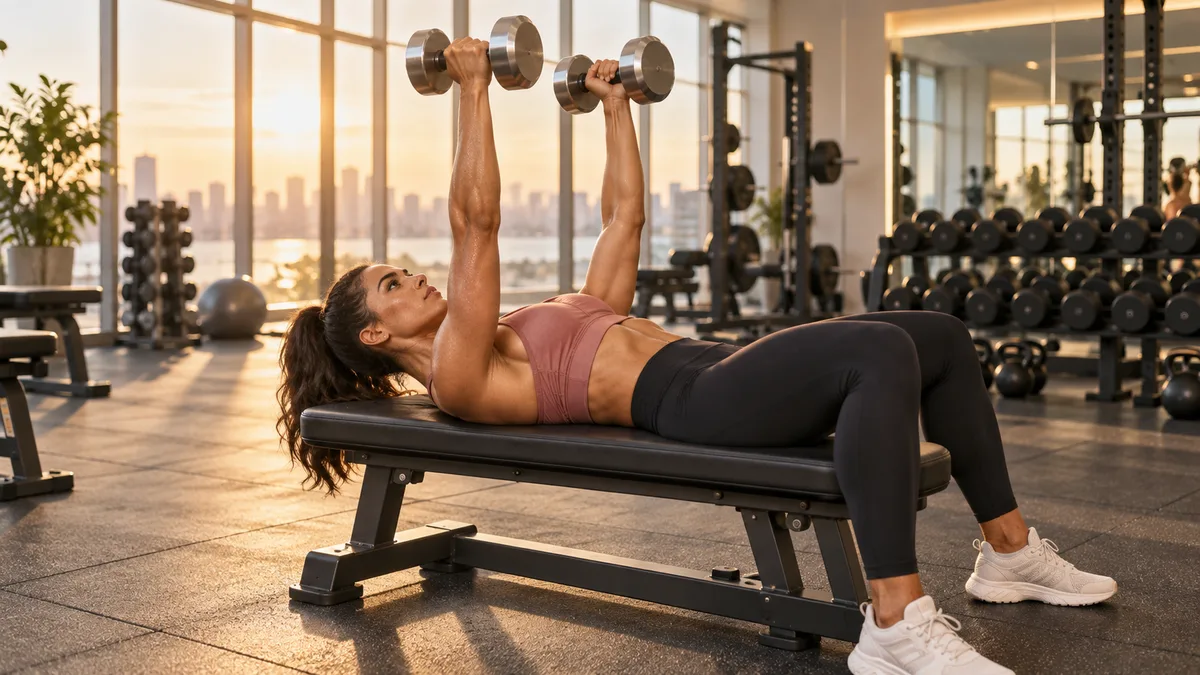
Most women walk into the gym, head straight for the leg press, and completely ignore the upper body section. Sound familiar? You’re not alone, but you’re also leaving a LOT of gains on the table.
Training your chest and back together isn’t reserved for bodybuilders. It’s the fastest route to better posture, a lifted look, and the kind of functional strength that makes everyday life easier. And no, you won’t wake up looking like a linebacker.
This guide breaks down exactly which exercises to do, how to structure your workout, and why training these two muscle groups together works so well.
Why training chest and back together is a power move
Your chest (pectorals) and back (lats, rhomboids, traps) work as opposing muscle groups. When one contracts, the other stretches. This is called an antagonist pairing, and it makes for a brutally efficient workout.
Pairing them means your chest rests while your back works, and vice versa. You get more total volume in less time, and research from the National Academy of Sports Medicine supports that antagonist supersets can significantly cut rest time without sacrificing strength output.
Beyond efficiency, training both sides of your upper body builds balanced muscle development. Skip one and you end up with rounded shoulders and a posture that screams “I spend too much time at a desk.” Train both and you stand taller, move better, and look stronger from every angle.
A quick look at the muscles you’re training
You don’t need a biology degree for this, but knowing what you’re working helps you feel it during the session.
Chest muscles
- Pectoralis major, the main chest muscle, responsible for pushing movements
- Pectoralis minor, which sits underneath and helps with shoulder stability
- Anterior deltoid, the front of the shoulder, assists with pressing
Back muscles
- Latissimus dorsi (lats), the wide back muscles that create that V-taper
- Rhomboids, which sit between your shoulder blades and pull them together
- Trapezius (traps), running from neck to mid-back, controlling shoulder blade movement
- Rear deltoids, the back of the shoulder, essential for posture
The best chest exercises for women
Ever wondered why your chest doesn’t seem to respond no matter how many push-ups you do? It’s usually a form issue or a lack of variety. These moves cover all angles and actually deliver results.
1. Push-up variations
The humble push-up remains one of the most effective chest exercises you can do. It requires zero equipment and builds serious upper body strength when you do it right. Keep your core tight, elbows at about 45 degrees from your torso, and lower your chest to the floor, not just your face.
Once standard push-ups feel easy, progress to incline push-ups (hands elevated) to target the lower chest, or decline push-ups (feet elevated) for the upper chest. Wide-grip push-ups shift more load to the pecs. Mix them up and your chest will thank you.
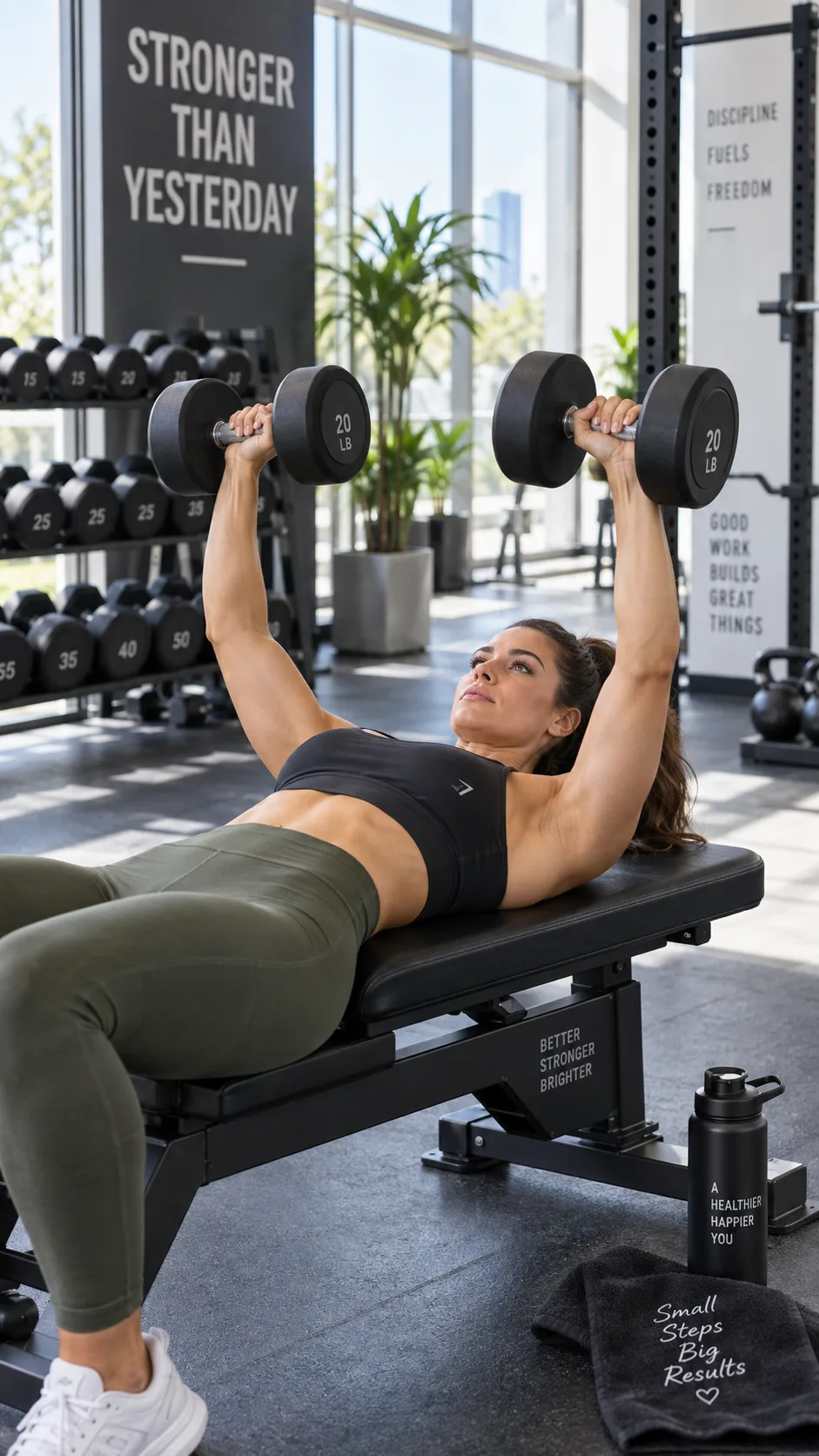
2. Dumbbell flat chest press
This is your bread-and-butter chest builder. Lie on a flat bench, hold dumbbells at chest height with elbows bent at about 90 degrees, then press them straight up until your arms are fully extended. Lower them back with control. Don’t let gravity do the work.
Pro tip: Squeeze your chest at the top of the movement. That deliberate contraction makes a big difference in muscle activation. Use a weight that challenges you for 10-12 reps while still allowing good form.
3. Dumbbell chest fly
The fly targets your chest through a long range of motion, which the press doesn’t fully achieve. Lie on a flat bench with arms extended above your chest, then lower the dumbbells out to the sides in a wide arc, like you’re hugging a giant tree. Bring them back up along the same path.
Keep a slight bend in your elbows throughout. Straight arms put unnecessary stress on your elbow joints. Think of this as a stretch-and-squeeze move rather than a power exercise, so go lighter than you think you need to.
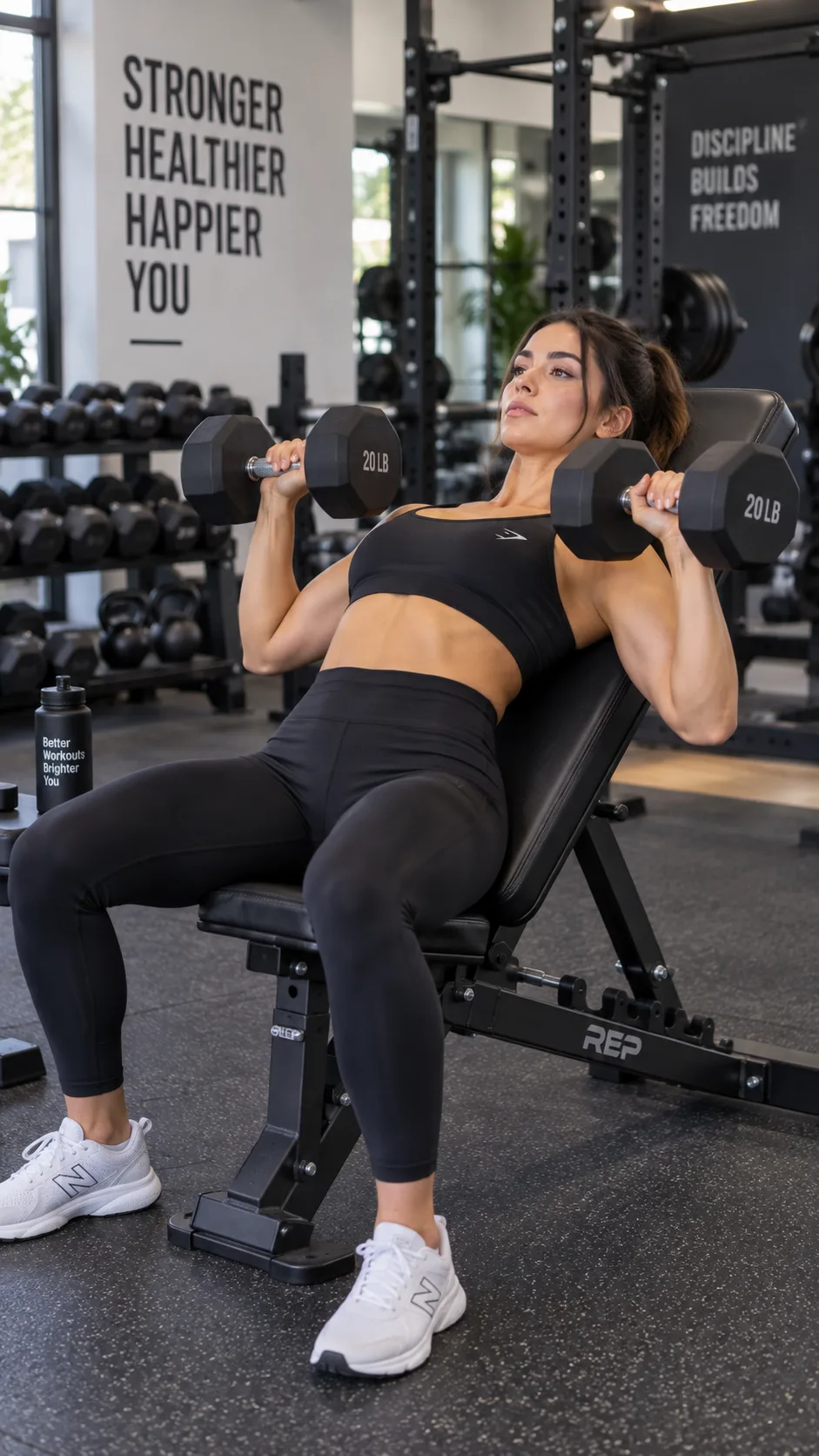
4. Incline dumbbell press
Setting the bench to a 30-45 degree incline shifts the focus to the upper chest and front deltoids. Women often underdevelop this area, which contributes to that slumped-forward posture. The incline press fixes that directly.
The best back exercises for women
A strong back is the unsung hero of a great physique. It protects your spine, improves your posture, and gives your upper body that sculpted, athletic look. Here’s what actually builds it.
1. Bent-over dumbbell row
This move builds the entire back and it’s one of the most functional exercises you can do. Hinge forward at the hips until your torso is nearly parallel to the floor, then row the dumbbells up toward your hips, not your shoulders. Think about driving your elbows back and squeezing your shoulder blades together at the top.
If you want to go deeper on dumbbell back work, check out this Back Workout Women Dumbbell: 7 Moves for a Stronger, Sculpted Upper Back guide. It covers progressions and variations in much more detail.
2. Lat pulldown
The lat pulldown is THE exercise for building wide lats. Sit at the cable machine, grip the bar slightly wider than shoulder width, and pull it down to your collarbone while leaning back slightly. Control the return. Don’t let the bar yank you up.
Most beginners either pull the bar behind their head (not necessary and harder on your neck) or use too much weight and end up pulling with their arms instead of their lats. Lighter weight with a full range of motion beats heavy sloppy reps every time. ACE Fitness has solid form cues if you want a deeper breakdown.
3. Cable or dumbbell face pull
Face pulls are criminally underused in women’s training. They target the rear deltoids and upper traps, the muscles most responsible for pulling your shoulders back and keeping you out of that forward-hunch posture. Set a cable at face height, grip the rope with both hands, and pull it toward your face while flaring your elbows out to the side.
If you sit at a desk all day, face pulls might be the single most important exercise in this entire article. Do them. Every. Week.
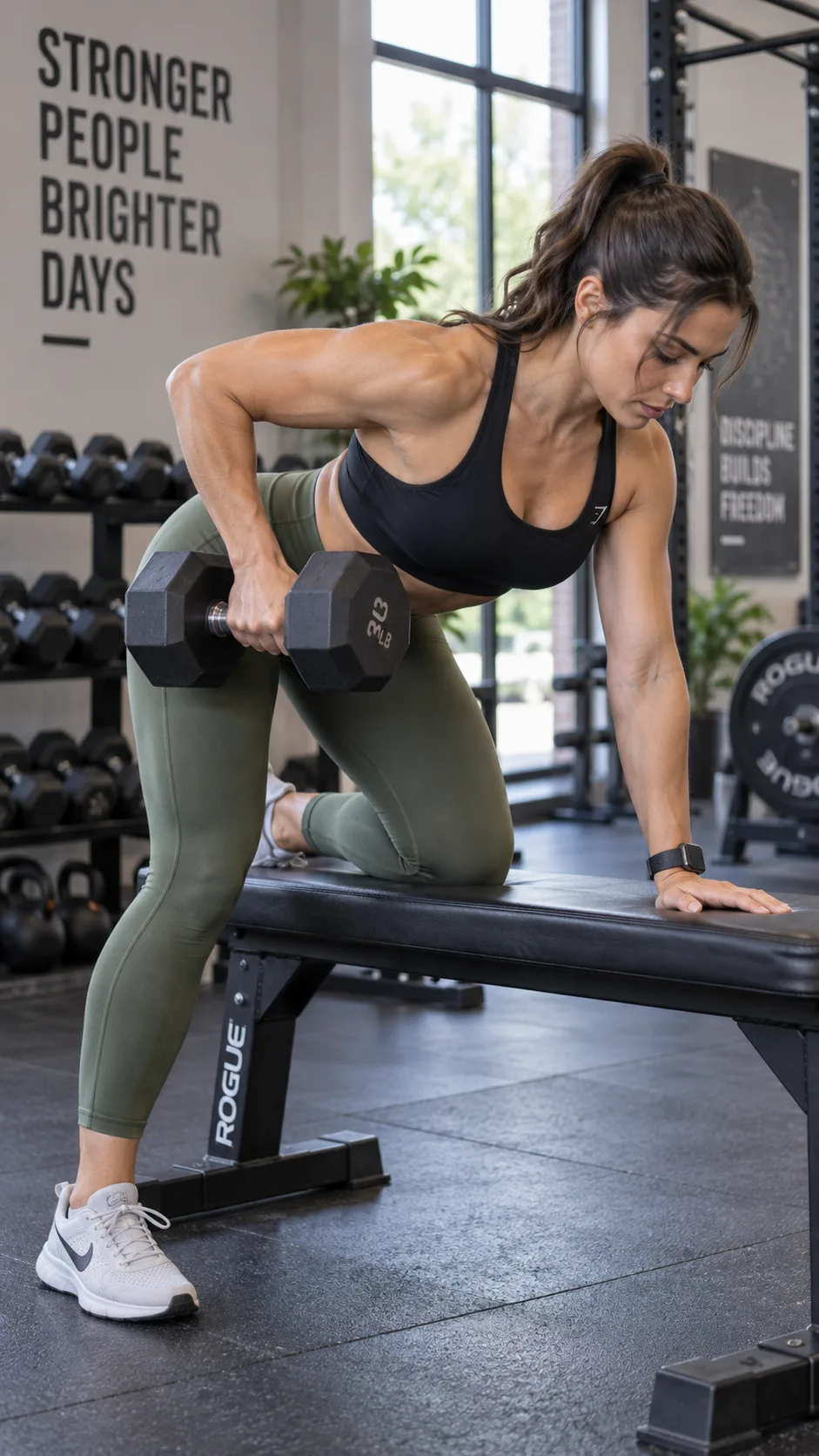
4. Single-arm dumbbell row
Place one knee and the same-side hand on a bench for support, then row a dumbbell with your free arm, pulling your elbow back past your hip. Single-arm rows let you use heavier weight and achieve a greater range of motion than bilateral rows. They also expose and correct side-to-side imbalances.
The full chest and back workout plan
Here’s how to put it all together into a single session. This workout takes about 45-55 minutes and works well 1-2 times per week as part of a broader training program.
Warm-up (5-10 minutes): Arm circles, band pull-aparts, cat-cow stretches, light shoulder rotations.
- Push-up (any variation), 3 sets x 10-15 reps
- Bent-over dumbbell row, 3 sets x 10-12 reps each side
- Incline dumbbell press, 3 sets x 10-12 reps
- Lat pulldown, 3 sets x 10-12 reps
- Dumbbell chest fly, 3 sets x 12-15 reps
- Face pull (cable or band), 3 sets x 15-20 reps
- Single-arm dumbbell row, 2 sets x 12 reps each side
Run exercises 1+2 as a superset, 3+4 as a superset, and 5+6 as a superset. Rest 60-90 seconds between each pairing. Exercise 7 finishes the session solo.
How to structure your weekly training around this workout
Where does a chest and back day fit in your week? That depends on what else you’re training, but here’s a framework that works for most women.
- 2-3 days per week upper body, alternating between this chest/back workout and an arm or shoulder focus
- 2 days per week lower body, and if you want a solid leg plan to pair with this, Good Leg Workouts at the Gym has you covered
- 1 active recovery day for walking, yoga, or light stretching
- 1-2 full rest days because muscle grows when you rest, not just when you train
If you want a more comprehensive upper body approach beyond just chest and back, the Full Upper Body Workout at the Gym plan gives you a complete blueprint that layers in arms and shoulders.
Progressive overload: the thing everyone ignores
Here’s what most people miss. Doing the same workout for months won’t get you anywhere new. Progressive overload means you consistently increase the challenge on your muscles over time. Without it, your body adapts and stops changing.
You don’t need to add weight every single session. Progressive overload includes:
- Adding reps within the same rep range (8 to 10 reps)
- Adding sets over time (3 to 4 sets)
- Increasing weight when you can complete all reps with good form
- Reducing rest time between sets
- Slowing down the eccentric (lowering) phase of the movement
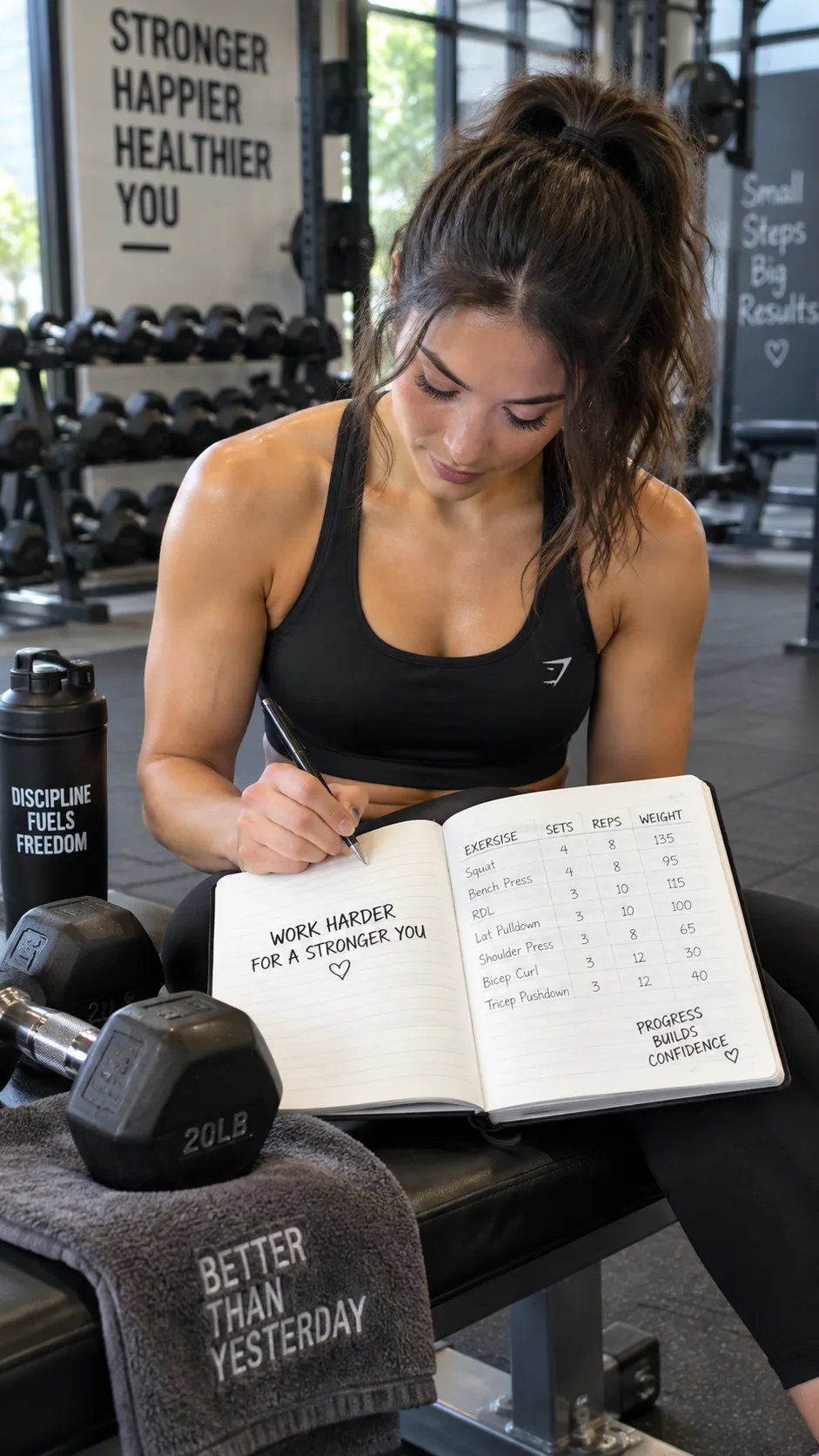
Track your workouts. Even a simple notes app works. Mayo Clinic recommends progressing your resistance training gradually to avoid injury while still making consistent strength gains.
Nutrition that supports chest and back gains
You can train perfectly and still undercut your progress if your nutrition is off. Muscle building requires two non-negotiables: enough protein and enough total calories.
Aim for 0.7-1g of protein per pound of body weight daily. That supports muscle repair and growth, which is exactly what happens when you consistently challenge your chest and back. Spread protein across 3-4 meals rather than cramming it all into one sitting. Your body can only use so much at once.
If you want a done-for-you eating plan that aligns with strength training goals, the High Protein Meal Plan for Women: Easy Recipes to Build Lean Muscle and Lose Weight takes the guesswork out of fueling your training. Healthline also offers a solid science-backed breakdown of daily protein needs if you want the research behind the numbers.
Common mistakes women make on chest and back day
Training smarter beats training harder every time. Avoid these traps that slow your progress.
- Going too heavy too soon. Ego lifting kills form and invites injury. Start lighter than you think you need to.
- Skipping the chest altogether. Many women focus only on back because chest feels “masculine.” It’s not. Strong pecs support posture just as much as a strong back does.
- Using momentum instead of muscle. Swinging your body on rows or kipping through lat pulldowns means the muscle isn’t doing the work. Slow down.
- Neglecting the rear deltoids. The front of the shoulder gets plenty of work from pressing. Rear delts rarely do. Face pulls and reverse flys fix this imbalance.
- Not warming up properly. Cold shoulders going into a chest press is a shoulder injury waiting to happen. Warm up. Every. Time.
- Training chest and back only once per week. Research suggests muscles respond well to 2 sessions per week for optimal hypertrophy (muscle growth).
What to expect and when to expect it
Let’s set real expectations. In the first 2-4 weeks, most of your strength gains come from neurological adaptations. Your nervous system gets better at recruiting muscle fibers. You might feel stronger before you look stronger, and that’s completely normal.
Visible changes in muscle definition typically start showing around weeks 6-12, depending on your starting point, consistency, and nutrition. The women who see the best results train consistently 2-3 times per week, eat enough protein, sleep 7-9 hours, and track their progress so they know they’re pushing forward.
In my opinion, the shift in how you feel (standing taller, carrying groceries without wincing, feeling genuinely strong in your own body) happens faster than the visual changes and honestly matters more.
Build the upper body you actually want
A chest and back workout for women isn’t a niche or advanced training concept. It’s fundamental. These are two of the largest muscle groups in your upper body, and training them together creates the kind of balanced, functional strength that transforms how you look and how you move.
Start with the workout plan above, nail your form before adding weight, and make nutrition work for you rather than against you. You don’t need a complicated program. You need the right exercises, done consistently, with progressive challenge over time.
Show up twice a week, track what you lift, eat your protein, and trust the process. The sculpted, strong upper body you want gets built rep by rep, and you’ve already got everything you need to start today.
