
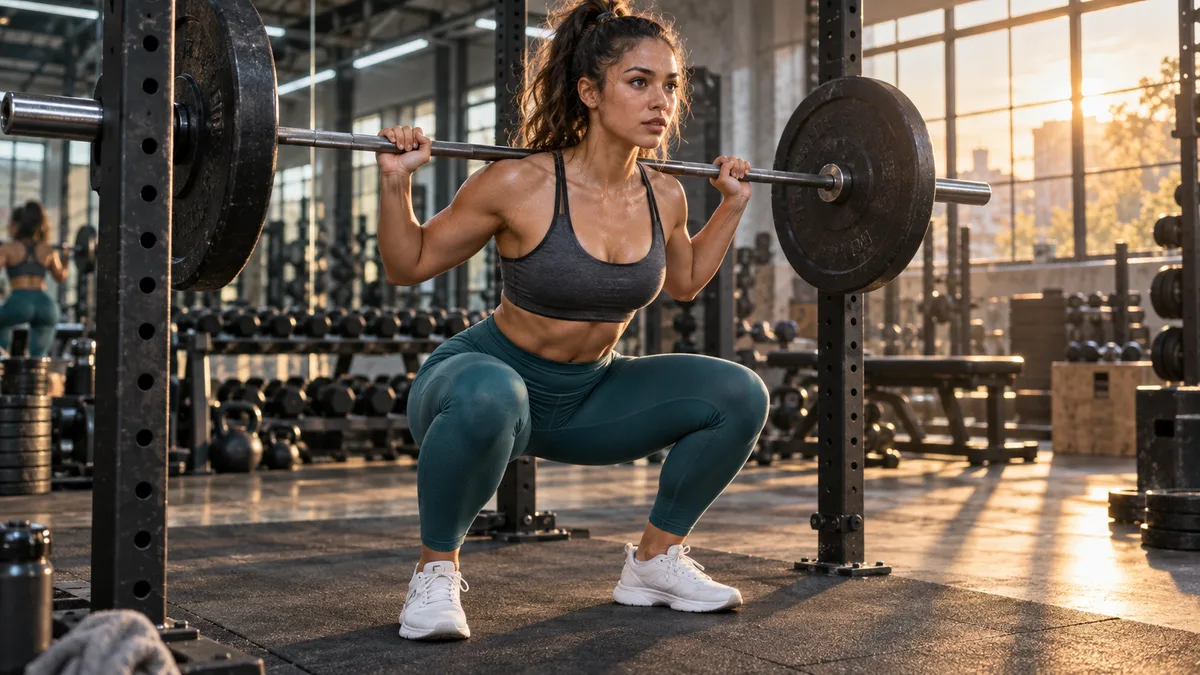
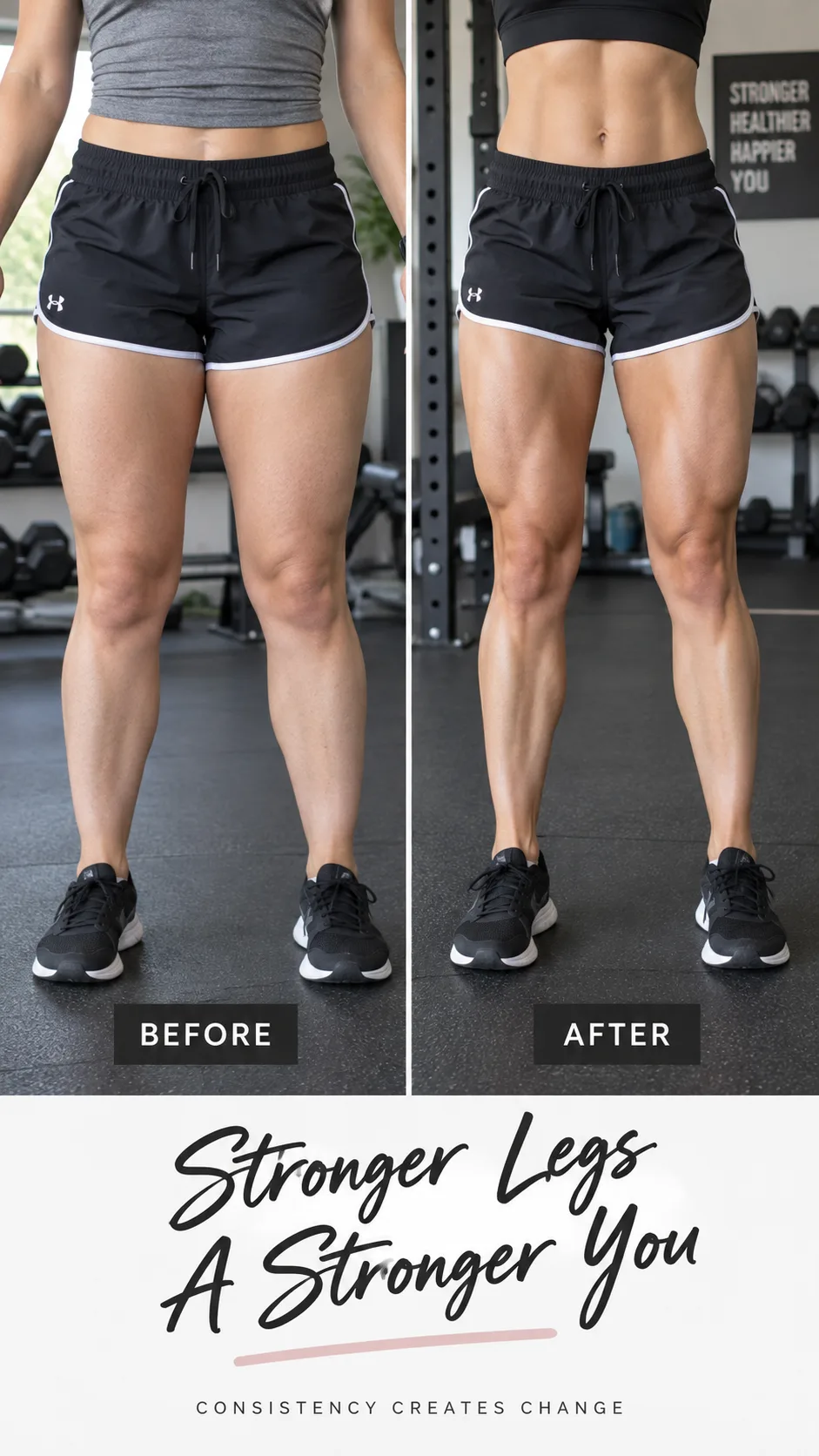
Let’s skip the fluff. You want stronger, more toned legs and you wouldn’t mind your stomach looking a little flatter while you’re at it. Good news — those two goals aren’t just compatible, they’re practically best friends. Training your legs hard recruits the biggest muscle groups in your body, torches calories, and forces your core to work overtime. Two birds, one squat rack.
But here’s the thing: most “leg day” plans you find online are designed for people who’ve been lifting for years. They assume you already know the difference between a Romanian deadlift and a conventional one (spoiler: it matters). If you’re a beginner, you need a plan that builds a solid foundation without destroying your ability to walk down stairs the next morning.
That’s exactly what this guide delivers. A complete toned leg workout gym plan built specifically for beginners, with every exercise explained, sets and reps laid out, and a clear progression path so you actually see results.
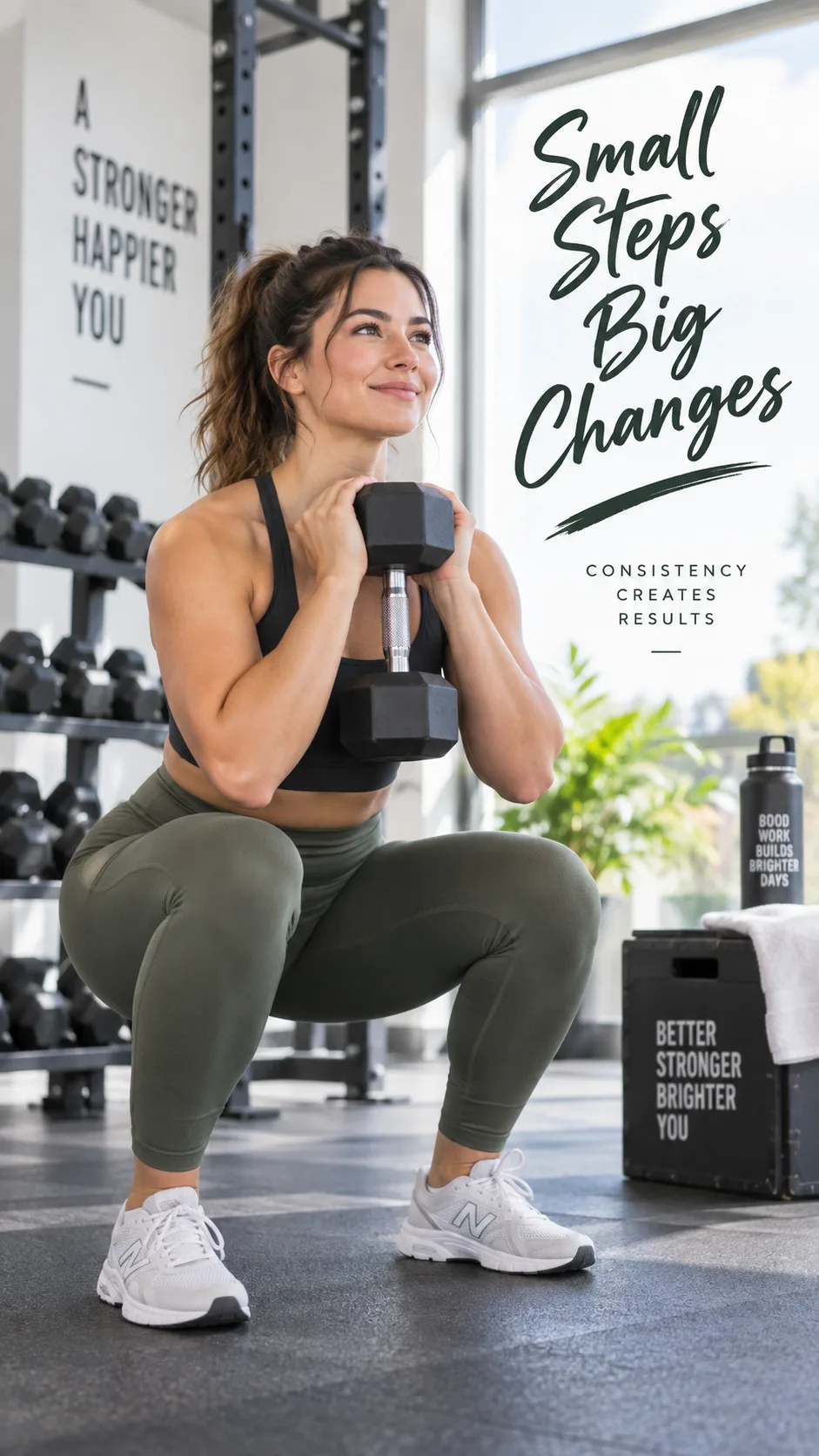
Why Leg Workouts Are the Secret Weapon for a Flatter Stomach
Ever wondered why trainers keep saying “never skip leg day”? It’s not just gym culture bravado. Your legs contain the largest muscles in your entire body — your quadriceps, hamstrings, and glutes. When you train these muscles, your body burns significantly more calories both during and after your workout compared to, say, doing bicep curls for an hour.
This concept is called excess post-exercise oxygen consumption (EPOC), and research from the American Council on Exercise confirms that compound leg exercises trigger it more effectively than isolation movements. In plain English? You keep burning fat hours after you leave the gym.
Here’s the part most people miss: nearly every standing leg exercise requires your core to stabilize your body. Squats, lunges, deadlifts — your abs and obliques are firing constantly. You’re not just building leg strength. You’re building a tighter midsection without doing a single crunch.
The Calorie-Burning Math
A solid 45-minute leg workout can burn anywhere from 300 to 500 calories, depending on your body weight and intensity. Compare that to an upper-body-only session, which typically burns 200 to 350 calories. Over weeks and months, that difference adds up — especially when combined with smart nutrition like a clean eating meal plan for beginners.
And no, building muscle in your legs won’t make them “bulky.” That’s one of the most persistent myths in fitness. Toning IS building lean muscle while reducing body fat. You can’t have one without the other.
The Essential Equipment You’ll Need
This plan uses standard gym equipment that every commercial gym has. Nothing exotic, nothing that requires a PhD to operate. Here’s your shopping list:
- Barbell and squat rack — your bread and butter for heavy compound lifts
- Dumbbells — a range from 10 to 30 lbs covers most beginners
- Leg press machine — a great confidence builder before you’re comfortable with heavy barbell squats
- Cable machine — for glute kickbacks and cable pull-throughs
- Resistance bands — optional but fantastic for glute activation warm-ups
- A bench or step — for step-ups and Bulgarian split squats
If your gym has a Smith machine, that works too. It’s actually a solid tool for beginners learning squat form because it guides the bar path. Don’t let anyone tell you the Smith machine is “cheating.” It’s a tool. Use it.
Your Beginner Toned Leg Workout Gym Plan
This plan runs twice per week with at least 48 hours between sessions. Your muscles grow during recovery, not during the workout itself. Training legs three times a week as a beginner is a recipe for burnout and joints that hate you.
Rest between sets: 60 to 90 seconds for most exercises. Up to 2 minutes for heavy compound movements like squats and leg press.
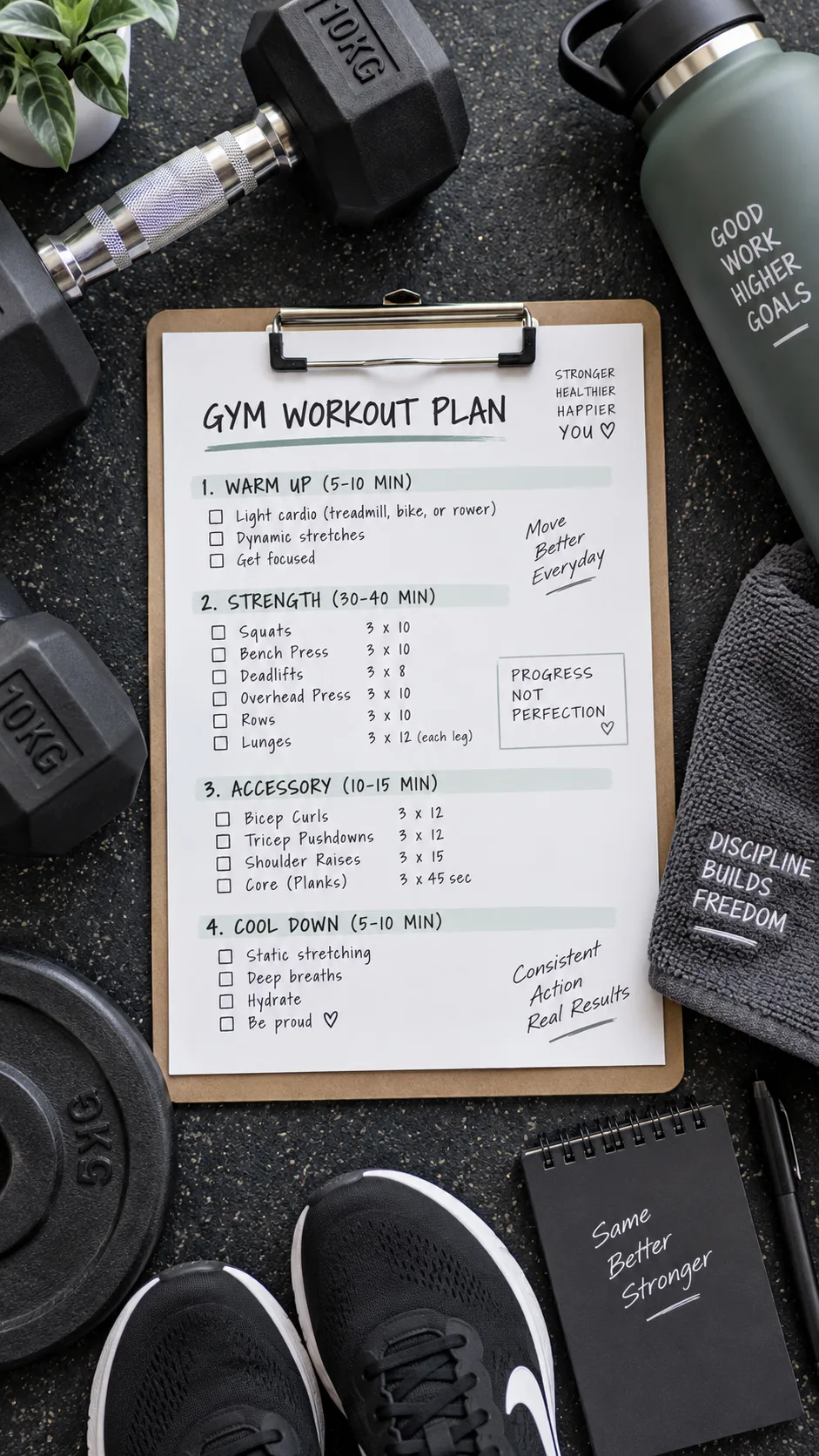
Day 1: Quad and Glute Focus
This session prioritizes your quadriceps (front of thighs) and glutes. These muscles give your legs that sculpted, athletic shape and are the biggest calorie burners.
- Goblet Squat — 3 sets x 12 reps
- Leg Press — 3 sets x 12 reps
- Walking Lunges (with dumbbells) — 3 sets x 10 reps per leg
- Step-Ups — 3 sets x 10 reps per leg
- Leg Extensions (machine) — 2 sets x 15 reps
- Glute Bridge (barbell or bodyweight) — 3 sets x 15 reps
Core Finisher: 3 sets of 30-second plank holds + 15 bicycle crunches. Your core already worked hard during the standing exercises — this just seals the deal.
Day 2: Hamstring and Posterior Chain Focus
Now we target the hamstrings (back of thighs), glutes from a different angle, and your lower back. This session is crucial for balanced leg development and preventing knee injuries.
- Romanian Deadlift (dumbbells) — 3 sets x 10 reps
- Bulgarian Split Squat — 3 sets x 10 reps per leg
- Lying Leg Curl (machine) — 3 sets x 12 reps
- Cable Pull-Through — 3 sets x 12 reps
- Sumo Squat (dumbbell) — 3 sets x 12 reps
- Calf Raises (standing machine or Smith machine) — 3 sets x 15 reps
Core Finisher: 3 sets of 12 dead bugs + 15 reverse crunches. These specifically target your lower abs, which contribute most to that “flatter stomach” appearance.
Exercise Breakdown: How to Do Each Move Properly
Form is EVERYTHING when you’re starting out. I’ve personally seen more progress from people who dropped their ego, lowered the weight, and nailed their form than from people who loaded up heavy and wobbled through every rep. Let me walk you through the key exercises.
Goblet Squat
Hold a dumbbell vertically against your chest with both hands. Stand with feet slightly wider than shoulder-width apart. Push your hips back and down as if sitting into a chair. Go as deep as you can while keeping your chest up and heels on the floor. Drive back up through your heels.
This is the single best squat variation for beginners because the front-loaded weight naturally keeps your torso upright. IMO, it teaches better squat mechanics than a barbell back squat for most people starting out.
Romanian Deadlift (RDL)
Hold dumbbells in front of your thighs. With a slight bend in your knees (they stay at the same angle throughout), hinge at your hips and lower the weights along your legs. You should feel a deep stretch in your hamstrings. Once the weights reach mid-shin, squeeze your glutes and drive your hips forward to stand tall.
The number one mistake? Rounding your lower back. Keep your spine neutral — imagine a broomstick taped to your back. If you can’t maintain a flat back, the weight is too heavy. Period.
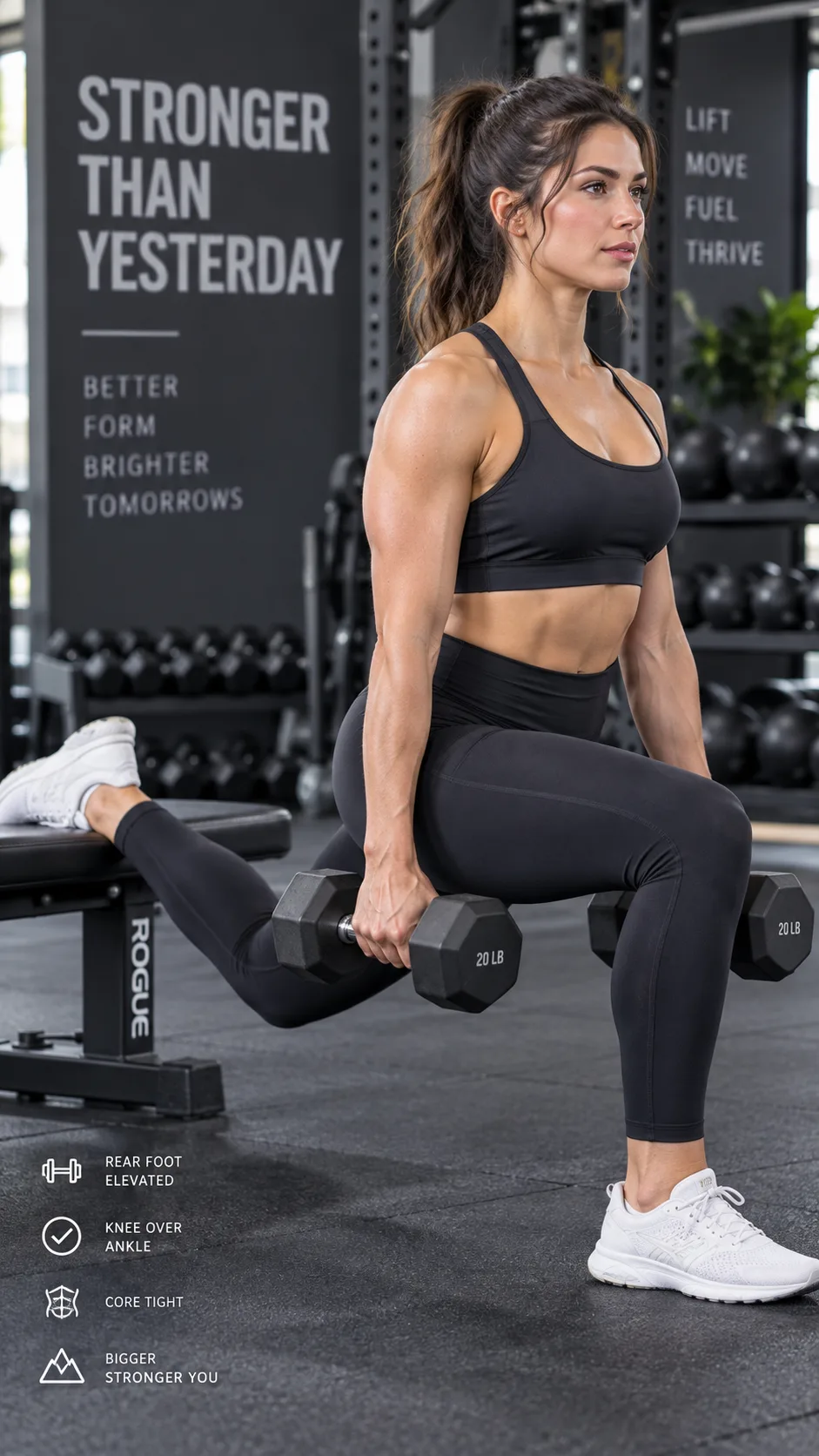
Bulgarian Split Squat
Stand about two feet in front of a bench. Place the top of your rear foot on the bench behind you. Hold dumbbells at your sides. Lower your body until your front thigh is parallel to the ground, then drive back up. This exercise is humbling — even with light weight, you’ll feel it deep in your quads and glutes.
Fair warning: you’ll probably wobble like a baby deer the first few times. That’s completely normal. Your stabilizer muscles need time to adapt. Start with bodyweight only if you need to.
Cable Pull-Through
This one looks a little awkward, but it’s one of the best glute exercises you’re probably not doing. Attach a rope handle to a low cable. Straddle the cable facing away from the machine. Hinge at your hips, letting the cable pull your hands back between your legs, then squeeze your glutes explosively to stand up straight.
Think of it as a standing hip thrust. Your glutes do all the work, and your core stays engaged the entire time. Win-win.
The Warm-Up You Shouldn’t Skip (But Probably Want To)
I get it — warming up feels like it’s eating into your actual workout time. But spending 5 to 10 minutes preparing your body prevents injuries and actually helps you lift heavier. Your muscles perform better when they’re warm. That’s just physiology.
- 5 minutes on the stationary bike or elliptical — light effort, just enough to raise your heart rate
- Banded lateral walks — 15 steps each direction (activates your glute medius)
- Bodyweight squats — 15 reps
- Leg swings — 10 per leg, front-to-back and side-to-side
- Hip circles — 10 per direction
This routine takes six minutes, max. Your knees and hips will thank you, especially as you start adding weight to the bar over the coming weeks.
Progressive Overload: The Only Way to Actually See Results
Here’s where most beginners go wrong. They find a comfortable weight and stick with it for months. Then they wonder why nothing changes. Sound familiar?
Progressive overload means gradually increasing the demand on your muscles over time. Without it, your body has no reason to adapt, grow, or get stronger. According to the National Strength and Conditioning Association, progressive overload is the foundational principle of all effective strength training programs.
Here’s a simple framework for beginners:
- Weeks 1-2: Focus entirely on form. Use light weights. Master the movement patterns.
- Weeks 3-4: Increase weight by 5 lbs on compound lifts (squats, leg press, RDLs) and 2.5 lbs on isolation exercises.
- Weeks 5-8: Continue adding weight when you can complete all prescribed reps with good form. If you can’t hit the minimum reps, keep the same weight until you can.
- Every 4 weeks: Add one extra set to your main compound lifts OR add 2 reps per set.
Write down every workout. Use a notebook, your phone, an app — whatever works. If you’re not tracking, you’re guessing. And guessing doesn’t build toned legs.
Nutrition: You Can’t Out-Train a Bad Diet
I wish this weren’t true, but no amount of squats will reveal toned legs or a flat stomach if your nutrition is working against you. You don’t need to be perfect, but you do need to be consistent with a few key principles.
Protein Is Non-Negotiable
Aim for 0.7 to 1 gram of protein per pound of body weight daily. Protein repairs and builds the muscle you’re breaking down during workouts. Without enough of it, your body can’t create the lean muscle tissue that gives legs their toned appearance. Meal prepping makes hitting these targets way easier — check out these high protein meal prep ideas for practical inspiration.
Create a Modest Caloric Deficit
If a flatter stomach is your goal, you need to lose some body fat. That requires eating slightly fewer calories than you burn — typically 300 to 500 calories below your maintenance level. Don’t go extreme. Crash diets destroy your energy, tank your performance in the gym, and ultimately lead to muscle loss. That’s the opposite of what we want.
Don’t Fear Carbs
Carbohydrates fuel your leg workouts. Seriously — try doing a set of heavy squats after eating nothing but chicken and salad all day. You’ll feel like you’re moving through cement. Eat complex carbs like oats, sweet potatoes, rice, and whole grain bread, especially in the meals before and after your training sessions.

Recovery: Where the Magic Actually Happens
Your muscles don’t grow in the gym. They grow while you’re sleeping, resting, and eating. If you skip recovery, you skip results. It’s that straightforward.
- Sleep 7-9 hours per night. Growth hormone — the stuff that repairs and builds muscle — peaks during deep sleep. Shortchange your sleep and you shortchange your gains.
- Stretch after every workout. Tight quads and hamstrings lead to knee pain and limited range of motion. Spend 5 minutes on static stretches post-workout.
- Take rest days seriously. Active recovery (a light walk, easy yoga, or wall Pilates) is fine, but avoid heavy training on rest days.
- Stay hydrated. Dehydrated muscles cramp, perform poorly, and recover slowly. Aim for at least half your body weight in ounces of water daily.
FYI, soreness after your first few sessions is completely normal. It’s called DOMS (Delayed Onset Muscle Soreness), and it usually peaks 24-48 hours post-workout. It gets significantly better as your body adapts. If it doesn’t fade after a week, you might be overdoing it.
Common Beginner Mistakes That Sabotage Your Progress
I’ve made every single one of these mistakes myself. Learn from my wasted time so you don’t have to repeat it 🙂
- Skipping hamstring work. Most beginners obsess over quads and glutes and completely ignore the back of their legs. This creates muscle imbalances that lead to knee injuries. Balance your training.
- Going too heavy, too soon. Your muscles might adapt quickly, but your tendons and ligaments need more time. Rushing leads to injuries that set you back months.
- Only doing cardio for fat loss. Endless treadmill sessions burn calories during the workout but don’t build muscle. Strength training raises your basal metabolic rate, meaning you burn more calories even at rest. Do both, but prioritize the weights.
- Ignoring single-leg exercises. Most people have one leg stronger than the other. Unilateral exercises like lunges and Bulgarian split squats fix imbalances before they become problems.
- Expecting results in two weeks. Visible changes in muscle tone and body composition take a minimum of 6-8 weeks of consistent training and nutrition. If someone promises faster results, they’re selling you something.
How Long Until You See Results?
Let’s set realistic expectations. You’ll FEEL stronger within 2-3 weeks. Your body learns to recruit muscle fibers more efficiently before any visible changes happen. This is called neural adaptation, and it’s why beginners can increase their weights quickly in the first month.
Visible muscle tone typically appears around weeks 6-12, depending on your starting point, consistency, and nutrition. A flatter stomach depends heavily on your body fat percentage and diet — some people see changes in their midsection faster than others based on genetics and where their body stores fat.
According to research published in the Journal of Strength and Conditioning Research, untrained individuals can gain approximately 2-4 pounds of lean muscle in their first eight weeks of consistent resistance training. That’s real, measurable progress.
The key word in all of this? Consistency. Not perfection. Not motivation. Not waiting until you feel ready. Just showing up twice a week and doing the work.
Sample Weekly Schedule for Optimal Results
Here’s how I’d structure your week to maximize leg development and fat loss while keeping things manageable for a beginner lifestyle:
- Monday: Leg Day 1 (Quad & Glute Focus)
- Tuesday: Upper Body or Full Body Dumbbell Workout
- Wednesday: 20-30 minutes moderate cardio (walking, cycling, swimming)
- Thursday: Leg Day 2 (Hamstring & Posterior Chain Focus)
- Friday: Upper Body or Full Body Training
- Saturday: Active recovery — light walk, stretching, mobility work
- Sunday: Complete rest
This schedule gives you two dedicated leg sessions, two upper body sessions, and strategic recovery days. It’s balanced, sustainable, and leaves room for a social life. Because let’s be honest — a workout plan you can’t stick to is worthless, no matter how scientifically perfect it looks on paper.
When to Level Up Your Plan
After 8-12 weeks of consistent training with this program, you’ll likely outgrow it. That’s a good thing — it means the plan worked. Signs you’re ready to progress include:
- You can complete all sets and reps easily with your current weight
- You no longer feel challenged during workouts
- Your form is solid and movement patterns feel natural
- You’re comfortable using free weights over machines
At that point, consider adding barbell back squats, conventional deadlifts, hip thrusts with a loaded barbell, and front squats to your rotation. You can also increase training frequency to three leg sessions per week using an upper/lower split. But don’t rush — the NHS recommends building a solid baseline before increasing training volume.
The Bottom Line
Building toned, strong legs and achieving a flatter stomach aren’t separate goals that require separate programs. A well-structured leg workout plan attacks both simultaneously by burning massive amounts of calories, building lean muscle, and engaging your core with every compound movement.
This beginner plan gives you everything you need: two focused training days per week, progressive overload built in, and exercises that target every major muscle in your lower body. Pair it with adequate protein, a modest calorie deficit, proper sleep, and patience — and you WILL see results.
Stop overthinking it. Print this plan, walk into the gym, and start with Day 1. The best workout program is the one you actually do. Your future self — the one with stronger legs and a tighter core — will thank you for starting today.
