
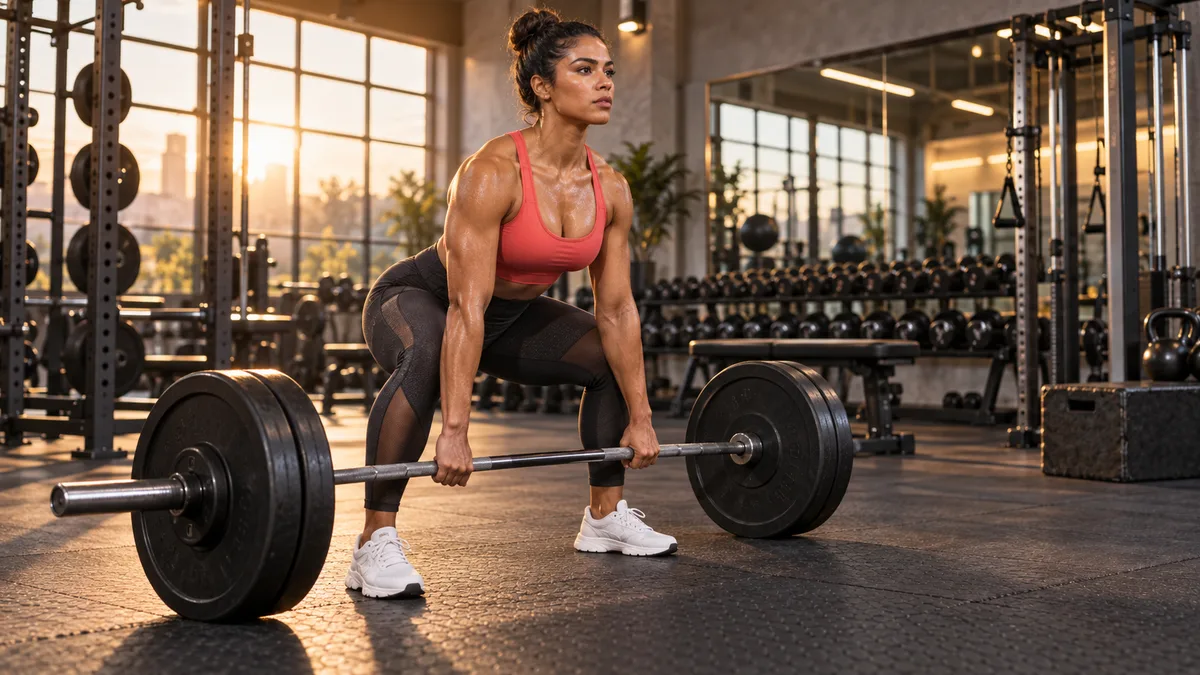
You walked into the gym. You stared at the machines. You did some bicep curls, hopped on the treadmill for twenty minutes, and left feeling like you accomplished… something? Yeah, that era ends now.
A full body gym workout for women removes the randomness from your training and replaces it with a structured, science-backed routine that hits every major muscle group in a single session. No wandering. No guessing. Just results that actually stack up week after week.
Whether you want to build lean muscle, torch body fat, or simply feel like an absolute powerhouse carrying all your grocery bags in one trip, this routine covers it. Let’s get into exactly what you need to do, why it works, and how to set up your week like a pro.
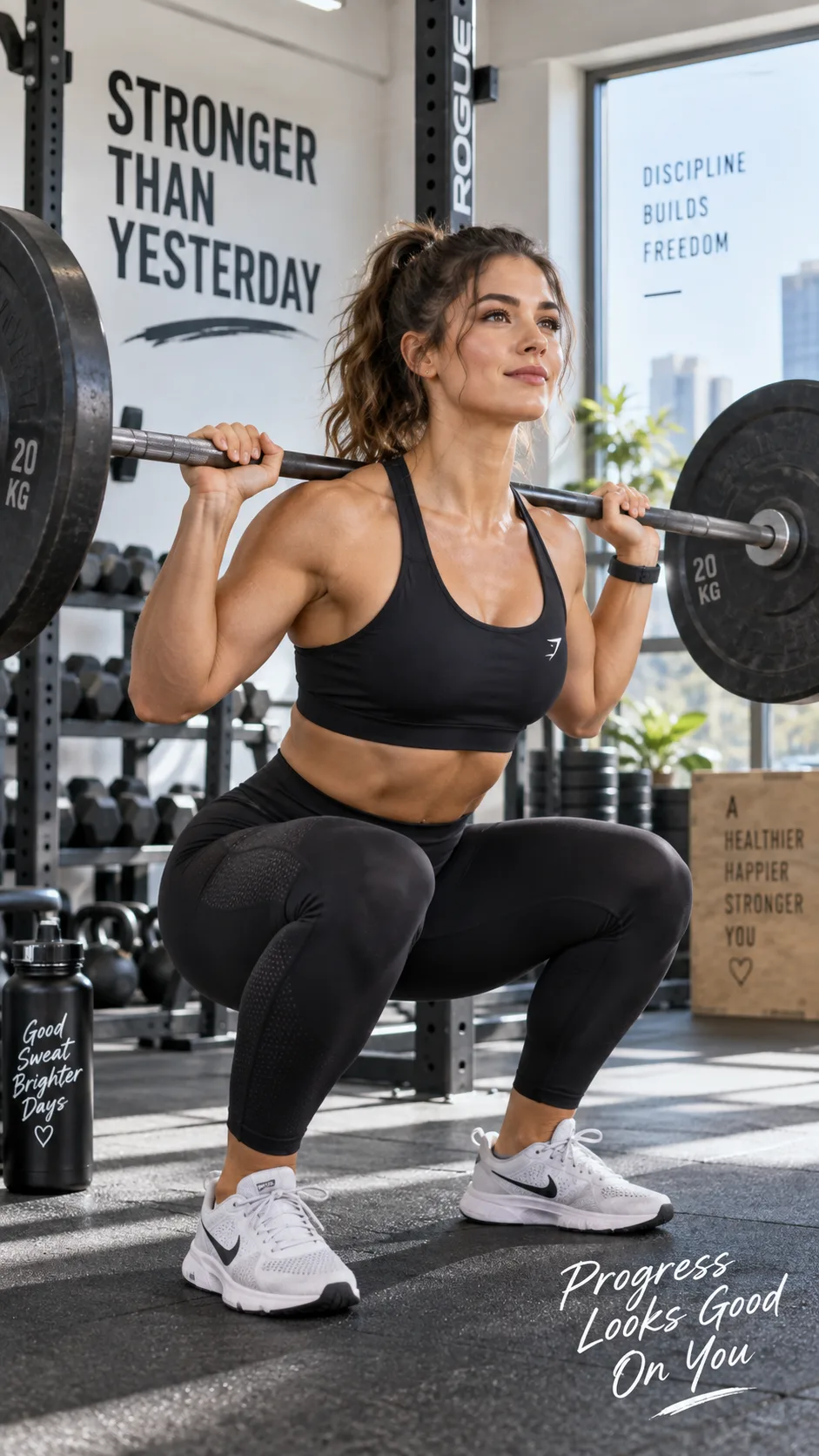
Why full body workouts crush it for women
Here’s a question nobody asks enough: why train your entire body in one session instead of splitting it up? The answer boils down to frequency, efficiency, and how your muscles grow.
Research from the Journal of Strength and Conditioning Research consistently shows that training each muscle group at least twice per week produces significantly more hypertrophy and strength gains than hitting it once. Full body routines make that happen naturally, without requiring you to live at the gym six days a week.
Women also tend to recover faster between sets and sessions than men, thanks to differences in muscle fiber composition and hormonal profiles. That means you can handle higher training frequency without feeling like you got hit by a bus. Your body literally wants this kind of stimulus.
The efficiency factor
Got three days a week to train? Perfect. Three full body sessions give every muscle group three exposures per week. Compare that to a traditional bro-split where your shoulders get one lonely workout on Thursday and then wait an entire week for attention again. Which approach sounds smarter?
Full body training also burns more calories per session because you recruit more total muscle mass. More muscles working equals more energy expenditure. If fat loss sits anywhere on your priority list, this matters. A lot.
Who this routine works best for
This program fits a wide range of women, but it particularly shines for:
- Beginners who need a clear, repeatable structure to build foundational strength
- Intermediate lifters who want to break through plateaus by increasing training frequency
- Busy women who can only commit to 3 gym sessions per week but still want serious results
- Anyone returning to the gym after a break (welcome back, by the way. Your muscles remember more than you think)
If you already train 5+ days and love your split, that’s totally valid too. You might enjoy our guide on 5-day workout splits specifically designed for women instead.
The full body gym workout for women: your complete routine
Alright, here’s the actual workout. I’ve organized it into compound movements first (the big lifts that recruit multiple muscle groups) followed by targeted accessory work. Perform this routine three times per week with at least one rest day between sessions. Think Monday, Wednesday, Friday or Tuesday, Thursday, Saturday.
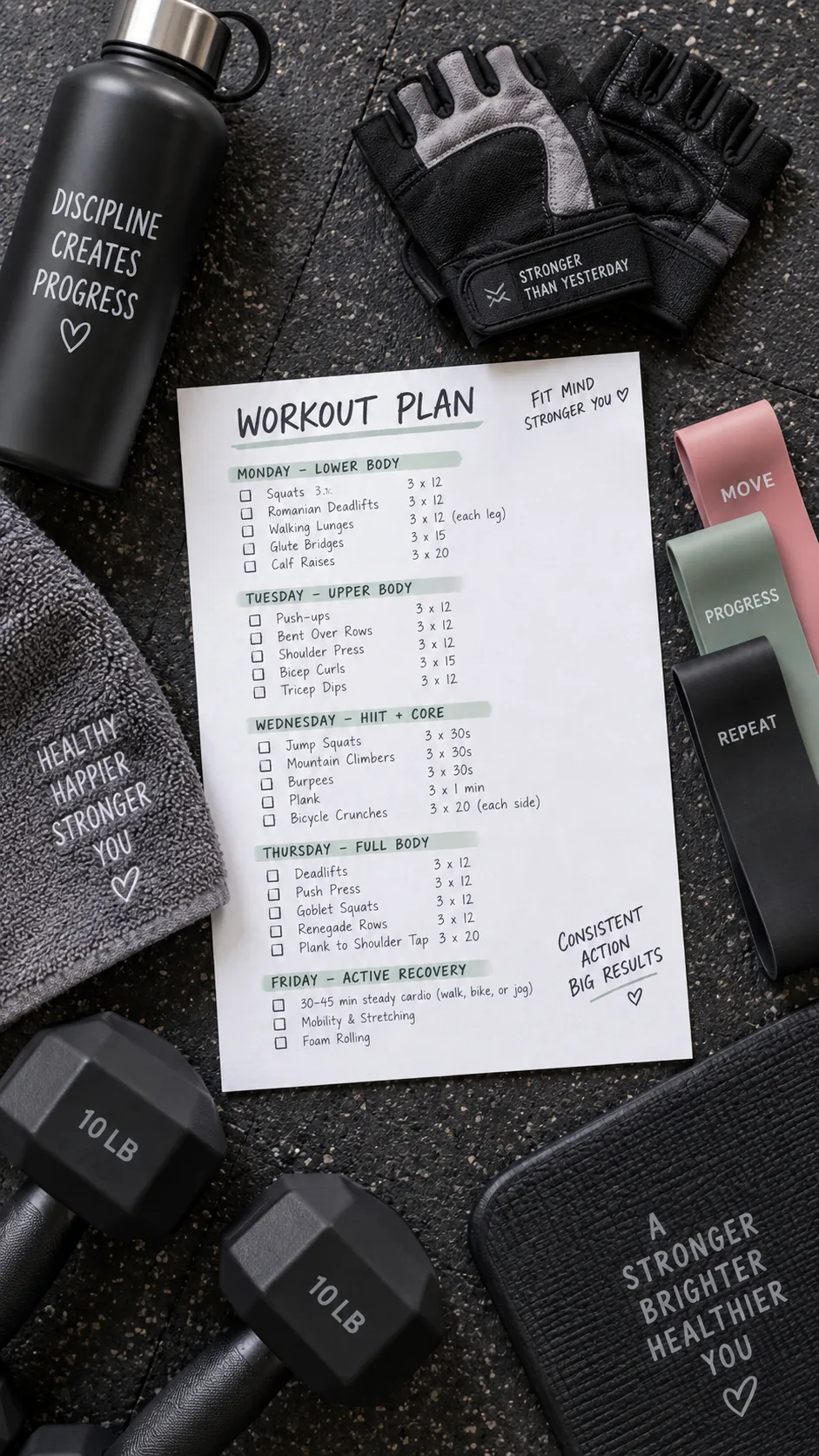
Warm-up (5 to 8 minutes)
Skip this at your own risk. A proper warm-up primes your nervous system, increases blood flow to your muscles, and dramatically reduces injury risk. Nobody wants to pull a hamstring on rep two of their deadlift.
- 5 minutes on the rowing machine or incline treadmill walk (moderate pace)
- 10 bodyweight squats
- 10 glute bridges
- 10 arm circles each direction
- 5 inchworms
The main workout
Here’s your total body gym routine laid out exercise by exercise. Rest 60 to 90 seconds between sets for compound lifts and 45 to 60 seconds for isolation work.
- Barbell Back Squat (4 sets x 8 to 10 reps)
- Romanian Deadlift (Barbell or Dumbbell) (3 sets x 10 to 12 reps)
- Dumbbell Bench Press (3 sets x 10 to 12 reps)
- Seated Cable Row (3 sets x 10 to 12 reps)
- Dumbbell Overhead Press (3 sets x 10 to 12 reps)
- Bulgarian Split Squats (3 sets x 10 reps per leg)
- Lat Pulldown (3 sets x 10 to 12 reps)
- Cable Tricep Pushdown (2 sets x 12 to 15 reps)
- Dumbbell Bicep Curls (2 sets x 12 to 15 reps)
- Plank Hold (3 sets x 30 to 45 seconds)
Total time: approximately 50 to 65 minutes. That’s it. No two-hour marathon session required.
Exercise breakdown: why each move earns its spot
Barbell Back Squat opens the routine because it’s the king (queen?) of lower body exercises. It hammers your quads, glutes, and core simultaneously. If you’re not comfortable with a barbell yet, goblet squats with a dumbbell work perfectly as a substitute.
Romanian Deadlifts target your posterior chain: hamstrings, glutes, and lower back. This movement pattern matters for everyday life, posture, and building that strong backside. For more hamstring and glute work, check out our best leg exercises for women at the gym.
Dumbbell Bench Press builds your chest, front delts, and triceps. And no, bench pressing will NOT make you “bulky.” That myth needs to retire permanently. Women don’t produce enough testosterone to accidentally look like a bodybuilder. You’ll just look strong and sculpted.
Seated Cable Row and Lat Pulldown cover your entire back from different angles. A strong back improves posture, reduces neck pain, and honestly just looks incredible in a tank top. Two pulling exercises balance out the pushing movements in this routine.
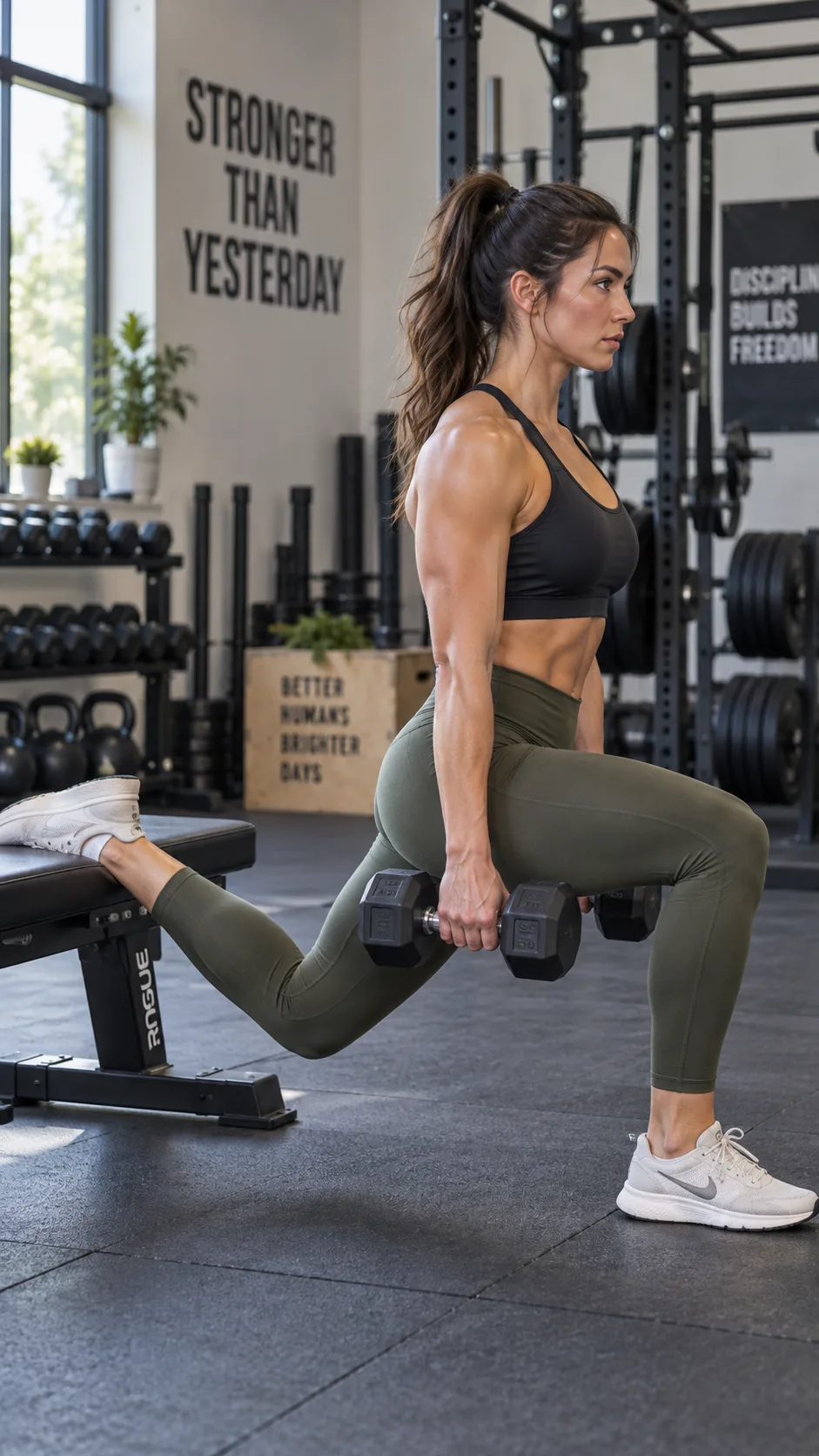
Bulgarian Split Squats are single-leg work that fixes muscle imbalances and absolutely torches your glutes. Are they uncomfortable? Yes. Do they work ridiculously well? Also yes.
How to structure your training week
Here’s what a smart week looks like when you build it around this full body gym workout for women:
- Monday: Full Body Workout (Session A)
- Tuesday: Active recovery (walking, yoga, or light stretching)
- Wednesday: Full Body Workout (Session B, same exercises, slightly different rep ranges)
- Thursday: Rest or mobility work
- Friday: Full Body Workout (Session C)
- Saturday and Sunday: Rest, hike, play a sport, live your life
Want to keep things fresh across sessions? Rotate your rep ranges. Session A might focus on 8 to 10 reps (heavier weight), Session B on 10 to 12 reps (moderate), and Session C on 12 to 15 reps (lighter, higher volume). This undulating periodization strategy prevents your body from adapting too quickly.
FYI, the rest days aren’t optional decoration on your schedule. Your muscles grow during recovery, not during the workout itself. Respect the process.
Progressive overload: the one rule that makes everything work
Here’s where most women unknowingly sabotage their progress. They pick up the same 10-pound dumbbells week after week, month after month, and wonder why nothing changes. Sound familiar?
Progressive overload means gradually increasing the demand you place on your muscles over time. Without it, your body has zero reason to adapt, grow, or get stronger. It’s the single most important training principle, and it’s shockingly simple to apply.
Practical ways to progressively overload
- Add weight: Even 2.5 pounds more on the bar counts. Microplates exist for a reason.
- Add reps: Did 8 reps last week? Aim for 9 this week with the same weight.
- Add sets: Progress from 3 sets to 4 once your current volume feels manageable.
- Slow down the tempo: A 3-second lowering phase makes the same weight feel significantly harder.
- Reduce rest time: Cutting rest from 90 seconds to 60 increases training density.
The American Council on Exercise recommends tracking your workouts to make sure you’re progressing. A simple notebook or your phone’s notes app works perfectly. Write down every weight, every rep, every set. If the numbers creep upward over weeks and months, you’re winning.

Common mistakes that stall your results
I’ve watched hundreds of women train over the years, and certain mistakes pop up on repeat. Let’s eliminate them right now so you don’t waste a single session.
1. Going too light for too long
Those pastel-colored 3-pound dumbbells? They served you well initially. But if you’ve been training for more than a few weeks, your muscles need a bigger challenge. You should finish your last 2 reps of each set feeling genuinely challenged. Not like you could casually do 10 more while scrolling Instagram.
2. Skipping compound movements
Spending 45 minutes on isolation exercises (hip abductors, leg extensions, cable kickbacks) while ignoring squats, deadlifts, and presses robs you of the biggest strength and calorie-burning benefits. Compounds first, isolation second. Always.
3. Neglecting your upper body
Ever notice the glute section of the gym packed with women while the bench press area sits empty? Upper body training matters just as much. It balances your physique, prevents injuries, and makes you functionally stronger in daily life. Our arm workout guide for women with weights can supplement your routine on this front.
4. Copying random Instagram workouts
That influencer’s “booty blaster circuit” with 47 banded exercises looks fun, but it probably lacks the progressive structure your body needs. Consistency with a proven program beats variety for variety’s sake every single time.
5. Ignoring your pelvic floor
Heavy lifting without pelvic floor awareness can create issues down the road, especially for women who’ve been through pregnancy or have hypermobility. Learning to engage your pelvic floor during compound lifts protects you long-term. The NHS offers excellent guidance on this topic.
Nutrition: the other half of the equation
You can run the most perfectly designed total body workout routine on the planet, but if your nutrition looks like a dumpster fire, your results will suffer. Period. Muscles need raw materials to repair and grow.
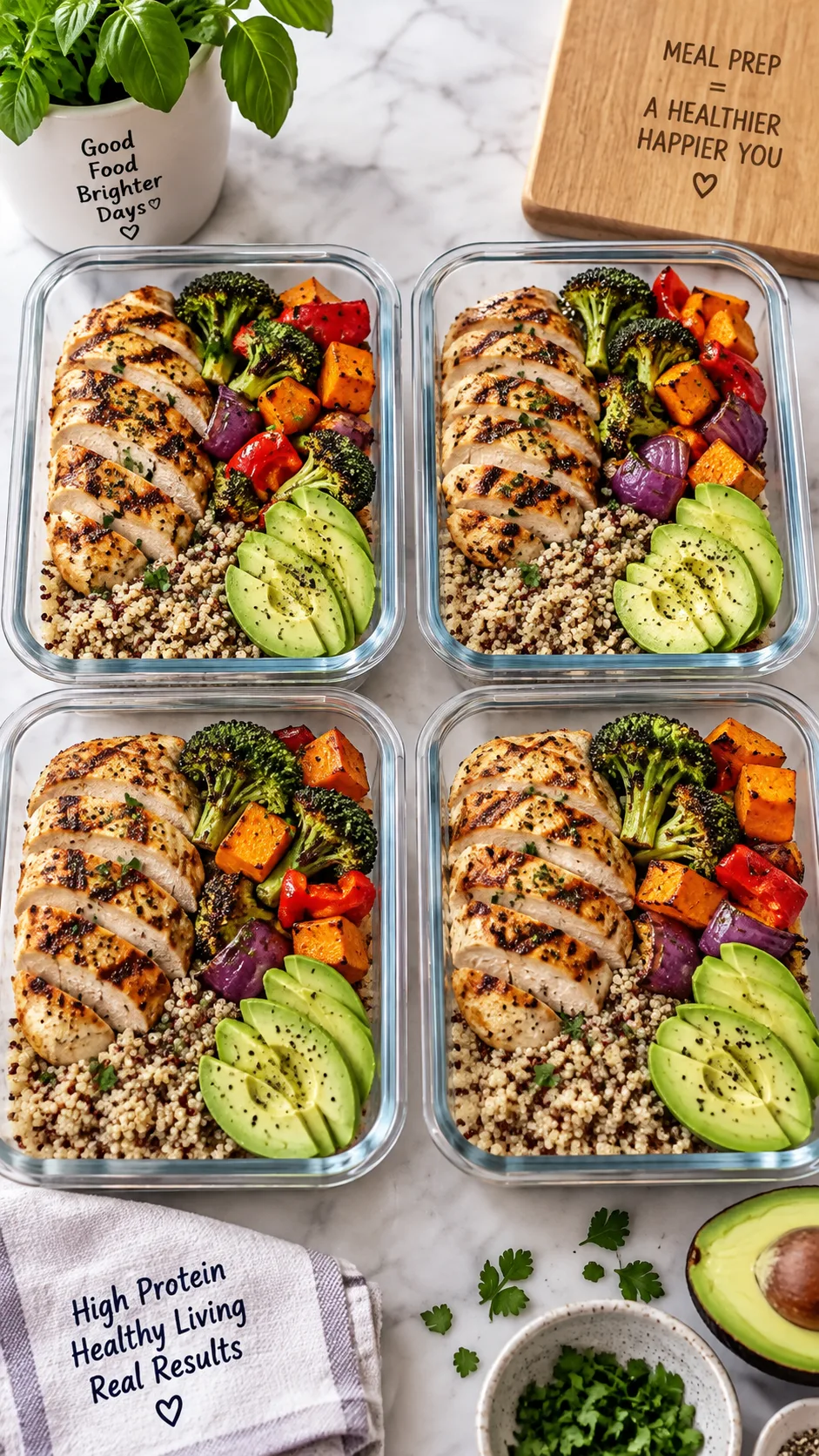
Protein sits at the top of the priority list. Aim for roughly 0.7 to 1 gram of protein per pound of bodyweight daily. That means a 140-pound woman should target approximately 100 to 140 grams of protein per day. Chicken, fish, eggs, Greek yogurt, tofu, lentils: pick your favorites and eat them consistently.
Don’t slash your calories too aggressively either. Women who eat in extreme deficits while strength training often lose muscle instead of building it. A modest deficit (300 to 500 calories below maintenance) works for fat loss. For muscle building, eat at maintenance or a slight surplus. IMO, far too many women under-eat and then blame their program when progress stalls.
Need a practical plan? Our high protein meal plan for women lays out exactly what to eat to support your training goals.
How long before you see results?
Real talk: you’ll feel stronger within 2 to 3 weeks. That’s your nervous system getting better at recruiting muscle fibers, and it happens fast. The weights that challenged you in week one will start feeling noticeably easier.
Visible changes in muscle tone and body composition typically show up around the 6 to 8 week mark, assuming you train consistently, eat enough protein, and sleep well. According to a meta-analysis published in PubMed, untrained individuals can expect measurable hypertrophy after approximately 6 to 8 weeks of consistent resistance training.
The catch? You have to stick with it. Not for two weeks. Not until it gets boring. Consistency over months and years separates people who transform their bodies from people who stay exactly the same. There’s no hack around this one.
Equipment you’ll need
This routine uses standard gym equipment that virtually every commercial gym provides:
- Barbell and weight plates (squat rack access)
- Dumbbells (a range of weights, typically 10 to 30+ pounds depending on your level)
- Cable machine
- Adjustable bench
- Lat pulldown machine
No fancy equipment. No gimmicky gadgets. If your gym has these basics, you’re fully equipped to run this program.
Prefer training with free weights only? A full body dumbbell workout plan gives you an excellent alternative you can run with minimal equipment.
When to switch programs
Run this full body gym workout for 8 to 12 weeks before considering a change. That’s enough time to see genuine progress and milk the program for everything it’s worth. Switching programs every two weeks because you got bored accomplishes nothing except keeping you a perpetual beginner.
After 8 to 12 weeks, you can either adjust the exercises while keeping the full body structure, increase the overall volume, or transition to an upper/lower split if you want to train four days per week. The best program is the one you’ll follow long enough for it to work.
Quick reference: your weekly checklist
Pin this somewhere you’ll see it daily:
- ☐ 3 full body workouts per week (non-consecutive days)
- ☐ Progressive overload applied each session (more weight, reps, or sets)
- ☐ Protein target hit daily (0.7 to 1g per pound of bodyweight)
- ☐ 7 to 9 hours of sleep per night
- ☐ Workouts logged in a notebook or app
- ☐ Rest days respected, not skipped
Final thoughts: stop overcomplicating it
A full body gym workout for women isn’t glamorous. It won’t go viral on social media. But it works (consistently, predictably, and powerfully) for women at nearly every fitness level. Three sessions per week, compound movements as the backbone, progressive overload driving the bus, and solid nutrition fueling the engine.
You don’t need a 27-page periodization spreadsheet or a $200/month coaching app to get stronger. You need a plan, a logbook, and the discipline to show up three times a week and do the work. That’s honestly the whole secret.
Start this routine next Monday. Track everything. Push a little harder each week. And in 8 weeks, come back and tell me you don’t feel like an entirely different person. I’ll be waiting.
