

You’ve started workout plans before. Monday felt great, Wednesday felt okay, and by the following Monday… well, Netflix won. Sound familiar? The problem was never your willpower. The problem was the plan itself.
A well-structured 3 month workout plan works because it gives your body and brain exactly what they need: enough time to adapt, enough variety to stay interested, and enough progression to see real, undeniable results. Twelve weeks sits in that sweet spot where habits actually form and your body physically transforms. Not in some “after” photo fantasy way, but in a “hey, I can carry all the groceries in one trip” way.
This guide lays out the entire 12-week progression, week by week, so you never have to wonder what to do next. Time to build something that actually lasts.
Why 3 months is the magic number for fitness
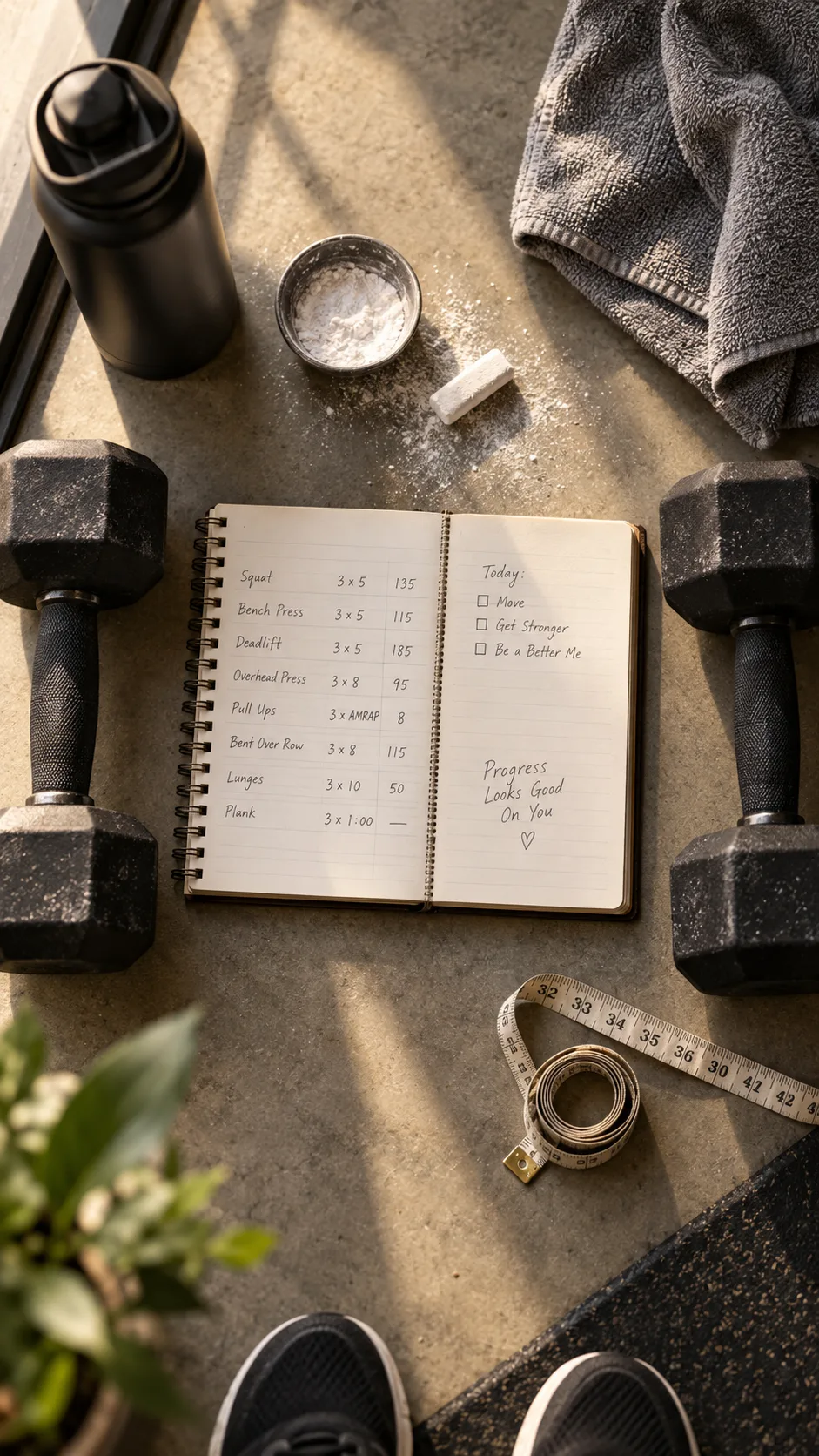
Here’s the thing most fitness influencers won’t tell you: one month isn’t enough time to build a real habit. That old “21 days to form a habit” myth? Researchers at University College London found it actually takes an average of 66 days (over two months) for a new behavior to become automatic. A 12-week plan covers that timeline with room to spare.
Three months also lines up perfectly with how your body adapts to exercise. During weeks 1 through 4, your nervous system learns movement patterns. Weeks 5 through 8 bring noticeable strength gains. Weeks 9 through 12? That’s where visible body composition changes start showing up. Skip any phase and you shortchange the whole process.
Ever wondered why most gym memberships spike in January and flatline by March? People jump straight to advanced routines, burn out, and quit. A phased 12-week workout plan prevents that by meeting you exactly where you are and progressing gradually.
Before you start: setting up your 12-week framework
Before you touch a single dumbbell, you need a few things locked in. Think of this as building the scaffolding before the house goes up.
Pick your training split

Your training split determines how you organize muscle groups across the week. For a 3 month plan, these three splits work best depending on your schedule:
- Full Body (3 days/week): Ideal for beginners or anyone with a tight schedule. You hit every major muscle group each session.
- Upper/Lower (4 days/week): Great for intermediates who want more volume without marathon gym sessions.
- Push Pull Legs (5-6 days/week): Best for experienced lifters ready to train with higher frequency and volume.
If you’re brand new to the gym, start with full body. Seriously, ego aside, it’s the fastest path to results for beginners. You can always graduate to a more advanced split in Month 2 or 3.
Establish your baselines
Before Week 1, test and record these numbers. You’ll thank yourself when you compare them to your Week 12 results:
- Your working weight on 5 lifts (squat, deadlift, bench press, overhead press, row)
- Maximum push-ups in one set
- A timed one-mile walk or run
- Body measurements (waist, hips, arms, thighs) and/or progress photos
Write these down. Numbers don’t lie, and they’ll keep you motivated when the mirror feels slow to cooperate.

Month 1: Building the foundation (Weeks 1 through 4)
Month 1 isn’t about destroying yourself. It’s about teaching your body how to move well, building consistency, and creating the workout habit. This is the most important month of the entire plan. Rush it, and everything else crumbles.
Weekly structure
- Frequency: 3-4 sessions per week
- Intensity: Moderate (RPE 6-7 out of 10)
- Rep Range: 10-15 reps per exercise
- Rest Periods: 60-90 seconds between sets
- Focus: Movement quality, mind-muscle connection, building consistency
Sample week (Full Body, 3 Days)
Day 1, Full Body A: Goblet squats, dumbbell bench press, cable rows, dumbbell lunges, plank holds. Three sets each.
Day 2, Full Body B: Romanian deadlifts, overhead press, lat pulldowns, step-ups, dead bugs. Three sets each.
Day 3, Full Body C: Leg press, incline dumbbell press, seated rows, Bulgarian split squats, Pallof press. Three sets each.
If you’ve just completed a 1 month workout plan and want to keep building, this Month 1 phase works as the perfect bridge. You already have the consistency habit, so you can focus on dialing in form and adding structure.
Progression strategy for Month 1
Each week, aim to add 1-2 reps per set OR 5 lbs to your working weight. Don’t try to do both simultaneously. The goal here is practice, not personal records. According to the American College of Sports Medicine, beginners can expect strength gains of 40-60% within the first few months, but only if they prioritize proper form first.
Month 2: Turning up the intensity (Weeks 5 through 8)
You survived Month 1 without quitting. That already puts you ahead of about 50% of people who start a new fitness routine. Now your body has adapted to the basics, which means it’s time to challenge it with more volume and heavier loads.
What changes
- Frequency: 4 sessions per week (move to an Upper/Lower split)
- Intensity: Moderate to High (RPE 7-8 out of 10)
- Rep Range: 8-12 reps for compound lifts, 12-15 for isolation work
- Rest Periods: 90-120 seconds for compound lifts, 60 seconds for isolation
- New Element: Introduce progressive overload tracking and supersets
Sample week (Upper/Lower, 4 Days)
Day 1, Upper Body: Barbell bench press (4×8), bent-over rows (4×8), overhead press (3×10), face pulls (3×15), dumbbell curls superset with tricep pushdowns (3×12).
Day 2, Lower Body: Barbell back squats (4×8), Romanian deadlifts (4×10), leg press (3×12), walking lunges (3×10 each leg), calf raises (4×15).
Day 3, Upper Body: Dumbbell incline press (4×10), cable rows (4×10), Arnold press (3×10), lateral raises (3×15), hammer curls superset with overhead extensions (3×12).
Day 4, Lower Body: Deadlifts (4×6), front squats or goblet squats (3×10), hip thrusts (4×10), leg curls (3×12), hanging leg raises (3×12).
For anyone focusing specifically on upper body development, pairing this plan with a dedicated upper body dumbbell workout on your lighter days can accelerate arm and shoulder progress without overtraining.
Progression strategy for Month 2
Progressive overload becomes your religion this month. Every session, you should aim to beat your previous performance, whether that’s one more rep, five more pounds, or a shorter rest period. Track everything in a notebook or an app like Strong.
This is also the month where soreness starts to feel… good? You’ll notice a shift from “why did I do this to myself” to “I can feel that muscle working.” That’s your nervous system getting efficient. Enjoy it.
Month 3: Peak performance mode (Weeks 9 through 12)
This is where it all comes together. Your body has spent eight weeks adapting, and now it’s primed for peak output. Month 3 pushes intensity to its highest point, introduces more advanced techniques, and sets you up for long-term training beyond the 12-week mark.
What changes
- Frequency: 4-5 sessions per week
- Intensity: High (RPE 8-9 out of 10)
- Rep Range: 5-8 reps for heavy compounds, 8-12 for accessories
- Rest Periods: 2-3 minutes for heavy lifts, 60-90 seconds for accessories
- New Elements: Drop sets, tempo reps, AMRAP (As Many Reps As Possible) finishers
Advanced techniques to introduce
- Drop Sets: After your last set, immediately reduce the weight by 30% and rep to failure. Brutal, but effective for muscle growth.
- Tempo Reps: Slow the eccentric (lowering) phase to 3-4 seconds. Your muscles will scream. That’s them growing.
- AMRAP Finishers: End each workout with one set of a compound movement, performing as many quality reps as possible. Great for pushing mental and physical limits.
- Mechanical Drop Sets: Move from a harder variation to an easier one without rest (e.g., close-grip push-ups to regular push-ups to knee push-ups).
Week 12: Test and celebrate
During your final week, retest every baseline measurement you recorded before Week 1. Compare your numbers. I promise you, the difference will surprise you. Most people following a structured 12-week workout plan see strength increases of 20-50% on their main lifts.
Take new progress photos. Measure again. And please, actually celebrate. You just committed to something for three entire months. That deserves recognition.
The weekly schedule that ties everything together
Here’s a bird’s-eye view of how your entire 12 weeks flow. Print this, screenshot it, stick it on your fridge, whatever helps you remember.
| Phase | Weeks | Days/Week | Split | Primary Goal |
|---|---|---|---|---|
| Month 1 | 1-4 | 3-4 | Full Body | Form, habit, base strength |
| Month 2 | 5-8 | 4 | Upper/Lower | Volume, progressive overload |
| Month 3 | 9-12 | 4-5 | Upper/Lower or PPL | Intensity, advanced techniques |
Rest days matter just as much as training days. Schedule at least 2 full rest days per week throughout the entire program. Your muscles grow during recovery, not during the workout itself.
Nutrition and recovery: the other half of the equation
You can follow the most perfectly designed 3 month workout plan on earth, but if your nutrition is garbage, your results will reflect that. No sugarcoating here. What you eat determines about 70-80% of your body composition results.
Nutrition priorities (ranked)
- Total calories: Eat in a slight surplus to build muscle or a moderate deficit to lose fat. The NIH Body Weight Planner helps you calculate a realistic target.
- Protein intake: Aim for 0.7-1g per pound of bodyweight daily. Non-negotiable for muscle recovery and growth.
- Sleep: 7-9 hours per night. Research from the Annals of Internal Medicine shows that sleep-deprived dieters lose 60% more muscle mass compared to well-rested ones. That stat alone should convince you to put the phone down at bedtime.
- Hydration: Half your bodyweight in ounces of water, minimum. Dehydration tanks your workout performance by up to 25%.
Recovery tools worth your time
Foam rolling, stretching, and the occasional rest-day walk all help. Fancy recovery gadgets? Most of them make better Instagram content than actual recovery tools. Stick with sleep, nutrition, and light movement on off days. That covers 95% of what your body needs.
Common mistakes that derail a 12-week plan
I’ve watched people sabotage perfectly good workout plans in the same predictable ways. Here’s what to avoid:
- Changing the plan every two weeks. Program hopping kills progress. Commit to the 12 weeks. The plan works if you work it.
- Going too hard too fast. Week 1 should NOT feel like Week 12. If you can barely walk after your first session, you’ve overshot the intensity.
- Ignoring rest days. More is not always more. Overtraining leads to injury, fatigue, and quitting. Your muscles literally cannot grow without adequate recovery time.
- Skipping the boring stuff. Warm-ups, cool-downs, mobility work. They’re not glamorous, but they keep you injury-free and in the gym long-term.
- Relying on motivation instead of systems. Motivation fades. Scheduling your workouts like appointments, laying out gym clothes the night before, tracking your sessions in a notebook: THAT keeps you going.
What happens after Week 12?
Great question. You have several solid options:
- Take a deload week. Reduce volume and intensity by 40-50% for one week. Your body will recover fully and come back stronger.
- Repeat the program with heavier weights. Same structure, higher baseline numbers. Simple and effective.
- Transition to a new training split. If you ran a full body / upper-lower progression, try a Push Pull Legs split next for fresh stimulus.
- Set a new 12-week goal. Maybe this time it’s a specific strength target, a body composition goal, or training for a race or event.
The most important thing? Don’t stop. The 12-week mark isn’t a finish line. It’s the point where exercise stops feeling like a chore and starts feeling like something you just… do. That’s the real win.
Making fitness finally stick: the bottom line
A 3 month workout plan works because it respects how your body actually adapts: gradually, in phases, with increasing challenge over time. Month 1 builds the foundation and the habit. Month 2 ramps up the intensity and volume. Month 3 pushes you to levels you didn’t think you could reach.
The secret ingredient isn’t some revolutionary exercise or expensive supplement. It’s consistency applied to a smart structure over enough time. Twelve weeks gives you that time. This plan gives you that structure. All you need to bring is the consistency.
So pick your start date. Write down your baselines. Show up for Week 1, and then just keep showing up. Twelve weeks from now, you won’t just look different. You’ll feel different. And that’s the version of fitness that actually sticks.
