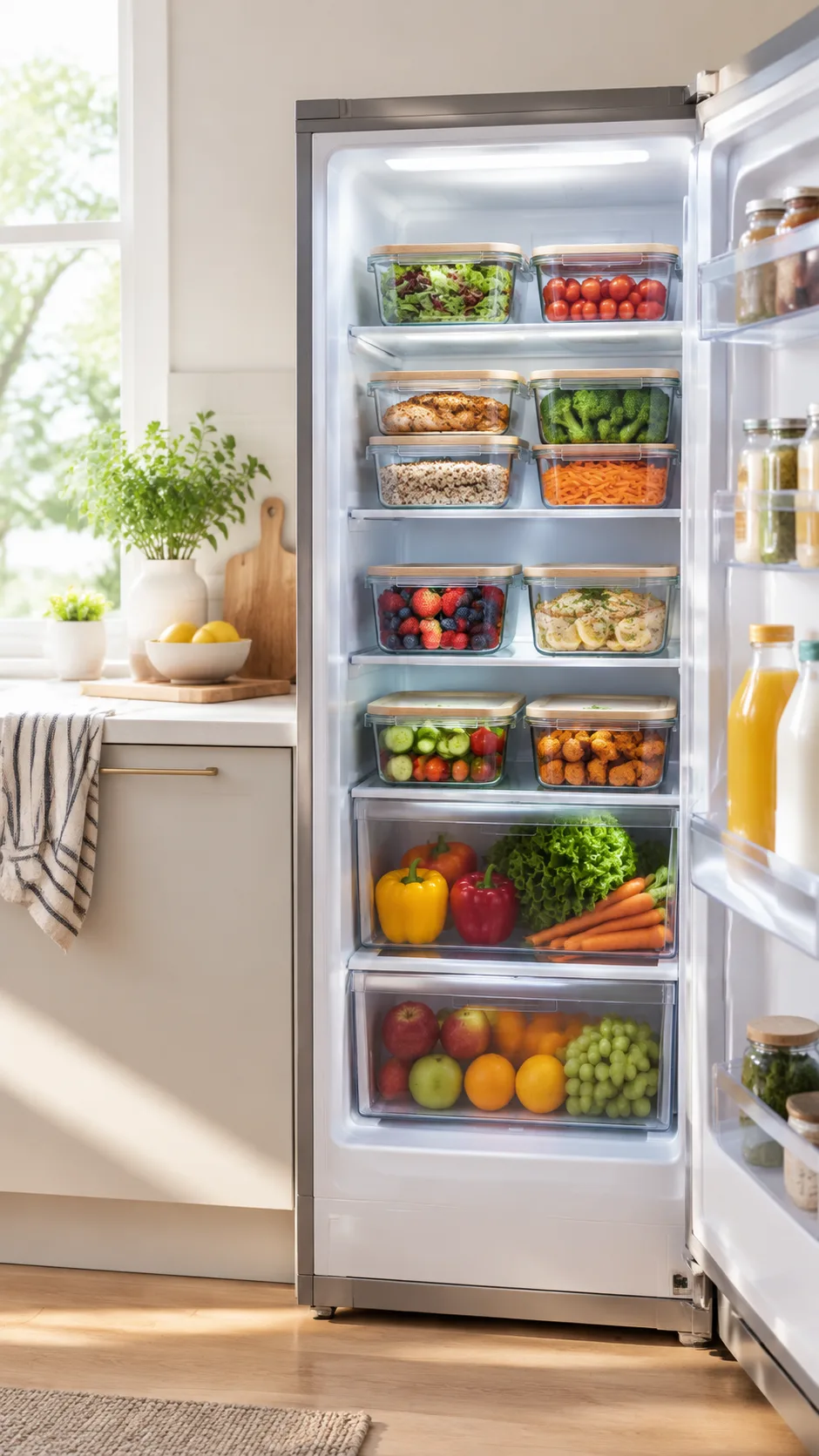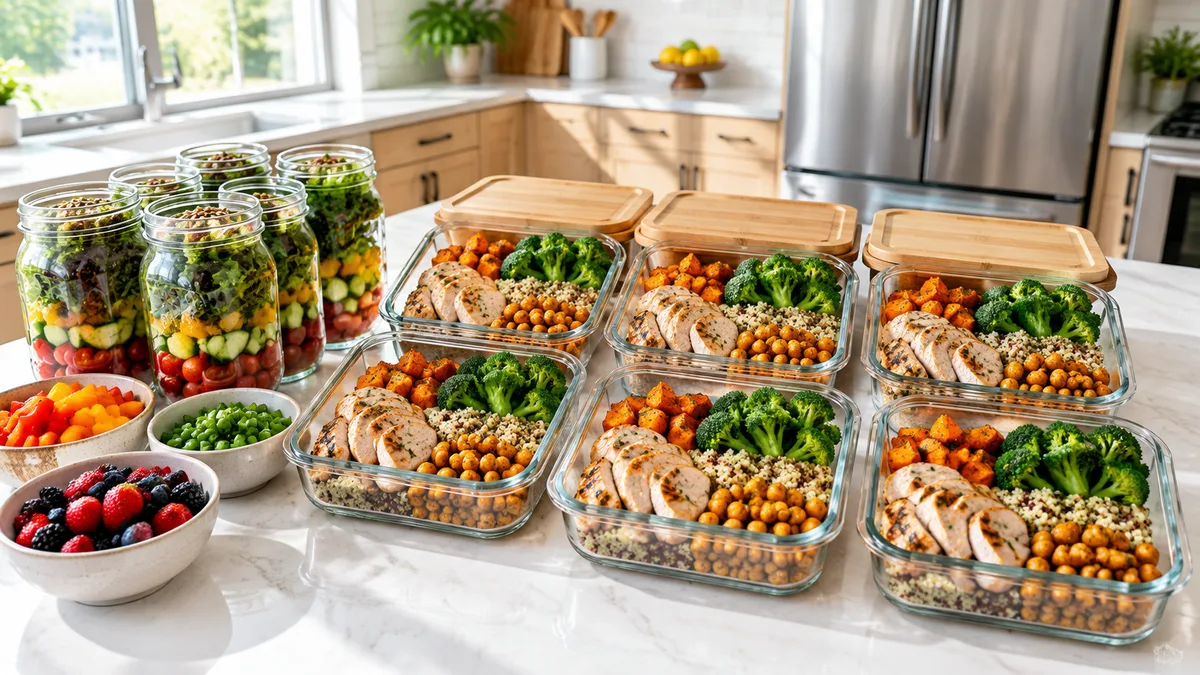
You know that dreadful 6:00 PM feeling. You walk into the kitchen, open the fridge, stare at random ingredients, and sigh while your kids beg for snacks. Most parents spend forty to sixty minutes every evening chopping onions, waiting for pans to heat, and scrubbing greasy skillets. That routine steals five to seven hours of your personal time every single week.
You can reclaim five full hours of your life every week without resorting to frozen chicken nuggets. Drop the traditional habit of cooking an entire meal from scratch every night. Replace that daily scramble with a practical, modular cooking routine that gives you fast weeknight dinners with almost no cleanup.
This weekly meal prep family routine cuts your kitchen time in half, protects your sanity, and puts fresh dinners on the table in fifteen minutes flat.
The hidden math of wasted kitchen hours
Where does your evening time go? Look at the numbers, because the math adds up fast.
Each home-cooked weeknight dinner eats up time in four areas:
- Decision fatigue (10 minutes): You stare into pantry shelves, debate with your spouse, and wonder what to make.
- Prep work (20 minutes): You peel garlic, dice peppers, trim chicken, and pull out bottles of spices.
- Active cooking (20 to 30 minutes): You stand over hot burners, stir sauces, and watch the oven clock.
- Post-dinner cleanup (20 minutes): You scrub pans, wipe counters, and pack the dishwasher.
Multiply that routine across five weeknights, and you burn up to six hours on dinner duties alone. When you shift the bulk of your prep and cooking into a single 90-minute block, you eliminate repetitive dishwashing and daily chopping. You wash the chef’s knife once. You wipe down the cutting board once.
Learning a few easy meal planning ideas gives you the foundation you need to feed your family without daily meltdowns.
Component prep versus full meals
Many parents spend three hours on a Sunday assembling five full casseroles, only to face soggy textures by Thursday. Full meal prep often ruins food quality, and nobody craves four-day-old reheated lasagna on a Wednesday night.
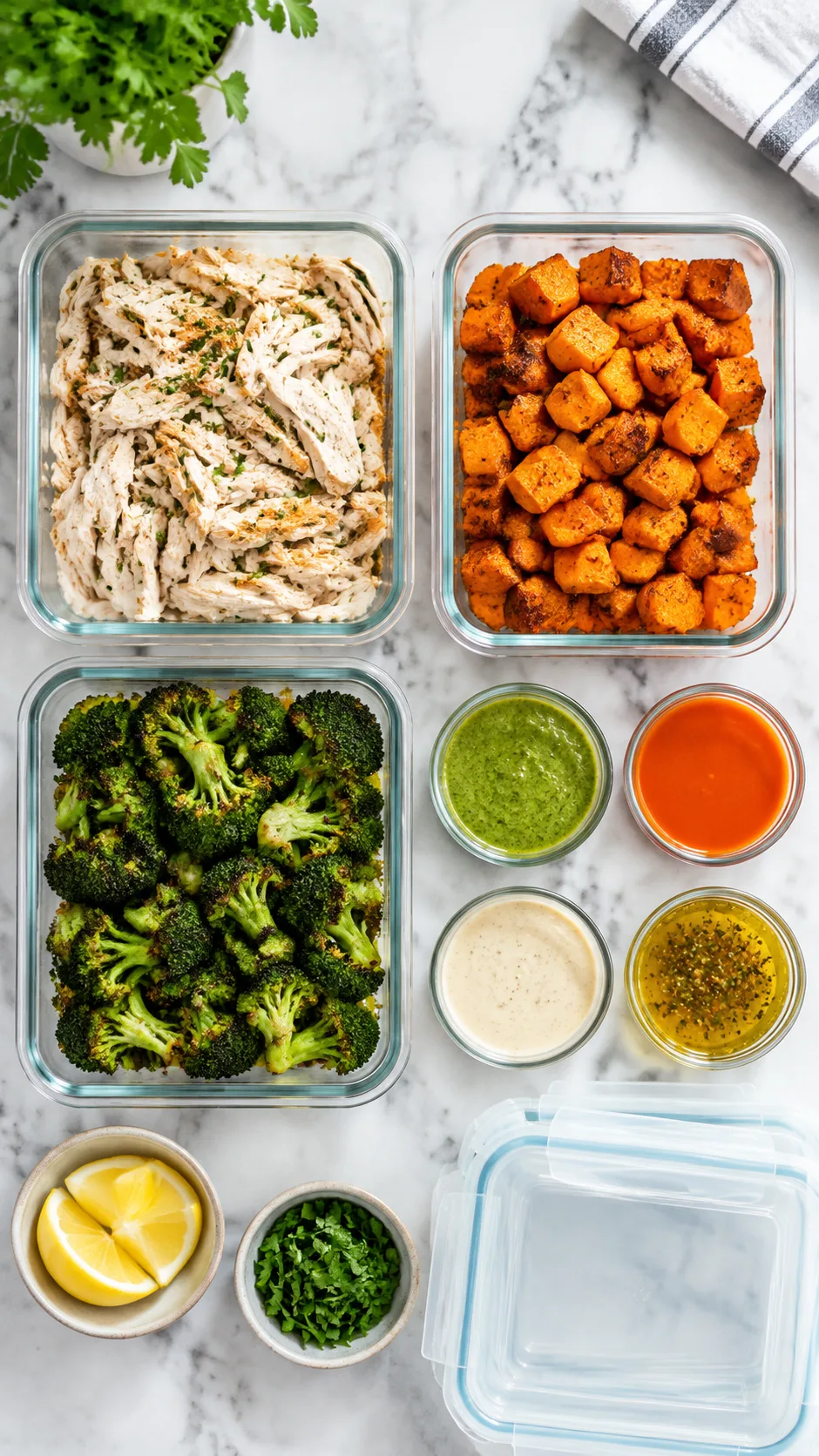
Try component meal prep instead. You cook building blocks rather than finished dishes, filling your fridge with versatile basics:
- Two foundational proteins (such as shredded salsa chicken and seasoned lean ground beef).
- Two carbohydrates (such as roasted sweet potato cubes and jasmine rice).
- Two roasted sheet-pan vegetables (such as charred broccoli florets and zucchini slices).
- Two raw crunchy vegetables (such as shredded cabbage and diced bell peppers).
- Two flavorful sauces (such as tangy chimichurri and garlic yogurt sauce).
This setup lets you build completely different dinners each night from the exact same components. You make Mediterranean chicken bowls on Monday, assemble beef tacos on Tuesday, and toss together a quick skillet hash on Wednesday. You use the same base food, but nobody gets bored.
Phase 1: The 20-minute Friday kitchen audit
Never start meal prep on Sunday afternoon with an empty fridge and zero plan. That approach guarantees frustration and a hasty takeout order. Build your plan Friday morning with a quick, honest kitchen audit.
Step 1: Check the pantry and freezer
Open your freezer and pull out forgotten bags of frozen peas or vacuum-sealed ground turkey. Check the crisper drawer for carrots that need using. You save money and prevent food waste when you design dinners around items you already own. Budget-minded families can pair this routine with a low budget meal plan to reduce grocery spending by thirty percent.
Step 2: Choose your protein and carb lineup
Decide on your components before you write down a single item on your grocery list. Keep the formula simple:
- Protein A: 3 pounds boneless skinless chicken thighs or breasts.
- Protein B: 2 pounds ground beef or ground turkey.
- Carb A: 4 cups cooked jasmine rice or quinoa.
- Carb B: 3 pounds cubed Yukon gold or sweet potatoes.
- Veggies: 2 heads of broccoli, 4 bell peppers, and 1 bag of baby spinach.
Step 3: Use online grocery pickup
Skip dragging your children through crowded supermarket aisles on Saturday morning. You lose ninety minutes dodging carts and handling snack requests. Submit your grocery order online for curbside pickup on Friday afternoon. Pick up the packed bags on Saturday morning while you run your errands. That simple step saves your first hour of kitchen chores for the week.
Phase 2: The Sunday 90-minute kitchen power sprint
Put your headphones on, turn on a podcast, and send the kids outside. This ninety-minute cooking block sets up your entire week. The trick lies in multitasking with your appliances: run your oven and pressure cooker while you chop fresh vegetables.
The tools you need
Clear your counters before you touch an ingredient. Set out your equipment:
- Two large rimmed sheet pans lined with parchment paper.
- A multi-cooker or Instant Pot for shredding meat quickly.
- A large 12-inch heavy skillet.
- A sharp 8-inch chef’s knife and an oversized cutting board.
- Airtight glass food storage containers.
Minutes 0 to 15: Start the hands-off cooking
Preheat your oven to 425°F (220°C). Pour one cup of chicken broth into your Instant Pot, add 3 pounds of chicken breasts, season with garlic powder, salt, and cumin, seal the lid, and cook on High Pressure for 12 minutes. Rinse your rice and switch on your rice cooker. In less than fifteen minutes, you have started your primary meat and starch without watching a stove.
Minutes 15 to 45: Chop vegetables and cook the second protein
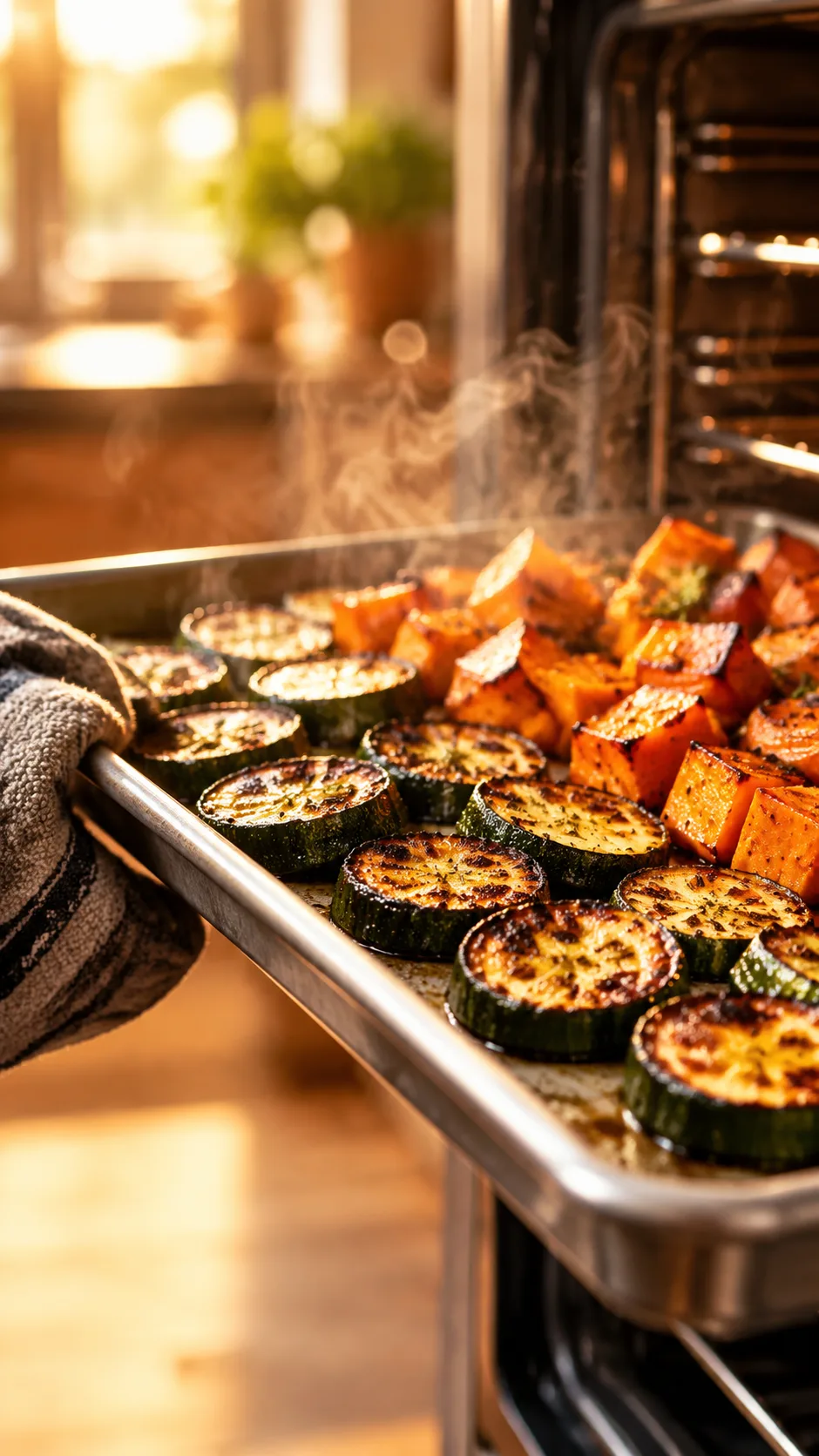
Wash your produce. Cube your sweet potatoes and slice the broccoli into florets. Toss the sweet potatoes with olive oil, smoked paprika, salt, and pepper, then spread them onto your first sheet pan. Toss the broccoli florets with olive oil, sea salt, and black pepper, then spread them onto the second pan.
Slide both sheet pans into the hot oven for 25 minutes. While the vegetables roast, brown your ground beef in a skillet over medium-high heat with diced onions and taco seasoning. Drain the grease and spoon the cooked beef into a glass container.
Minutes 45 to 70: Shred meat and mix sauces
Release the steam valve on your Instant Pot. Transfer the cooked chicken to a wide bowl and shred it using two forks or a handheld mixer (the mixer shreds chicken in thirty seconds). Spoon two tablespoons of the cooking liquid over the shredded meat so it stays moist throughout the week.
Remove the roasted vegetables from the oven and let the steam escape before packing them into containers. Whisk your dressings together in small jars: mix a quick lemon-tahini dressing, a lime vinaigrette, or a chipotle crema. The Harvard T.H. Chan School of Public Health points out that making homemade dressings with healthy oils helps you avoid the hidden sugars and additives found in commercial salad bottles.
Minutes 70 to 90: Pack the containers and clean up
Divide your cooked ingredients into labeled glass storage containers. Wipe down your counters, place the cutting board in the sink, wash the skillet, and put away your tools. You just finished eighty percent of your cooking for the next five nights in an hour and a half.
Phase 3: Food storage and safety
Nothing ruins a good routine faster than finding slimy vegetables or spoiled meat by midweek. Follow basic food safety practices to keep everything fresh.
The USDA Food Safety and Inspection Service advises eating or freezing cooked meats and poultry within three to four days of refrigeration. When you prep on Sunday afternoon, your cooked chicken stays fresh through Thursday evening. Put your Friday meat portions directly into the freezer on Sunday night, then transfer them to the fridge on Thursday morning to thaw.
Storage rules for keeping food fresh
- Ditch flimsy plastic tubs: Buy sturdy borosilicate glass containers with snap lids. Glass keeps vegetables crisp, prevents lingering food odors, and goes safely into the microwave or oven.
- Cool food before sealing: Avoid putting airtight lids on steaming food. Trapped moisture pools on the lid and drips onto your vegetables, making them soggy. Let your ingredients sit uncovered for twenty minutes before you seal them.
- Keep greens dry: Place a dry paper towel inside containers holding salad greens and sliced raw vegetables. The towel catches excess moisture and keeps produce crisp for a full week.
If you need a simple framework for grocery shopping and portioning, read our guide to building a simple meal plan that saves both money and mental effort.
Phase 4: The 15-minute Monday to Friday dinner plan
Now you get to enjoy the benefits of your weekend work. When dinner time arrives on a busy Tuesday, you do not cook from scratch. You pull your prepared containers out and plate fresh meals faster than a restaurant delivery driver can reach your house.
Monday: Fiesta burrito bowls
Warm your prepped ground beef or shredded chicken alongside the jasmine rice. Spoon rice into wide bowls, layer on the meat, and add roasted peppers, black beans, salsa, and sliced avocado. You have dinner ready in eight minutes.
Tuesday: Mediterranean loaded flatbreads
Spread store-bought hummus over pita bread or warm naan. Layer on shredded chicken, diced cucumbers, tomatoes, and kalamata olives. Drizzle with your homemade lemon dressing. Toast them under your oven broiler for three minutes if you want melted cheese on top.
Wednesday: Crispy skillet hash
Heat your pre-roasted sweet potatoes and broccoli florets in a hot skillet with a little butter. Toss in your leftover seasoned ground beef until warm. Crack four eggs over the mixture, cover the pan with a lid for three minutes until the whites cook through, and serve a hot skillet hash.
Thursday: 10-minute peanut chicken noodles
Cook quick rice noodles or ramen noodles in boiling water for four minutes. Whisk two tablespoons of peanut butter with warm water, soy sauce, lime juice, and honey. Toss the warm noodles, shredded chicken, and sliced raw cabbage with the peanut dressing. Scatter crushed peanuts on top for crunch.
Friday: Clean out the crisper pizzas
Clear out the fridge at the end of the week. Hand your kids pre-baked pizza crusts or flatbreads. Set out your remaining containers of chicken, roasted vegetables, tomato sauce, and mozzarella cheese. Let each family member build their own pizza, bake at 450°F for eight minutes, and relax. You navigated another full week without ordering takeout.
Handling picky eaters and different preferences
If one child hates cooked broccoli while your partner avoids dairy, component prep solves the conflict without forcing you to cook separate meals.
The Academy of Nutrition and Dietetics notes that offering kids control over their food choices reduces mealtime arguments and encourages healthy eating habits. Component prep lets you serve dinner family style:
- Place each prepared ingredient in its own dish on the table.
- Set a clear expectation: everyone selects one protein, one grain, and one vegetable.
- Allow your children to build their own plates from those options.
If your child prefers plain food, they can pick dry roasted broccoli alongside rice and chicken. Meanwhile, you can top your plate with hot sauce and rich dressing. Everyone eats according to their taste, and you only cooked one batch of food.
Frequently asked questions
Will prepped food taste stale by Thursday?
Food only tastes stale when you mix everything together too early. When you keep meat, grains, and vegetables in separate glass containers, each item retains its flavor and texture all week. Store your sauces and crunchy garnishes separately, and add them right before eating.
How do I reheat prepped food without drying out the meat?
Do not reheat meat on high microwave power. Warm meat in a skillet over medium heat with one tablespoon of water or broth, keeping the lid on. If you prefer the microwave, set the power to 70 percent and lay a damp paper towel across the bowl to trap moisture.
What if my family gets tired of eating the same proteins?
Vary your spices rather than cooking multiple dishes. Divide your raw chicken across two baking dishes on Sunday: season one dish with Italian herbs and garlic, and season the second dish with chili powder and cumin. You get two distinct flavors from one cooking session.
How to get started this week
Breaking the daily 6:00 PM kitchen scramble changes your evenings. You gain thirty to sixty quiet minutes each night to spend time with your children, read a book, exercise, or rest on the couch without facing a sink full of dirty pots.
You do not need to change every cooking habit at once. Select two proteins and two vegetables for this coming Sunday. Block out 90 minutes, put on some music, and complete your first prep session. Once you experience an eight-minute dinner on a busy Monday night, you will never return to the daily scramble.