
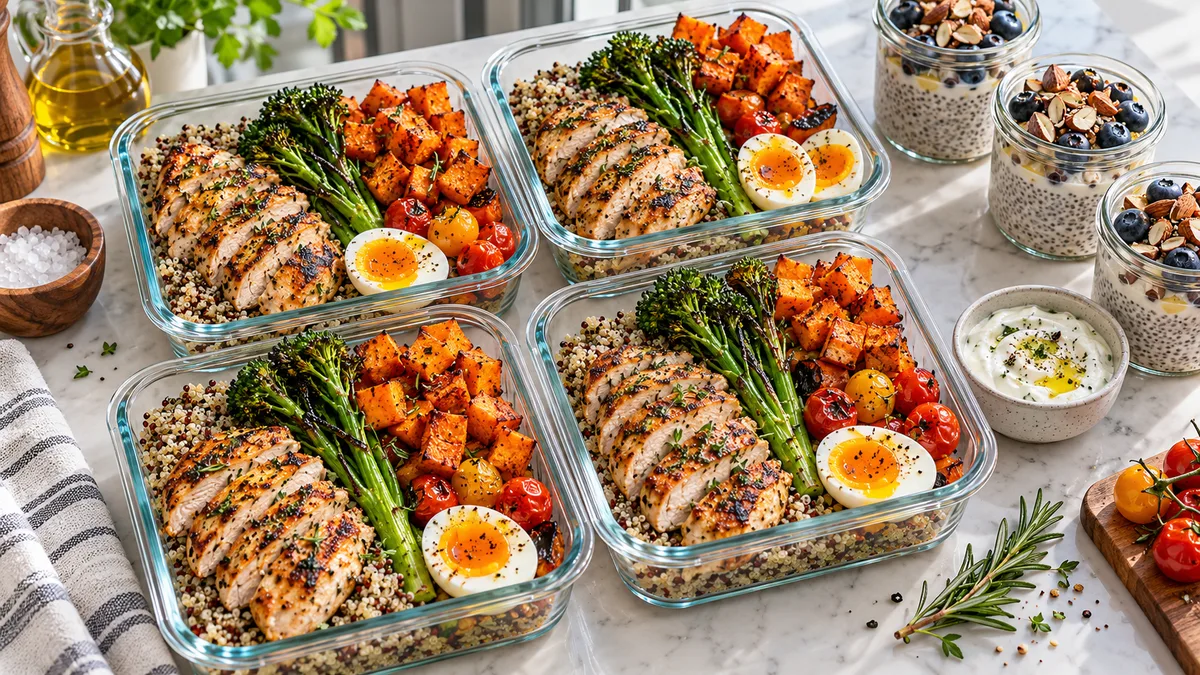
Around 3:00 PM, your stomach growls, your concentration slips, and the vending machine down the hall starts looking like an oasis. You buy a bag of chips or a candy bar, regret the choice twenty minutes later, and hit an energy wall before dinner.
Beginners often assume high-protein meal prep means losing half their Sunday to the stove. They picture stacks of flimsy plastic tubs filled with chalky chicken breast and boiled broccoli. Nobody sticks with a routine that feels like a chore.
You can hit your nutrition goals without eating like a bodybuilder prepping for a contest. When you build meals around a straightforward protein base, you free up your weeknights and sidestep midday slumps. You can easily set up a weekly routine that tastes good.
Why protein works best for busy beginners
Human biology explains why a giant bowl of pasta leaves you starving by mid-afternoon, while a piece of steak satisfies you until dinner. Your digestive tract spends significantly more energy breaking down protein than it does processing fats or simple carbohydrates.
Nutritionists refer to this as the Thermic Effect of Food (TEF). Protein has a thermic effect of roughly 20 to 30 percent. In practice, your digestive system burns up to 30 out of every 100 protein calories just breaking down the food.
Protein also directly controls appetite hormones. When you eat protein, your gut releases satiety signals like peptide YY and GLP-1 while blunting ghrelin, the primary hunger hormone. Research from the Harvard T.H. Chan School of Public Health shows that eating enough quality protein keeps blood sugar steady and prevents energy dips.
If you want stable energy and lasting fullness throughout the workday, prioritizing protein delivers the best return.
The simple high-protein plate formula
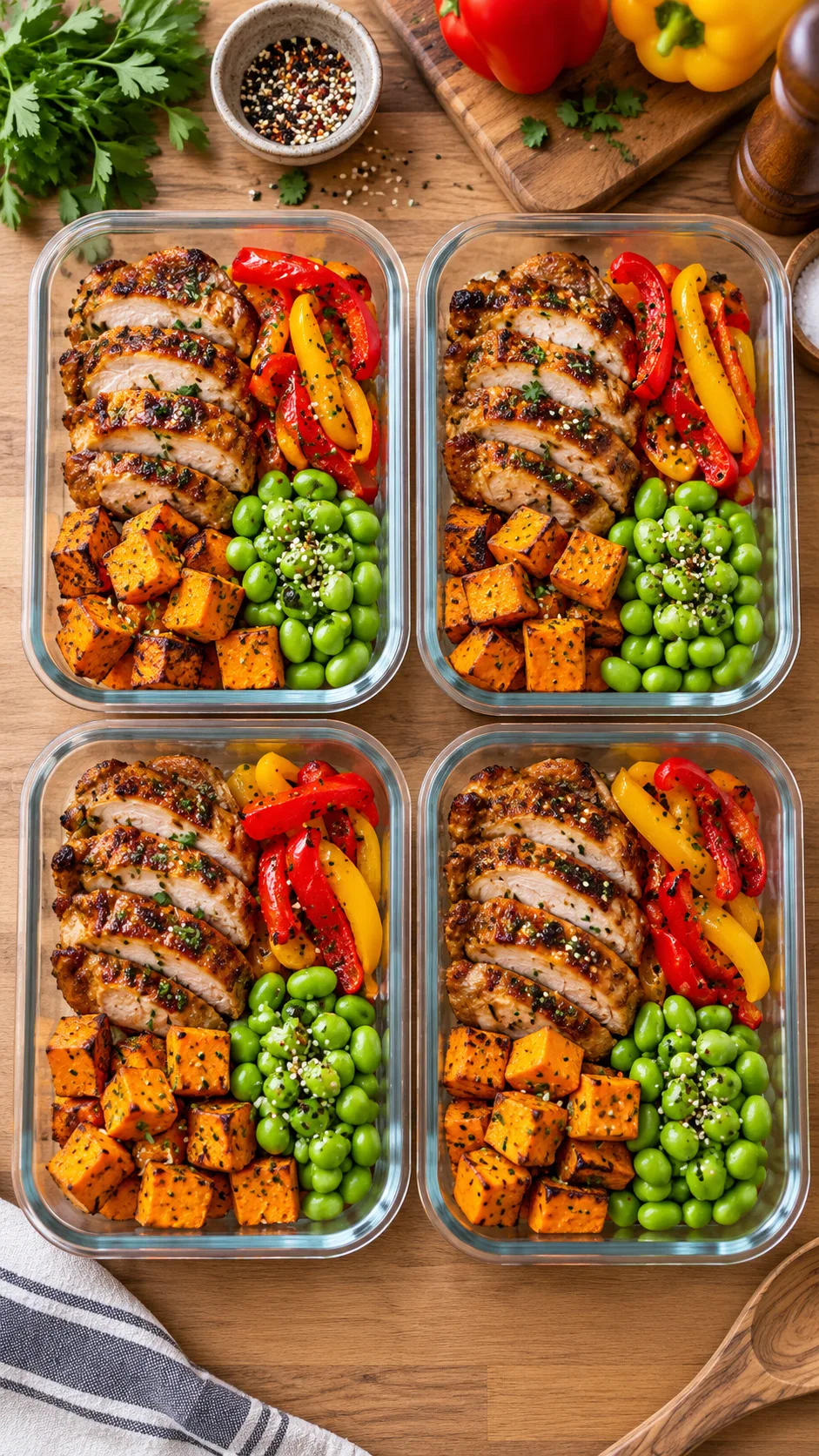
Skip recipes that require half a dozen pans and rare pantry spices. Assembling meals in modular components works far better for a busy week. Use this basic framework to build dozens of satisfying bowls without opening a cookbook:
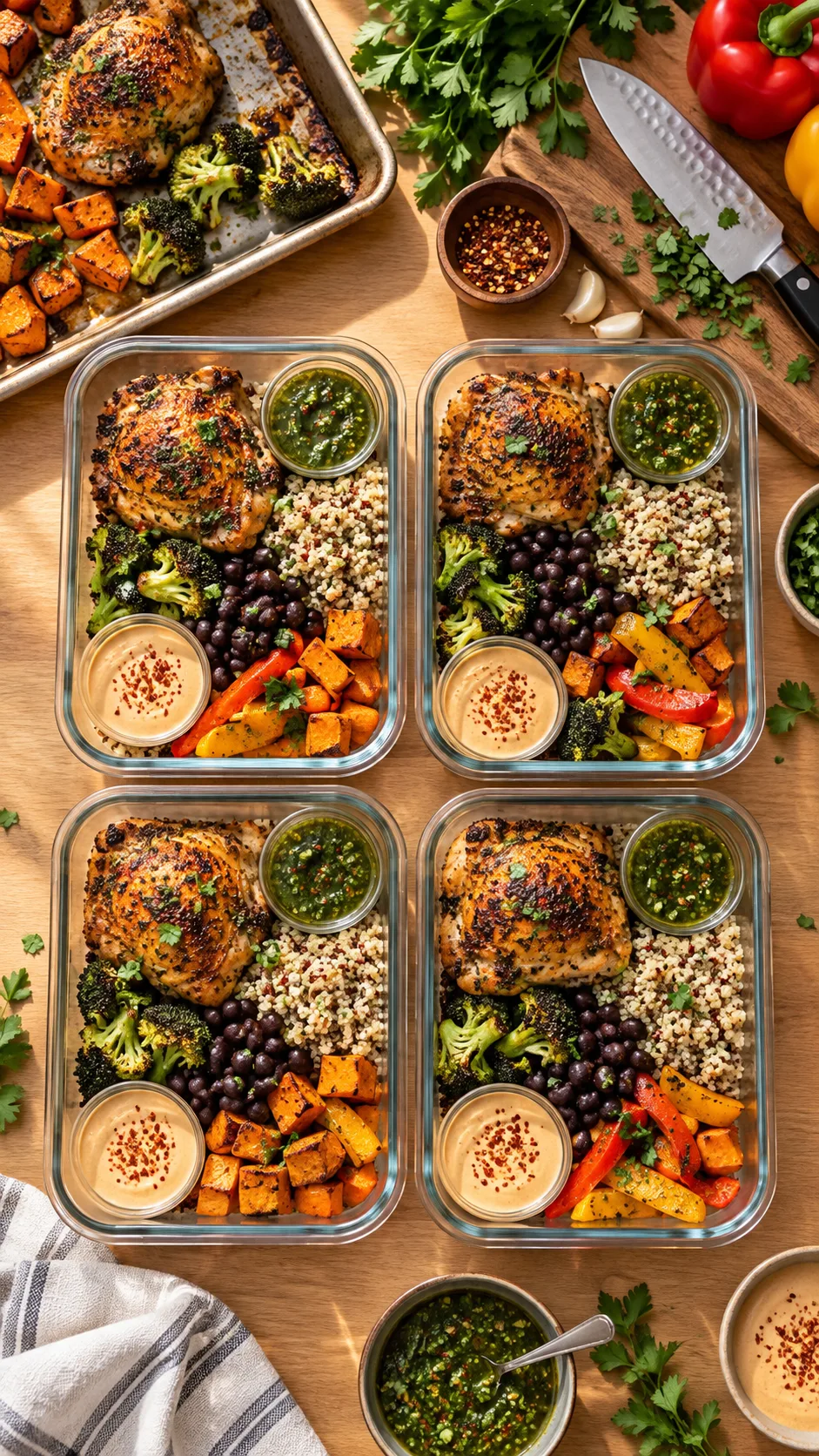
- The protein anchor (35 to 45 grams): Fill about a third of your container with a concentrated protein source. Good options include lean ground turkey, roasted chicken thighs, extra-firm tofu, or shrimp.
- The high-fiber base (10 to 15 grams of fiber): Dedicate the rest of your container to vegetables and slow-digesting carbs like quinoa, roasted sweet potatoes, black beans, or broccoli.
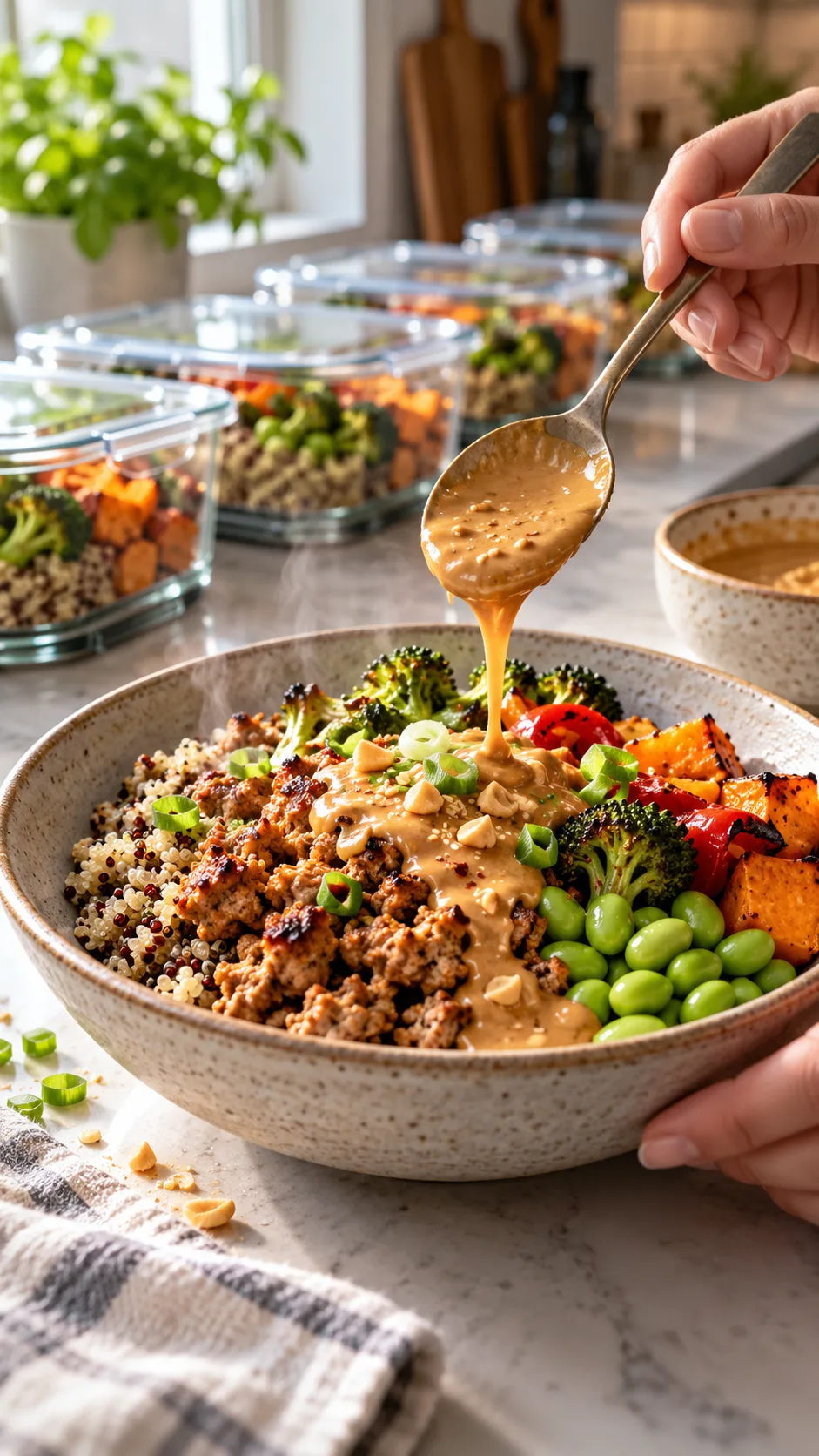
- The sauce or fat element: Add one or two tablespoons of a strong sauce. Chimichurri, peanut sauce, spicy tahini, or Greek yogurt ranch turn plain fuel into a satisfying meal.
This setup keeps you full for four to six hours. When you combine this formula with our high protein high fiber meal plan, building your weekly menu becomes straightforward.
The 90-minute prep routine
You do not need to spend an entire Sunday washing pans. Ninety focused minutes gives you enough food for four to five days of lunches and dinners. Use this timeline to keep your kitchen moving smoothly:
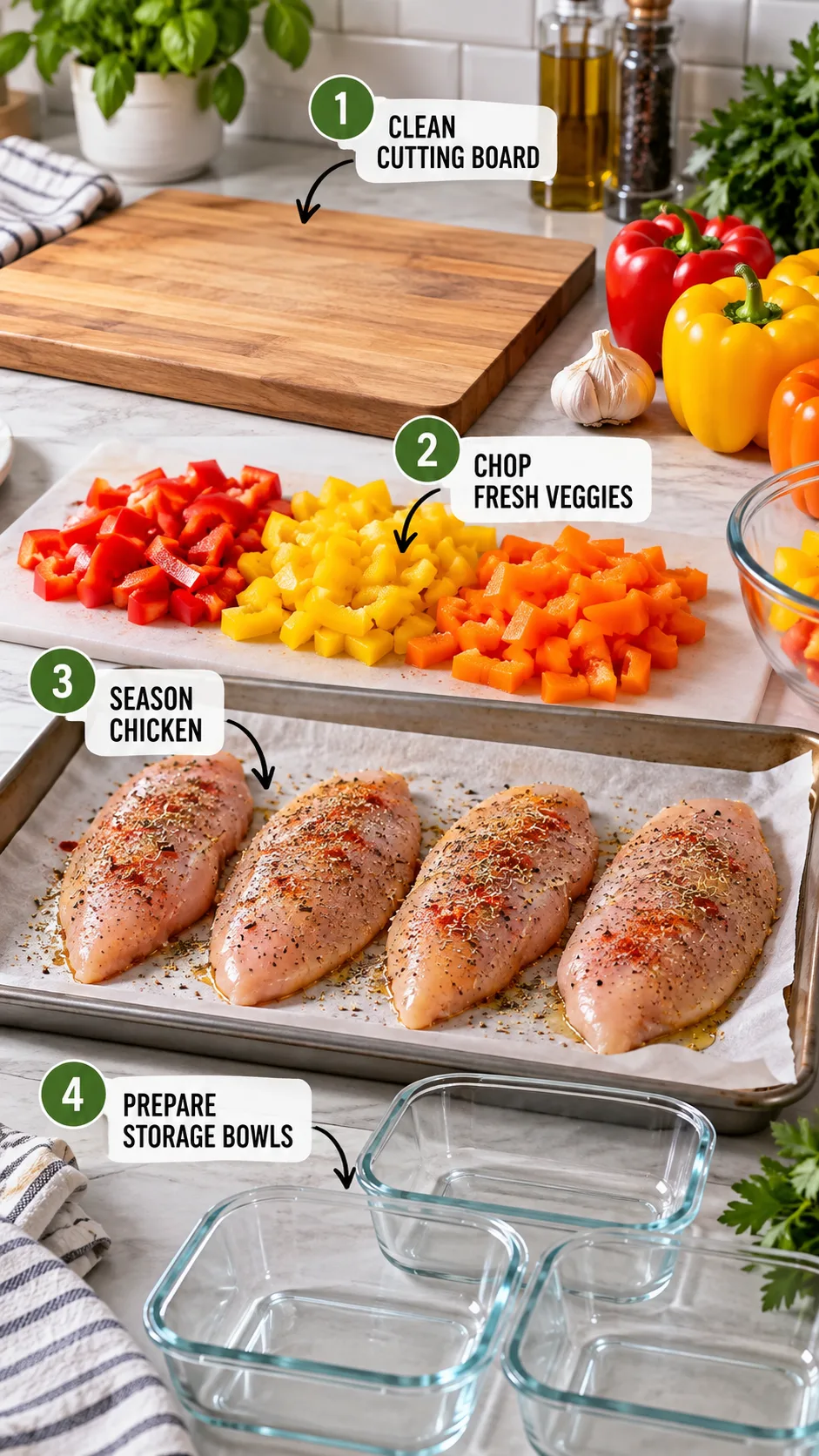
Minutes 0 to 15: Oven warm-up and chopping
Set your oven to 400°F (205°C). Line two large baking sheets with parchment paper or heavy aluminum foil. Lining the pans keeps cleanup under a minute because juices never bake onto the metal.
Chop your vegetables into uniform, bite-sized pieces so everything cooks at the same rate. Bell peppers, red onions, zucchini, and broccoli florets roast well alongside one another.
Minutes 15 to 45: Sheet pan roasting
Spread your vegetables across the first baking sheet. Drizzle them directly on the pan with olive oil, salt, black pepper, and garlic powder. Arrange them in a single layer so the edges brown instead of steaming.
Put your seasoned protein on the second baking sheet. Boneless chicken thighs, lean pork loin strips, or cubed extra-firm tofu cook through in about 25 minutes at high heat. Slide both trays into the oven together.
Minutes 45 to 65: Stovetop cooking
While the oven runs, move to the stove. Simmer a batch of quinoa, brown rice, or red lentil pasta in a medium saucepan. In a separate skillet, brown two pounds of 93 percent lean ground turkey or beef with taco seasoning.
This leaves you with two distinct proteins and a hearty carb source without standing over the stove the whole time.
Minutes 65 to 90: Container assembly
Remove the baking sheets from the oven and let the food rest for ten minutes. Trapped steam turns hot food soggy once you seal the containers. After the food cools down, divide the grains, vegetables, and proteins into airtight glass containers.
If you want a structured schedule for the rest of your week, read our step-by-step beginner meal prep framework to organize your kitchen workflow.
The beginner high-protein grocery list
Never walk into the supermarket without a written list. Supermarkets place processed snacks right at eye level to encourage impulse buys. Stick largely to the perimeter walls and stock up on these versatile items:
Protein sources
- Boneless, Skinless Chicken Thighs: Chicken thighs have slightly more fat than breasts, so they stay tender when you reheat them in the microwave.
- 93% Lean Ground Turkey or Beef: Ground beef or turkey cooks quickly and provides roughly 22 grams of protein per 4-ounce serving, according to data from the USDA FoodData Central database.
- Wild Salmon or Canned Albacore Tuna: Canned albacore tuna and wild salmon provide lean protein along with omega-3 fatty acids.
- Plain Non-Fat Greek Yogurt: Plain nonfat Greek yogurt supplies up to 20 grams of protein per cup. You can use it in place of sour cream or eat it with fruit for breakfast.
- Cottage Cheese (2% or 4%): Cottage cheese blends into pasta sauces for extra creaminess, or works as a quick snack with black pepper and sliced tomatoes.
- Extra-Firm Tofu or Tempeh: Extra-firm tofu and tempeh absorb marinades quickly and hold their shape during roasting.
Fiber-rich carbohydrates
- Quinoa: Quinoa provides 8 grams of complete protein per cooked cup along with dietary fiber.
- Black Beans & Chickpeas: Rinse canned beans under cold water to wash away excess sodium.
- Sweet Potatoes: Sweet potatoes supply slow-digesting carbohydrates and a high dose of vitamin A.
- Chickpea or Lentil Pasta: Chickpea or lentil pasta offers twice the protein of regular pasta alongside substantially more fiber.
Sauces and seasonings
- Sriracha or traditional hot sauce
- Balsamic glaze
- Dijon mustard
- Low-sodium soy sauce or coconut aminos
- Fresh limes and lemons
- Smoked paprika, garlic powder, and dried oregano
Watch: Quick meal prep in action
If you prefer watching someone cook before trying it yourself, this video demonstrates how to put together a week of meals without unnecessary steps:
A five-day meal schedule targeting 130 grams of daily protein
Here is a practical five-day setup that avoids repetitive flavors. Changing sauces and sides keeps Friday lunch just as appetizing as Monday dinner. You can find more combinations in our guide to easy high protein meal prep ideas.
Monday and Wednesday: Smoky turkey burrito bowls
Protein Count: Roughly 42 grams per serving
- 6 oz Seasoned 93% lean ground turkey (browned with cumin, chili powder, and onion flakes)
- 1/2 cup cooked brown rice or cilantro-lime cauliflower rice
- 1/3 cup black beans (rinsed and drained)
- 1/2 cup roasted bell peppers and onions
- 2 tablespoons salsa verde
- 1 tablespoon Greek yogurt (as faux sour cream)
Pro tip: Pack fresh lime wedges separately and squeeze them over the container after reheating. Fresh citrus instantly cuts through reheated meat and beans.
Tuesday and Thursday: Mediterranean chicken boxes
Protein Count: Roughly 45 grams per serving
- 6 oz Marinated chicken breast or thighs (oregano, garlic, lemon juice, olive oil)
- 1/2 cup fluffy quinoa
- 1 cup roasted zucchini and grape tomatoes
- 2 tablespoons traditional hummus
- 1 tablespoon crumbled sheep’s milk feta cheese
Pro tip: You can eat this bowl warm or cold. If you microwave it for 60 seconds, the hummus loosens into a warm dressing across the quinoa.
Friday: Sesame ginger shrimp and edamame bowl
Protein Count: Roughly 38 grams per serving
- 6 oz Large peeled shrimp (sautéed with garlic and ginger for 4 minutes total)
- 1/2 cup shelled edamame (steamed)
- 1 cup shredded cabbage and carrot slaw mix
- 1/2 cup high-protein edamame pasta or soba noodles
- 1 tablespoon toasted sesame dressing
Pro tip: Cook shrimp toward the end of your week rather than on Sunday. Shrimp cooks in under five minutes, so you can sear it in a hot pan right before dinner on Thursday or Friday.
High-protein snacks for the afternoon
If you eat lunch at 1:00 PM and dinner at 7:30 PM, you will likely get hungry before you get home. Packing substantial snacks keeps you away from office vending machines. Stock your fridge with these items:
- The power yogurt parfait (25 grams of protein): Stir one scoop of vanilla whey or plant powder into 3/4 cup of plain Greek yogurt until completely smooth. Top it with fresh raspberries.
- Spiced edamame in the pod (17 grams of protein): Microwave a bag of frozen edamame pods for three minutes, then toss with coarse sea salt and smoked red pepper flakes. Shelling the pods by hand naturally slows your eating pace.
- Beef or turkey sticks (10 to 12 grams of protein): Stash shelf-stable meat sticks in your work bag. Eat one with a small serving of raw almonds for an easy commute snack.
Data published on PubMed indicates that spreading protein across three or four meals stimulates muscle repair more effectively than loading the entire daily total into a single heavy dinner. Distribute your intake across the day.
Storage tips to keep reheated food tender
Reheated chicken often turns dry and tough when stored or warmed up incorrectly. A few simple adjustments keep your food tender through the end of the week:
1. Use glass containers with locking lids
Ditch thin takeout containers. Plastic absorbs food odors, stains easily from tomato sauces, and bends under heat. Glass containers with snap-lock lids form an airtight seal that preserves freshness for days. You can also place glass directly into the microwave or oven without worrying about melted plastic.
2. Follow the four-day refrigerator limit
Cooked meats and seafood maintain good quality in a refrigerator set below 40°F (4°C) for three to four days. If you cook on Sunday afternoon, eat those meals by Thursday lunch. Place Friday portions in the freezer, or cook a quick two-portion meal on Wednesday evening.
3. Use an ice cube when reheating grains and meat
Before heating cooked poultry, rice, or grains, place a single ice cube on top of your food and cover the container loosely with a paper towel. Run your microwave at 70 percent power for two minutes. The cube releases steam into the container rather than melting completely, restoring moisture to the meat and softening the grains.
Solutions to common beginner hurdles
Most people hit a few predictable obstacles during their first month of meal prep. Here is how to handle the most common issues:
Dealing with food fatigue
Prepare a plain protein base like shredded chicken or browned ground turkey seasoned only with salt, pepper, and garlic. Divide the meat into three portions. Mix one portion with hot sauce, the second with salsa, and the third with a spoonful of teriyaki marinade. You spend the same cooking time while getting three different flavor profiles for the week.
Preventing soggy vegetables
Water-dense vegetables like zucchini, mushrooms, and asparagus release liquid as they sit in the fridge. Roast them thoroughly at high heat until the edges brown. Alternatively, pack crunchy raw vegetables like shredded cabbage, sliced radishes, or snap peas in a separate bag, then add them to your hot bowl right after reheating.
Managing prep time on busy weekends
Start with a manageable target. Do not try cooking breakfast, lunch, and dinner for the entire week on your first attempt. Cook only lunches for Monday through Thursday. Once you master that routine, you can add breakfasts or dinners. Building the habit steadily produces better long-term consistency than trying to overhaul your entire kitchen overnight.
Next steps for your weekend
Meal prep does not require culinary training or expensive equipment. It requires a repeatable schedule. When you apply the high-protein formula (a solid protein anchor, a high-fiber base, and an easy sauce), you save hours during the workweek and keep your nutrition on track.
You do not have to rely on expensive takeout that leaves you sluggish by 2:00 PM. Set aside ninety minutes this Sunday, head to the store with your list, and stock your fridge with meals you look forward to eating.
