
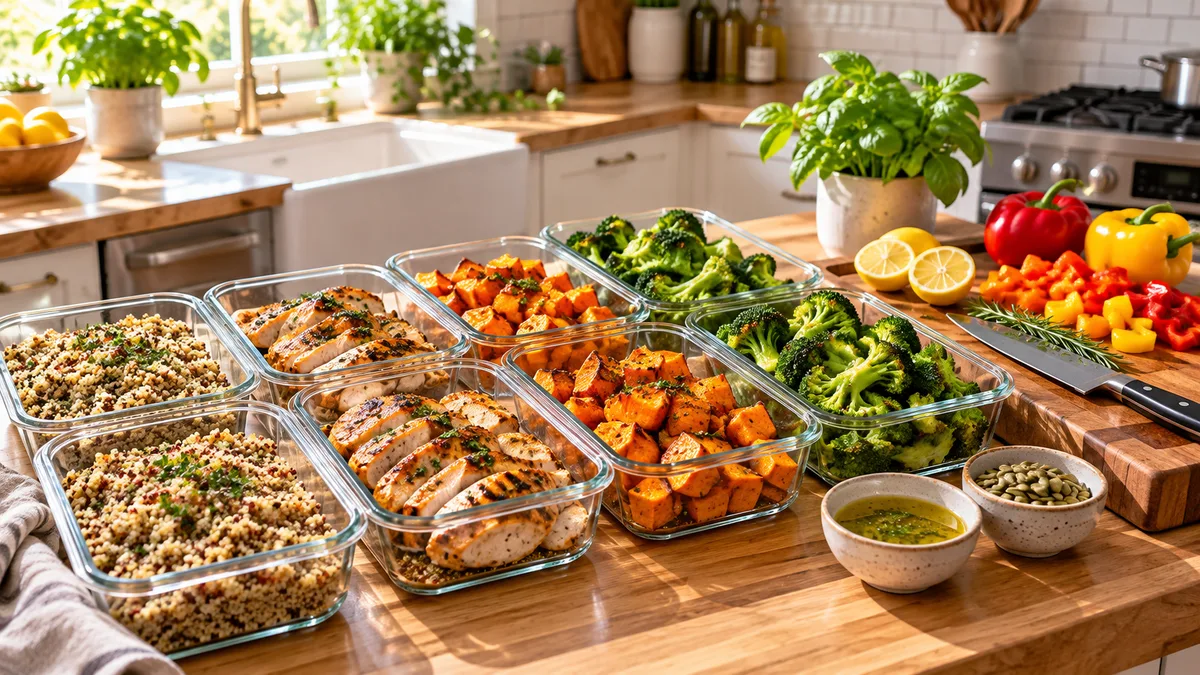
Your week does not need another 6 p.m. “What on earth am I eating?” crisis.
A simple meal prep for the week routine puts food within reach, cuts down on pricey takeout, and keeps the kitchen from becoming a mess. You do not need matching glass containers, a color coded spreadsheet, or the stamina of a reality TV chef.
You need a plan, a short grocery list, and one focused Sunday session. This beginner meal prep system can save you 10 or more hours each week when you count daily cooking, food decisions, extra shopping trips, and cleanup. That sounds pretty good.
Why meal prep saves so much time and sanity
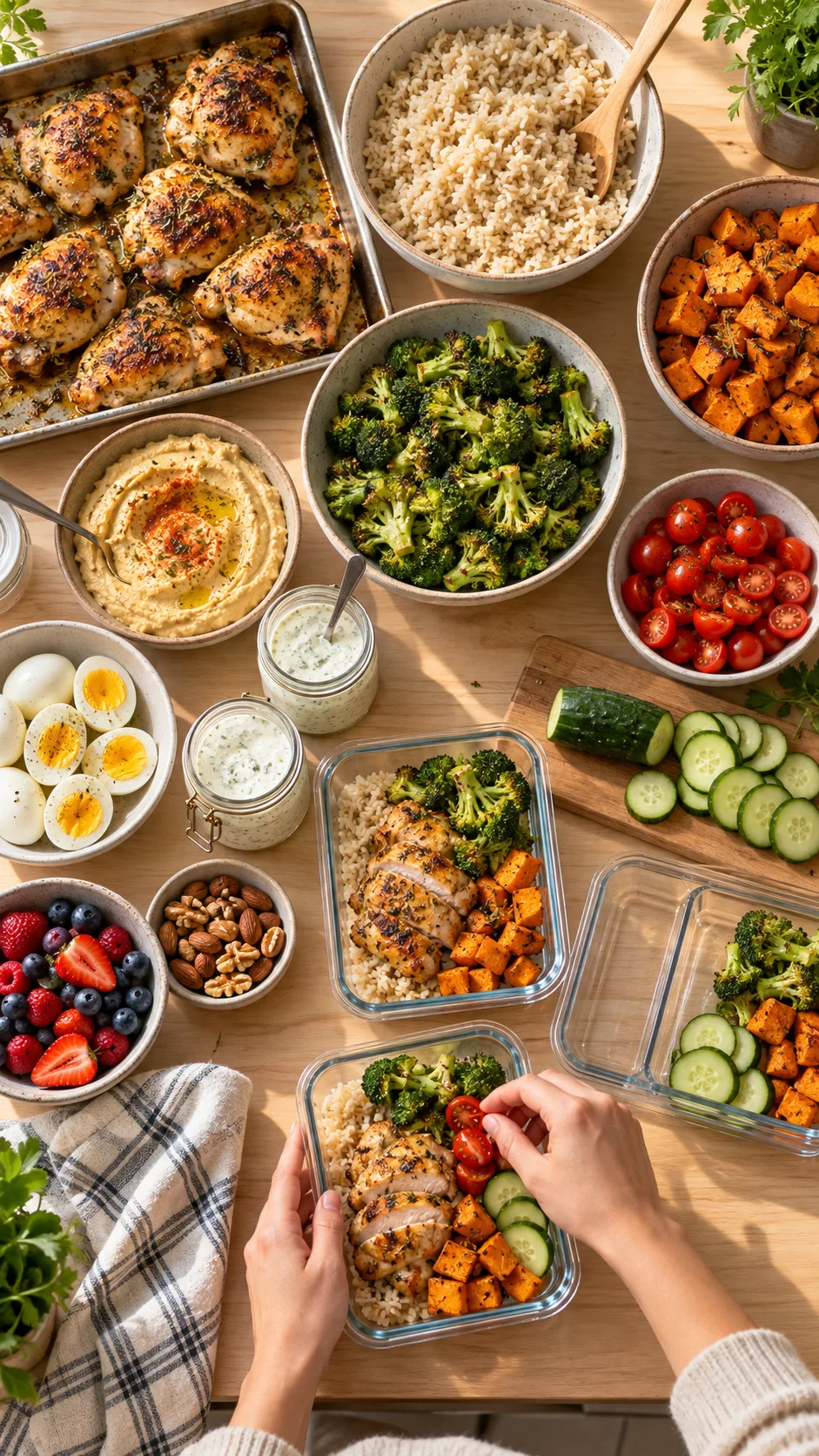
Most people do not lose time because cooking takes forever. They lose it when they decide what to cook every day, search for ingredients, scroll through recipes, and wash the same pan night after night. Those small delays pile up.
With weekly meal prep, you make a handful of decisions once, then turn prepared ingredients into quick meals throughout the week. You still eat real food. You just stop treating every Tuesday lunch like a surprise exam.
The 10 hour time saving math
Keep the numbers realistic. A typical week can include five rushed breakfasts, five lunches, five dinners, several snack searches, and at least one emergency grocery run. All of that takes time.
- Daily meal decisions: 10 to 15 minutes a day equals 70 to 105 minutes each week.
- Cooking from scratch each night: 30 to 45 minutes over five nights equals 150 to 225 minutes each week.
- Extra kitchen cleanup: 10 minutes over five nights equals 50 minutes each week.
- Last minute grocery trips or takeout pickups: 30 to 60 minutes each week.
- Lunch packing and breakfast scrambling: 10 to 15 minutes over five days equals 50 to 75 minutes each week.
One Sunday meal prep session that lasts 90 minutes to two hours can replace much of that work. You will still cook sometimes, and you do not need to eliminate every kitchen task. You only need enough structure to make weekday meals easy.
The beginner meal prep mindset: prep components, not seven perfect menus
Many beginners picture a fridge full of 21 identical containers. Some people like that setup, but eating the same lunch by Thursday can feel grim. For most beginners, component meal prep makes more sense.
Cook a few proteins, carbs, vegetables, sauces, and snacks, then combine them in different ways. You get variety without eating the same chicken and rice box until you question your choices.
Your simple meal prep formula
Build your week around this straightforward formula: 2 proteins + 2 carbs + 3 vegetables + 1 sauce + 2 snack options. It gives you choices without turning Sunday into a catering shift.
- Pick two proteins: chicken thighs, eggs, turkey mince, tofu, salmon, beans, lentils, or Greek yogurt.
- Pick two filling carbs: rice, potatoes, pasta, oats, quinoa, wraps, or whole grain bread.
- Pick three vegetables: choose one roasted option, one fresh option, and one frozen option.
- Pick one flavor booster: salsa, pesto, hummus, yogurt dressing, peanut sauce, or a simple vinaigrette.
- Pick two easy snacks: fruit, cheese, yogurt, nuts, boiled eggs, edamame, or chopped vegetables.
Do you need every one of those options each week? No. Start small, notice what you eat, and adjust next Sunday. Your meal prep routine should fit your life, not an imaginary person who loves kale at 7 a.m.
The simple Sunday meal prep system
This Sunday meal prep for beginners system keeps the work focused and manageable. Set a timer, put on something you enjoy, and treat the session as a favor to Future You. Future You has meetings, errands, and no desire to chop onions at 8:30 p.m.
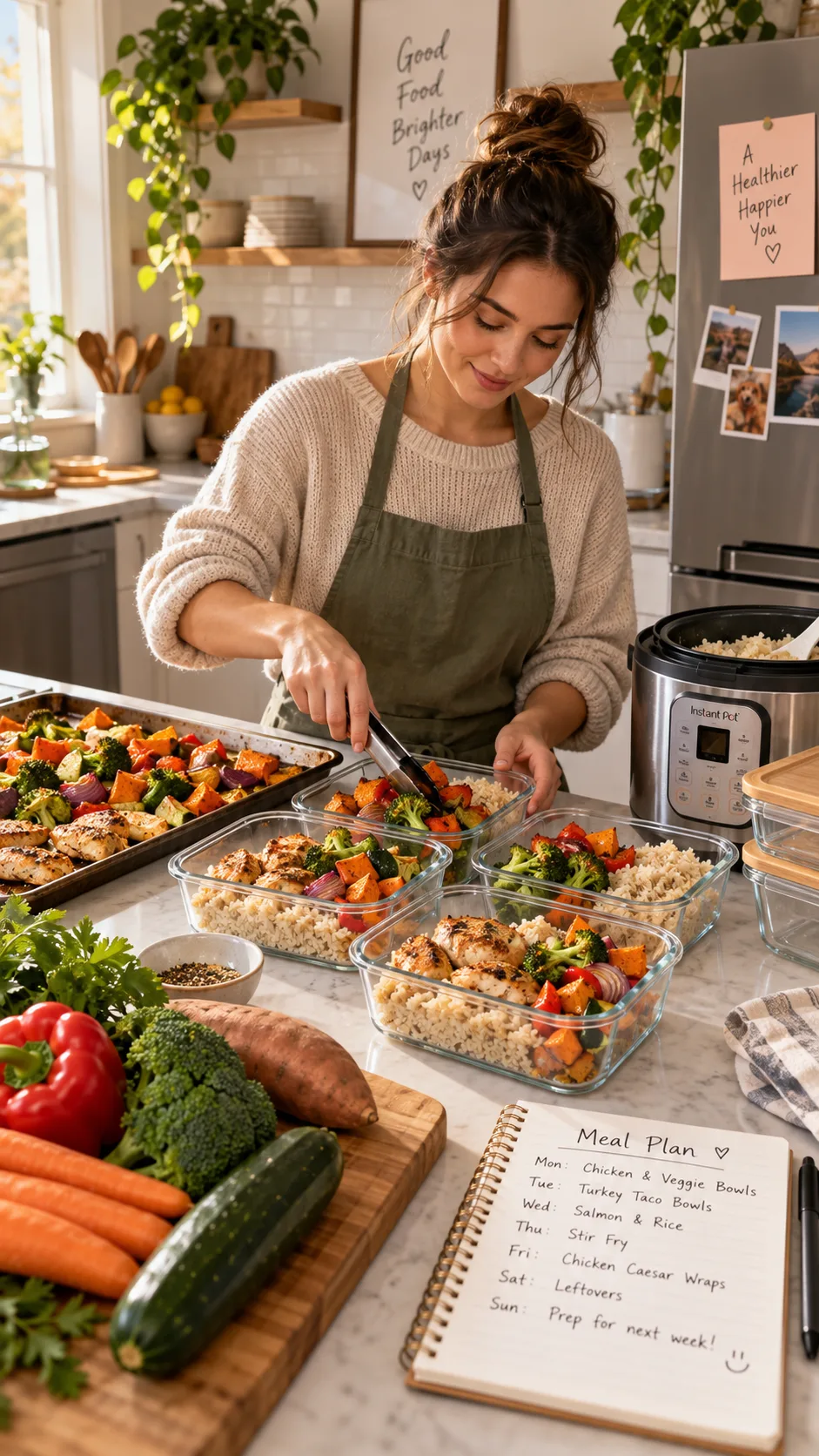
Step 1: Check your week before you plan food
Look at your calendar first. Mark late workdays, gym sessions, dinners out, travel, and any evening when cooking sounds unreasonable. Plan around your real schedule, not the version you wish you had.
If you eat out on Friday and visit family on Saturday, do not prepare seven dinners. Prepare three or four dinners and keep flexible ingredients for the rest. You can prevent food waste before you even enter the shop.
Step 2: Choose three main meals
Pick one breakfast, one lunch, and two dinner formats. You can repeat meals while changing the toppings, sauces, or vegetables so your taste buds do not stage a revolt.
For example, prepare overnight oats for breakfast and chicken grain bowls for lunch. Use the same roasted vegetables in pasta one night and wraps the next. That approach gives you a healthy meal prep for the week without requiring a restaurant sized menu.
Step 3: Make a short, organized grocery list
Arrange your shopping list by store section. You will move through the shop faster, buy fewer random “maybe” ingredients, and avoid finding three jars of paprika in the cupboard later. Every kitchen has a spice drawer with a few mysteries.
- Protein: 1.5 to 2 pounds chicken thighs, turkey, tofu, or another main choice.
- Carbs: rice, potatoes, oats, wraps, or pasta.
- Produce: broccoli, peppers, onions, spinach, salad greens, berries, bananas, and apples.
- Flavor: garlic, lemons, salsa, dressing, herbs, or your favorite sauce.
- Snack staples: Greek yogurt, eggs, nuts, hummus, or cheese.
Need more beginner friendly food ideas? Our easy healthy meal prep ideas guide has simple combinations that keep weeknight cooking low stress.
Step 4: Cook in the right order
You do not need to multitask like a game show contestant. Start the items that take the longest, then use the waiting time for quicker jobs.
- Heat the oven and start rice, quinoa, potatoes, or another carb.
- Chop vegetables while the oven heats.
- Put vegetables and protein on separate sheet pans.
- Cook a quick stovetop item, such as eggs, turkey mince, or a simple sauce.
- Wash fruit and chop snack vegetables while everything cooks.
- Let hot food cool briefly, then pack it into containers.
Sheet pan meals have earned their popularity. They cook several ingredients at once, leave fewer dishes behind, and do not demand advanced cooking skills. Oil, salt, pepper, garlic powder, and smoked paprika can do a lot of work.
A 90 minute Sunday meal prep plan for beginners
Use this practical example for your first week. It makes about four lunches, three flexible dinners, five breakfasts, and snacks. Adjust the portions for your household and appetite.
Your easy weekly meal prep menu
- Breakfast: overnight oats with Greek yogurt, berries, and peanut butter.
- Lunch: chicken, rice, roasted broccoli, and peppers with salsa or yogurt sauce.
- Dinner option one: chicken and vegetable wraps with hummus.
- Dinner option two: quick rice bowls with a fried egg, spinach, and leftover vegetables.
- Snacks: fruit, boiled eggs, yogurt, nuts, and carrots with hummus.
Your 90 minute timeline
- 0 to 10 minutes: Preheat the oven to 425°F (220°C). Start rice or another grain. Mix five jars of overnight oats.
- 10 to 25 minutes: Chop broccoli, peppers, and onions. Season chicken and spread everything across sheet pans.
- 25 to 50 minutes: Roast the chicken and vegetables. Boil eggs, wash fruit, and mix a quick yogurt sauce.
- 50 to 65 minutes: Check the chicken with a food thermometer. The USDA safe temperature chart recommends 165°F (74°C) for poultry.
- 65 to 80 minutes: Slice the chicken, fluff the rice, and portion lunch containers.
- 80 to 90 minutes: Label containers, wipe the counters, and put your weekday food where you will see it.
That is it. You now have a fridge full of answers, which feels pretty luxurious on a busy Wednesday.

How to portion meal prep without counting every crumb
You do not need to weigh every lettuce leaf unless a clinician or a specific training goal calls for it. Use a simple plate structure instead. It keeps meals balanced and leaves room for normal human enjoyment.
- Half your container: vegetables or fruit.
- One quarter: protein.
- One quarter: carbs such as rice, potatoes, pasta, or grains.
- Add fats: avocado, olive oil, nuts, cheese, seeds, or a creamy sauce in a sensible amount.
Increase carbs if you train hard, walk a lot, or feel hungry soon after meals. Add more vegetables and protein if meals leave you hungry but sluggish. Your appetite gives you useful feedback, so pay attention to it.
If you want meals that feel lighter but still satisfy you, read this guide to low calorie meal prep that keeps you full. Restrictive meals rarely work for long when they leave you searching for biscuits at 9 p.m.
Food safety rules that keep your meal prep fresh
Meal prep only saves time when you handle food safely. Do not leave cooked food on the counter for hours while you reorganize a drawer or answer seventeen messages. Cool it and refrigerate it promptly.
The U.S. Food and Drug Administration advises people to refrigerate perishable foods within two hours, or within one hour when temperatures rise above 90°F (32°C). Keep your refrigerator at or below 40°F (4°C).
The four day rule for most cooked meals
Most cooked leftovers stay good in the refrigerator for three to four days. The FoodSafety.gov cold storage chart gives practical storage guidance for common foods.
Prepare food for Monday through Thursday, then freeze Friday portions or cook something fresh later in the week. This habit protects flavor and keeps food safer. Nobody wants to gamble on suspicious chicken.
- Use shallow containers so food cools faster.
- Store sauces separately when possible to prevent soggy meals.
- Label containers with the prep date.
- Reheat leftovers until they reach 165°F (74°C).
- Pack an ice pack if food sits outside a fridge before lunch.
Common beginner meal prep mistakes and easy fixes
Your first week will not look like a glossy social media fridge tour. Good. You need a system that survives real life, not one that only looks good in a photo.
Making too much food
Many beginners prepare seven days of meals, lose interest by day four, and throw food away. Start with three or four days of prepared meals. Add freezer portions after you learn what you enjoy.
Choosing recipes with too many steps
A recipe with 19 ingredients can taste great, but it does not belong in your first beginner meal prep session. Choose meals with familiar ingredients and short cooking times. Chicken, vegetables, rice, eggs, and wraps can take you far.
Forgetting flavor
Plain food often sends people back to takeout apps. Keep sauces, herbs, citrus, hot sauce, and seasonings on hand. A bowl can taste completely different with salsa one day and peanut sauce the next.
Skipping convenience foods
Frozen vegetables, bagged salad, microwave rice, rotisserie chicken, and canned beans count as smart shortcuts. They do not make you lazy. They make your plan realistic. The freezer aisle has rescued many decent Sundays.
How to make meal prep work with your health goals
Meal prep should flex around your preferences, budget, culture, and goals. You can use this Sunday system for weight management, muscle gain, heart health, vegetarian eating, or fewer takeaway meals.
If you want a whole food approach with a little more structure, read our clean eating meal plan for beginners. Choose foods you enjoy and can eat regularly instead of following rules that make dinner feel like paperwork.
For weight loss
Prioritize protein, vegetables, high fiber carbs, and filling snacks. Measure calorie dense extras such as oils, cheese, nuts, and sauces rather than banning them. Regular habits beat perfection.
For muscle gain or active weeks
Add larger servings of rice, potatoes, oats, pasta, or bread around training. Include protein with each meal and snack. You can prepare a post workout option too, such as Greek yogurt with fruit or a turkey sandwich.
For tight budgets
Choose beans, eggs, chicken thighs, tinned fish, oats, frozen vegetables, rice, and potatoes. Buy ingredients you can use in several meals. A short ingredient list lowers your grocery bill and stress level.
Your first Sunday meal prep checklist
Save this list for your first session. Do not chase perfection. Make Monday easier than it would have been otherwise.
- Check your calendar for the next four to seven days.
- Choose one breakfast, one lunch, two dinner formats, and two snacks.
- Write a grocery list before shopping.
- Buy containers, labels, and an instant read food thermometer if you need them.
- Cook components in batches: protein, carb, vegetables, and sauce.
- Cool, portion, label, and refrigerate food promptly.
- Freeze anything you will not eat within four days.
- Keep one flexible backup meal, such as eggs on toast or freezer soup.
Make this Sunday system your own
Meal prep for the week for beginners does not require complicated recipes or military level planning. Pick a few foods you like, cook them once, and make weekdays easier one container at a time.
Start with 90 minutes this Sunday. Prepare four days instead of seven, use shortcuts without guilt, and leave room for a meal out or a spontaneous pizza night. Your meal prep plan should give you freedom, not another rulebook.
Open your calendar, make your short list, and give Future You a fridge full of easy meals. Monday morning will thank you.
