
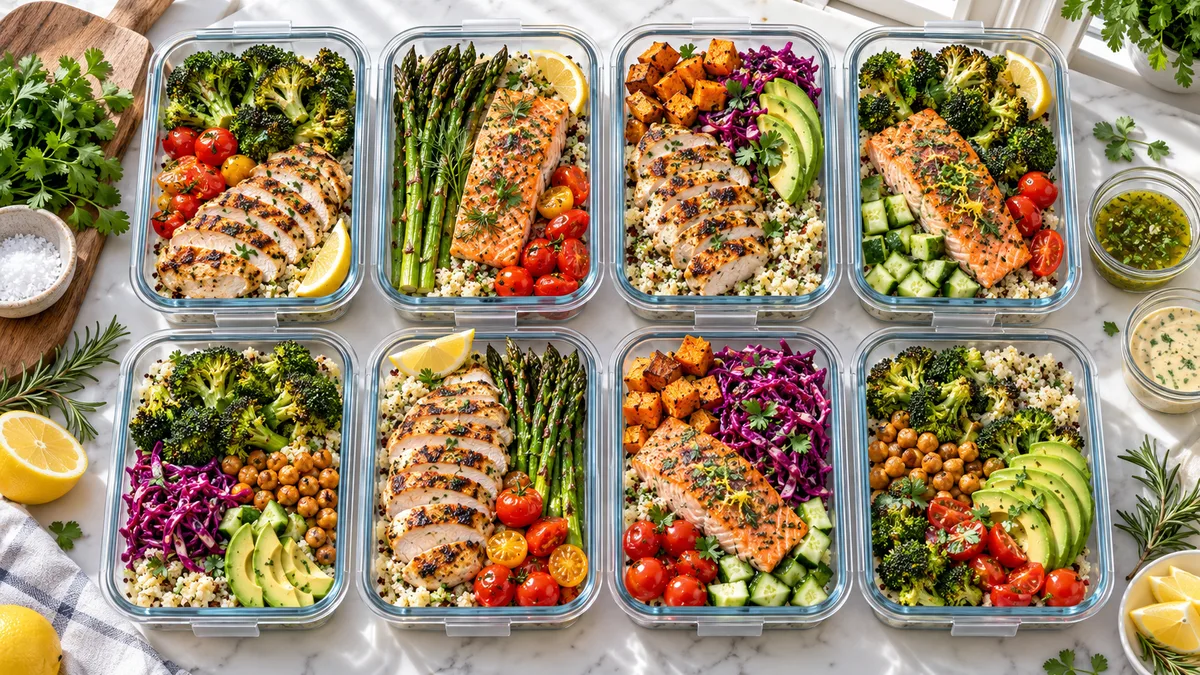
You can eat fewer calories without spending every afternoon staring at the office biscuit tin as if it betrayed you personally. Build meals with protein, fibre, volume, and flavour in every container.
Low calorie meal prep falls apart when it leaves you hungry, bored, or one inconvenience away from ordering enough takeaway for a small village. Good prep gives you satisfying portions, steady energy, and easy options waiting in the fridge.
This guide walks you through low calorie meal prep that keeps you full all week, without sad salads or dry chicken breast. Nobody deserves either one.
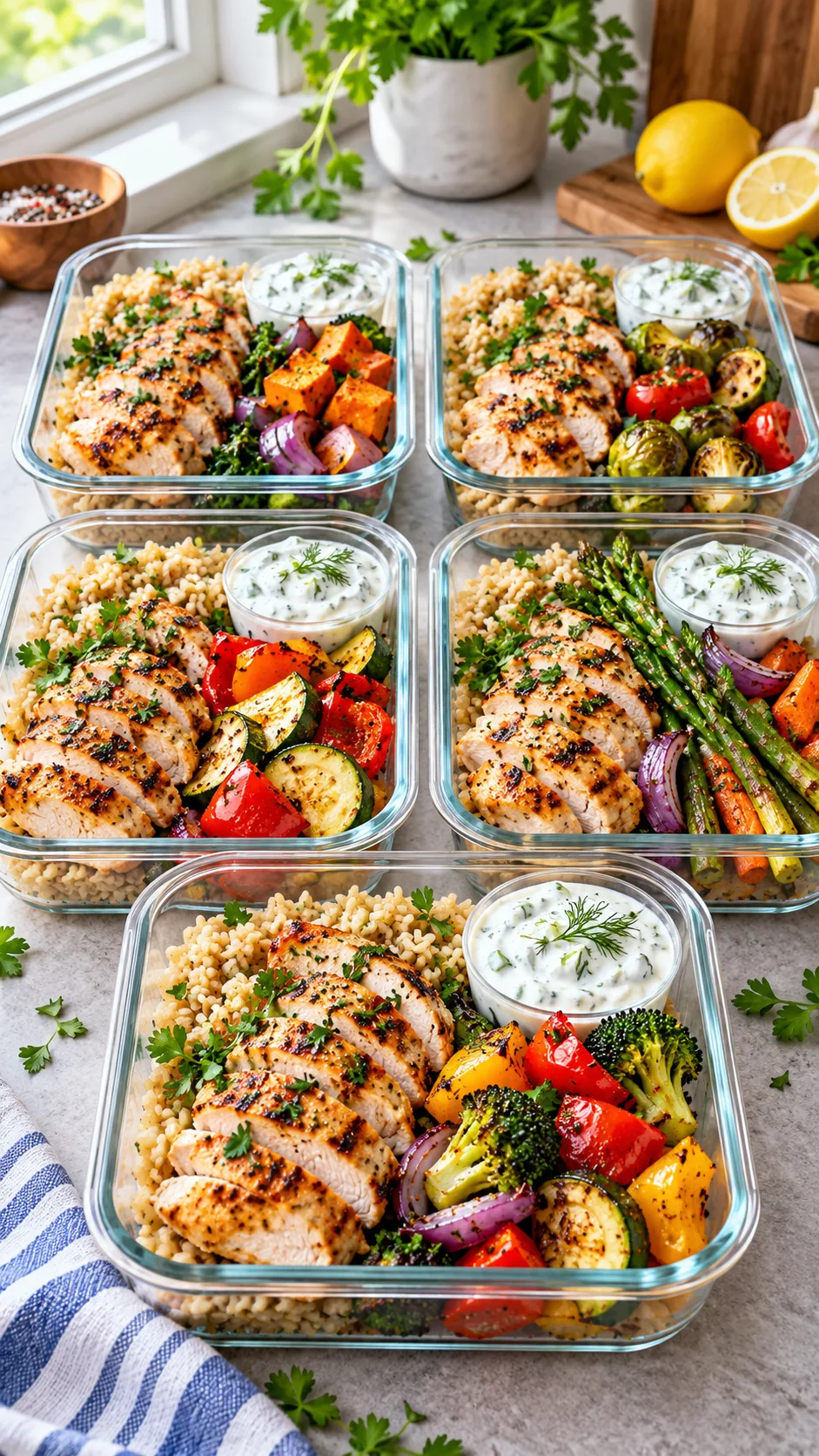
Why most low calorie meal prep leaves you hungry
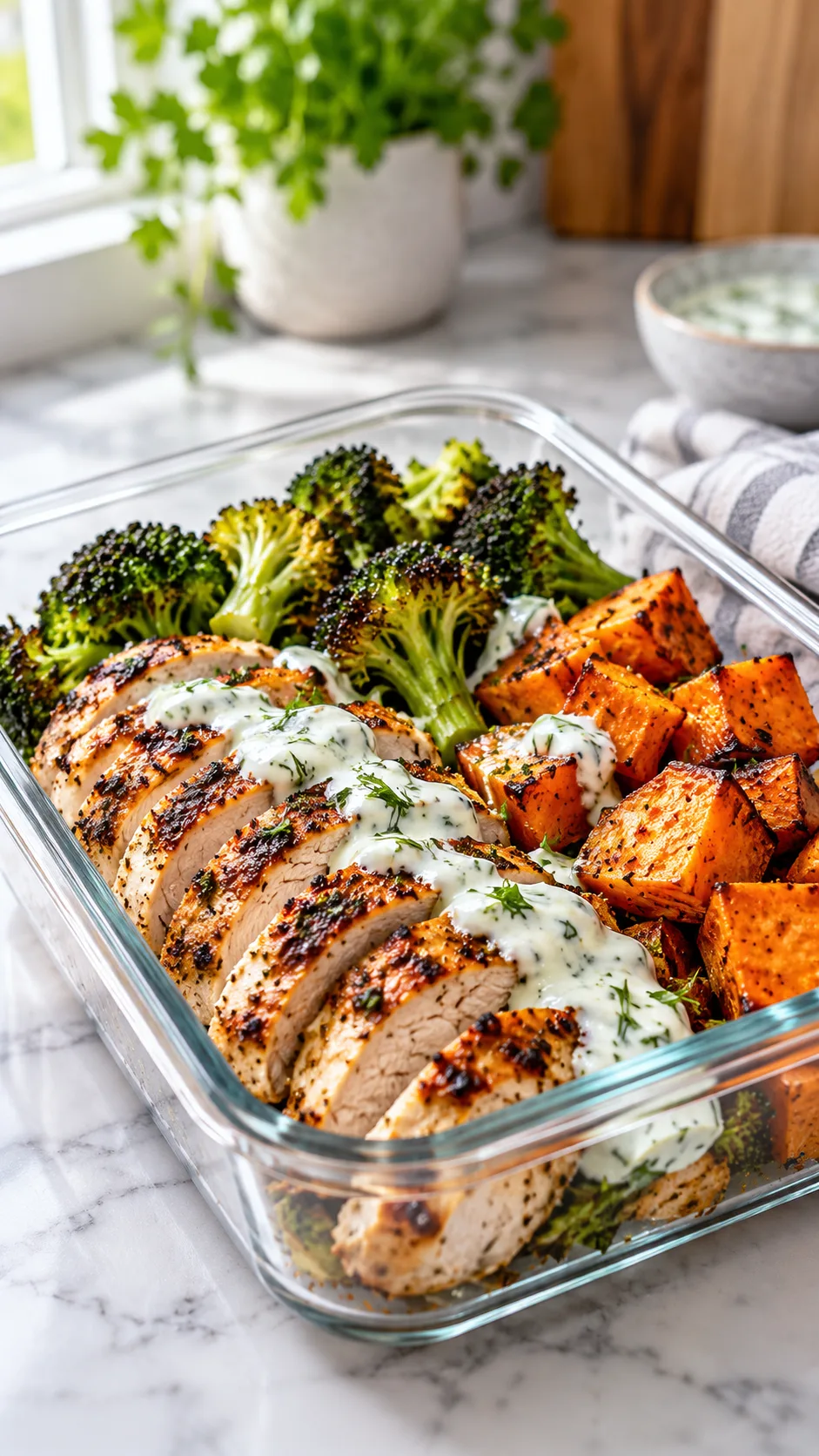
Many people cut calories by shrinking every part of the meal. They use a tiny scoop of rice, a few cucumber slices, and a protein portion that looks like it lost a fight with a postage stamp. Two hours later, hunger shows up right on schedule.
Your body needs enough food volume and enough staying power to feel satisfied. One 350 calorie meal can hold you over, while another sends you to the snack drawer before your next meeting. The difference often comes down to what fills the plate.
Fullness comes from more than calories
Protein helps manage appetite and maintain muscle, especially during fat loss. Fibre slows digestion and gives meals more bulk. Water-rich foods, including vegetables, fruit, soups, and yogurt, make a plate feel larger without piling on calories.
Fat makes food taste satisfying, but calories add up fast. You do not need to avoid olive oil, avocado, nuts, or cheese. Measure them instead of free pouring as if you host a cooking show.
The Dietary Guidelines for Americans encourage meals built around vegetables, fruit, whole grains, protein foods, and dairy or fortified alternatives. That approach gives you a useful place to start when you plan balanced, lower calorie meals.
The low calorie trap: eating “healthy” but not enough
A plain salad may fit your calorie target, but it may not suit your real life. If lunch includes lettuce, tomatoes, and a teaspoon of dressing, your stomach will ask for another round before 3 PM.
Make meals feel generous. Add lean protein, beans, potatoes, whole grains, crunchy vegetables, and a bold sauce. You can lose weight or manage calories without treating every meal like punishment.
The simple formula for filling low calorie meal prep
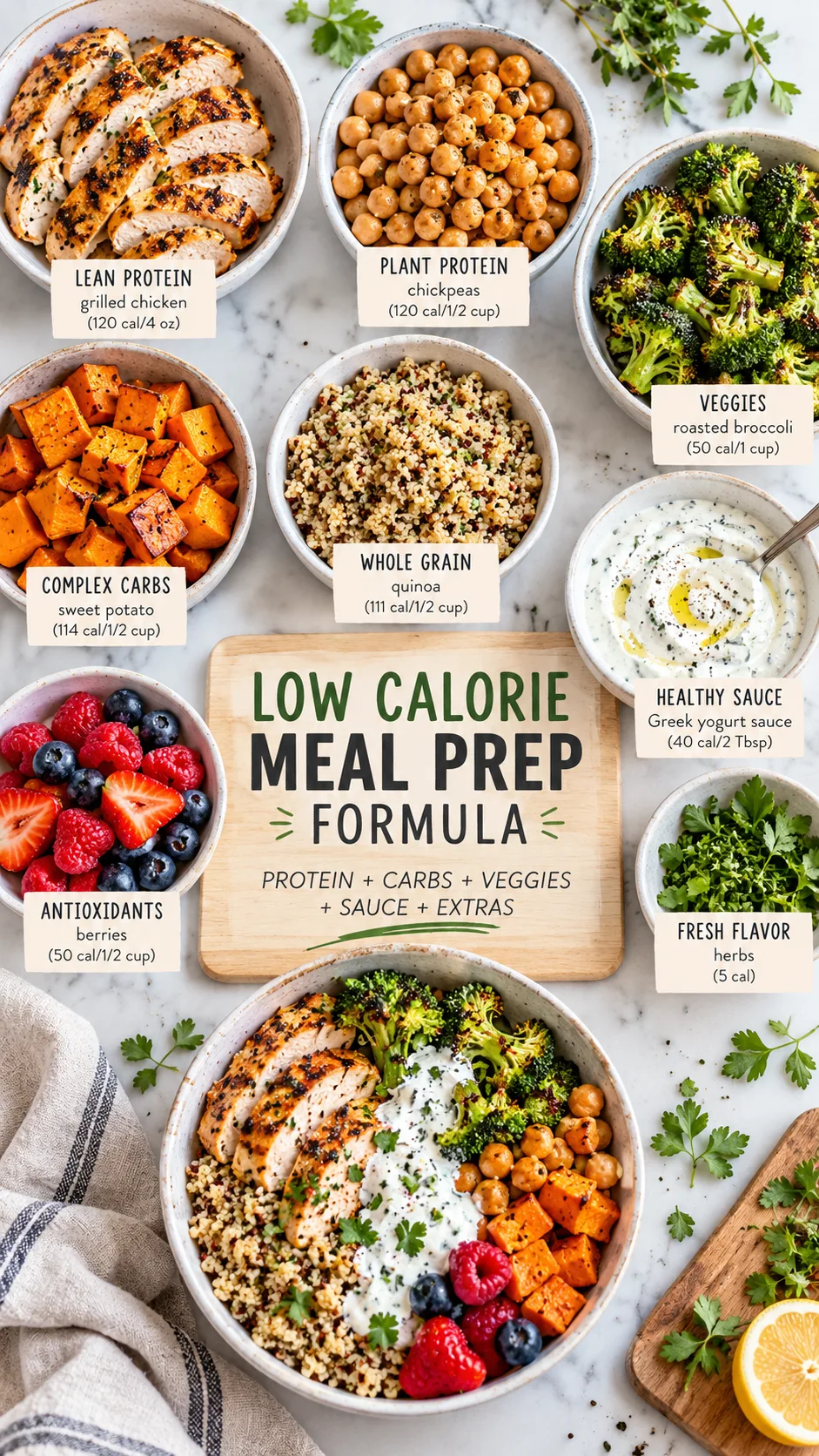
Use this formula for breakfast, lunch, dinner, or snacks. It keeps meals flexible, practical, and far more filling than random “healthy” recipes from the internet.
- Choose 25 to 40 grams of protein. Pick chicken, turkey, eggs, Greek yogurt, cottage cheese, tuna, tofu, tempeh, lentils, beans, shrimp, or lean beef.
- Add 2 cups of high-volume vegetables. Use broccoli, zucchini, peppers, cabbage, green beans, spinach, cauliflower, mushrooms, carrots, or salad greens.
- Include a sensible carb. Choose potatoes, sweet potatoes, oats, quinoa, brown rice, whole-wheat pasta, beans, fruit, or corn.
- Use a measured flavour booster. Add salsa, mustard, hot sauce, lemon, herbs, Greek yogurt dressing, light mayo, hummus, or a teaspoon of olive oil.
- Finish with texture. Add pickled onions, fresh herbs, roasted chickpeas, seeds, crushed nuts, or crunchy slaw.
Each part of this formula has a purpose. Protein carries you to the next meal, vegetables add bulk, carbs provide energy, and flavour helps you stick with the plan past Wednesday.
How many calories should a meal prep meal have?
Your calorie target depends on your body size, activity level, health goals, hunger cues, and total daily intake. No single number suits everyone. Anyone who promises a magic number deserves a polite side eye.
For many people, a filling low calorie lunch or dinner lands around 400 to 600 calories. Breakfast often falls between 300 and 500 calories, while snacks often work well in the 150 to 250 calorie range.
Treat those figures as planning ranges, not rules carved in stone. If you train hard, walk often, breastfeed, manage a health condition, or feel hungry all the time, speak with a registered dietitian or qualified clinician about your needs.
The Centers for Disease Control and Prevention recommends gradual, sustainable changes instead of extreme restriction. You will likely keep that approach going next week, too.
Build your weekly low calorie meal prep plan
You do not need seven different recipes to eat well. You need a few dependable building blocks, two sauces, and enough change from day to day to keep lunch from becoming an emotional event.
Pick two proteins
Choose one animal protein and one plant option, or pick two favourites that fit your budget. Cook eight to ten servings if you prep lunches and dinners for five days.
- Chicken breast or boneless chicken thighs with visible fat trimmed
- Extra-lean ground turkey or lean beef
- Eggs and egg whites
- Canned tuna, salmon, or sardines
- Tofu, tempeh, edamame, lentils, and black beans
- Nonfat or low-fat Greek yogurt and cottage cheese
Protein does not need fancy seasoning, but it needs some seasoning. Try garlic, smoked paprika, chili powder, cumin, Italian herbs, curry powder, lemon pepper, soy sauce, ginger, or harissa.
Choose two vegetables and one easy carb
Roast one tray of vegetables and keep another vegetable fresh for crunch. Cook one carb that reheats well, then portion it with intention instead of scooping until the container will not close.
- Roasted broccoli, cauliflower, peppers, onions, zucchini, and carrots
- Bagged slaw, spinach, romaine, cucumber, cherry tomatoes, and snap peas
- Baby potatoes, sweet potatoes, brown rice, quinoa, whole-wheat couscous, or beans
Potatoes deserve more credit than diet culture gives them. A baked potato brings satisfying volume, potassium, and comfort food appeal without a dramatic speech about “cheat meals.”
Make two sauces for variety
A batch of chicken can taste completely different with another sauce. Keep sauces in small containers so vegetables stay crisp and lunch does not turn into a soggy mystery.
- Greek yogurt ranch: Greek yogurt, lemon juice, garlic powder, dill, salt, and pepper.
- Smoky taco sauce: Salsa, lime juice, cumin, hot sauce, and a spoonful of Greek yogurt.
- Peanut-lime sauce: Powdered peanut butter, lime juice, soy sauce, ginger, water, and chili flakes.
- Lemon herb dressing: Lemon juice, Dijon mustard, olive oil, garlic, parsley, and black pepper.
If you want ideas beyond the basics, check out these easy healthy meal prep ideas. A small recipe rotation keeps meal prep useful instead of oddly repetitive.
Five low calorie meal prep recipes that keep you full
Each recipe focuses on protein, fibre, and portions that feel satisfying. Adjust the seasoning, carbs, and serving sizes to suit your calorie needs.
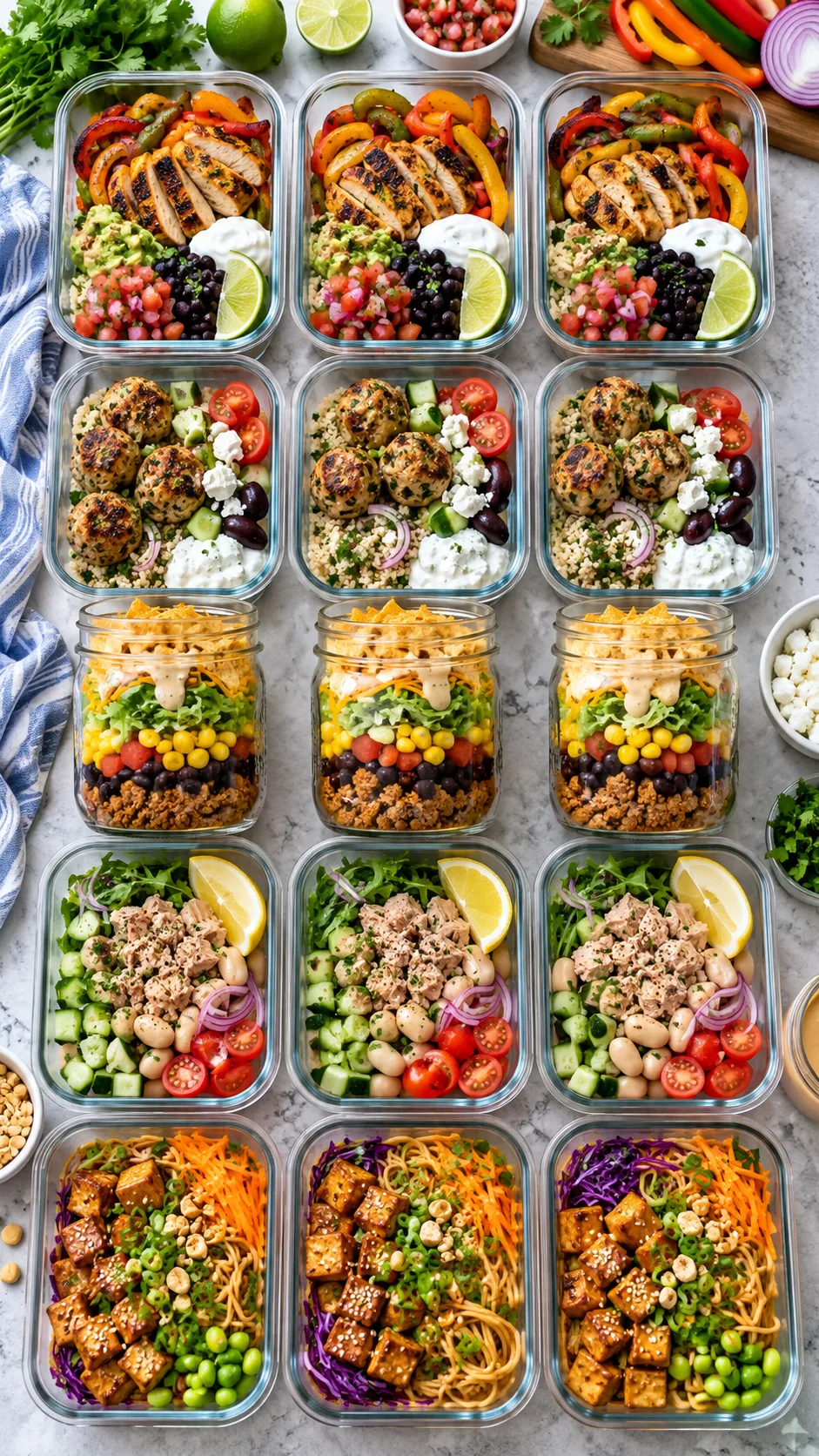
1. Chicken fajita bowls with black beans
These bowls taste fresh, filling, and much cheaper than ordering lunch through an app. Use chicken breast, peppers, onions, black beans, cauliflower rice or brown rice, salsa, and Greek yogurt.
- 4 to 5 ounces cooked chicken breast
- 1/2 cup black beans
- 1/2 cup cooked brown rice or 1 cup cauliflower rice
- 1 to 2 cups roasted peppers and onions
- Salsa, lime, cilantro, and Greek yogurt
A typical bowl contains around 450 to 550 calories, depending on the rice and sauce you choose. The beans add fibre and make the meal feel far more substantial than chicken and vegetables alone.
2. Turkey meatball Mediterranean boxes
Mix lean ground turkey with egg, garlic, oregano, parsley, and a little oat flour or breadcrumbs. Bake the meatballs, then add roasted zucchini, cucumber, tomatoes, chickpeas, and lemony yogurt sauce.
These boxes keep well in the fridge for several days. Pack cucumber and tomato separately if you want them crisp, because nobody enjoys a watery tomato situation.
3. High-protein taco salad jars
Layer lean turkey taco meat, black beans, corn, chopped lettuce, tomatoes, salsa, and Greek yogurt dressing in wide containers. Add crushed tortilla chips when you eat the salad.
Put wet ingredients at the bottom and greens at the top. That one small step protects the texture and keeps the salad tasting fresh on day four.
4. Creamy tuna and white bean bowls
Combine canned tuna, white beans, celery, red onion, dill, lemon juice, Greek yogurt, and Dijon mustard. Eat the mixture with chopped greens, cucumber, roasted potatoes, or whole-grain crackers.
Tuna supplies protein, while white beans add fibre and creaminess. This meal costs very little, and your grocery budget will notice.
5. Tofu peanut noodle bowls
Press extra-firm tofu, cube it, and roast it until crisp. Toss it with shredded cabbage, carrots, edamame, cooked whole-wheat noodles or rice noodles, and a light peanut-lime sauce.
This plant-based meal prep gives you plenty of chew, crunch, and protein. For more meat-free options, these vegetarian meal prep ideas can help you build a full weekly rotation.
Low calorie breakfast meal prep that stops mid-morning snacking
Breakfast can shape your hunger for the rest of the day. A sugary pastry may taste good for ten minutes, but it rarely gets you through a busy morning without a snack hunt.
Protein overnight oats
Mix oats, Greek yogurt, milk or a milk alternative, chia seeds, protein powder, berries, and cinnamon in jars. Oats and chia add fibre, while yogurt and protein powder make the meal more substantial.
Use frozen berries to save money and simplify prep. They thaw overnight and make the oats jammy without several spoonfuls of sugar.
Egg and vegetable breakfast muffins
Whisk eggs and egg whites with spinach, peppers, mushrooms, turkey sausage, and feta. Bake the mixture in a muffin tin, then eat two or three muffins with fruit and whole-grain toast.
These muffins suit rushed mornings. Grab them, reheat them, and get out the door before your coffee cools into disappointment.
Cottage cheese fruit bowls
Portion cottage cheese with berries, sliced apple, cinnamon, and a measured sprinkle of granola or walnuts. Cottage cheese provides high-quality protein, while fruit adds volume, sweetness, and fibre.
If cottage cheese tastes too plain, blend it with cocoa powder, vanilla, and a little sweetener. That trick makes a pudding-like snack that feels suspiciously indulgent.
Need more morning recipes? Try these high protein breakfast meal prep ideas for more make-ahead options.
Meal prep storage and food safety that matters
Good meal prep should make your week easier, not turn your fridge into a science experiment. Cool cooked food promptly, divide it into shallow containers, and refrigerate it within two hours of cooking.
The FoodSafety.gov cold storage chart advises you to keep most cooked leftovers in the refrigerator for three to four days. Freeze meals you plan to eat later that week, then thaw them safely in the refrigerator.
- Store cooked meals in airtight containers.
- Label containers with the prep date.
- Keep sauces, crunchy toppings, and fresh greens separate when possible.
- Reheat leftovers until they reach 165°F or 74°C.
- Throw food away if it smells off, looks questionable, or makes you ask, “Maybe it’s fine?”
Keep Sunday through Wednesday meals in the fridge, then freeze Thursday and Friday portions. This routine protects food quality and gives you fresher meals without extra weekday cooking.
Common low calorie meal prep mistakes
Small planning mistakes can make healthy meal prep feel exhausting. Fix them before they lead to another week of good intentions and emergency pizza.
You skip carbs completely
Carbs do not ruin a calorie deficit. Huge portions can raise calories, but sensible servings of potatoes, oats, rice, beans, fruit, and whole grains can support fullness and training energy.
Choose high-fibre carbs and eat them with protein. That pairing lasts longer than a bowl of lettuce pretending to count as lunch.
You choose meals with no real flavour
Seasoning adds few meaningful calories, so use it. Lemon, vinegar, pickles, and salsa can make a basic meal taste fresh, while herbs and spices help you avoid eating the same flavours all week.
Keep taco, Mediterranean, and Asian-inspired flavour profiles on hand. You can rotate the same core ingredients without feeling stuck with the same lunch forever.
You forget snacks
Planned snacks can stop impulsive eating when hunger hits hard. Pair protein with produce or fibre to stay satisfied longer.
- Greek yogurt with berries
- Apple slices with powdered peanut butter dip
- Carrots and hummus
- Hard-boiled eggs and cherry tomatoes
- Cottage cheese with pineapple
- Edamame with sea salt and chili flakes
Your easy Sunday meal prep checklist
Keep your first low calorie meal prep session simple. You do not need matching containers, a huge kitchen, or the energy of a lifestyle influencer with unlimited counter space.
- Choose two proteins and cook them first.
- Roast two sheet pans of vegetables while the proteins cook.
- Prepare one carb, such as potatoes, rice, quinoa, or beans.
- Mix two sauces or buy lower-calorie favourites that you enjoy.
- Portion three to four days of meals into containers.
- Freeze later-week servings.
- Prep one breakfast and two easy snacks.
Set aside about 90 minutes the first time. After a few weeks, you will move faster because you will know your favourite combinations, your portion needs, and the recipes worth repeating.
Final thoughts: Eat less without feeling like you eat less
The best low calorie meal prep does not depend on tiny portions or endless willpower. It uses protein-rich meals, high-fibre ingredients, plenty of vegetables, sensible carbs, and food you genuinely want to eat.
Start this week with two proteins, two vegetables, one carb, and two sauces. Keep the plan simple, make enough food for your busiest days, and let your future hungry self thank you.
You do not need perfect meal prep. You need a fridge that makes the helpful choice easy.
