
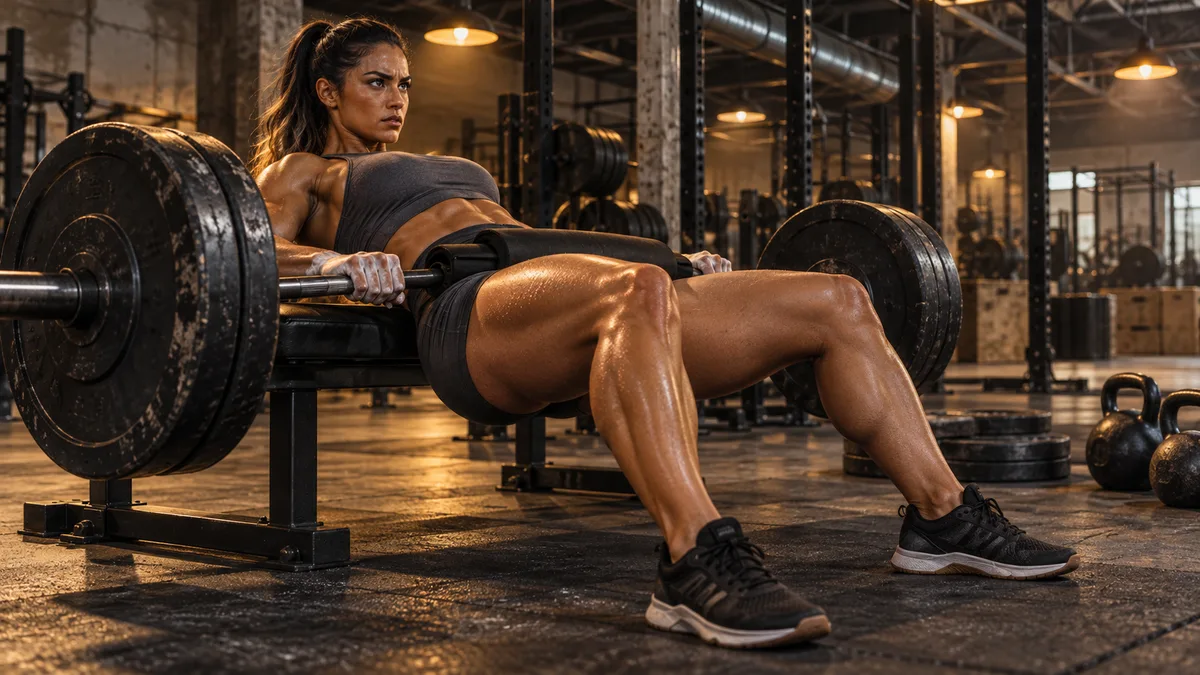
Your legs carry you through every single thing you do, and if your lower body training has been an afterthought, your results are probably telling that story. Strong legs and lifted glutes aren’t just aesthetic goals; they’re the foundation of athletic performance, injury prevention, and long-term physical health. The good news? Nine well-chosen moves cover everything.
This guide breaks down each exercise with the cues, sets, reps, and common mistakes that matter most. No fluff. Just the moves that work and the details that make them work better.
Why your lower body training deserves more attention
Here’s a number worth knowing: your lower body contains roughly 60% of your total muscle mass. That means every time you train legs with real intensity, you trigger a hormonal response (elevated testosterone and growth hormone) that benefits your entire body. ACE Fitness consistently places compound lower body movements among the highest-return exercises in resistance training.
Ever notice how people who train legs consistently just look more athletic overall? That’s not a coincidence. Strong glutes stabilize the pelvis, protect the lower back, and generate power for almost every movement in sport and daily life. Skipping lower body day is skipping the foundation.
What you need to train these moves
You don’t need a full commercial gym setup to get serious results, but a few things make a real difference.
- Flat-soled or lifting shoes because thick running shoe soles compress under load and compromise your squat mechanics
- Barbell and squat rack for squats, hip thrusts, RDLs, and sumo deadlifts
- Dumbbells for lunges, step-ups, and split squats if a barbell isn’t available
- A sturdy bench or box needed for Bulgarian split squats and step-ups
- Resistance bands great for glute activation in your warm-up
If you train at home, most of these movements translate directly to dumbbells. See 10 Lower Body Dumbbell Workout Moves for Stronger Legs and Glutes at Home for a complete at-home variation of this routine.
The 9 moves that build powerful legs and glutes
1. Barbell Back Squat
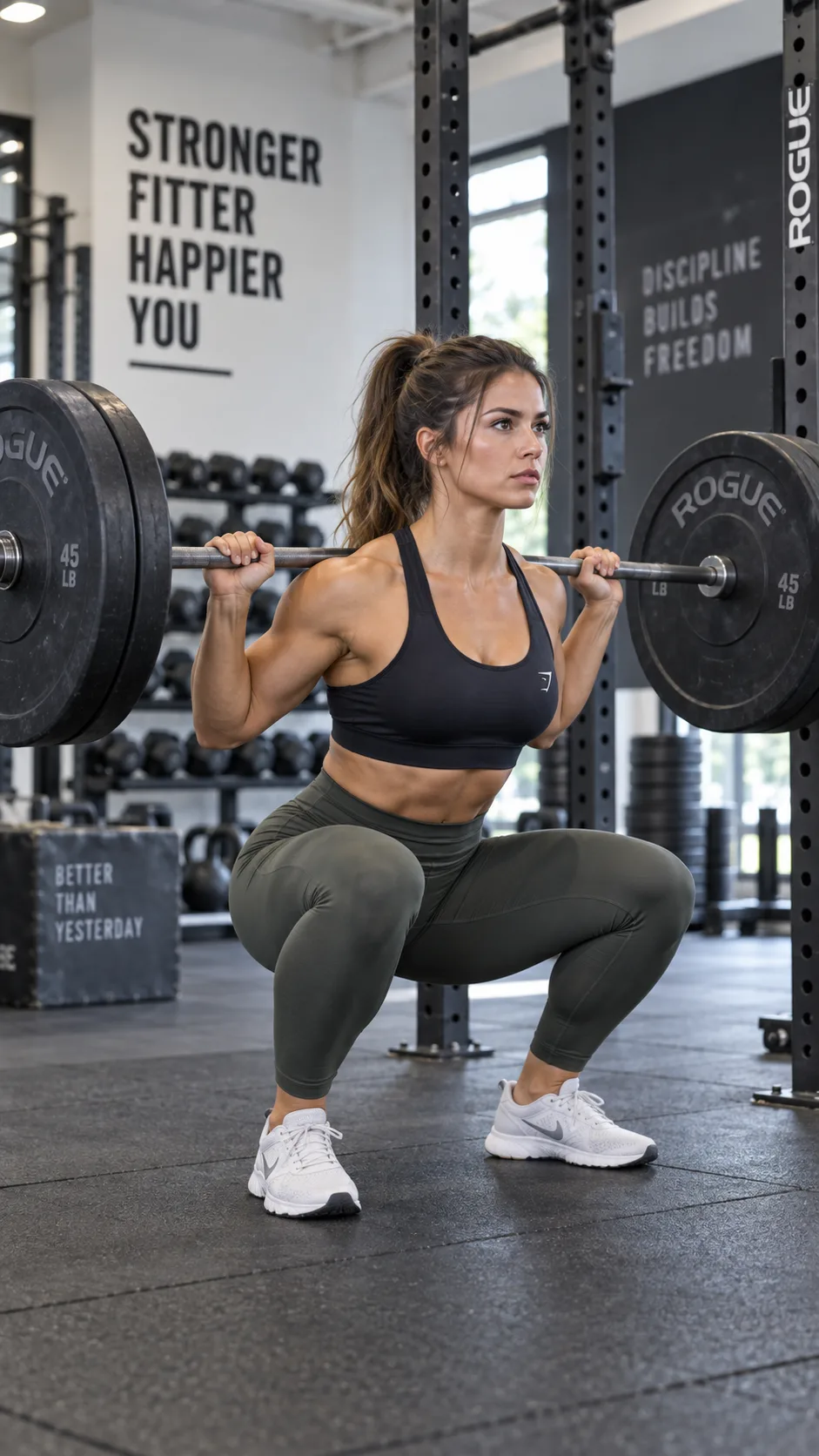
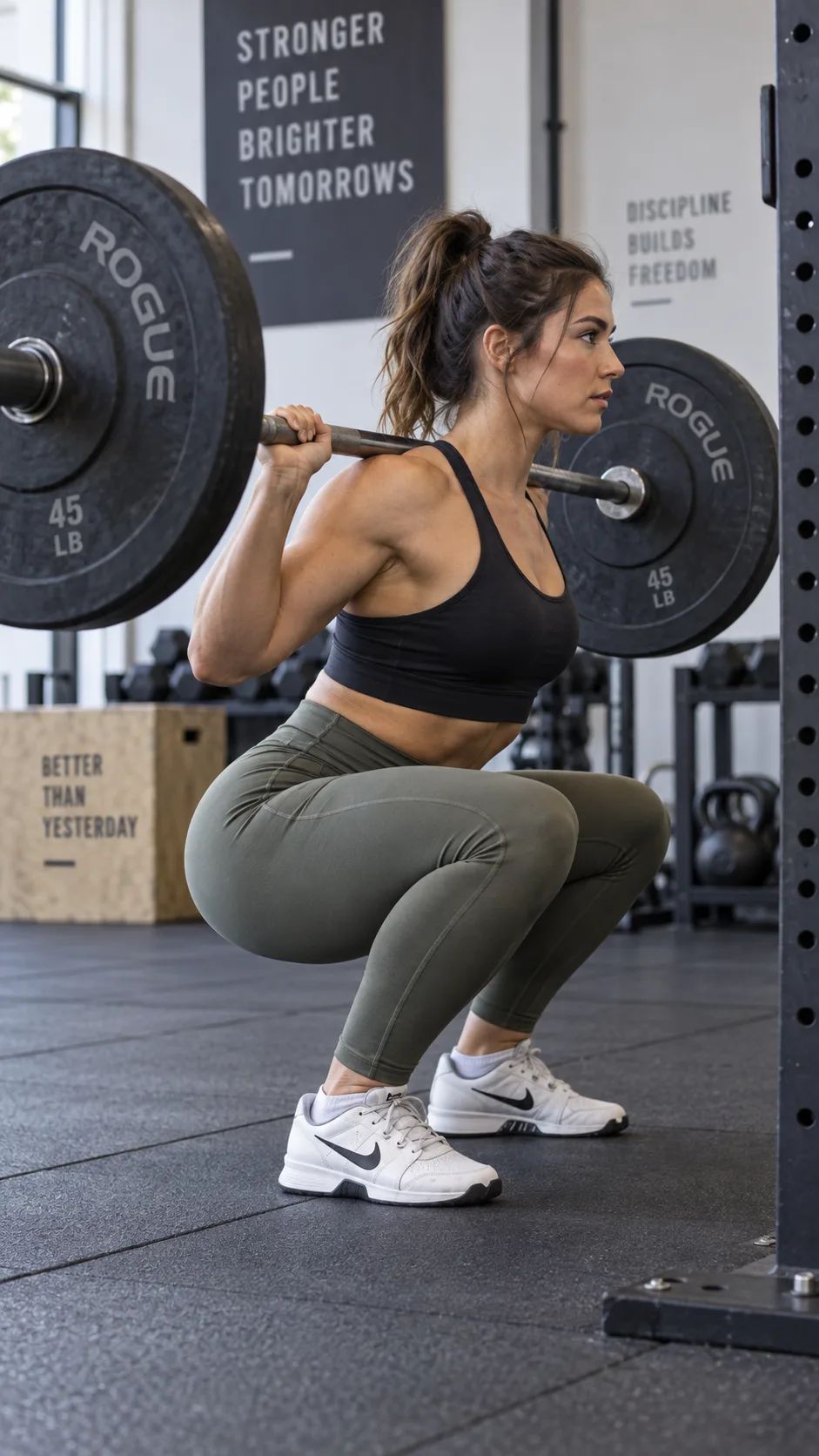
The back squat is the most comprehensive lower body exercise that exists. It loads your quads, glutes, hamstrings, and core simultaneously under a heavy axial load. No other movement matches its total stimulus. If you only had time for one lower body exercise, this would be it.
Place the bar across your upper traps (not your neck), feet shoulder-width or slightly wider, toes turned out slightly. Send your hips back and down, keep your chest tall, and drive your knees out as you descend. Aim for parallel depth or below. That’s where glute activation peaks.
- Sets & reps: 4 sets of 6-10 reps
- Cue worth remembering: “Drive the floor away” on the ascent. It keeps tension through the whole lift
- Common mistake: Chest collapsing forward under load. Brace your upper back before unracking
2. Romanian Deadlift (RDL)
The Romanian deadlift stretches your hamstrings and glutes under load, a combination that builds serious size and strength in the posterior chain. The RDL targets muscles that most people dramatically undertrain compared to their quads, which is exactly why so many athletes and gym-goers have weak hamstrings relative to their leg strength overall.
Hold a barbell (or dumbbells) at hip height, feet hip-width apart. Push your hips backward to initiate the hinge, not by bending your knees first. Lower the bar until you feel a deep stretch in your hamstrings (typically mid-shin), then drive your hips forward to stand tall.
- Sets & reps: 3-4 sets of 8-12 reps
- Cue worth remembering: Drag the bar close to your legs the entire way. It keeps your spine safe and your hips loaded
- Common mistake: Rounding the lower back as fatigue sets in. Brace your core hard before every single rep
3. Bulgarian Split Squat
People either love this move or genuinely dread it. IMO, the ones who dread it are the ones who need it most. The Bulgarian split squat isolates each leg individually, which exposes strength imbalances and forces your quads, glutes, and hip stabilizers to work without the stronger leg compensating.
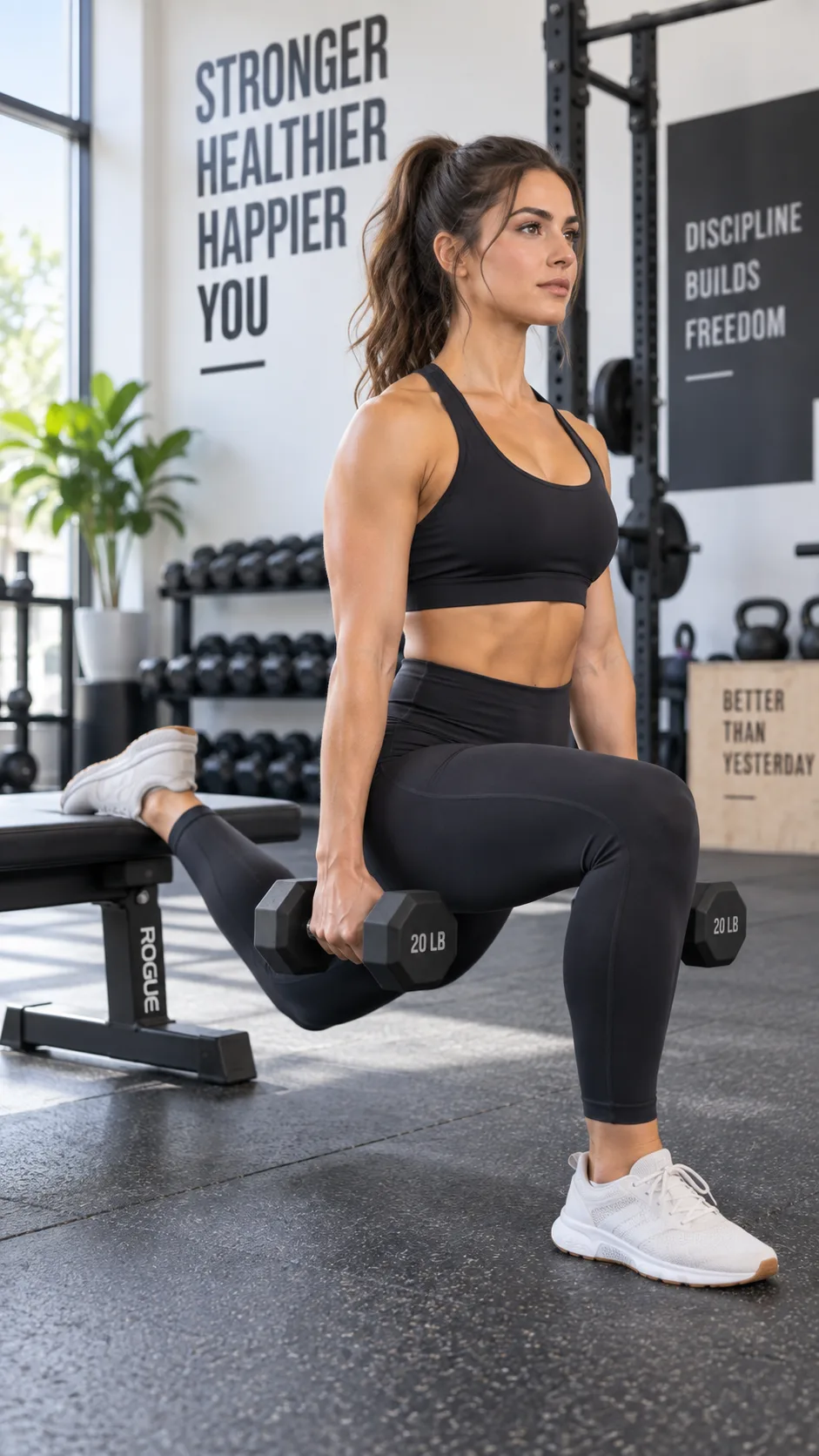
Rest your rear foot on a bench, step your front foot forward until your shin stays close to vertical at the bottom. Lower your back knee toward the floor, keeping your torso upright and your weight through your front heel. Drive back up without using your back foot for push-off.
- Sets & reps: 3 sets of 8-10 reps per leg
- Cue worth remembering: The further forward your front foot, the more glute involvement. Experiment with stance length
- Common mistake: Leaning too far forward, which shifts stress from your quads to your lower back
4. Barbell Hip Thrust
Nothing loads the glutes more directly than the hip thrust, and the research backs that up. Studies published via the National Institutes of Health show that hip thrusts produce peak glute EMG activation significantly higher than squats or conventional deadlifts. For anyone specifically targeting glute development and a lifted shape, this move is non-negotiable.
Sit on the floor with your upper back against a padded bench, bar resting across your hip creases with a pad. Plant your feet flat and hip-width apart. Drive your hips upward until your torso and thighs form a straight line at the top, then lower with control.
- Sets & reps: 4 sets of 10-15 reps
- Cue worth remembering: Squeeze your glutes hard at the top for a full one-second pause on every rep
- Common mistake: Hyperextending the lower back at the top. Keep your ribs down and your core braced
5. Leg Press
The leg press gets unfairly dismissed by barbell purists, but it earns its place in any serious program. Because the machine stabilizes the load for you, the leg press lets you overload your quads and glutes with heavier weights than free weights allow, and mechanical overload is a primary driver of hypertrophy.
Sit with feet shoulder-width on the platform. Lower the sled until your knees reach 90 degrees, then press through your heels to near full extension. Foot position determines emphasis: higher placement recruits more glutes and hamstrings, lower placement hits your quads harder.
- Sets & reps: 3-4 sets of 10-15 reps
- Cue worth remembering: Slow the lowering phase to 3 seconds. The eccentric is where most of the growth stimulus lives
- Common mistake: Stacking on weight and doing half reps. Full range of motion beats a heavier partial every time
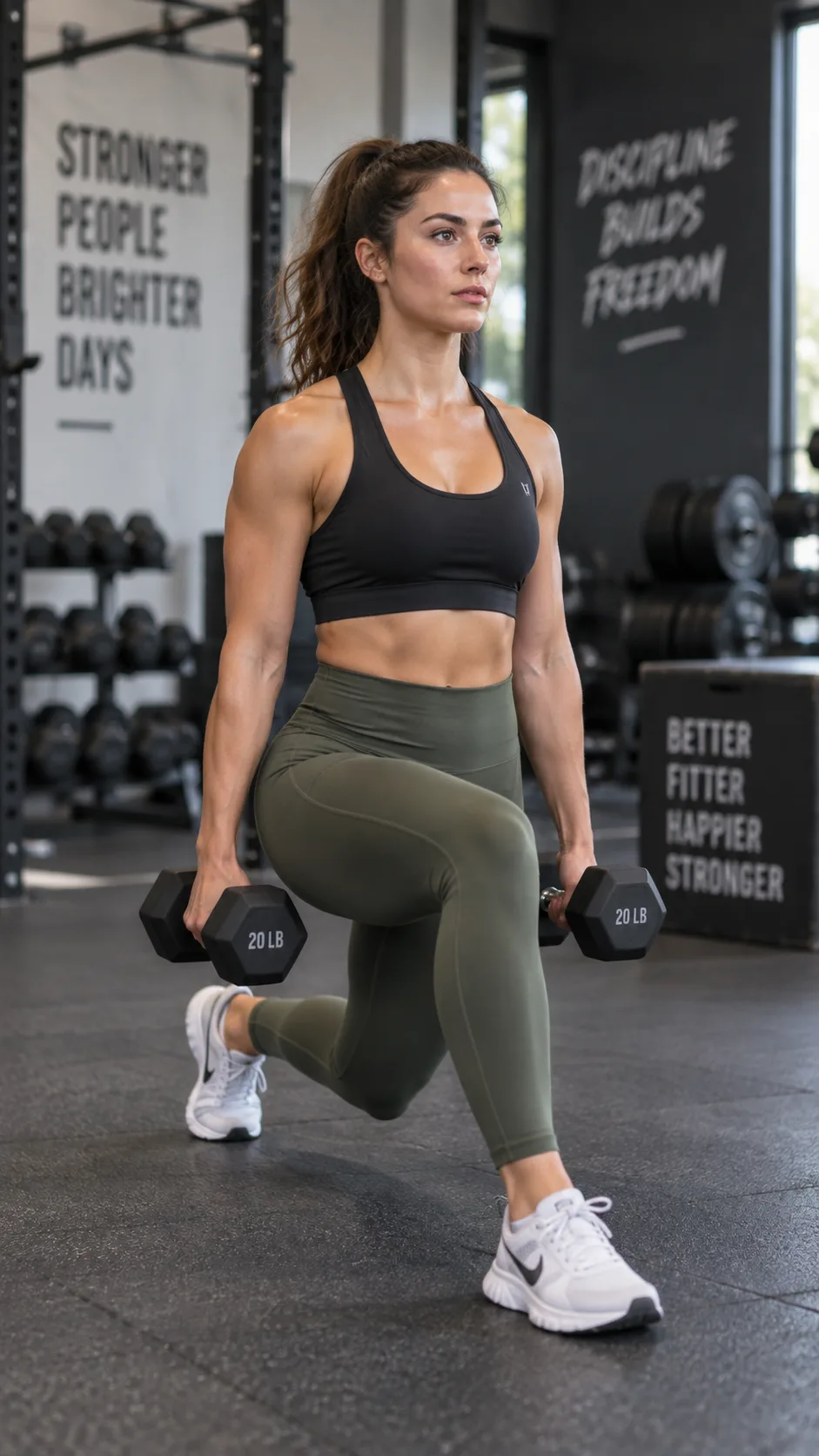
6. Walking Lunges
Walking lunges do something stationary lunges can’t: they force continuous hip extension through a traveling step pattern, which hammers your glutes and hamstrings more than a static position. The forward momentum adds a balance and coordination challenge that makes this both a strength and a stability exercise.
Hold dumbbells at your sides, take a long step forward, lower your back knee to just above the floor, then drive through your front heel to bring your back foot forward into the next stride. Keep your chest tall throughout the whole movement.
- Sets & reps: 3 sets of 12-16 reps per leg, or 20-30 meters
- Cue worth remembering: “Long stride” beats “short stride” every time. A short step puts most stress on your front knee
- Common mistake: Looking at the floor, which rounds your spine and throws off your balance
7. Sumo Deadlift
The sumo deadlift is the deadlift variation your inner thighs and glutes have been waiting for. The wide stance shifts significant loading to your adductors, glutes, and upper hamstrings, areas the conventional deadlift consistently undertargets. If your glutes fatigue faster in sumo than conventional, that’s confirmation you found a weak point worth addressing.
Set your feet wider than shoulder-width with toes angled out 30-45 degrees. Grip the bar inside your legs, drive your knees out hard, and push the floor away as you stand. Keep the bar tracking close to your legs from start to finish.
- Sets & reps: 3-4 sets of 5-8 reps
- Cue worth remembering: “Spread the floor apart” with your feet before you pull. This activates your hips immediately
- Common mistake: Allowing the knees to cave inward under load. This is a hip-dominant pull, not a knee-driven one
8. Glute Bridge
Think the glute bridge sounds too easy? Add a resistance band just above your knees, hold the top position for three seconds per rep, and get back to us. The glute bridge isolates the glutes without any spinal compression, making it both a premier activation drill before heavier work and a highly effective burnout finisher at the end of a session.
Lie on your back, knees bent, feet flat on the floor about hip-width apart. Squeeze your glutes and drive your hips straight up, not by pushing through your lower back. Hold the top, lower with control, and reset before the next rep.
- Sets & reps: 3 sets of 15-20 reps with a 2-3 second hold at the top
- Cue worth remembering: Walk your feet slightly further from your hips to increase hamstring and glute recruitment
- Common mistake: Letting your ribs flare upward at the top. Your core should stay braced throughout
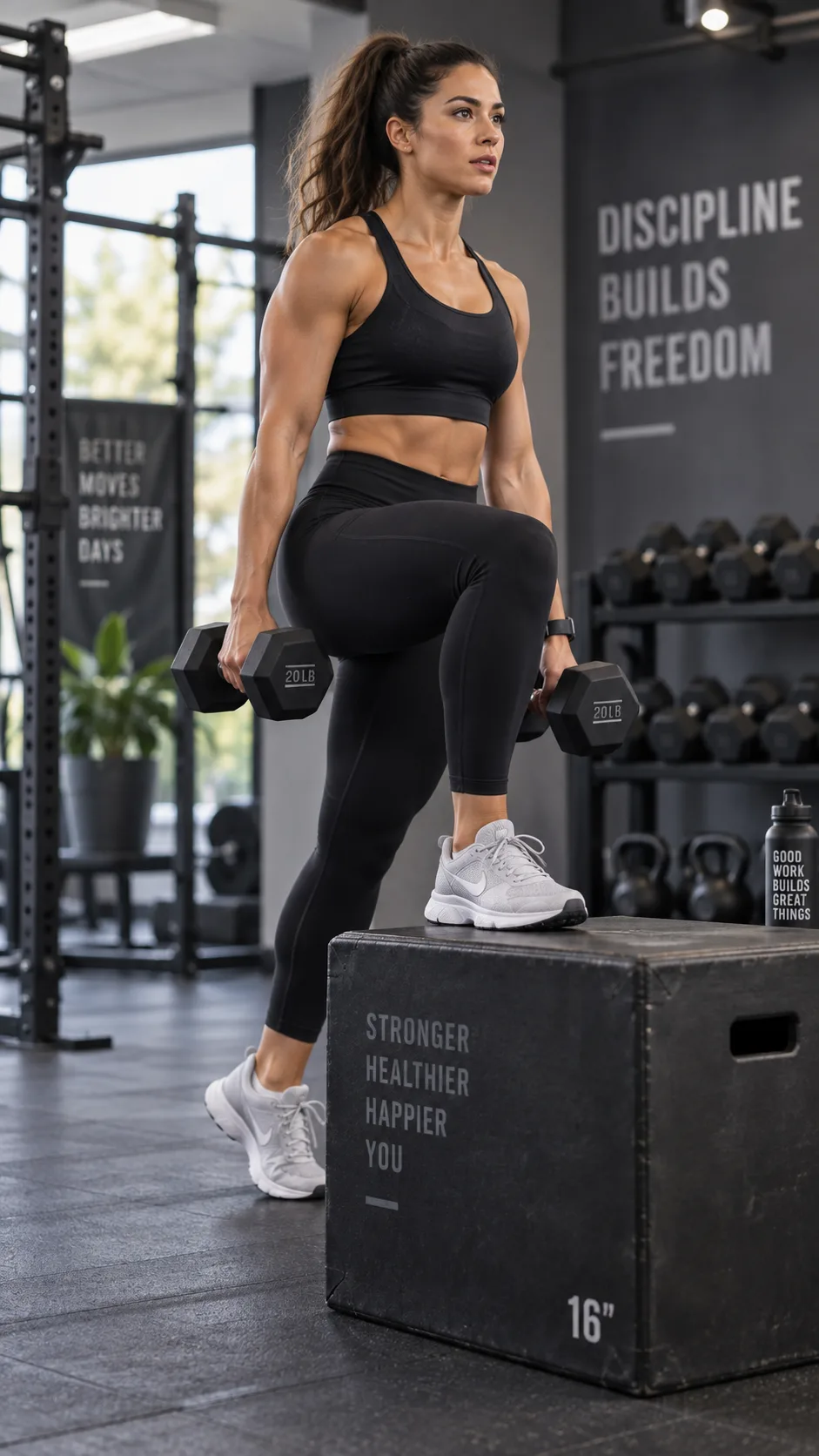
9. Step-Ups
Step-ups demand far more hip extension strength and single-leg coordination than most people expect until they load them up. By forcing one leg to carry the full workload through a tall range of motion, step-ups build quad and glute strength that transfers directly to real-world activities like stairs, hiking, and athletic deceleration.
Hold dumbbells at your sides and stand in front of a bench at roughly knee height. Step up with one foot, drive through that heel to fully extend the leg at the top, then lower back down with control. Complete all reps on one leg before switching sides.
- Sets & reps: 3 sets of 10-12 reps per leg
- Cue worth remembering: The drive comes from the elevated heel. Your back foot barely touches down and provides no push
- Common mistake: Using a box that’s too short. The challenge and the benefit come from the hip flexion required by real height
How to structure a lower body strength session
You don’t need all nine moves in a single workout. That’s a recipe for an exhausted mess, not a productive training session. A well-structured lower body workout runs 50-75 minutes and includes 4-6 of these exercises, ordered from heaviest compound lifts to accessory isolation work.
- Warm-up (10 min): Banded glute bridges, lateral band walks, hip 90/90 stretches, bodyweight squats
- Primary compound (heavy): Barbell back squat or sumo deadlift, 4 sets, lower rep range
- Secondary compound: Romanian deadlift or leg press, 3-4 sets, moderate weight
- Unilateral work: Bulgarian split squats or step-ups, 3 sets per leg
- Glute isolation: Barbell hip thrusts, 4 sets, full squeeze each rep
- Finisher: Walking lunges or glute bridges, 2-3 sets, higher reps
If you want to plug this into a structured weekly split, Push Pull Legs Workout Plan: The Best PPL Split Routine for Building Strength gives you the full framework for organizing lower body sessions across the week with the right recovery built in.
The NSCA recommends training each major muscle group 2-3 times per week for strength and hypertrophy, with 48-72 hours of recovery between sessions targeting the same muscles. Two dedicated lower body days per week hits that sweet spot for most people.
Watch: Lower body strength training technique
Seeing proper mechanics in action often locks in cues that text alone can’t fully convey. This breakdown covers the compound movements in detail with clear coaching on form and positioning.
Mistakes that keep your legs from growing
Even experienced lifters fall into these patterns. Fixing even one of them often unlocks months of stalled progress.
- Partial range of motion in squats because quarter squats load your quads with minimal glute involvement. Depth changes everything.
- Rushing the eccentric phase means dropping the weight fast and eliminating the most growth-stimulating part of the rep. Control the lowering.
- Skipping unilateral work entirely is a problem because your legs might feel balanced together but hide a significant strength discrepancy. Split squats and lunges expose it and fix it.
- No progressive overload means if you’ve lifted the same weight for the same reps for two months, you’re maintaining, not building. Add weight, reps, or sets week over week.
- Weak hip hinge pattern trips people up on RDLs and sumo deadlifts. Initiating with your hips (not your knees) is the whole skill. Groove it with lighter weight before loading it heavy.
For a broader look at how to train your legs in different ways across the week, The Best Full Leg Workout Routine for Stronger, More Sculpted Legs covers full programming with progressive overload built into each phase.
The bottom line
These nine moves cover every angle of lower body development: quad dominance, posterior chain strength, glute isolation, and single-leg stability. Pick four to six per session, arrange them heavy to light, and push for progress week over week. That’s the entire formula.
Strong legs and powerful glutes take time, but they absolutely get built when you show up consistently with a smart plan and real effort. The nine moves above give you everything you need to make it happen.
Now go train legs. Your future self will be genuinely grateful.
