If your brain turns to jelly at the sight of a long grocery list, you are not alone. Nearly half of Americans face serious health challenges, and many more juggle weight and time issues. That makes a practical, low-pressure system worth trying.
This short guide shows a kinder way to feed yourself for the week without endless prep or complex recipes. Focus on one meal at a time, stock a few reliable ingredients, and build simple bowls, salads, or dinners that include protein and veggies.
You do not need to spend all weekend in the kitchen. With smart grocery choices and tiny prep steps, you can keep healthier foods on hand and cut stress.
Key Takeaways
- Break your week into single, easy meals to avoid overwhelm.
- Keep staple ingredients for quick bowls, salads, or one-dish dinners.
- Short prep windows save time and reduce pressure.
- Simple protein + veggies help maintain health when motivation dips.
- Meal planning can be flexible, build a system that fits your life.
Why Traditional Meal Planning Often Fails
Rigid weekly menus collapse when life throws a surprise meeting or a tired evening at you.
Traditional systems ask you to map every meal for seven days. That sounds good in theory. In practice, it ignores hard facts: nearly half of Americans face diabetes or prediabetes, and 60-70% are overweight or obese. These stats show one size rarely fits all.
Your brain also matters. When you are stressed, it resists strict schedules. That makes meal prep feel like another task to fail at. People burn out and skip healthy choices.
Flexible approaches win by design. They let you swap a yogurt or switch protein sources without guilt. Small choices across days add up more than a perfect, fragile weekly plan.
- Reduce all-or-nothing thinking.
- Prioritize steady fuel for the brain and body.
- Favor nutrient-rich food over perfect schedules.
| Approach | Typical Problem | Practical Fix |
|---|---|---|
| Traditional | Rigid menus break on busy days | Allow swaps and backups |
| High-expectation prep | Leads to stress and burnout | Shorten prep windows; keep staples |
| Flexible templates | Adapts to hunger and time | Focus on protein and veggies |
Embracing the Lazy Meal Plan Philosophy
A simple framework can turn chaotic dinner choices into a calm, repeatable routine. This approach treats food as fuel, not a test of will. It reduces decision fatigue and keeps your week manageable.
The Benefits of Flexible Templates
Flexible templates free you from strict recipes and long grocery lists. Use a protein + grain + veggies structure and swap items based on what you have in the kitchen.
- You get dinner on the table with less pressure.
- Planning only four or five meals a week is realistic for many people.
- Rotating favorites lowers mental load and cuts food waste.
Why Perfectionism Is the Enemy
Perfectionism kills consistency. If you feel like swapping a planned dinner for something easier, do it.
Focus on the outcome: balanced, simple meals that nourish you. That one thing matters more than flawless recipes.
| Approach | Main Drawback | Quick Fix |
|---|---|---|
| Rigid planning | Breaks under time stress | Allow swaps and backups |
| Perfectionist prep | Leads to burnout | Shorten prep; rotate favorites |
| Flexible templates | None for busy life | Use protein + veggies + grain |
Building Your Foundation with Protein and Fat
A solid protein and fat base makes grabbing food during a busy week far easier.
Protein and healthy fat are the most filling parts of a meal. They help your brain stay focused and keep hunger in check across the day.
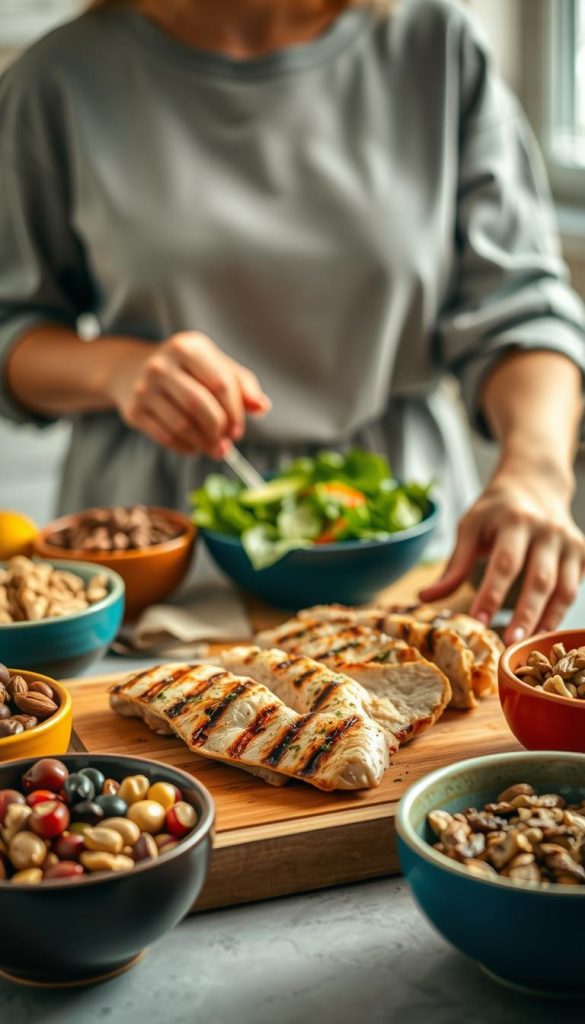
Decide on a protein ahead time so you can assemble quick meals. Choose chicken, salmon, or eggs for ease. If you prefer plants, beans are a shelf-stable option that works in bowls, soups, or salads.
- Keep Greek yogurt for fast, high-protein snacks.
- Cook a batch of chicken or salmon once and reuse it over days.
- Use canned beans for quick, flavored additions.
| Protein | Speed | Best Use |
|---|---|---|
| Chicken | 30-40 min (batch) | Bowls, sandwiches |
| Salmon | 15-20 min | Salads, quick dinners |
| Beans / Eggs | Instant / 10 min | Snacks, wraps |
When you set this foundation, meal planning and day-to-day prep become simpler. On busy work days you can assemble a balanced plate in minutes and protect your long-term health.
Incorporating Seasonal Vegetables Without the Stress
Frozen produce can be the quick win that keeps vegetables on your table all week. It often arrives pre-chopped, so you save time and skip the hard part: prep.
Use frozen greens, peas, or broccoli to bulk a bowl or salad in seconds. Toss frozen salmon and broccoli on a sheet pan for a fast dinner. Or stir cauliflower rice into a skillet to add volume without extra cooking time.
At the grocery store, focus on versatile ingredients like sturdy greens and pre-washed mixes. Pair them with leftover chicken or canned beans for instant protein.

- Keep a variety of frozen foods so you always have a healthy option for one meal.
- Use cauliflower rice to pad a bowl or to switch a salad into a warm dinner.
- Read Lily’s free ebook for tips that make veggies taste better and easier to love.
| Strategy | Why it helps | Quick example |
|---|---|---|
| Frozen produce | Less chopping, longer shelf life | Sheet-pan salmon + broccoli |
| Cauliflower rice | Adds volume without extra time | Warm bowl with chicken and greens |
| Versatile fresh greens | Fast salads, pairs with many proteins | Greens + leftover chicken = instant salad |
Mastering Flavor Profiles to Keep Things Interesting
A few smart spices can turn basic protein and veggies into something you actually look forward to. That change makes a quick bowl feel intentional and satisfying.
The Flavor Bible is a great resource to learn simple pairings. It helps you mix herbs and spices so the same ingredients keep tasting new.
When your brain is tired, keep three go-to spice blends in a jar. They cut decision time and make cooking feel effortless. A dollop of Greek yogurt also doubles as a fast, creamy sauce that elevates many meals.
- Rotate global profiles, Mexican, Mediterranean, and Thai, to avoid repetition.
- Use spice blends for instant flavor without extra prep.
- Small experiments with sauces help you stay engaged with your food.

| Flavor Profile | Key Spices / Herbs | Quick Example |
|---|---|---|
| Mexican | cumin, smoked paprika, oregano | Chicken + avocado + yogurt lime sauce |
| Mediterranean | rosemary, thyme, lemon zest | Salmon + roasted veggies + herb yogurt drizzle |
| Thai | cilantro, lime, chili flakes | Tofu or shrimp + rice bowl + tangy yogurt dip |
In practice: this is a simple way to keep your meal planning fresh. Small tweaks protect satisfaction and make healthy eating stick.
Deciding When to Add Carbohydrates
Think of carbohydrates as optional fuel you add when your body asks for extra energy.
Base your choice on activity and hunger. If you spent the day on your feet or did a long workout, a starchy potato or a cup of beans helps recovery and fills you up.
On lower-activity days, treat carbs more like a condiment. A small scoop of rice or a slice of toast can round out a plate without turning carbs into the star.
A flexible lazy meal approach lets you add or skip carbs without guilt. When planning dinner, ask: is my body asking for more fuel, or would a lighter plate keep my energy steady?
- Match carbs to your activity that day.
- Use beans or potatoes after long, active days.
- Treat carbs as a complement to protein and veggies most days.
| Situation | Carb Choice | Why it helps |
|---|---|---|
| High activity day | Potatoes, rice, beans | Refuels glycogen, aids recovery |
| Low activity day | Small portion of whole grain | Steady energy without excess |
| Unsure / hungry | Half-portion + extra protein | Satisfies hunger and limits overeating |
Essential Pantry and Freezer Staples for Low-Energy Days
When energy is low, the right staples make assembling dinner almost automatic. Keep a short list of fridge, freezer, and pantry items so you can pull together bowls, salads, or soups in minutes.
Must-Have Fridge Items
Eggs, Greek yogurt, and pre-cooked chicken let you build a high-protein bowl or quick salad in under ten minutes. Keep a jar of pickles or olives for instant flavor.
Also store a lemon, a bag of carrots, and a tub of hummus to top salads or toast.
Freezer Essentials for Quick Meals
Stock salmon, frozen veggies, and cauliflower rice. Toss a tray of protein and veggies at 400°F for 20 minutes for an almost no-active-prep dinner.
Frozen soup or a bag of mixed greens saves grocery time on busy days.
Pantry Staples for Brain Health
Canned beans, whole-grain crackers, and low-sodium soup are versatile. Keep 72% (or higher) dark chocolate for a gentle dopamine lift and comfort.
Tip: Drink 64 ounces of water daily to help mood and energy so assembling easy meals feels less daunting.
- Quick “life rafts”: tuna salad, egg on toast, or a yogurt bowl for fast eats.
- Use simple recipes saved on your phone so cooking takes less time and thought.
Simple Strategies for When You Feel Like Doing Nothing
Some nights you have zero energy, so keep a few truly no-cook options ready. That one choice protects your week and your brain.
No-cook meals like a yogurt bowl with fruit and nuts or a quick wrap with canned tuna and greens take minutes. They need no stovetop skills and still give you protein and veggies.
Stock your kitchen with grab-and-go ingredients ahead time: Greek yogurt, canned beans, whole-grain wraps, pre-washed greens, and a jar of olives. When work or stress knocks you down, these items are within hand.
- Have three back-pocket meals you can assemble blindfolded.
- Accept simple options, soup, toast, or a bowl are valid dinner choices.
- Focus on consistency over perfection; one easy night won’t undo progress.
Practical tip: keep a small list on your phone of easy meals so decision fatigue doesn’t win. Be kind to yourself, choosing the simplest thing is sometimes the best way to stay on track for the week.
| Problem | Fast Fix | Why it Helps |
|---|---|---|
| Zero energy after work | No-cook yogurt bowl or wrap | Provides protein, quick satisfaction |
| No groceries | Canned beans + frozen veggies + toast | Uses shelf-stable staples, saves a trip |
| Too much pressure to cook | Pre-chopped salad + leftover protein | Reduces decision fatigue, keeps nutrition steady |
Conclusion
Small habits around food can keep your week steady without adding more to-do items. Adopt a simple meal plan that fits your schedule and your shelf. Keep a few reliable staples so you can eat well even when time is tight.
Focus on consistent, easy choices. That keeps your brain fueled and supports long-term health. Let flexibility be your friend, swap ingredients, shorten prep, and accept simple dinners when you need them.
Start small, keep a short list on your phone, and trust that good planning serves your life, not the other way around. Each meal you choose wisely moves you forward.
FAQ
What is a lazy meal approach and how can it help when you have zero motivation?
It’s a low-effort weekly food strategy that focuses on simple, satisfying dishes you can assemble fast. You rely on protein (chicken, eggs, salmon, beans), quick-cook veggies, and a few go-to pantry staples so you eat healthier with minimal planning or stress. The idea is to remove decision fatigue and keep grocery runs short.
How do I avoid failing at traditional meal planning?
Keep things flexible: swap ingredients based on what you already have, use templates instead of strict recipes, and batch one or two components like roasted carrots or cooked rice. That reduces pressure and helps you stick with the routine even on busy workdays or nights when you don’t feel like cooking.
What’s a good foundation of protein and fat for low-energy days?
Choose easy proteins such as canned tuna, rotisserie chicken, eggs, or baked salmon. Pair them with healthy fats like olive oil, avocado, yogurt, or a handful of nuts. These combos keep you full and support brain health so you don’t reach for empty-calorie snacks.
How can I include seasonal vegetables without adding extra work?
Buy a mix of fresh and frozen produce. Roast a tray of seasonal vegetables once, or keep frozen cauliflower rice and mixed vegetables on hand. Frozen greens and carrots are great for soups, bowls, and quick sautés that feel fresh but require minimal prep.
What freezer and pantry staples should I stock for truly easy meals?
Keep frozen salmon, chicken breasts, mixed vegetables, and edamame. In the pantry, store canned beans, brown rice, whole-grain pasta, stock, olive oil, and spices. These items let you throw together bowls, soups, or salads with little brainpower.
Which fridge items make weeknight dinners simpler?
Ready-to-eat items like hummus, Greek yogurt, pre-washed salad greens, salsa, and shredded cheese speed up assembly. A jar of roasted red peppers or pesto can transform leftovers into a new meal in minutes.
How do you keep flavors interesting without complex recipes?
Use simple flavor-building tools: citrus, soy sauce, chili flakes, garlic powder, and fresh herbs. Rotate a few sauces, yogurt-tahini, vinaigrette, or a quick soy-honey glaze, to make similar core ingredients taste new across days.
When should I add carbohydrates to a low-effort menu?
Add carbs based on activity and hunger. If you have a busy day or exercise, include whole grains like brown rice or quinoa. For lighter days, skip heavy portions and rely more on veggies and protein to keep energy steady.
What are smart strategies for days you truly don’t want to cook?
Keep go-to no-cook options: yogurt bowls, salads with canned beans, cheese-and-cracker plates, or a quick soup from frozen stock and veggies. Batch-cook one comfort item like soup or a casserole so you can reheat without thinking.
How can I shop efficiently to support low-effort eating all week?
Make a short list focused on flexible ingredients: a protein, two vegetables (fresh and frozen), one whole grain, a can or two of beans, and a few flavor enhancers. Stick to a loop of reliable items you enjoy to reduce shopping time and stress.
Will this approach still support my health goals?
Yes. Prioritizing protein, vegetables, healthy fats, and whole grains supports satiety and nutrient balance. You can meet health goals without elaborate recipes by choosing quality staples and controlling portions.
Can this work for families or people with picky eaters?
Absolutely. Use build-your-own bowls or plates so everyone customizes their meal. Offer simple rotations, roasted chicken, steamed veggies, rice, so picky eaters recognize and accept components while others add extras for variety.
How do I prevent boredom from repeating the same dinners?
Rotate sauces, herbs, and textures. Swap rice for cauliflower rice, change from roasted to steamed vegetables, or trade baked chicken for canned salmon one night. Small changes make meals feel new without extra effort.
What quick breakfasts and snacks fit this low-energy approach?
Keep Greek yogurt with frozen berries, hard-boiled eggs, whole-grain toast with avocado, or a simple smoothie with spinach, banana, and protein powder. These require minimal prep and keep you full until your next meal.
How do I use leftovers smartly to save time?
Transform proteins into new meals: shred roasted chicken for tacos, toss cold salmon into a salad, or mix beans into a grain bowl. Store components separately so you can mix-and-match across several days.