

What if a few simple moves could free up your evenings and save you money without giving up flavor?
You can start with small steps at home and see big wins. Spend a few minutes each day on smart prep and you’ll cut stress around dinner time. This keeps your family fed with quality ingredients and fewer last-minute trips to the store.
Whether you cook on weeknights or batch cook on weekends, clear systems make the week feel easy. You’ll learn quick recipes that fit busy days, save money, and give you more family time. These tips work for breakfast, lunch, or dinner and suit new cooks or seasoned home chefs.
Key Takeaways
- Spend a few minutes daily to reduce evening stress and save money.
- Simple prep techniques help organize your week and boost variety.
- Focus on quality ingredients to keep recipes satisfying and nutritious.
- Batch cooking frees up time for family and other priorities.
- These steps work for all skill levels and most busy schedules.
Why You Should Start Meal Planning
A short weekly ritual can turn your evenings from chaotic to calm. When you set a simple routine, you remove the stress of deciding what to cook each night. Kellie Armstrong, MSN, RN, explains that a consistent habit is the most effective way to cut daily anxiety.
You’ll save time and money by organizing your grocery list on Sunday. This ensures you have what you need for the whole week and reduces extra trips to the store.
- You gain better portion and ingredient control when you cook at home.
- A structured prep system helps you avoid fast food on busy days.
- Planning turns the kitchen into an efficient space where each day feels manageable.
| Benefit | Short Win | How to Start |
|---|---|---|
| Save time | Fewer nightly decisions | Pick 3 dinners for the week |
| Save money | Less impulse buying | Shop from a single list |
| Control ingredients | Better portions | Cook at home twice a week |
| Lower stress | Calmer evenings | Set one prep hour Sunday |
Essential Meal Planning Ideas Healthy for Your Week
A clear calendar and a focused grocery list cut evening stress. Use a weekly view to place dinners, family events, and work nights so you know when to cook ahead. The MeaLime app helps by offering classic, flexitarian, or vegetarian plans and auto-generating a grocery list with all your ingredients.

Getting Started with Your Calendar
Set aside 30 minutes on Friday to review the week. Note any nights you need a quick sheet pan dish or a hearty soup.
Tip: Block days for batch cook, quick pasta, or a salad so you avoid daily guesswork.
Budgeting at the Supermarket
Shop from your app list. Focus on whole grain staples, fresh vegetables, and lean proteins like chicken or beans.
Check your pantry first for pasta, rice, and canned tomatoes to save time and money.
| Task | Time | Grocery Tip | Why it Helps |
|---|---|---|---|
| Weekly calendar review | 30 minutes | Use MeaLime list | Prevents last-minute runs |
| Friday prep block | 30–60 minutes | Prep grains and veggies | Saves minutes nightly |
| Pantry check | 10 minutes | Note pasta, rice, tomatoes | Avoid duplicate buys |
| Smart shopping | 1 trip/week | Buy whole grain and beans | Stretch budget and time |
Smart Strategies for Efficient Food Prep
Work smarter in the kitchen by stacking tasks that cook at the same time. This helps you finish multiple components in a single block so evenings become simpler. With a clear plan, you can roast, simmer, and chop without extra stress.
Multi-tasking in the Kitchen
Roast chicken while you cook brown rice on the stove. A sheet pan of vegetables and tomatoes can bake alongside the bird, freeing up stove burners for a quick sauce or eggs.
While the pan is in the oven, wash salad greens and cut fresh fruit. That way the fridge is ready for the week and your family can grab snacks or add toppings in minutes.
- Cook beans and quinoa ahead to speed up weeknight recipes.
- Make a simple sauce and store in jars for quick bowls and salads.
- Clean as you go to save cleanup time at the end.
| Task | When | Why |
|---|---|---|
| Roast protein + veggies | One prep day | Saves time across several meals |
| Batch grains and beans | 30–45 minutes | Quick assembly in minutes |
| Chop fruit & greens | During cook time | Easy grabs for family |
Simple Recipes for Breakfast and Lunch
A little advance work means you can eat well between meetings without stress.
Nutritious Breakfast Options
Prep overnight oats or egg muffins on Sunday and you’ll have a protein-packed breakfast for every day. Jeanine Donofrio and Phoebe Moore updated their guide in 2026 and recommend these quick starts for busy weeks.
Try: jars of oats with yogurt and fresh fruit, or baked egg cups with herbs and cheese.
Salad and Bowl Ideas
Make a Mediterranean quinoa salad or a warm lentil soup that tastes better after a day in the fridge.
You can add cooked chicken, beans, or brown rice to any bowl to round out the dish.
Packable Sandwiches and Wraps
Wraps loaded with veggies, cheese, and a bold sauce travel well for workdays. Use whole grain wraps and layered ingredients so nothing gets soggy.
Swap fillings to match what you have on hand and keep lunches interesting without extra time.

| Recipe | Prep Time | Key Ingredients | Serves |
|---|---|---|---|
| Overnight oats | 5 minutes | Oats, yogurt, fresh fruit | 1–2 |
| Egg muffins | 20 minutes | Eggs, cheese, herbs | 6–8 |
| Mediterranean quinoa salad | 25 minutes | Quinoa, tomatoes, olives, herbs | 4 |
| Lentil soup | 40 minutes | Lentils, carrots, onions, broth | 4–6 |
Best Practices for Food Storage and Safety
Knowing fridge and freezer rules saves you time and keeps dishes safe.
Keep your refrigerator at 40°F or lower. Store cooked ground poultry or beef for no more than 1–2 days. Soups, stews, and similar dishes last about 3–4 days when chilled promptly.
Freeze blanched vegetables after steaming 3–5 minutes. At 0°F or lower you can keep those veggies for 8–12 months and still use them in a recipe later. Label each container with the date so you can track ingredients easily.
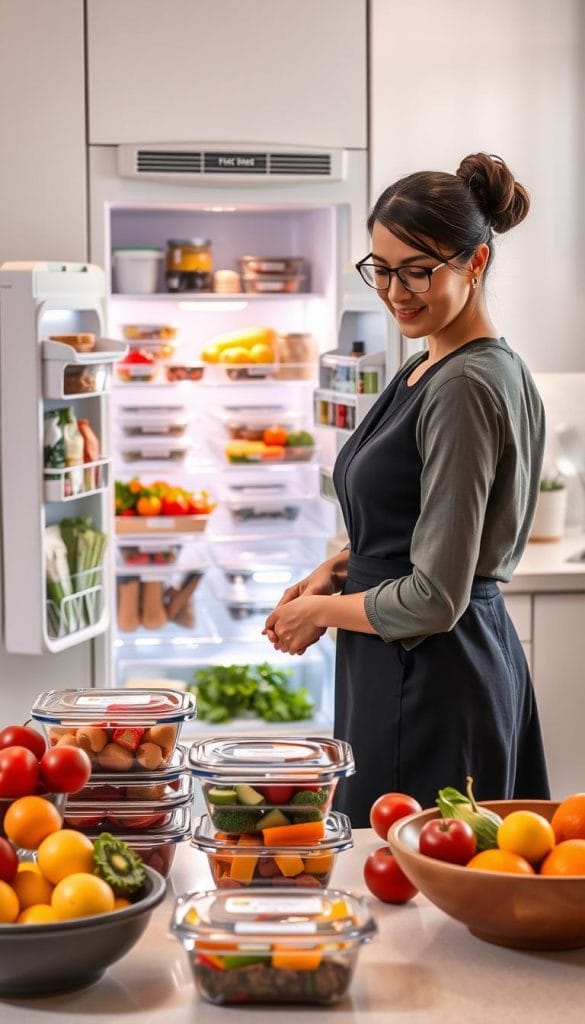
- Rotate storage: put older items at the front so you use them first and avoid waste.
- Store perishables like fresh herbs, salad greens, and chopped fruit at eye level to remind you to use them.
- Portion for quick reheats: split rice, pasta, beans, or chicken into single-serve containers for fast dinners during the week.
- Date everything: jars of soup, sauces, or cheese-based dishes stay safe when you know when they were made.
| Item | Temp | Storage Time |
|---|---|---|
| Cooked ground beef/poultry | ≤ 40°F | 1–2 days |
| Soups and stews | ≤ 40°F | 3–4 days |
| Blanched vegetables | 0°F or lower | 8–12 months |
Conclusion
, Small habits in the kitchen add up to big wins across your week. Use simple recipe swaps and steady meal prep to cut stress and save time.
Start small: pick two recipes for the week, roast a chicken, or cook rice and quinoa once and reuse them in bowls and salad jars.
Consistency turns one good day into many. Keep your fridge stocked, label containers, and set aside short prep blocks so dinner and breakfast feel easy.
Stick with it and you’ll enjoy more free time, less waste, and better control over your food. Your planning pays off every day.