

Can two simple weights really change how you train and how you feel? If you want to build muscle, boost strength, and save time, the answer is yes.
You can get a high-quality session in just 20 to 40 minutes. Andrew Tracey, a trainer and fitness editor with 18 years of experience, recommends using two dumbbells for a weekly routine that keeps you consistent.
Track your reps and sets to measure progress. Keep your knees slightly bent during starts to protect your joints while performing foundational exercises.
This plan fits busy schedules and works at home or on the road. Clear cues and short sessions make it easy to stick with the plan and see steady gains over a week of focused training.
Key Takeaways
- Short sessions (20–40 minutes) deliver efficient strength gains.
- Using two dumbbells keeps routines simple and consistent.
- Track reps and sets to measure progress reliably.
- Maintain slight knee bend to protect joints during moves.
- Plan fits home and travel training for busy schedules.
Why Choose a Full Body Dumbbell Workout
A compact weight routine lets you challenge your whole musculature without a big gym. It fits into busy days and gives clear results you can track.
Efficiency is the main draw: a single session targets chest, shoulders, back, quads, and hamstrings. You don’t need many machines to build lean muscle and improve overall strength.
Andrew Tracey points out these sessions add muscle, boost fitness, and grow total strength when you stay consistent. That makes progress clear and measurable.
- Works major muscle groups with minimal equipment.
- Short, repeatable sessions that improve conditioning.
- Easy to track sets, reps, and progression.
| Benefit | What It Targets | Why It Helps |
|---|---|---|
| Time-efficient | Full movement patterns | Fits work and travel schedules |
| Trackable | Major muscle groups | Clear progress via reps and load |
| Scalable | Strength and conditioning | Adaptable for all fitness levels |
Choose this approach if you want a simple, effective plan that builds muscle and raises your fitness without complexity.
Essential Equipment and Setup
Start with the gear that makes every session simple and portable. You don’t need a lot to get meaningful strength work done. A couple of reliable pieces of kit let you train at home, in a hotel, or at a park.
Choosing the Right Weight
For the Men’s Health Dumbbell Club, use two dumbbells that suit your current level. Pick a load that lets you keep perfect form through all prescribed reps and sets.
If you’re unsure, follow Men’s Health guidance to pick a starting option that challenges you by the last few reps without sacrificing technique.
- Versatility: Two dumbbells cover pressing, rowing, hinge, squat, and carry exercises.
- Form first: Choose a weight that lets you complete each set with control.
- Base position: Keep your knees slightly soft when standing to protect joints and create a stable base.
- Intensity: Most movements work best with a medium-weight dumbbell so you can finish the session safely.
Mastering Your Warmup Routine
Start every session with a targeted warmup to prime movement and cut injury risk. A proper ramp-up gets your heart rate up and muscles ready.
Spend 5–10 minutes on active drills before you lift. Include dynamic moves that increase joint range and mobility.
Andrew Tracey recommends simple, effective primers like the single-halo and the rear delt fly to prepare shoulders and upper back. These cues help you maintain form during heavier sets.
- Begin with light cardio for 60–90 seconds.
- Add dynamic stretches and movement-specific prep.
- Finish with 1–2 warm sets at low load.
Prioritize the warmup to reduce injury risk and steady your focus. When you do, every training session becomes safer and more productive.
| Step | What to Do | Time |
|---|---|---|
| General Prep | Light cardio (jog in place, jump rope) | 1–2 minutes |
| Mobility | Dynamic stretches, single-halo, rear delt fly | 3–5 minutes |
| Prime Sets | Low-load practice reps of main lifts | 1–3 minutes |
Understanding the Full Body Dumbbell Workout Approach
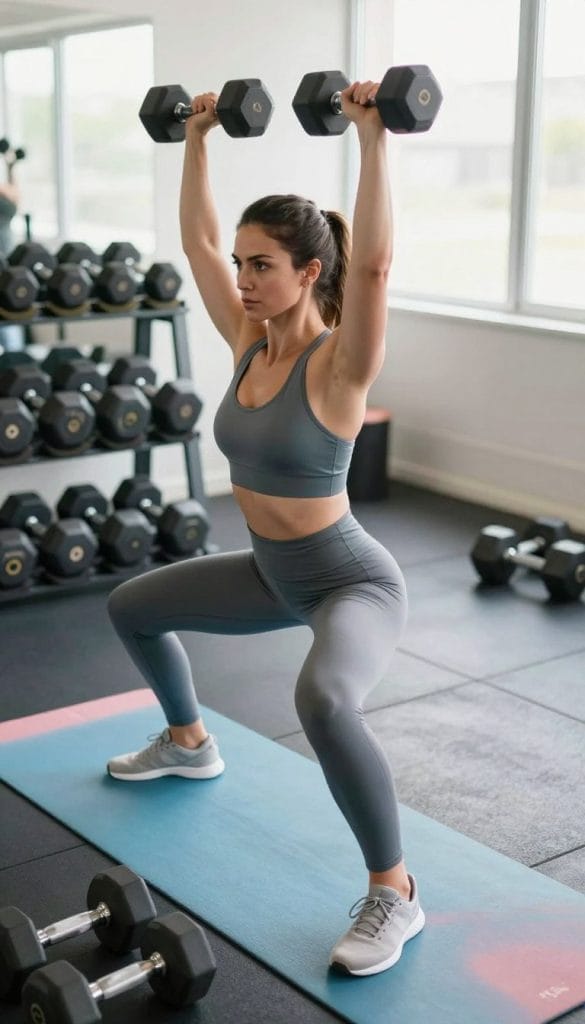
Use time-based sets to push intensity and track progress when you have limited minutes. Two main methods make this training efficient: AMRAP and triset formats. Both keep you moving and force steady gains.
The AMRAP Method
AMRAP stands for As Many Reps As Possible. Set a timer—say 10 or 30 minutes—and perform continuous rounds of selected exercises. Your goal is to do as many quality reps as you can while keeping form tight.
Key cues: keep your core tight, hinge forward at the hips for rows, and plant your feet firmly for squats. These small cues save your back and improve each rep.
Triset Training
Trisets link three exercises performed back-to-back with minimal rest. This approach builds muscle and endurance in less time.
- Choose one push, one pull, and one lower-body move for balance.
- Keep palms facing in when you clean weights to the front of your shoulders for squats.
- Maintain torso upright and knees tracking over toes during standing squats for stability.
| Method | When to Use | Benefit |
|---|---|---|
| AMRAP | Timed sessions (10–30 minutes) | Max effort, easy progress tracking |
| Triset | Strength plus conditioning days | Builds muscle and endurance in less time |
| Form Cues | Every set and rep | Protects back, targets hips and legs correctly |
Power and Strength Training Complexes
Power complexes link quick, explosive moves so you build strength and speed in less time.
Try Complex 1: dumbbell cleans, push-presses, then front squats. Do each rep with intent and keep your core tight.
Use powerful hip extension on the clean to drive the weight up. Keep your palms facing in as you bring the load to the front rack position.
- Stand with feet shoulder-width on the floor for a stable base.
- Keep hips back and torso vertical during front squats to target legs and core.
- Rest 60–90 seconds between rounds to keep quality high.
| Move | Reps | Sets | Rest (seconds) |
|---|---|---|---|
| DB Cleans | 6 | 3 | 60–90 |
| Push-Press | 6 | 3 | 60–90 |
| Front Squat | 8 | 3 | 60–90 |
Focus on form over speed. That way you build real power and protect your back, shoulders, and knees during training.
Hypertrophy Focused Movements
Targeting the peak contraction in each move will accelerate your muscle gains. Focus on tension and control rather than rushing through sets.

Crush press: squeeze the dumbbells together at the top to engage your chest. Hold the tight position for a second to increase tension and time under load.
During bent-over rows keep your shoulder blades pulled in and your back flat. This position isolates the upper back and keeps the hips and torso stable.
For reverse lunges, stay upright and brace your core. Perform 10 reps per leg so each side gets equal work and you build muscle evenly.
- Keep your feet steady on the floor and knees tracking over toes.
- Use a controlled tempo—pause at the top for two seconds when possible.
- Match weight and sets to your level; choose loads that let you finish clean reps.
Core Stability and Midline Control
Your core is the control center for movement—train it deliberately to improve every rep.
Start with the Turkish Get-Up. This move forces midline control across multiple planes. Keep your eyes on the dumbbell and lock your shoulder as you rise.
When you hold a plank position, brace the core, spread your feet wide, and keep your hips square to the floor. That stance helps protect your back and keeps the hips stable.
- Practice slow, controlled reps and finish each set with quality, not speed.
- Keep knees slightly soft and maintain a steady position during carries and presses.
- Focus on breathing to support the midline and reduce spinal load.
Why it matters: solid midline control improves performance across every move in your routine. Use deliberate sets and measured progress to protect your back and build lasting stability.
Conditioning and Finisher Exercises
Finishers are short, sharp, and designed to push your limits while reinforcing form. Use them at the end of a session to raise the heart rate and lock in technique under fatigue.
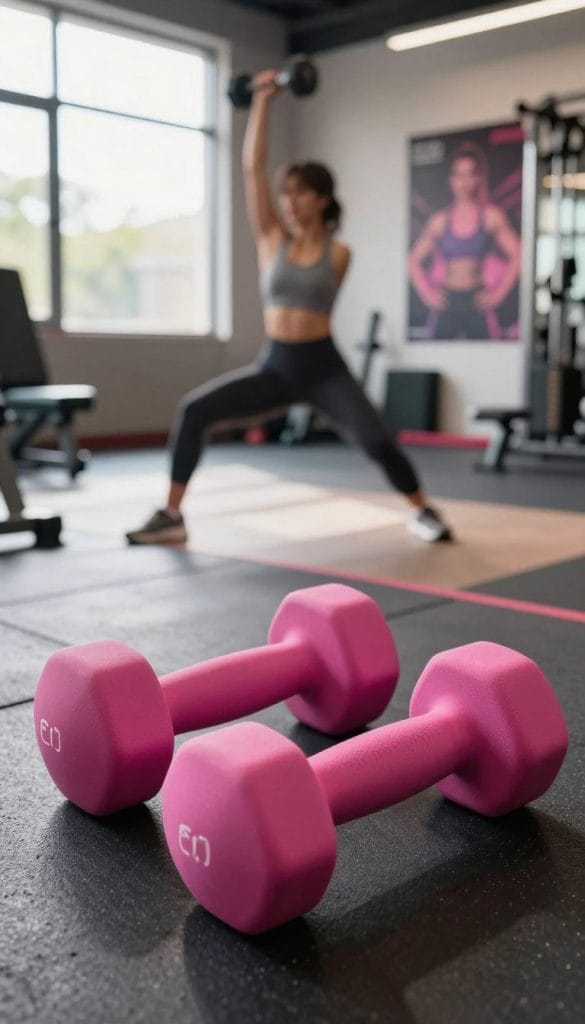
Try the burpee over bells as a go-to conditioning finisher. Jump laterally over the dumbbells after each press-up, and make sure your chest touches the floor during the push-up portion to keep the movement honest.
When you do split jumps, keep your hips low and torso vertical. That stance helps you generate power from the legs and core while protecting knees and back.
- Land softly on your feet and keep knees slightly bent to cushion impact.
- Aim to finish reps and sets quickly, but never sacrifice form for a few seconds saved.
- Limit finishers to 1–3 rounds of 30–60 seconds or 8–12 reps per set, depending on the exercise.
| Finisher | Work | Duration / Reps | Focus |
|---|---|---|---|
| Burpee over bells | Cardio + strength | 3 rounds of 30–45 seconds | Chest contact, soft landing, quick ground-to-stand |
| Split jumps | Plyometric | 3 sets of 8–12 reps per leg | Hips low, torso vertical, explosive drive |
| Farmer carry sprints | Carry + conditioning | 4 x 20–30 meters | Stable core, short powerful steps, solid foot position |
Perfecting Your Form and Technique
Clean movement patterns keep you strong and guard your back during every set. Focus on a few technical cues and make them habit. Small changes protect you and improve results.
Hinging at the Hips
Begin each hinge by pushing your hips back, not by bending at the waist. That hip-first position loads the hamstrings and keeps the spine safe.
Think “hips back” on every descent and “hips forward” on the return. Use this cue on deadlifts, Romanian variants, and when you hinge to set up a row.
Maintaining a Neutral Spine
Keep a neutral spine to protect your back during lifts. A straight, braced torso reduces shear and lets you handle heavier weights over time.
Brace your core and hold that position for a few seconds at the top of each rep. Avoid rounding toward the ground when you fatigue.
Engaging Your Shoulder Blades
On rows and presses, pull your shoulder blades together at the top of the movement. That engagement stabilizes the shoulder and shifts load into the upper back and chest.
Keep your core tight and your palms facing in when you press overhead. Always keep your feet flat on the floor and knees aligned to form a steady base.
Quick checklist
- Hinge forward with hips, not back.
- Hold a neutral spine during pulls and lifts.
- Engage blades at the top of the row.
- Core tight, palms facing in for presses.
- Feet flat, knees aligned; solid position for every rep and set.
| Focus | Key Cue | Why it Helps |
|---|---|---|
| Hinge | Hips back / hips forward | Protects spine; loads hamstrings and glutes |
| Spine | Neutral / core tight | Reduces risk of injury; improves force transfer |
| Shoulders | Scapula pinched / palms facing | Stabilizes joint; improves row and press mechanics |
Tracking Your Progress Over Time
Small records add up; tracking turns guesswork into measurable progress. Keep a simple log of totals after each session so you can compare results from one week to the next.
Record your total reps and sets for every exercise. Andrew Tracey recommends this exact approach so you have a clear benchmark to beat in future sessions.
Log the load, reps, and how the set felt. That data shows whether your strength and muscle are improving and where you need to push harder.
- Write results immediately after each set to keep entries accurate.
- Review past entries weekly to spot trends and plateaus.
- Adjust intensity when you see steady gains or stalled progress.
| Metric | Why Track | Frequency |
|---|---|---|
| Total reps | Shows volume and endurance | Every session |
| Load & sets | Measures strength gains | Every session |
| Notes (fatigue, form) | Helps tweak training plans | Weekly review |
Adapting the Routine for Your Fitness Level
Scale each session to match where you are today, not where you want to be next month.
You can adapt this dumbbell workout by changing the weight or the number of reps to match your current level.
If lower body exercises feel too hard, focus first on perfecting squats. Practice form with a lighter load until your hips, knees, and feet move in sync.
Keep your back flat and core braced during every exercise. That protects the spine and helps you lift more safely as intensity rises.
- Reduce weight or reps when balance is shaky.
- Modify a single-leg deadlift with lighter weight until stability improves.
- Progress gradually; your body adapts over weeks, not days.
Tip: If one leg or movement lags, do a few extra reps on that side. Small, consistent adjustments make steady gains without risking injury.
Conclusion
End your sessions with intent: track results, tweak what’s needed, then build on it.
Consistency, paired with clear goals, is the simplest way to turn effort into real gains.
These routines help you build muscle and improve overall strength from home. Track reps, note loads, and push progression week to week.
Whether you are new or experienced, scale each session to match your level. Use the plan to shape your training, stay patient, and enjoy the process. Small, steady steps are the best way to make these workouts stick and change your body for the better.