
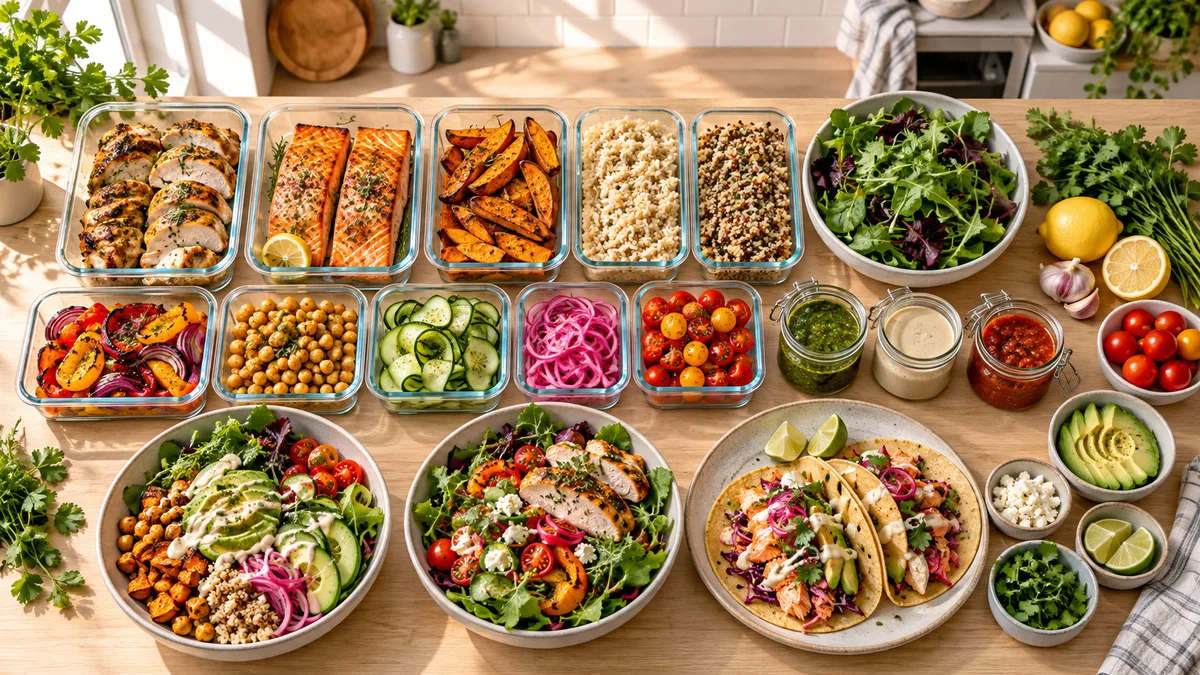
Your Sunday meal prep should make the week easier, not leave you staring at five containers of dry chicken and broccoli.
You want quick lunches, easy dinners, less takeout, and food you still want to eat by Thursday. That sounds simple, but most plans fall apart when every meal looks and tastes the same.
I learned that after a particularly grim week of turkey chili lunches. The chili tasted great on Sunday. By Friday, I would have traded it for a parking ticket. So how do you prep healthy food for the week without getting sick of it?
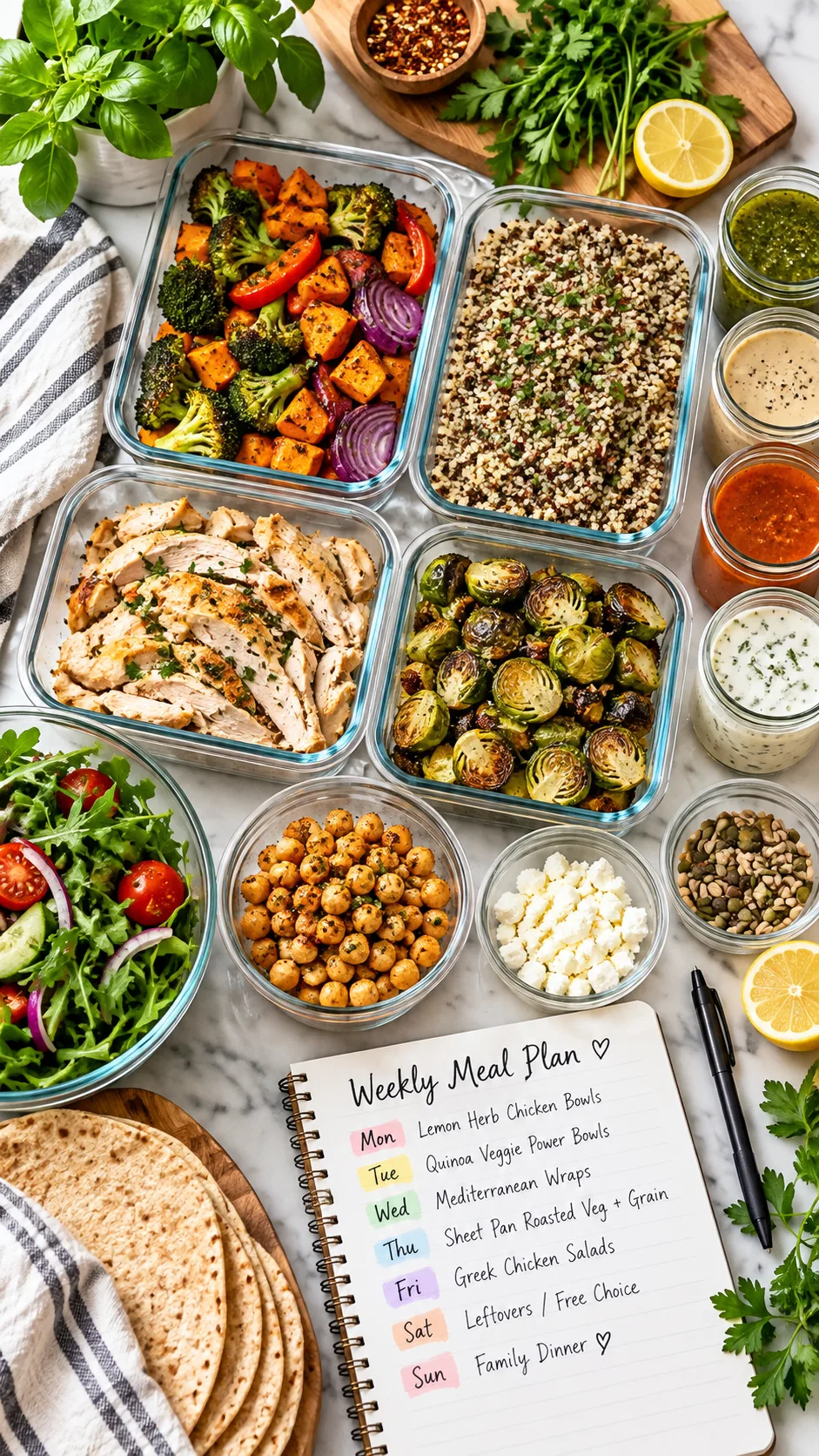
Stop prepping full meals and start prepping building blocks
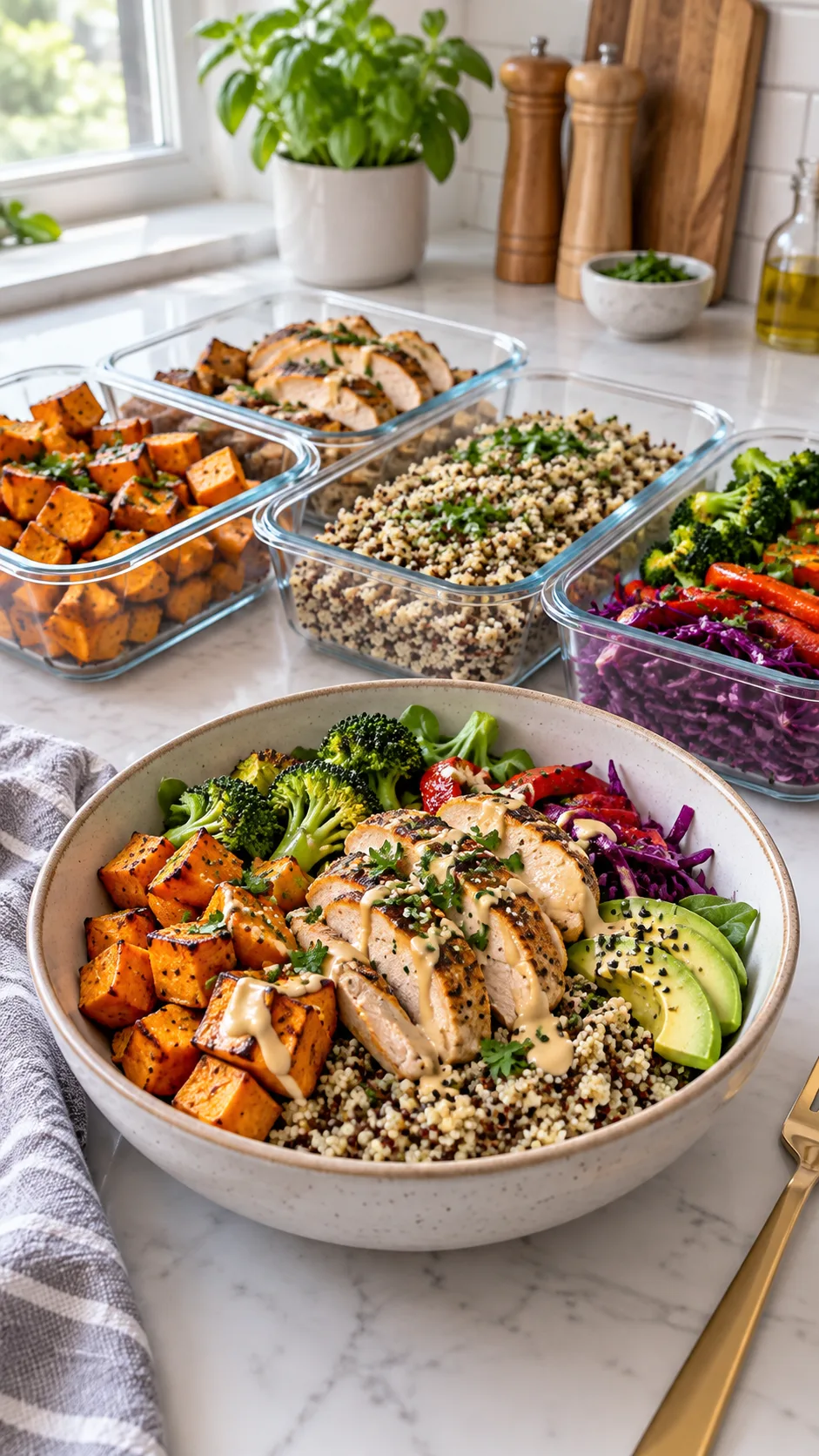
The biggest shift comes from prepping components instead of seven matching meals. Cook flexible foods once, then put them together differently throughout the week.
You get variety without cooking from scratch every night. Grab-and-go food still waits for you, but your taste buds do not stage a revolt. That helps.
A meal prep formula that keeps food interesting
Build your weekly prep around a few mix-and-match categories. Pick foods that work in bowls, salads, wraps, skillets, soups, and snack plates.
- Two proteins: chicken thighs, ground turkey, tofu, eggs, salmon, lentils, or beans.
- Two carbs: rice, quinoa, potatoes, pasta, tortillas, oats, or whole-grain bread.
- Three vegetables: one roasted, one fresh, and one that cooks quickly.
- Two sauces: choose very different flavor directions for easy variety.
- One emergency meal: soup, frozen chili, burritos, or a casserole that freezes well.
For example, cook lemon-herb chicken and taco-seasoned turkey. Add roasted sweet potatoes, brown rice, chopped salad vegetables, salsa verde, and tahini-lemon dressing.
On Monday, eat a taco bowl. On Wednesday, tuck turkey into a wrap. On Friday, toss chicken, rice, greens, and tahini into a bowl that feels more like takeout than leftovers.
Plan for four days, then use the freezer like a grown-up
Many people try to keep seven days of meals in the refrigerator. That creates food safety concerns and makes the last meals taste tired. Your fridge cannot work miracles.
The USDA recommends that you refrigerate cooked leftovers within two hours and eat them within three to four days. Freeze part of your Sunday batch to carry your plan safely through the week.
Use the 4-and-3 method
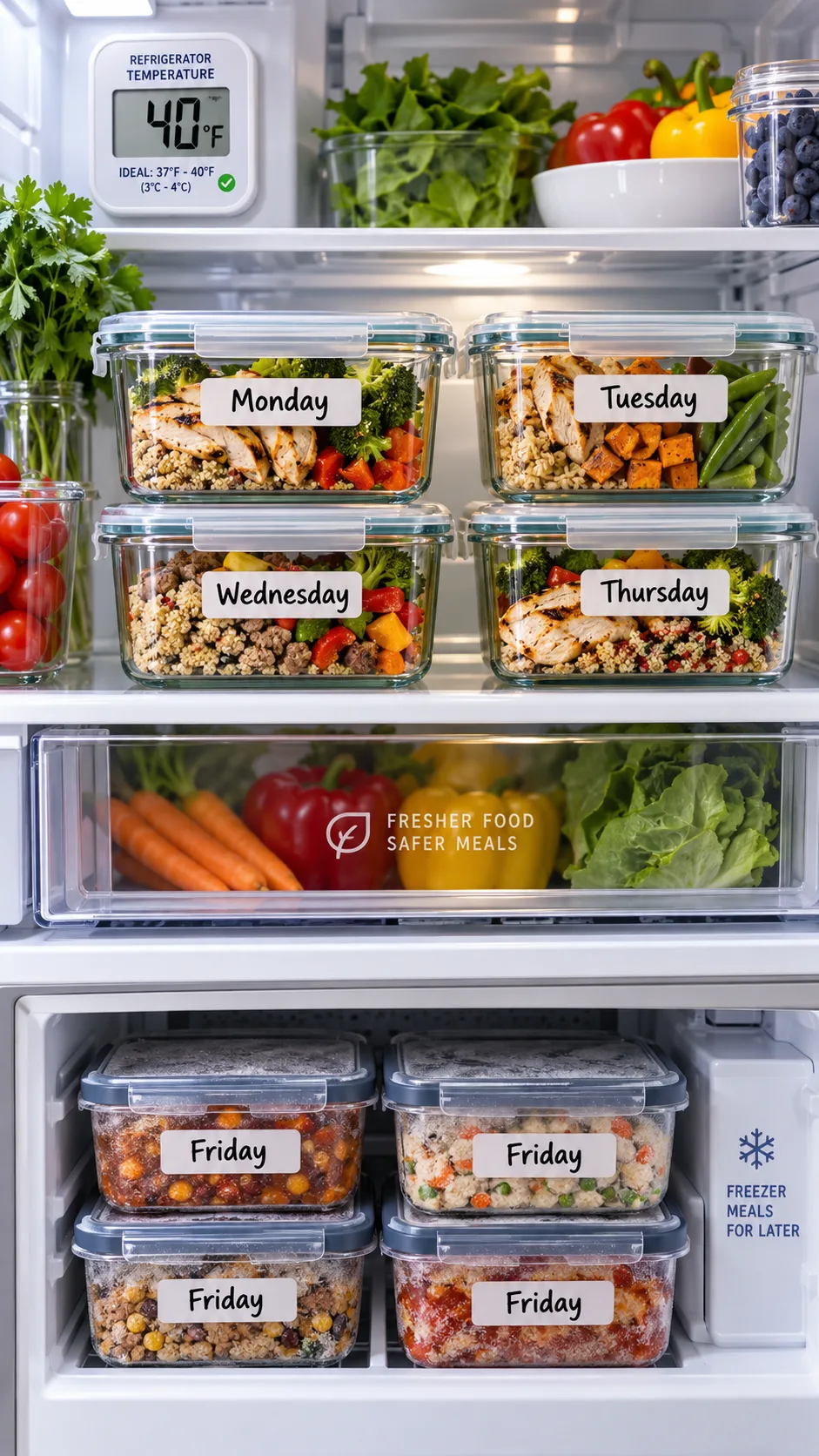
Make four days of refrigerator meals and three days of freezer meals. Each night, move one freezer portion into the fridge for the following day. That small habit keeps food fresher and helps it hold its texture later in the week.
- Cook your proteins, grains, and roasted vegetables on Sunday.
- Pack Monday through Thursday meals in the refrigerator.
- Freeze Friday meals and one or two backup portions right away.
- Move Friday’s meal into the refrigerator on Thursday night.
- Use backup portions when your week goes sideways.
Freeze food right away instead of waiting until Thursday, when you suddenly remember that chicken exists. Let food cool in shallow containers so it reaches refrigerator temperature faster.
The FDA food safety guidance also tells you to keep your refrigerator at or below 40°F. A cheap fridge thermometer costs less than one panic-fueled grocery run.
Choose ingredients that hold up all week
Not every healthy ingredient does well inside a meal prep container. Delicate greens wilt, avocado browns, and overcooked fish can clear an office break room. Use sturdy foods for the main batch, then add fragile ingredients later.
Best proteins for weekly meal prep
Protein shapes each meal, so pick options that reheat well or taste good cold. Chicken thighs stay juicier than chicken breast, while beans and lentils often taste better after they sit in seasoning.
- Shredded chicken thighs with simple seasoning
- Lean ground turkey, beef, or chicken with onions and spices
- Turkey meatballs or chicken meatballs
- Baked tofu, tempeh, or seasoned chickpeas
- Hard-boiled eggs for breakfasts and snack boxes
- Black beans, lentils, and white beans for plant-based meals
Cook fish for early-week meals, or freeze individual portions right after cooking. Keep canned tuna, salmon, or sardines in the pantry for a no-cook protein option. Convenience matters when you get home hungry at 7 p.m.
Vegetables that refuse to turn sad
Roasting vegetables makes meal prep easier because heat concentrates their flavor. Broccoli, carrots, bell peppers, cauliflower, Brussels sprouts, zucchini, green beans, and onions all last well for a few days in the refrigerator.
Keep crisp vegetables separate until you need them. Store chopped cucumbers, shredded cabbage, carrots, radishes, snap peas, and lettuce in airtight containers with a dry paper towel. The towel absorbs extra moisture before it turns your salad into a swamp.
Carbs that make leftovers feel like a real meal
Carbs bring comfort, energy, and staying power to meal prep. Brown rice, quinoa, farro, potatoes, sweet potatoes, pasta, and tortillas give you plenty of easy choices during the week.
Cook grains with broth, garlic, herbs, or spices instead of plain water when you can. That small step builds flavor before you open a sauce jar. Bland rice rarely needs to happen.
Use sauces to create different meals from the same prep
Sauces carry much of the work in a meal prep plan that does not get dull. You can eat the same chicken twice and enjoy two very different meals when you change the sauce, toppings, and base.
I prep two sauces with distinct personalities. One usually tastes fresh and citrusy. The other leans richer, spicier, or smoky. That approach beats buying six random bottled dressings that sit untouched in the refrigerator door.
Pick two flavor lanes each week
Choose flavor combinations that share a few ingredients without tasting the same. You save money, spend less time prepping, and give yourself more options.
- Mexican-inspired: salsa, lime, cumin, black beans, corn, avocado, cilantro, and taco seasoning.
- Mediterranean: lemon, garlic, cucumber, feta, olives, chickpeas, tomatoes, and hummus.
- Asian-inspired: soy sauce, ginger, sesame oil, scallions, rice vinegar, edamame, and chili crisp.
- Italian-inspired: pesto, marinara, basil, mozzarella, white beans, spinach, and roasted peppers.
- Middle Eastern-inspired: tahini, lemon, za’atar, cumin, parsley, cucumbers, and lentils.
Keep sauces in small containers instead of pouring them over every meal on Sunday. This protects texture and lets you change your mind at lunch. You do not need to commit to Tuesday’s dressing days in advance.
A simple sauce plan
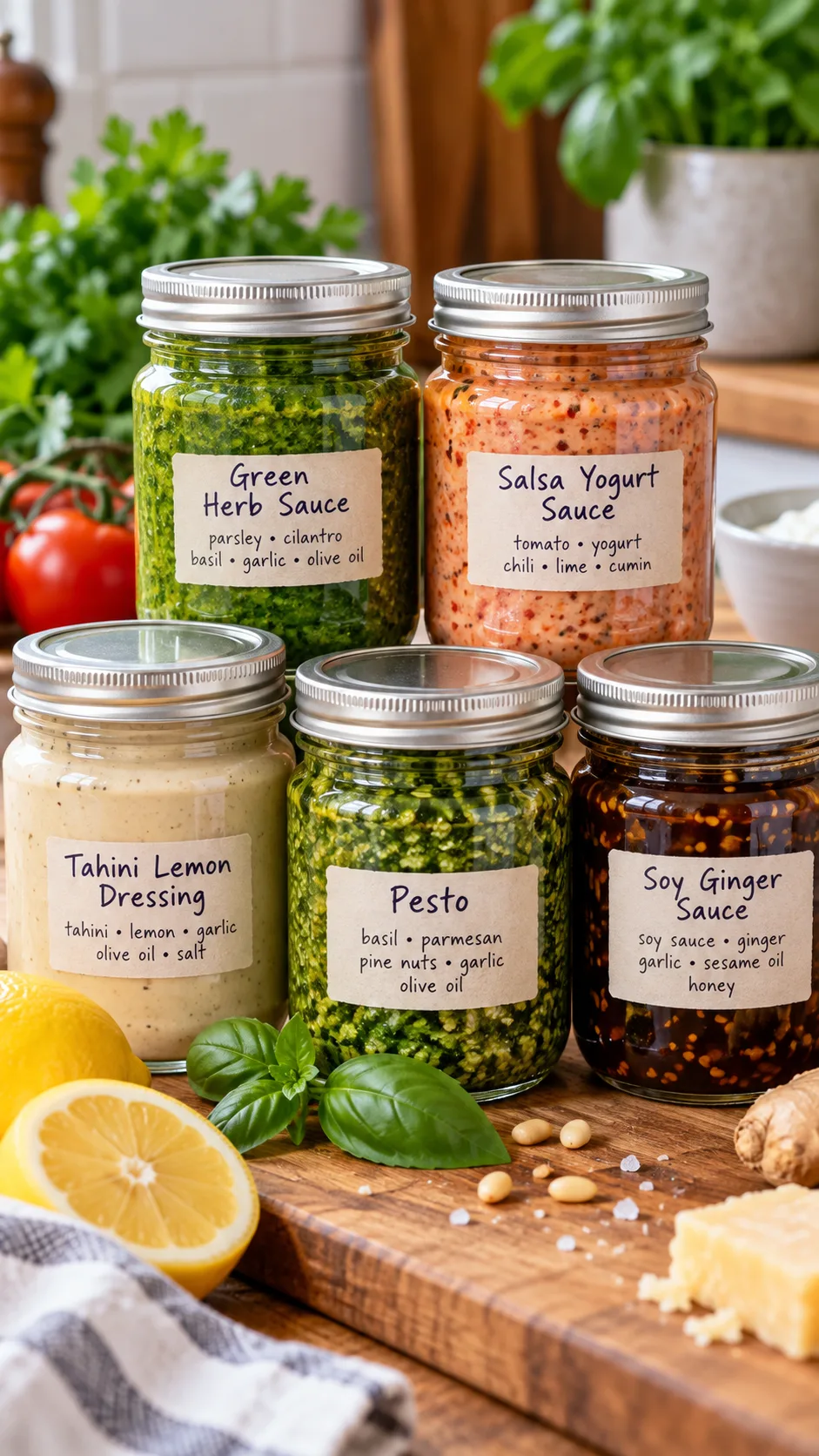
Make lemon-tahini sauce for grain bowls and roasted vegetables. Stir tahini, lemon juice, water, garlic, salt, and pepper until smooth.
Then mix a quick salsa yogurt sauce with Greek yogurt, salsa, lime juice, and hot sauce. Use it on tacos, potatoes, eggs, turkey bowls, and wraps. One batch goes a long way.
Build a Sunday meal prep plan in 90 minutes
You do not need a whole afternoon or seventeen matching containers to meal prep well. You need a sensible order. Start the slowest foods first, then handle other tasks while the oven and stove cook.
This Sunday routine works for most busy weeks. Change the quantities to fit your household, appetite, activity level, and goals.
Your practical 90-minute meal prep schedule
- Minute 0: Preheat the oven, start rice or quinoa, and fill a pot for hard-boiled eggs.
- Minute 10: Chop vegetables and toss them with oil, salt, pepper, and seasoning.
- Minute 20: Put vegetables and protein in the oven, or cook protein in a skillet.
- Minute 35: Mix two sauces while the main ingredients cook.
- Minute 50: Wash and chop salad ingredients, then portion snacks.
- Minute 65: Let hot food cool slightly, then pack meals and label freezer portions.
- Minute 90: Clean the kitchen, admire your work, and order nothing except perhaps a well-earned coffee.
Use sheet pans when you can. A sheet pan setup cuts down on dishes and lets vegetables caramelize while you handle grains and sauces. Less washing up gets my vote every time.
A sample Sunday meal prep menu that never feels repetitive
This healthy meal prep example works for one person who wants lunches and flexible dinners. Increase the portions if you cook for a family or want extra meals.
What to prep on Sunday
- 1.5 pounds taco-seasoned ground turkey
- 1.5 pounds lemon-garlic chicken thighs
- 3 cups cooked brown rice or quinoa
- One sheet pan of sweet potatoes, peppers, onions, and broccoli
- One container of shredded cabbage and carrots
- One container of chopped cucumbers and tomatoes
- Black beans, corn, tortillas, and mixed greens
- Salsa yogurt sauce and lemon-tahini dressing
Monday: taco turkey grain bowl
Layer rice, turkey, black beans, corn, roasted peppers, salsa yogurt sauce, and cilantro. Add avocado just before eating. This lunch fills you up and beats a vending machine granola bar by a mile.
Tuesday: lemon chicken chopped salad
Toss mixed greens, cabbage, cucumbers, tomatoes, chicken, roasted sweet potatoes, and lemon-tahini dressing. Pack the dressing separately until lunch. Add pumpkin seeds or feta for crunch and more flavor.
Wednesday: turkey and vegetable wrap
Fill a whole-grain tortilla with taco turkey, cabbage, peppers, corn, and salsa yogurt sauce. Add fruit or Greek yogurt on the side. You get a different texture with almost no extra cooking.
Thursday: chicken rice skillet
Warm chicken, rice, broccoli, and sweet potatoes in a skillet with a splash of broth or water. Finish with tahini sauce, hot sauce, or a fried egg. A skillet makes leftovers feel more deliberate than a microwaved container.
Friday: freezer burrito bowl or emergency meal
Thaw your frozen portion overnight, then heat it for lunch or dinner. Add fresh greens, salsa, or a squeeze of lime to perk it up. Friday-you will thank Sunday-you.
Keep breakfast and snacks simple, not elaborate
Lunch and dinner get most of the meal prep attention, but breakfast chaos can wreck a good plan by 10 a.m. Keep breakfast simple enough to grab while you are half awake.
Prep two breakfast choices instead of seven. Variety helps, but your morning brain does not need a brunch menu.
- Overnight oats with berries, chia seeds, and Greek yogurt
- Egg muffins with vegetables and cheese
- Hard-boiled eggs with fruit and whole-grain toast
- Greek yogurt bowls with nuts and frozen berries
- Freezer breakfast burritos with eggs, beans, and vegetables
For snacks, pair protein with fiber so you stay full longer. Try apples with peanut butter, cottage cheese with fruit, carrots with hummus, roasted chickpeas, cheese with crackers, or yogurt with nuts.
If you follow a specific nutrition plan, shape your prep around your needs instead of copying someone else’s plate. People who use appetite-regulating medication may find this GLP-1 meal plan guide helpful for putting protein, hydration, and manageable portions first.
Store meal prep food so it tastes good on day four
Great cooking cannot overcome bad storage. Use airtight containers, cool cooked food promptly, and keep wet ingredients away from crunchy ingredients. These habits protect flavor and food safety.
Container rules worth following
- Use shallow containers so food cools faster and reheats easily.
- Store dressings, sauces, nuts, seeds, and crunchy toppings separately.
- Keep leafy greens dry and add them just before eating.
- Label freezer containers with the meal name and date.
- Use glass containers for reheating when possible, especially for saucy foods.
- Pack individual lunch portions if rushed mornings push you toward takeout.
Reheat leftovers to 165°F, according to FoodSafety.gov guidance. Stir food halfway through microwave reheating so the center heats evenly.
Trust your senses, but do not depend on them alone. Food can grow unsafe bacteria without changing its smell or appearance. If you question a container’s safety, throw it out. A $7 lunch does not justify a miserable weekend.
Make meal prep fit your budget and your real life
Meal prep works best when it fits your schedule, food preferences, and grocery budget. You do not need expensive superfoods or a refrigerator stocked like a wellness influencer’s showroom.
Buy versatile ingredients that show up in several meals. Rice, canned beans, frozen vegetables, eggs, chicken thighs, oats, and seasonal produce can stretch a modest grocery budget far.
Check out this low-budget meal plan for more practical ways to eat well without draining your grocery budget. Planning around store sales helps too, especially when you choose proteins and produce first.
Give yourself a flexible meal prep rule
Plan about 80 percent of your meals and leave 20 percent open. You might meet a friend for dinner, want something different, or get stuck at work late. Flexibility keeps the plan useful instead of brittle.
Keep a short emergency pantry list too. Pasta, canned beans, jarred sauce, broth, frozen vegetables, tuna, and tortillas can put dinner on the table in minutes. You do not need perfection. You need a backup plan.
Common Sunday meal prep mistakes that cause boredom
A few predictable mistakes cause most meal prep problems. Fix them, and your weekly food routine becomes much easier.
- You prep only one meal. Cook components, then change the format, sauce, and toppings.
- You season everything the same way. Season some protein lightly, then add different flavors during the week.
- You pack all seven days in the refrigerator. Freeze portions for later in the week on Sunday.
- You ignore texture. Keep crisp toppings, greens, dressings, and crunchy foods separate.
- You prep recipes that take forever. Save elaborate cooking projects for weekends when you want to make them.
- You forget convenience foods. Use frozen vegetables, canned beans, rotisserie chicken, and bagged salad when they make life easier.
- You expect motivation to carry you. Put ready-to-eat food where you will see it first.
Meal prep should remove decisions, not create a second job. If your plan feels too complicated, simplify it. A basic bowl you eat beats an ambitious recipe you abandon on Wednesday.
Make this Sunday the start of an easier week
The best Sunday meal prep plan combines fresh ingredients, smart storage, freezer portions, and different flavors. You do not need a different gourmet meal every day. You need enough options to keep lunch from feeling like a punishment.
Prep proteins, carbs, vegetables, sauces, and one backup meal. Keep delicate ingredients separate, freeze meals for later in the week, and remix your food instead of eating the same plate repeatedly.
Start with one 90-minute session this Sunday. On Wednesday, your future self can open the fridge, find real food waiting, and feel ridiculously capable. That small win can make the whole week easier.
