
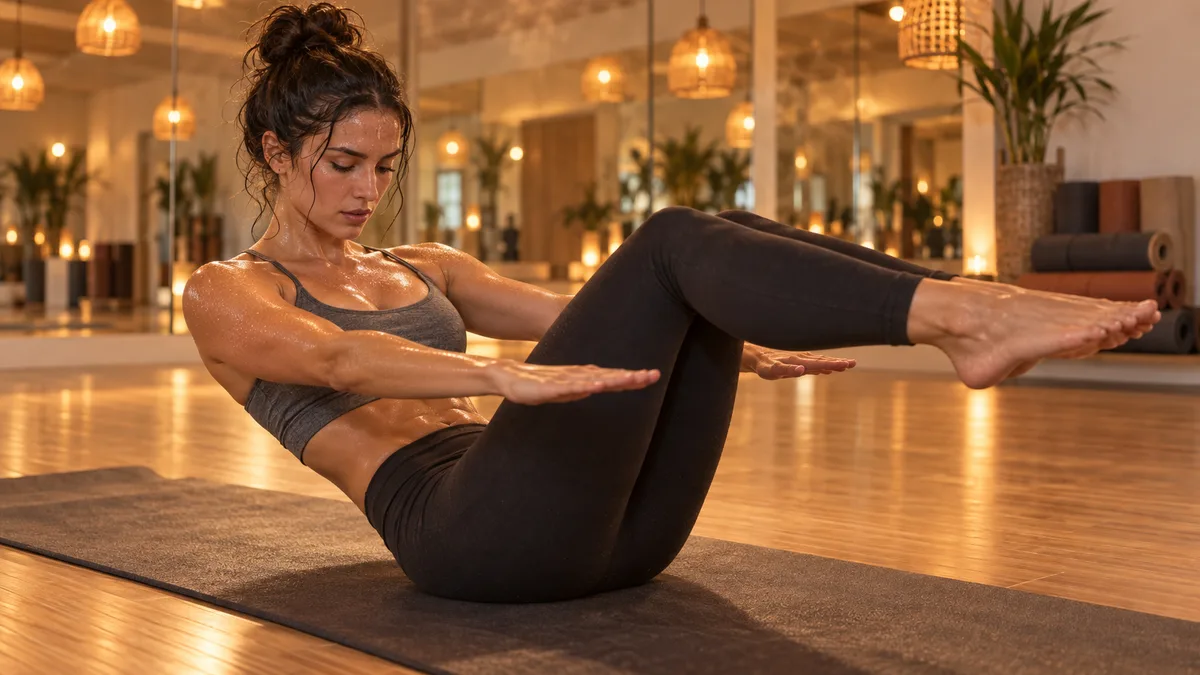
You walk into a studio. The thermostat reads somewhere around 95°F, and your instructor cheerfully tells you to grab a mat. This is hot mat Pilates, the workout that takes everything you thought you knew about Pilates and cranks the intensity up several notches. Literally.
If you’ve ever felt like traditional mat Pilates wasn’t quite challenging enough, or if you just love the idea of sweating through every single rep, this one’s for you. I remember my first hot Pilates class vividly. About three minutes in, I questioned every life decision that led me there. By the end? I was absolutely hooked.
Here’s exactly what a hot mat Pilates workout involves, why adding heat fundamentally changes how your core responds, and how you can walk into your first class feeling confident instead of terrified.
What exactly is hot mat Pilates?
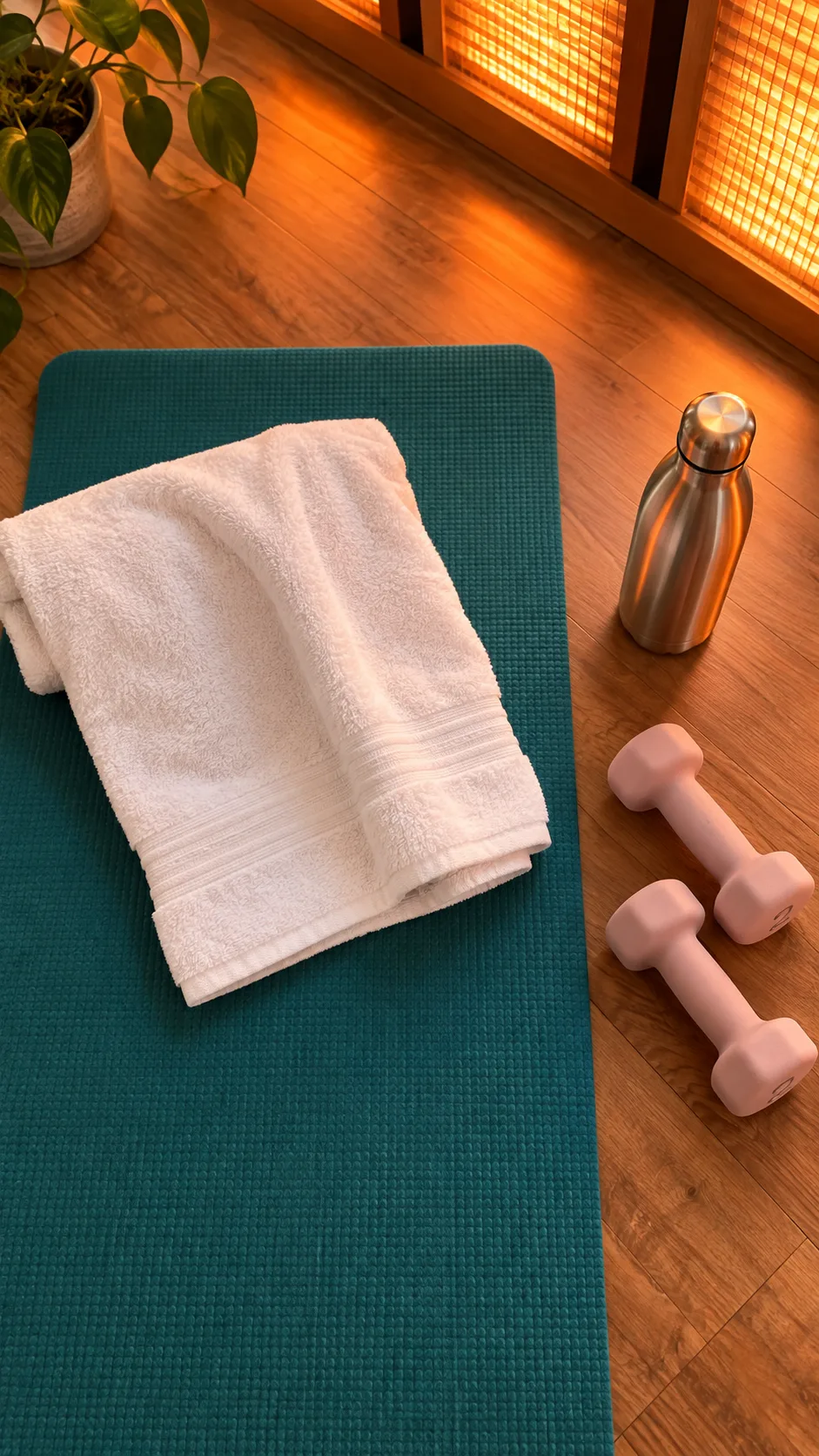
Hot mat Pilates combines traditional mat-based Pilates exercises with an intentionally heated studio environment, typically between 90°F and 100°F. Some studios use infrared heating panels rather than forced hot air, which warms your muscles directly without making the room feel suffocating. Think hot yoga’s cooler, more structured cousin.
The exercises themselves stay rooted in classical and contemporary Pilates principles: controlled movements, breath work, core engagement, and precision. But the heat adds a layer of challenge that transforms even “basic” moves into serious muscle work. A simple hundred suddenly feels like a thousand.
Infrared heat vs. forced air: does it matter?
Yes, it matters a lot. Infrared heat penetrates your skin and warms your body from the inside out, which many practitioners find more comfortable and less claustrophobic. Forced hot air heats the room itself and can make breathing feel heavier. Most reputable hot Pilates studios (like Inferno Hot Pilates locations) use infrared panels for this exact reason.
If you have a choice, I’d recommend starting with an infrared-heated studio. Your lungs will thank you during those long exhale sequences.
What to expect in your first hot mat Pilates class
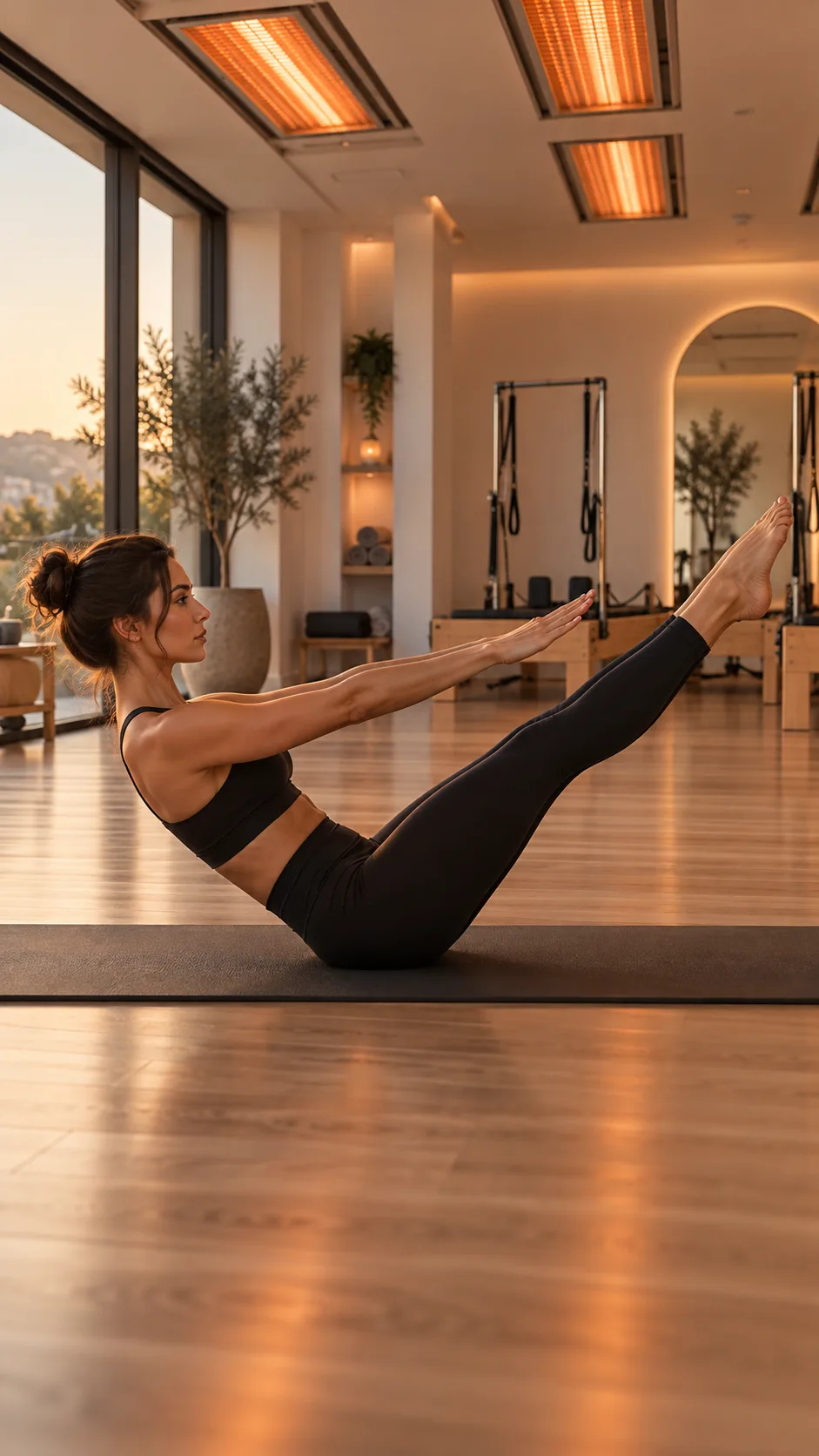
Walking into your first class blind can feel intimidating. Here’s the honest play-by-play so you know exactly what you’re getting into.
Before class starts
You’ll enter the heated studio about 5-10 minutes early. The warmth hits you immediately, not aggressively, but noticeably. Most studios provide mats, but you’ll want to lay a towel over yours because things get slippery fast. Grab a spot where you can see the instructor clearly, especially if you’re new.
Hydrate BEFORE you arrive. Chugging water mid-class is a rookie mistake that can lead to nausea when you’re doing roll-ups in 95-degree heat. Aim to drink at least 16-20 ounces of water in the two hours leading up to class.
The warm-up (minutes 1-10)
Your instructor will guide you through breath work and gentle spinal articulation. Because the room is already heated, your muscles start releasing tension faster than in a regular-temperature class. You’ll notice your body feels more pliable almost immediately. This isn’t placebo. The heat genuinely accelerates your warm-up.
The main workout (minutes 10-45)
Here’s where things get real. Expect a combination of:
- Core-focused sequences, including planks, hundreds, teasers, leg circles, and dead bugs
- Lower body burn with bridges, clam shells, inner thigh pulses, and single-leg work
- Upper body integration through push-up variations, arm circles with light weights (1-3 lbs), and tricep work
- Full-body compound movements like swimming, rolling like a ball, and controlled burpees (yes, really)
The pace tends to be faster than traditional Pilates. Many hot mat Pilates classes incorporate high-intensity interval training (HIIT) principles, alternating between bursts of effort and brief recovery periods. You’ll burn significantly more calories than a standard mat class. Some estimates put it at 400-600 calories per 50-minute session, depending on your body weight and effort level.
Cool down (minutes 45-55)
The final stretch feels almost euphoric. Your muscles are warm, your flexibility peaks, and your instructor takes you through deep stretches that feel impossibly good. This is the payoff. This is why people become obsessed.
Why the heat changes your core routine (for real)
This isn’t just about sweating more and calling it harder. The heat creates measurable physiological changes that alter how your muscles engage, recover, and adapt.
1. Your muscles warm up faster and go deeper
When your body temperature rises, blood flow to your muscles increases. This means your deep stabilizing core muscles (the transverse abdominis, multifidus, and pelvic floor) activate more readily. In a regular-temperature room, it can take 10-15 minutes before these deeper muscles fully engage. In a heated environment, that window shrinks dramatically.
Ever wonder why your plank feels shakier in a hot class even though you can hold one for a minute at home? That’s your body recruiting MORE muscle fibers, not fewer. The heat pushes your neuromuscular system to work harder for stabilization.
2. More range of motion means more muscle engagement
Research published in the Journal of Strength and Conditioning Research found that elevated muscle temperature increases flexibility by improving tissue elasticity. In practical terms? Your roll-ups go deeper. Your spine articulates more fully. Your hip flexors release more during leg work.
More range of motion = more time under tension = greater muscle activation. That’s the simple equation that makes hot mat Pilates so effective for core development.
3. Your heart rate stays elevated
The heat forces your cardiovascular system to work harder even during “rest” periods. Your heart pumps more blood to the skin’s surface for cooling, which keeps your heart rate 10-20% higher than it would be performing the same exercises in a cooler room. This turns a traditionally low-to-moderate intensity workout into a genuine cardio challenge.
For anyone trying to combine core strengthening with calorie burn, hot mat Pilates delivers both simultaneously. If you’re also following a full body Pilates workout plan at home, adding one or two heated sessions per week can speed up your results considerably.
4. The sweat factor isn’t just cosmetic
Time to address the elephant in the (very hot) room. Yes, you will sweat. A LOT. But beyond the obvious detox narrative (which, FYI, your liver and kidneys handle the real detoxification), sweating profusely during exercise does serve a practical purpose. It forces you to grip harder, stabilize more, and engage your core to compensate for the slippery surface beneath you.
Every slip of your foot during a plank becomes an involuntary stability challenge. Your obliques fire. Your deep core braces. The instability that the sweat creates becomes a training tool in itself. Sneaky, right?
The top benefits of hot mat Pilates
Beyond the core-specific advantages, here’s why people keep coming back to heated Pilates classes week after week:
- Accelerated flexibility gains: The heat allows you to safely push your stretches further than you could in a cold studio, leading to faster improvements in overall flexibility.
- Higher calorie burn: That elevated heart rate translates to burning 25-40% more calories compared to traditional mat Pilates.
- Sharper mind-body connection: The heat demands your full attention. You CAN’T zone out when your body is working this hard, which deepens your mind-muscle connection with every movement.
- Stress relief on another level: The combination of controlled breathing, intense physical effort, and heat creates an almost meditative state that many people find more calming than traditional exercise.
- Improved muscle recovery between sessions: Infrared heat, in particular, has shown promise in reducing delayed onset muscle soreness (DOMS), according to studies reviewed by the National Library of Medicine.
- Stronger postural muscles: The sustained core engagement in heat builds the endurance of your postural muscles, which means you sit taller and stand straighter outside the studio too.
If you’re also working on sculpting your legs and glutes, hot mat Pilates complements that beautifully. The lower body sequences in a heated class hit your glutes and inner thighs with an intensity that regular classes simply can’t match.
What to wear and bring to hot mat Pilates
Your outfit choice matters more here than in any other Pilates class. Trust me on this one. I learned the hard way when my cotton t-shirt turned into a wet blanket by minute fifteen.
Clothing essentials
- Moisture-wicking fabrics only: Skip the cotton. Choose synthetic blends or performance fabrics that pull sweat away from your skin.
- Form-fitting layers: Loose clothing gets heavy when soaked and can interfere with your movements. Fitted leggings and a sports bra or tank top work best.
- Grip socks: Many studios require them, and even if they don’t, grip socks prevent you from sliding around on a sweat-drenched mat.
Your hot Pilates packing list
- A large water bottle (at least 24 oz, because you’ll drain it)
- A full-size towel for your mat AND a smaller hand towel for your face
- A change of clothes for after class (you WILL be drenched)
- Electrolyte tablets or powder to add to your water
- A light snack for post-class, something with protein and carbs
Speaking of post-workout nutrition, pairing your hot Pilates routine with a solid high-protein meal prep strategy makes a massive difference in how quickly your muscles recover and strengthen.
Who should try hot mat Pilates (and who should wait)
Hot mat Pilates welcomes a wide range of fitness levels, but it’s not for everyone, at least not right away.
You’ll love it if:
- You already have a basic foundation in Pilates or similar movement practices
- You enjoy sweating and find heat-based workouts energizing rather than draining
- You want to level up your core strength beyond what traditional Pilates offers
- You’re looking for a low-impact workout that still delivers serious intensity
You should proceed with caution if:
- You’re pregnant: Elevated core body temperature poses risks during pregnancy. Always consult your OB-GYN first.
- You have cardiovascular conditions: The added cardiovascular strain from heat requires medical clearance.
- You’re prone to heat-related illness: If you’ve experienced heat exhaustion or heat stroke before, this format demands extra caution.
- You’re a complete beginner: Consider taking a few regular-temperature Pilates classes first to learn the foundational movements before adding heat to the mix.
In my opinion, the biggest mistake people make is jumping straight into a heated class without understanding basic Pilates form. The heat makes it tempting to push past your limits, but sloppy form in a hot room leads to injury faster than sloppy form in a cool one. Learn the movements first. Add the heat second.
8 tips to crush your first hot mat Pilates workout
Ready to give it a shot? Here’s how to set yourself up for success rather than suffering:
- Hydrate all day, not just before class. Start drinking extra water the morning of your class. Showing up dehydrated makes the heat feel overwhelming instead of invigorating.
- Eat a light meal 90 minutes before. Something easy to digest: a banana with almond butter, a small portion of oatmeal, or a handful of trail mix. An empty stomach in that heat will make you dizzy. A full one will make you nauseous. Find the sweet spot.
- Arrive early and acclimate. Sit in the heated room for a few minutes before class starts. Let your body adjust gradually rather than jumping straight into movement.
- Position yourself near the door. If you need to step out for a breather during your first class, there’s absolutely no shame in it. Make your exit easy.
- Focus on breathing, not competing. The person next to you holding a perfect teaser while dripping sweat? They’ve been doing this for months. Your only job is to breathe and maintain YOUR form.
- Take breaks when you need them. Child’s pose exists for a reason. Use it 🙂
- Replace your electrolytes. Plain water alone won’t cut it after an intense hot Pilates session. Add electrolyte powder to your water or grab a coconut water post-class.
- Don’t judge the workout by your first class. Your first experience will feel harder than it should because your body hasn’t adapted to the heat yet. Give it three sessions before you decide whether hot Pilates is for you.
How often should you do hot mat Pilates?
Most instructors and fitness professionals recommend 2-3 hot mat Pilates sessions per week for optimal results without overtraining. Your body needs recovery time, especially since the heat adds extra physiological stress that a standard workout doesn’t.
On your off days, you can still train. Complement your hot sessions with active recovery work, lighter strength training, or a regular-temperature Pilates flow. The variety keeps your body adapting and prevents the burnout that comes from doing too much of one thing.
After about a month of consistent practice, most people notice visible changes in their core definition, posture, and overall body composition. The combination of higher calorie burn, deeper muscle engagement, and improved flexibility creates a transformation that feels faster than traditional approaches.
Hot mat Pilates vs. hot yoga: what’s the difference?
People confuse these two constantly, so let me clear it up.
- Hot yoga (typically Bikram or vinyasa-style) focuses on holding poses, flowing sequences, and spiritual or meditative elements. The pace varies but tends toward sustained holds.
- Hot mat Pilates emphasizes controlled, repetitive movements targeting specific muscle groups, especially the core. It often incorporates HIIT-style intervals and uses principles from Joseph Pilates’ original method with modern athletic programming layered on top.
If you want deep stretching and mindfulness, hot yoga serves that purpose well. If you want targeted muscle sculpting, core strength, and a higher calorie burn in a heated environment, hot mat Pilates wins every time. Many people (myself included) do both and find they complement each other perfectly.
The bottom line: is hot mat Pilates worth the hype?
After two years of incorporating hot mat Pilates into my weekly routine, I can say this with confidence: yes, it absolutely lives up to the hype. The heat isn’t a gimmick. It fundamentally changes how your muscles engage, how deeply you can stretch, and how many calories you burn during what most people dismiss as a “gentle” workout.
Here’s what you should remember:
- The heated environment accelerates your warm-up and deepens core muscle activation
- Expect to burn 400-600 calories per session, significantly more than regular mat Pilates
- Hydration and electrolyte replacement aren’t optional. They’re essential.
- Start with basic Pilates knowledge before adding heat
- Give yourself at least three classes before making a judgment
Your core has never worked this hard in a regular-temperature room. The heat changes the game, and once you experience it, going back to a cool studio feels like something’s missing. So grab your grip socks, pack an extra towel, and prepare to discover what your core can do when you turn up the temperature. You might just surprise yourself.
