
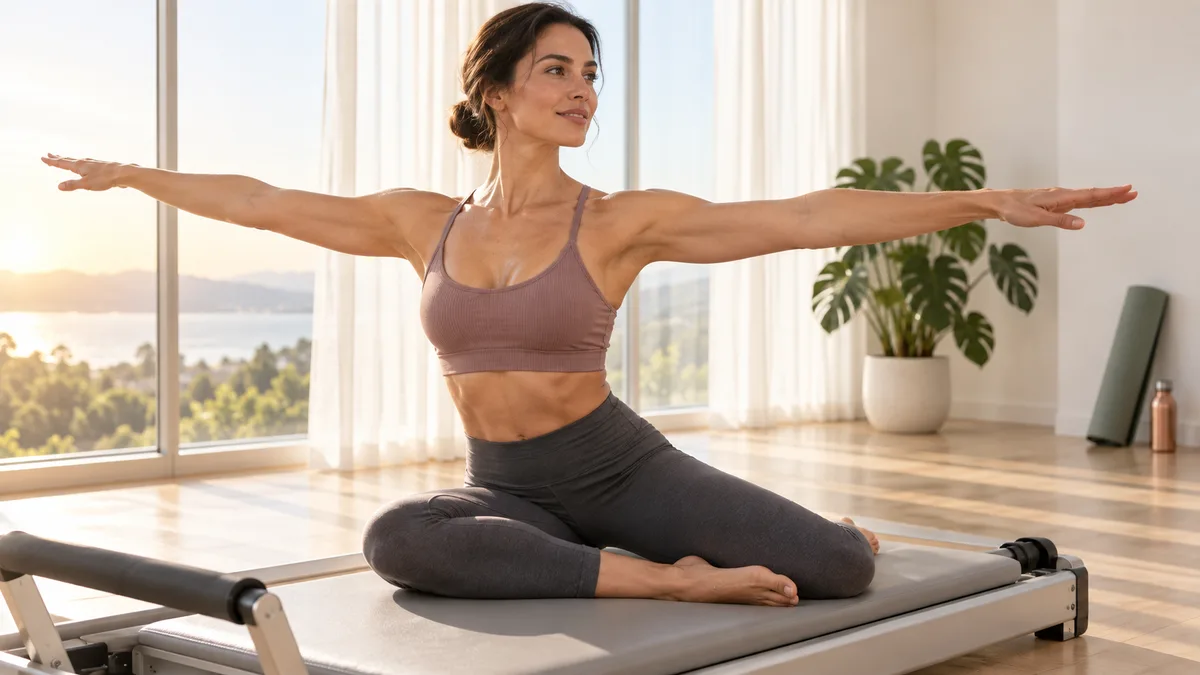
Your arms deserve better than endless bicep curls. If you’ve been grinding through traditional weight training and wondering why your upper body feels tight, sore, and weirdly bulky instead of lean and defined, Pilates might be exactly what’s missing from your routine.
Upper body Pilates workouts build real, functional strength while sculpting long, toned muscles. No heavy dumbbells required. No “gym bro” culture. Just you, your body weight, and movements that actually make sense for how humans are supposed to move.
I spent years chasing arm definition through conventional strength training. Then I tried a Pilates arm series that made my triceps shake like a leaf in a hurricane. That was my wake-up call. Pilates isn’t easy. It’s just smart.
Why upper body Pilates beats traditional arm workouts
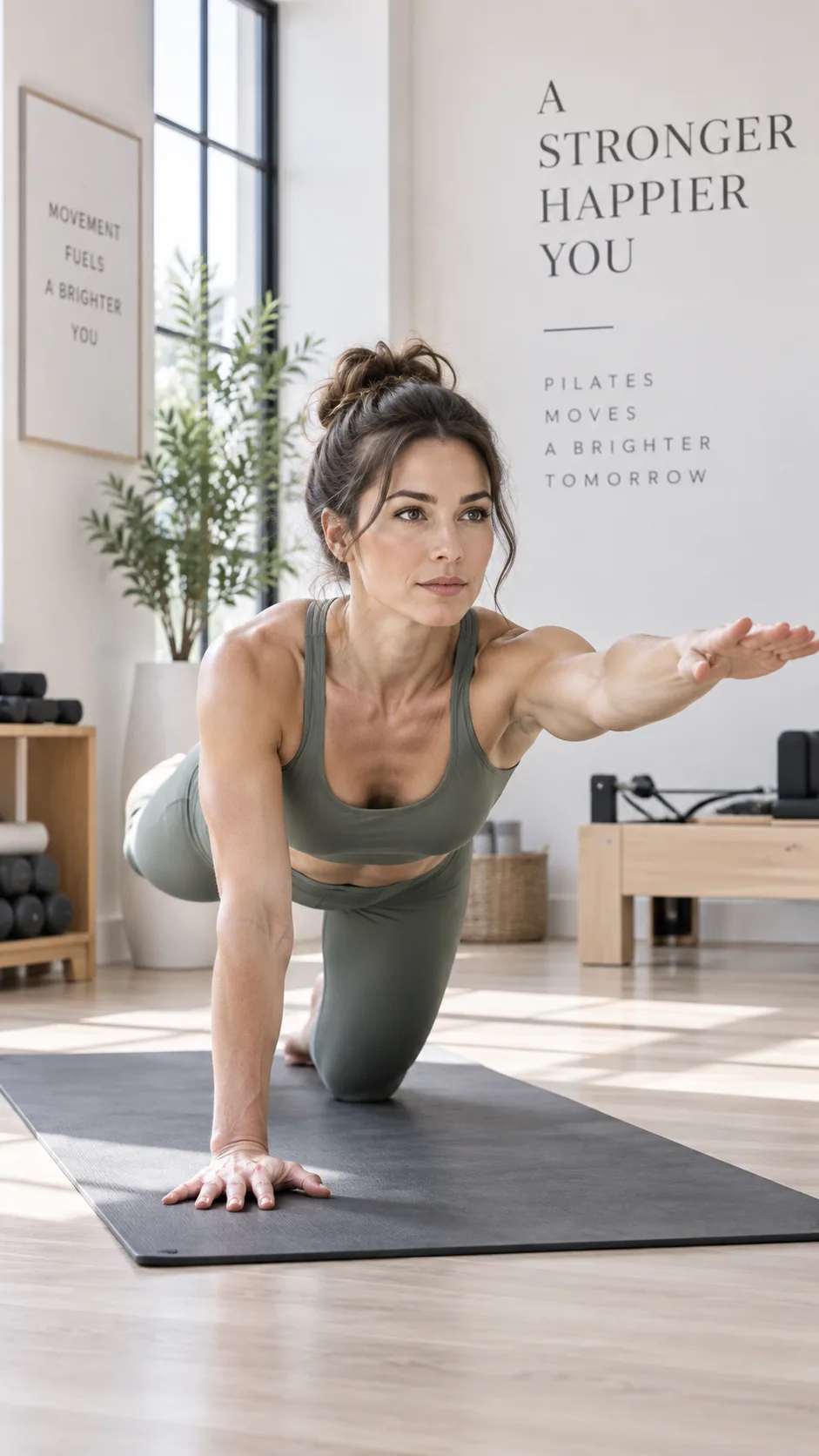
Something worth clearing up right away: Pilates doesn’t make you weak. It makes you intelligently strong. Traditional weight training isolates individual muscles, which works fine if you want to look good flexing in a mirror. But Pilates trains muscles to work together as a coordinated unit.
Ever wondered why dancers and Pilates instructors have such sculpted arms without ever touching a barbell? It comes down to eccentric muscle loading and sustained time under tension. When you hold a Pilates position, your muscles work through their full range of motion against gravity, and that slow, controlled effort creates definition without adding bulk.
The science behind long, lean muscles
Research published by the National Institutes of Health found that Pilates significantly improves upper body muscular endurance and postural alignment. The method centers on slow, controlled movements with high repetitions and low resistance, which is the exact formula for muscle tone without hypertrophy.
Your muscles have two primary types of fibers: Type I (slow-twitch) and Type II (fast-twitch). Heavy lifting targets Type II fibers, which grow larger. Pilates primarily activates Type I fibers, which develop endurance and definition. That’s the science behind the “Pilates body” everyone talks about.
On top of that, every single upper body Pilates exercise requires you to stabilize your core. So while you’re working your arms, shoulders, and back, your abs are quietly putting in overtime. Two muscle groups for the price of one.
Upper body Pilates exercises for arm definition
Now for the good stuff. These exercises form the backbone of any effective upper body Pilates routine. I’ve organized them by difficulty so you can start wherever you are and progress naturally.
Beginner arm-defining exercises
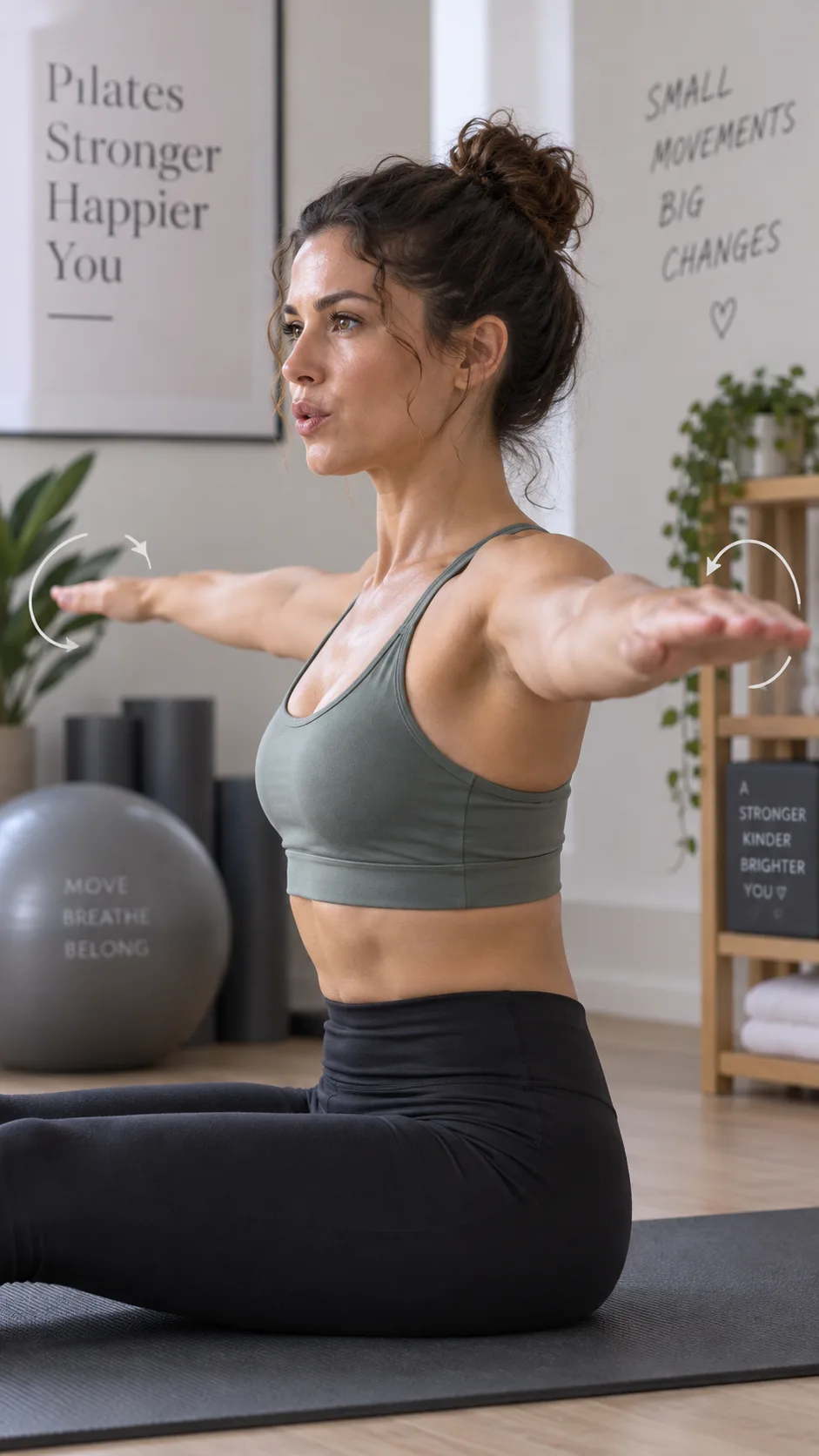
- Pilates Arm Circles: Stand tall with arms extended to the sides at shoulder height. Make small, controlled circles (about the size of a softball). Do 20 forward, then 20 backward. Sounds easy? Your shoulders will respectfully disagree by circle number 15.
- Chest Expansion: Kneel on your mat, arms reaching forward at shoulder height. Press your arms straight back behind you while opening your chest, then slowly return. The operative word here is SLOWLY. Aim for 12-15 reps.
- Pilates Push-Up Prep: From a standing position, roll down through your spine, walk your hands out to a plank, hold for 3 seconds, then walk back up. This teaches your upper body to support your weight with proper alignment. Do 5-8 reps.
- Arm Weights Series (Zip-Up): Using 1-2 pound weights (or no weights at all), draw your fists up the front of your body from hips to chin, elbows pointing outward and upward. Lower with control. 10-12 reps.
Intermediate exercises that seriously deliver
- Plank to Pike: Start in a forearm plank. Press up to a high plank one arm at a time, then pike your hips up toward the ceiling. Return to forearm plank. This targets your shoulders, triceps, and core simultaneously. Aim for 8-10 reps.
- Side Plank with Arm Reach: Hold a side plank on your bottom forearm. Extend your top arm toward the ceiling, then thread it underneath your body with rotation. This builds serious shoulder stability and oblique strength. 8 reps per side.
- Tricep Dips (Pilates Style): Sit with knees bent, hands behind you with fingers pointing toward your body. Lift your hips off the mat and bend your elbows to lower, then press back up. The Pilates twist? Keep your shoulder blades pulled DOWN the entire time. 12-15 reps.
- Swimming: Lie face down with arms extended overhead. Lift opposite arm and leg simultaneously, alternating rapidly while keeping your core braced. This exercise hits the posterior chain including rear deltoids and upper back. Flutter for 30-60 seconds.
Advanced moves for the committed
- Pilates Push-Up (Full Version): Stand tall, roll down, walk out to plank, perform 3-5 push-ups with elbows glued close to your ribs, walk back up, and roll up to standing. One set is 3-5 full sequences. This is WAY harder than it looks on paper.
- Leg Pull Front: From a high plank, lift one leg off the mat while rocking backward and forward on your supporting arms. This demands serious shoulder stability. 5 reps per leg.
- Teaser with Arm Extension: Balance in a V-sit position, then extend and retract your arms overhead while maintaining the hold. Your entire upper body will be on fire. 8-10 arm extensions per hold.
The complete 30-minute upper body Pilates workout
Ready to put it all together? Here’s a structured 30-minute upper body Pilates workout you can do at home with zero equipment. I recommend doing this routine 3-4 times per week for visible results within 4-6 weeks.
Warm-up (5 minutes)
- Standing roll-downs x 5
- Shoulder rolls (forward and backward) x 10 each direction
- Arm circles (small to large) x 20 each direction
- Cat-cow stretches x 8
- Thoracic spine rotations x 6 per side
Main workout (20 minutes)
- Chest Expansion – 15 reps
- Zip-Up Arms – 12 reps
- Pilates Push-Up Prep (or Full Push-Ups) – 8 reps
- Plank Hold – 30 seconds
- Side Plank with Arm Reach – 8 reps each side
- Tricep Dips (Pilates Style) – 15 reps
- Swimming – 45 seconds
- Plank to Pike – 8 reps
- Arm Circles (palms up, palms down) – 20 reps each direction
- Leg Pull Front – 5 reps per leg (skip if not ready)
Rest 30-60 seconds between exercises. Repeat the full circuit twice if you have the time and energy. Quality always trumps quantity. Sloppy reps teach your body sloppy movement patterns.
Cool-down (5 minutes)
- Child’s pose with arms extended – 30 seconds
- Thread-the-needle stretch – 30 seconds per side
- Doorway chest stretch – 30 seconds per side
- Neck rolls – 5 each direction
- Standing forward fold with clasped hands behind back – 30 seconds
Here’s a fantastic follow-along Pilates arm workout to get you started:
Common mistakes that sabotage your results
Even the best upper body Pilates workout falls flat if you’re making these errors. I’ve made every single one of them, so learn from my suffering.
1. Moving too fast
Pilates rewards slowness. When you rush through arm circles or push-ups, you let momentum do the work your muscles should handle. Slow down by at least 50% from whatever speed feels natural. Your muscles will engage properly, and you’ll feel the difference immediately.
2. Forgetting about your shoulder blades
This is the BIG one. If your shoulders are creeping up toward your ears during exercises, you’re recruiting your upper trapezius muscles instead of your deltoids and lats. Pull your shoulder blades down and together before every single movement. Think of tucking them into your back pockets.
3. Neglecting your core connection
Your arms don’t work in isolation. They connect through your shoulders, ribcage, and core. If your core checks out, your arms overcompensate and your form collapses. Engage your deep abdominals (think belly button to spine) before starting ANY upper body movement. This is also why pelvic floor exercises complement Pilates so well, because they strengthen the foundation everything else builds upon.
4. Using weights that are too heavy
In Pilates, 2-3 pound hand weights are considered PLENTY. This isn’t about ego lifting. Heavier weights shift you out of the Pilates movement philosophy and into traditional strength training territory. If you want that lean, defined look, keep the resistance light and the repetitions high.
How to accelerate your upper body Pilates results
Consistency beats intensity every time, but a few smart additions can speed up your arm definition journey considerably.
Add resistance bands
A light resistance band transforms basic Pilates arm exercises into something considerably more challenging. Wrap one around your wrists during arm circles, or step on it during standing arm work. The variable resistance matches the Pilates philosophy perfectly: constant tension throughout the full range of motion.
Fuel your body properly
You can’t out-exercise a poor diet, and your muscles need adequate protein to recover and develop definition. Aim for sufficient protein intake daily to support muscle repair. If you’re looking for practical guidance, check out this 160g protein meal plan that makes hitting your targets surprisingly painless.
Staying hydrated matters enormously too. Dehydrated muscles cramp, fatigue faster, and recover more slowly. The Mayo Clinic recommends about 11.5 cups of fluid daily for women and 15.5 cups for men, with more if you’re exercising regularly.
Prioritize recovery
Your muscles don’t get stronger DURING the workout. They strengthen during recovery. Give your upper body at least 48 hours between intense Pilates sessions. On off days, gentle stretching, walking, or lower body work keeps you active without compromising recovery.
Pilates vs. weight training: can you do both?
Absolutely. And you probably should. The best approach combines both methods with intention. Use Pilates for mobility, muscle endurance, postural correction, and definition. Use weight training for raw strength and bone density.
A practical weekly split might look like this:
- Monday: Upper body Pilates workout
- Tuesday: Lower body weight training
- Wednesday: Rest or gentle stretching
- Thursday: Full body Pilates
- Friday: Upper body weight training (moderate)
- Saturday: Active recovery (walking, yoga)
- Sunday: Rest
The American College of Sports Medicine recommends adults perform muscle-strengthening activities at least two days per week. Pilates absolutely counts toward that recommendation, especially when you’re incorporating the exercises outlined above.
What results can you realistically expect?
Time for honest expectations, because nothing kills motivation faster than unrealistic ones.
Weeks 1-2: You’ll feel stronger during daily activities. Carrying groceries feels easier. Your posture improves noticeably. Your arms might feel more “awake” and engaged throughout the day.
Weeks 3-4: Visible muscle definition starts appearing, especially in your shoulders and triceps. Your push-up count improves. You feel genuinely more confident in sleeveless tops.
Weeks 5-8: This is where the results compound. Friends and family start commenting. Your upper body looks toned and sculpted. You can hold planks that previously seemed impossible. The shaky arms from week one become a distant memory.
Weeks 9-12: You’ve built a sustainable practice. Your body has adapted, and you’re progressing to more advanced variations naturally. The lean, defined arms you wanted? They’re here, and they’re FUNCTIONAL, not just decorative.
Who should (and shouldn’t) try this workout
Upper body Pilates workouts suit almost everyone, but a few groups benefit especially:
- Desk workers dealing with rounded shoulders and neck tension
- People recovering from injuries who need low-impact strengthening
- Anyone wanting toned arms without bulky muscles
- Older adults looking to maintain upper body strength and bone health
- Athletes seeking better shoulder stability and injury prevention
That said, if you have a current shoulder injury, rotator cuff tear, or undiagnosed upper body pain, see a physical therapist or qualified healthcare provider before starting. Pilates is therapeutic, but it’s not a substitute for medical advice. The Pilates Foundation maintains a directory of certified instructors if you want professional guidance.
I think everyone should try at least one month of consistent upper body Pilates before deciding it’s “not for them.” The first session might feel underwhelming. The second session will humble you. By the fourth session, you’ll understand why this method has thrived for over a century.
Making it stick: building a sustainable practice
The workout itself is only half the equation. Consistency transforms bodies, not single sessions, no matter how intense. Here are three practical strategies that keep me coming back to the mat:
Schedule it like a meeting. Block 30 minutes on your calendar. Treat it as non-negotiable. If it’s not scheduled, it doesn’t happen. That’s just how our brains work.
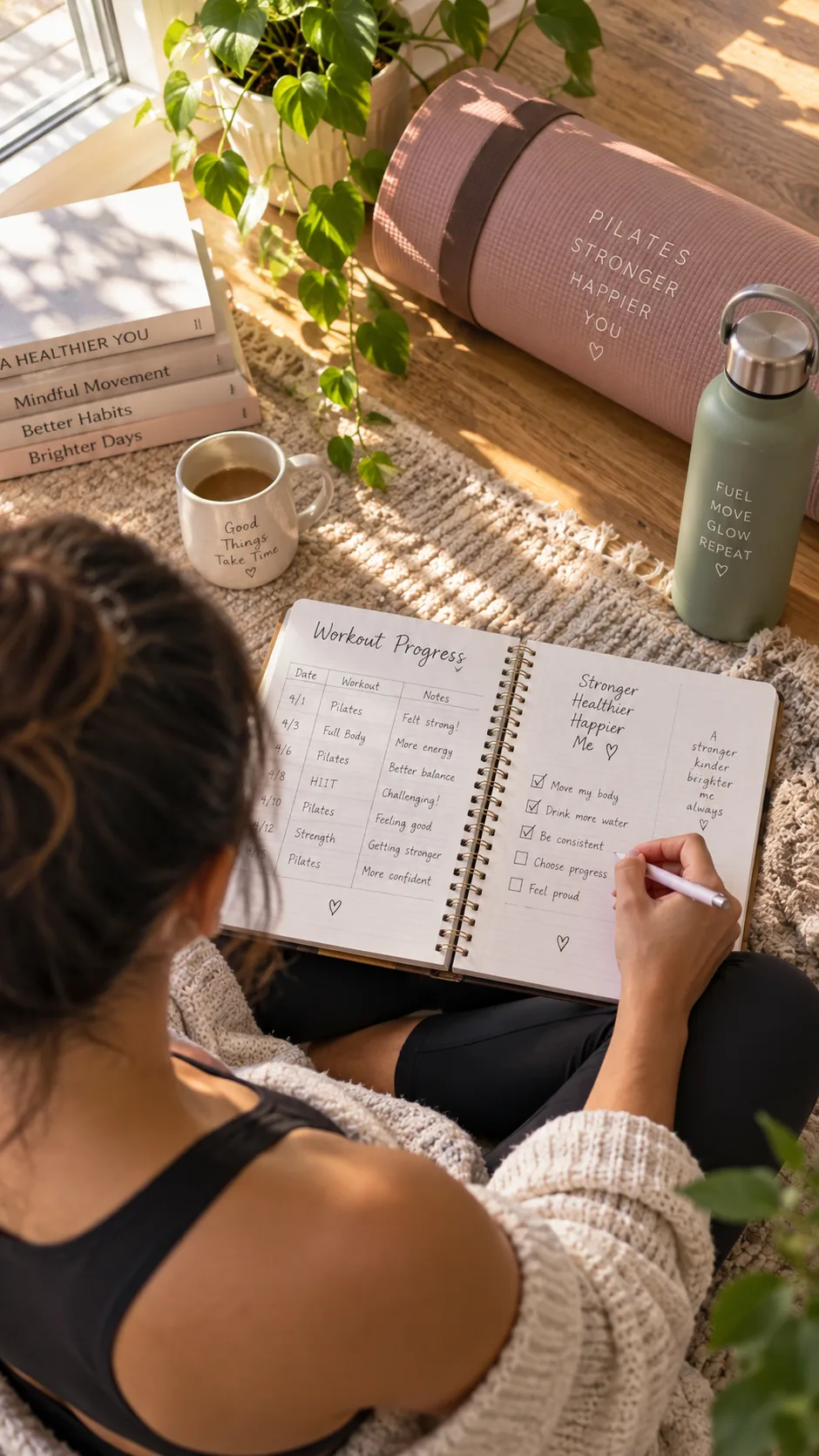
Track your progress. Write down how many reps you completed, how long you held your planks, and how you felt afterward. Watching those numbers climb over weeks gives you concrete proof that your effort matters.
Pair your workout with good nutrition. Having a solid meal prep strategy for the week removes the decision fatigue around eating well, freeing up mental energy for your fitness practice.
The bottom line
Upper body Pilates workouts deliver something traditional arm exercises simply can’t: lean muscle definition, improved posture, functional strength, and a body that moves beautifully, all without the bulk. The exercises require no fancy equipment, minimal space, and just 30 minutes of focused effort.
Start with the beginner exercises if you’re new. Progress to intermediate and advanced moves as your body adapts. Stay consistent for at least 6-8 weeks before judging your results. And most importantly, focus on quality over speed in every single rep.
Your arms are capable of so much more than you think. Give them the workout they actually deserve, one that builds strength from the inside out, respects your joints, and leaves you feeling powerful instead of broken. Now roll out that mat and get to work.
