
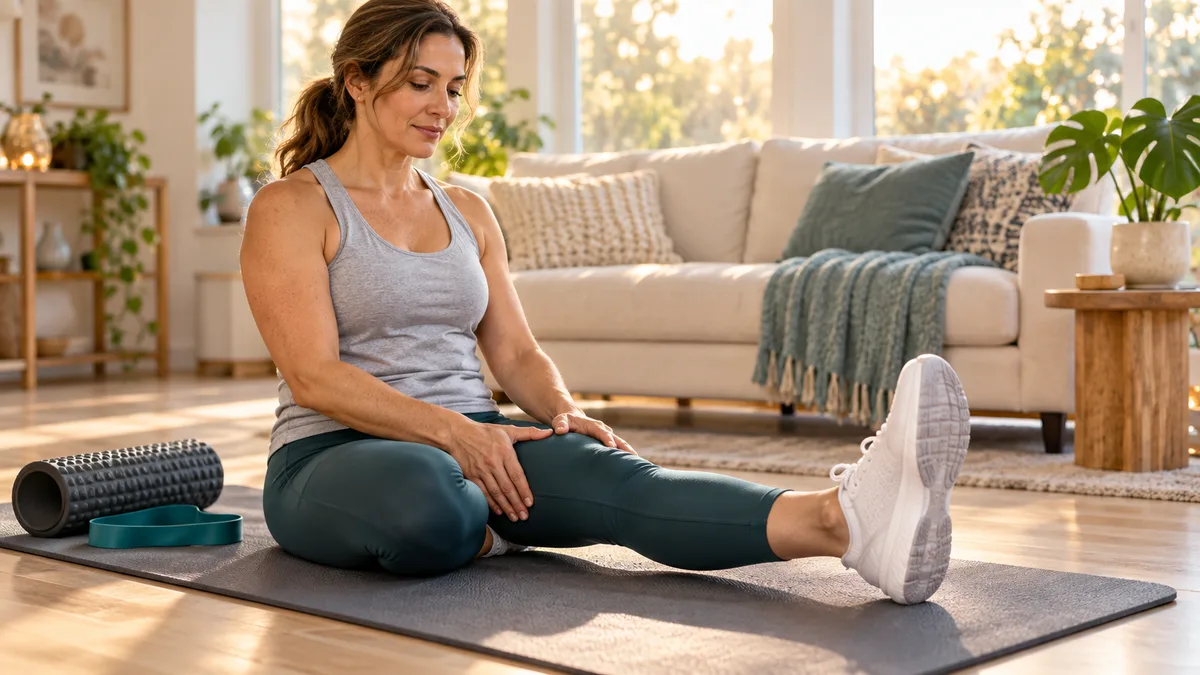
Your knees hurt, and you’re probably thinking the last thing you should do is exercise them. I get it. I thought the same thing when my left knee started screaming at me every time I walked down stairs. But here’s the uncomfortable truth: avoiding movement usually makes knee pain worse, not better.
The right exercises, gentle and targeted low-impact ones, rebuild the support system around your knee joint. Think of it like reinforcing a wobbly table leg instead of just avoiding the table altogether. So let’s talk about the specific moves that help, why they work, and how to do them without making things worse.

Why your knees hurt (and why exercise helps)
Before you start any knee strengthening routine, it helps to understand what’s going on in there. Your knee joint sits between the two longest bones in your body, and it relies heavily on surrounding muscles, tendons, and ligaments for stability. When those muscles weaken from inactivity, injury, or just aging, your knee joint absorbs more stress than it should.
According to the Arthritis Foundation, strengthening the muscles around the knee is one of the most effective non-surgical strategies for managing knee pain. That includes your quadriceps, hamstrings, glutes, and even your calves.
The takeaway? Weak muscles force your knee joint to do work it wasn’t designed to handle alone. Strengthening those muscles takes pressure off the joint and reduces pain over time. It’s not magic. It’s biomechanics.
Before you start: ground rules for exercising with knee pain
I’m not going to tell you to “listen to your body” and leave it at that. That advice is vague and honestly unhelpful. Here are actual, practical guidelines:
- Sharp pain means stop. Dull achiness during exercise? Often normal. A sudden, stabbing sensation? That’s your knee telling you to back off immediately.
- Start embarrassingly easy. Seriously. If you think the exercise is too simple, you’re probably at the right level. You can always progress later.
- Warm up first. Five minutes of gentle walking or marching in place gets blood flowing to the joint. Cold muscles and stiff joints are a terrible combination.
- Ice after, not before. Apply ice for 15-20 minutes post-workout if you notice swelling or increased soreness.
- Talk to your doctor or physical therapist if your pain is severe, your knee locks up, or you notice significant swelling. These exercises complement professional care. They don’t replace it.
The best low-impact knee strengthening exercises
Alright, here’s the good stuff. These moves specifically target the muscles that stabilize your knee, and none of them require jumping, running, or anything that’ll make you wince. I’ve organized them from easiest to most challenging.
1. Straight leg raises
This is the bread and butter of knee rehab, and physical therapists prescribe it for a reason. It strengthens your quadriceps without bending your knee at all.
- Lie on your back with one leg bent (foot flat on the floor) and the other straight.
- Tighten the thigh muscle of your straight leg and lift it about 12 inches off the ground.
- Hold for 3-5 seconds, then lower slowly.
- Do 10-15 reps per leg, 2-3 sets.
Sounds simple, right? Try doing three sets and tell me your quads aren’t burning. This exercise is deceptively effective.
2. Wall sits (partial range)
You don’t need to slide into a deep squat position. That would defeat the purpose for most people with knee pain. A partial wall sit keeps you in a safe range of motion while building serious quad and glute endurance.
- Stand with your back flat against a wall and feet about shoulder-width apart, roughly 18 inches from the wall.
- Slide down just 4-6 inches, NOT to a 90-degree angle.
- Hold for 10-30 seconds, then stand back up.
- Repeat 5-8 times.
If you enjoy wall Pilates workouts, you’ll recognize the concept here. Using the wall as support lets you control the intensity perfectly.
3. Clamshells
Wait, a hip exercise for knee pain? Absolutely. Weak glutes are one of the sneakiest causes of knee pain because they allow your knee to collapse inward during movement. Clamshells fix that.
- Lie on your side with knees bent at about 45 degrees, feet together.
- Keeping your feet touching, rotate your top knee open like a clamshell.
- Don’t let your hips roll backward. That’s cheating 🙂
- Lower slowly and repeat. 15-20 reps per side, 2-3 sets.

4. Step-ups (low step)
Grab a step that’s only 4-6 inches high. A thick book or the lowest step on your staircase works fine. This exercise mimics real-world movement while strengthening your quads, hamstrings, and glutes at the same time.
- Step up with your affected leg, pressing through your heel.
- Bring the other foot up to meet it, then step back down leading with the opposite leg.
- Keep your movements slow and controlled. No bouncing.
- 10-12 reps per leg, 2 sets.
Ever noticed how going downstairs hurts your knees more than going up? That eccentric (lowering) phase is where many people struggle, so controlling the step-down portion is the most beneficial part of this exercise.
5. Hamstring curls (standing)
Most people focus exclusively on their quads and completely ignore the back of the thigh. That imbalance pulls your knee joint out of alignment over time.
- Stand behind a chair, holding the back for balance.
- Slowly bend one knee, bringing your heel toward your glute.
- Hold for 2-3 seconds at the top, then lower with control.
- 12-15 reps per leg, 2-3 sets.
6. Glute bridges
Another powerhouse exercise that protects your knees by strengthening your posterior chain. Your glutes and hamstrings do the heavy lifting here, and your knees barely flex beyond a comfortable range.
- Lie on your back, knees bent, feet flat on the floor hip-width apart.
- Push through your heels and squeeze your glutes to lift your hips toward the ceiling.
- Hold at the top for 3 seconds. Don’t arch your lower back.
- Lower slowly. 15 reps, 3 sets.
7. Seated knee extensions (controlled)
You can do this one at your desk, on the couch, or literally anywhere you can sit. It isolates your quadriceps and builds the strength that stabilizes your kneecap.
- Sit in a sturdy chair with feet flat on the floor.
- Slowly straighten one leg until it’s parallel with the floor.
- Hold for 5 seconds, squeezing the top of your thigh hard.
- Lower with control. 10-12 reps per leg, 2-3 sets.
If the full range of motion bothers your knee, only extend to the point that feels comfortable. Partial reps still count and still build strength.
Building a weekly knee strengthening routine
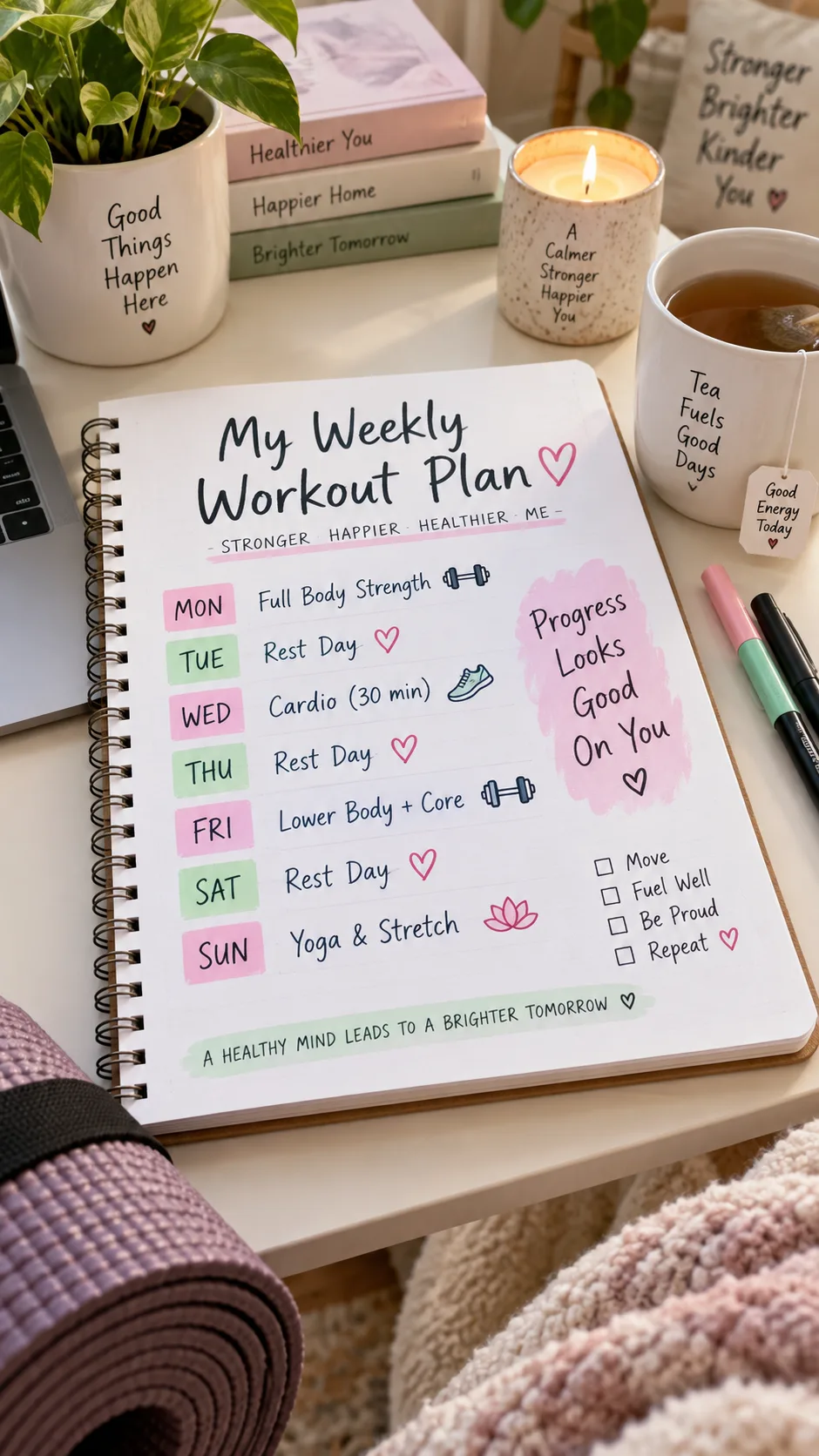
Having a list of exercises is great, but consistency beats intensity every single time when it comes to knee rehab. Here’s a simple weekly structure that works:
- Days 1, 3, and 5: Perform 4-5 of the exercises above. Alternate which ones you choose to keep things interesting.
- Days 2, 4, and 6: Light activity like walking, swimming, or cycling on a stationary bike (low resistance). These keep the joint mobile without overloading it.
- Day 7: Rest. Your muscles rebuild during recovery, not during the workout itself.
Each session should take about 15-25 minutes. That’s it. You don’t need an hour-long gym session to rebuild knee stability. You need short, focused work done regularly.
Exercises you should AVOID with knee pain
Not every exercise that claims to strengthen your legs belongs in a knee rehab program. Some moves put excessive shear force on the joint and can seriously set you back. Steer clear of these until your pain improves:
- Deep squats (below 90 degrees), too much compressive force on the joint
- Lunges with a forward knee drift, your knee should never travel far past your toes
- Leg press machines with heavy weight, easy to overload the joint
- Running on hard surfaces, high impact and repetitive
- Plyometric exercises (box jumps, burpees), your knees will hate you
Does this mean you can never do these exercises again? Not necessarily. But right now, while you’re rebuilding stability, they create more problems than they solve.
Nutrition matters more than you think
Here’s something most knee pain articles skip entirely: what you eat directly affects joint inflammation and tissue repair. Chronic inflammation fuels knee pain, and your diet either fans those flames or helps put them out.
Focus on anti-inflammatory foods like fatty fish, leafy greens, berries, and nuts. Reduce processed foods, added sugars, and excessive alcohol. Harvard Medical School has published extensive research showing that dietary changes can measurably reduce joint inflammation markers.
If you’re also managing your weight, which directly reduces stress on your knees (every extra pound adds roughly 4 pounds of pressure to the joint), check out our clean eating meal plan for families for practical, sustainable ideas.
In my experience, combining targeted exercise with anti-inflammatory nutrition is the fastest path to real improvement. One without the other leaves results on the table.
How long until you see results?
I won’t sugarcoat this. Knee strengthening isn’t an overnight fix. Most people start noticing reduced pain and improved stability within 4-6 weeks of consistent exercise. Some feel small improvements within the first two weeks, especially with activities like climbing stairs or standing from a chair.
A study published in the Journal of Physical Therapy Science found that participants who performed targeted quadriceps and hip strengthening exercises showed significant pain reduction after just 8 weeks. The catch? They did the exercises consistently, three times per week.
The biggest mistake people make is stopping once the pain decreases. Your muscles weakened over months or years. They need ongoing maintenance to stay strong. Think of these exercises less like a treatment plan and more like brushing your teeth. You just keep doing it.
When to see a professional
These exercises help a LOT of people, but they’re not a substitute for professional diagnosis when something more serious is going on. See a doctor or physical therapist if:
- Your knee locks or gives way unexpectedly
- You notice significant swelling that doesn’t resolve within 48 hours
- Pain wakes you up at night
- You can’t bear weight on the affected leg
- Your pain hasn’t improved after 6-8 weeks of consistent strengthening work
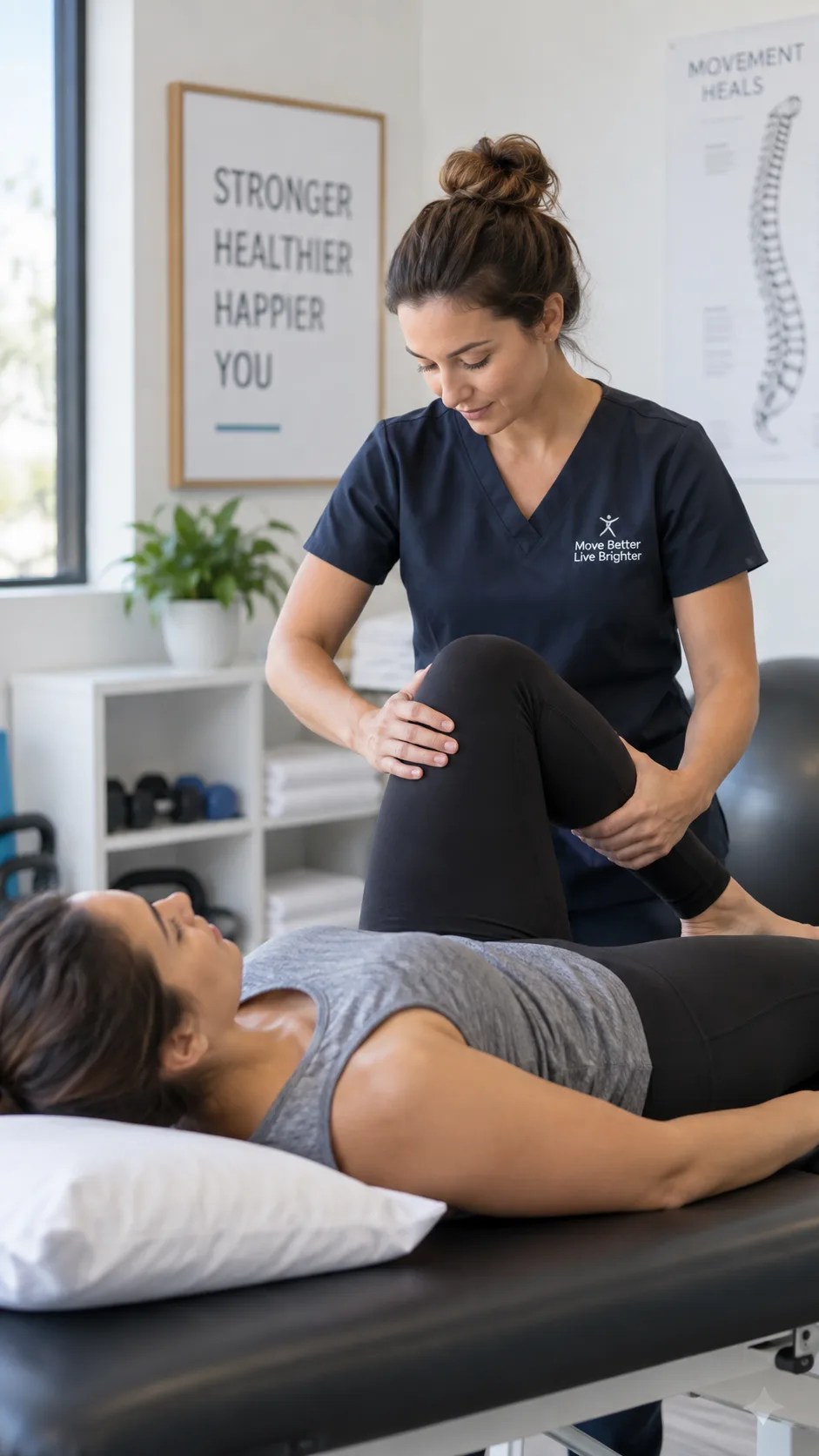
A physical therapist can identify specific imbalances, assess your movement patterns, and customize a program that addresses YOUR knee’s exact needs. Consider the exercises in this article your excellent starting point, and professional guidance as the next level up.
If you’re also working on upper body strength, combining both programs creates a balanced approach that supports your entire body, not just the parts that currently hurt.
Quick reference: your knee strengthening cheat sheet
Pin this, screenshot it, tape it to your fridge. Whatever helps you stay consistent:
- Straight Leg Raises, 10-15 reps, 2-3 sets (quad strength, zero knee bending)
- Partial Wall Sits, 10-30 second holds, 5-8 reps (quad and glute endurance)
- Clamshells, 15-20 reps, 2-3 sets (glute/hip stability)
- Low Step-Ups, 10-12 reps, 2 sets (functional strength)
- Standing Hamstring Curls, 12-15 reps, 2-3 sets (posterior chain balance)
- Glute Bridges, 15 reps, 3 sets (posterior chain power)
- Seated Knee Extensions, 10-12 reps, 2-3 sets (quad isolation)
The bottom line
Knee pain can feel like a life sentence, but it rarely is. The right low-impact strengthening exercises rebuild the muscular support system your knee joint desperately needs, reducing pain, improving stability, and getting you back to activities you’ve been avoiding.
Start with 2-3 exercises from this list. Do them three times a week. Progress slowly. Eat well. And give yourself grace. Rebuilding takes time, but every rep you do is an investment in a stronger, less painful future.
Your knees carried you this far. Now it’s time to return the favor.
