
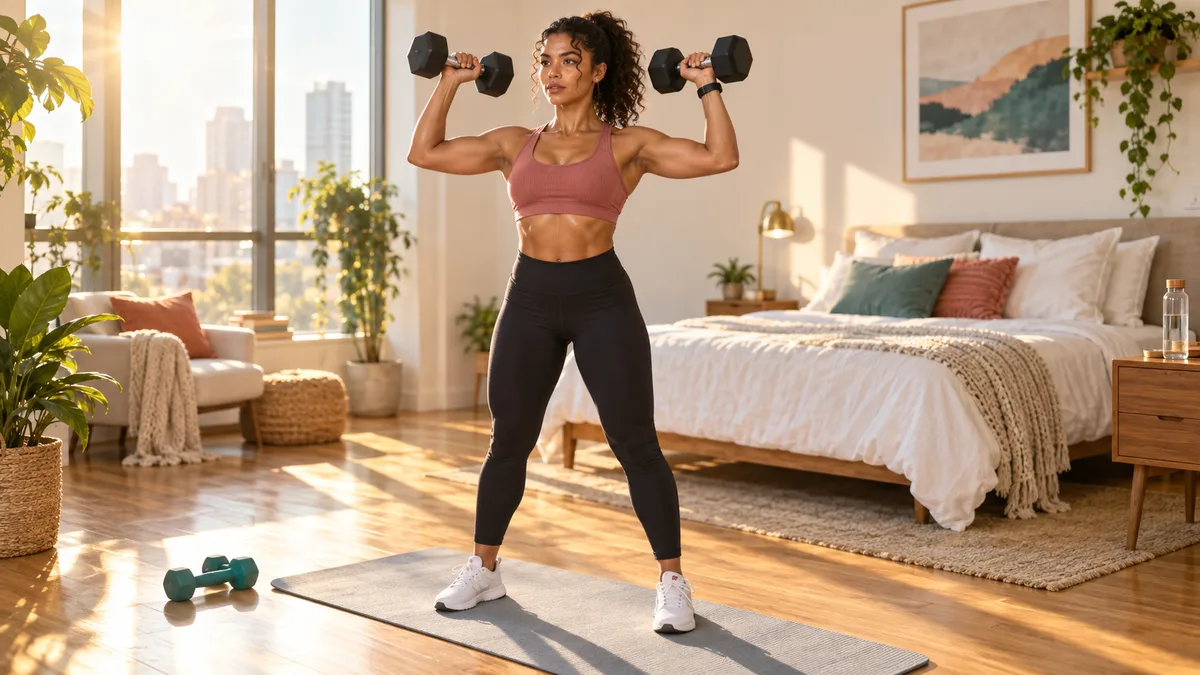
You bought the dumbbells. They’ve been sitting in the corner of your bedroom for three weeks now, judging you silently. Sound familiar? I’ve been there, staring at a pair of weights with zero idea what to do with them beyond bicep curls and… more bicep curls.
Here’s the truth: a pair of dumbbells is genuinely one of the most effective tools you can own for building full-body strength. You don’t need a fancy gym membership, a cable machine, or a personal trainer breathing down your neck. You just need a plan. And that’s exactly what this article hands you: a structured, beginner-friendly dumbbells workout for women that you can print out, stick on your wall, and actually follow.
No confusion. No guesswork. Just a clear path forward.
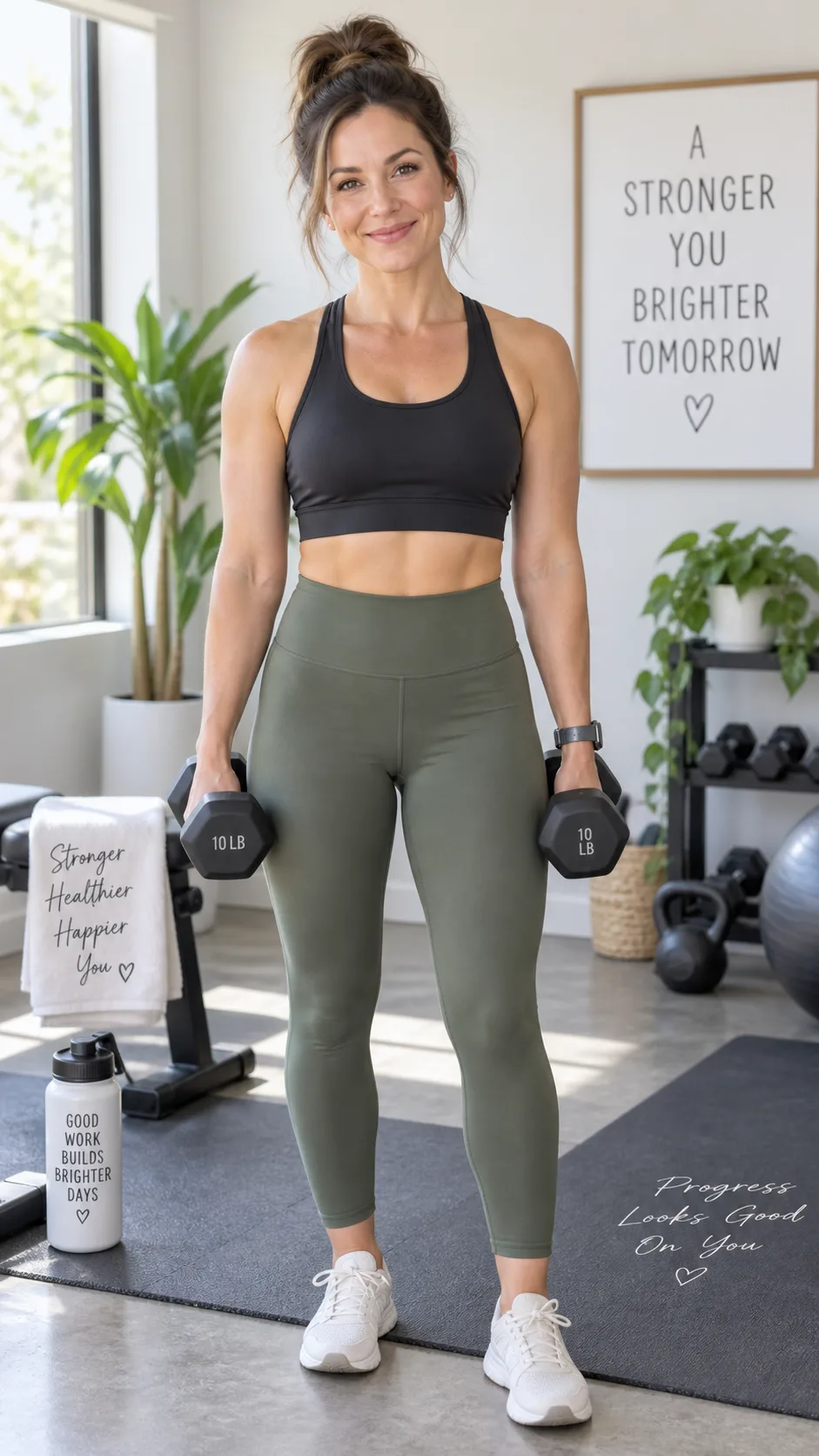
Why dumbbells are perfect for women starting strength training
Time to kill the biggest myth right now: lifting dumbbells will NOT make you bulky. Women produce roughly 15-20 times less testosterone than men, according to the American Council on Exercise. Building massive muscles requires years of dedicated heavy lifting, specific nutrition protocols, and often supplementation. Picking up a 10-pound dumbbell three times a week? That builds lean muscle, boosts your metabolism, and strengthens your bones.
What makes dumbbells specifically great for beginners? Freedom of movement. Unlike machines that lock you into fixed positions, dumbbells let your body move naturally. This recruits more stabilizer muscles, improves your coordination, and actually reduces your injury risk when you use proper form.
Dumbbells are also incredibly scalable. You start with 5-pound weights, and as you get stronger, you bump up to 8s, then 10s, then 15s. Progressive overload (fancy term, simple concept) keeps your muscles adapting and growing stronger over time.
What weight should you start with?
This question haunts every beginner, so let me make it easy. For most women who are brand new to strength training, here’s a solid starting point:
- Upper body exercises (shoulder press, rows, curls): 5-8 lbs per dumbbell
- Lower body exercises (squats, lunges, deadlifts): 8-15 lbs per dumbbell
- Core exercises (weighted crunches, Russian twists): 5-8 lbs single dumbbell
The right weight should feel challenging on your last 2-3 reps but never force you to sacrifice form. If you’re breezing through all 12 reps, go heavier. If you can’t complete 8 reps with good technique, drop down. Simple as that.
The full-body dumbbells workout routine (printable version)
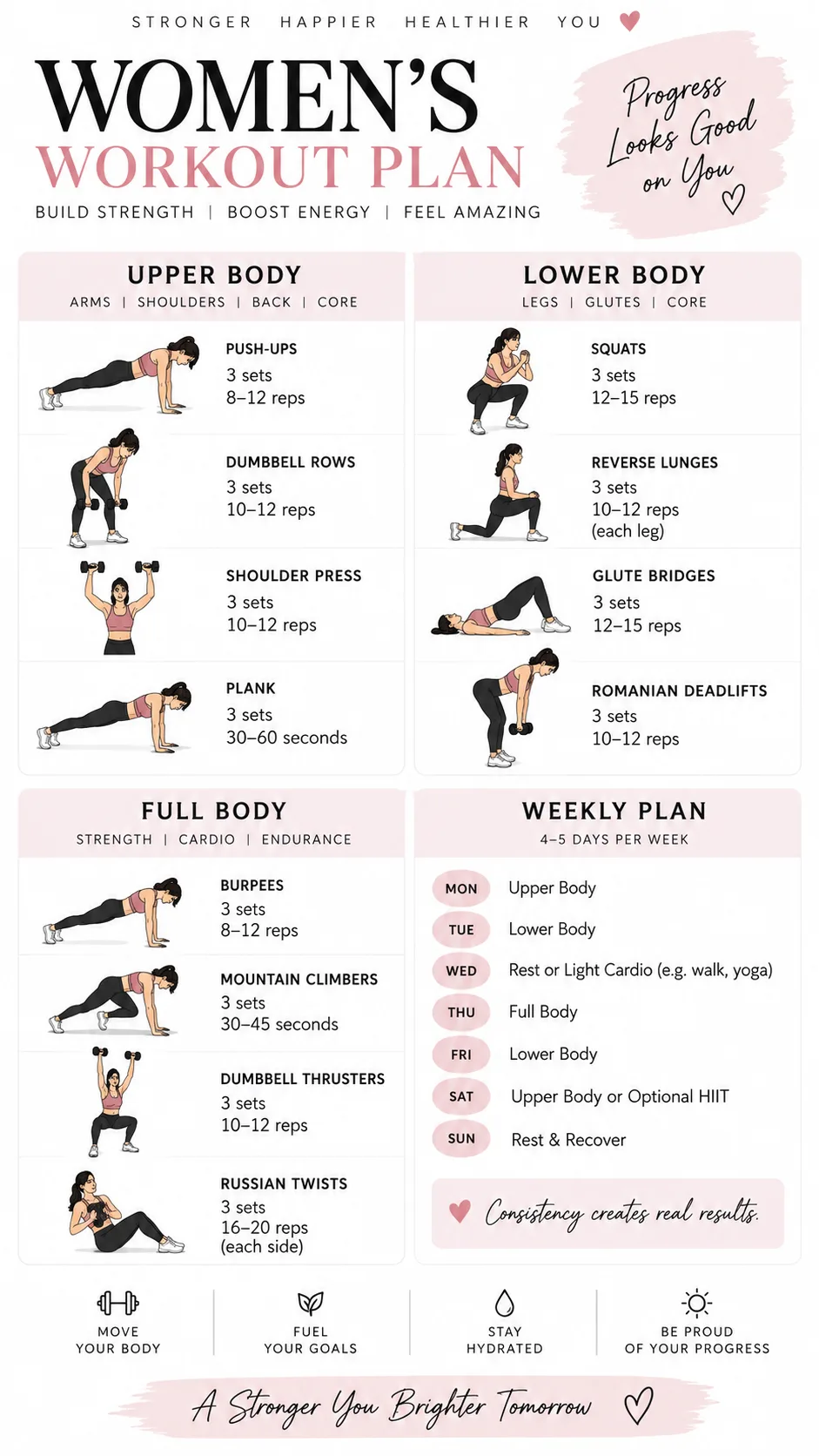
Here it is, the routine you came for. This full-body dumbbells workout targets every major muscle group in one session. Perform it 3 times per week with at least one rest day between sessions (think Monday, Wednesday, Friday). Each workout takes roughly 35-45 minutes.
Warm-up (5 minutes)
Never skip this part. I know, warming up feels like the vegetables of exercise: boring but necessary. Do 2 minutes of marching in place, then 20 arm circles (10 each direction), 10 bodyweight squats, and 10 hip circles per side. Your muscles and joints will thank you.
The workout
- Goblet Squats, 3 sets of 12 reps
- Dumbbell Romanian Deadlifts, 3 sets of 10 reps
- Dumbbell Bent-Over Rows, 3 sets of 10 reps per arm
- Dumbbell Overhead Press, 3 sets of 10 reps
- Dumbbell Reverse Lunges, 3 sets of 10 reps per leg
- Dumbbell Chest Press (Floor Press), 3 sets of 12 reps
- Dumbbell Bicep Curls, 2 sets of 12 reps
- Dumbbell Tricep Overhead Extension, 2 sets of 12 reps
- Dumbbell Weighted Glute Bridges, 3 sets of 15 reps
Rest 45-60 seconds between sets. If you need more rest, take it. You’re building a habit here, and your conditioning will improve over time.
How to perform each exercise with proper form
Having the list is great. Knowing how to actually DO each movement without hurting yourself? That’s where the real value lives. Here are the technique cues for every exercise in this dumbbells workout.
Goblet squats
Hold one dumbbell vertically at your chest with both hands, elbows pointing down. Stand with feet shoulder-width apart. Push your hips back and bend your knees, lowering until your thighs are at least parallel to the floor. Keep your chest up and your weight in your heels. Drive through your feet to stand back up.
Why this exercise works so well: it targets your quads, glutes, and core all at once, and the front-loaded weight naturally teaches you perfect squat mechanics. If you want more lower body work, check out our best leg workout routine for women.
Dumbbell Romanian deadlifts
Hold a dumbbell in each hand in front of your thighs. With a slight bend in your knees, hinge at your hips and lower the dumbbells along your legs until you feel a deep stretch in your hamstrings. Squeeze your glutes hard to stand back up. Your back should stay flat. Imagine balancing a glass of water on it.
Dumbbell bent-over rows
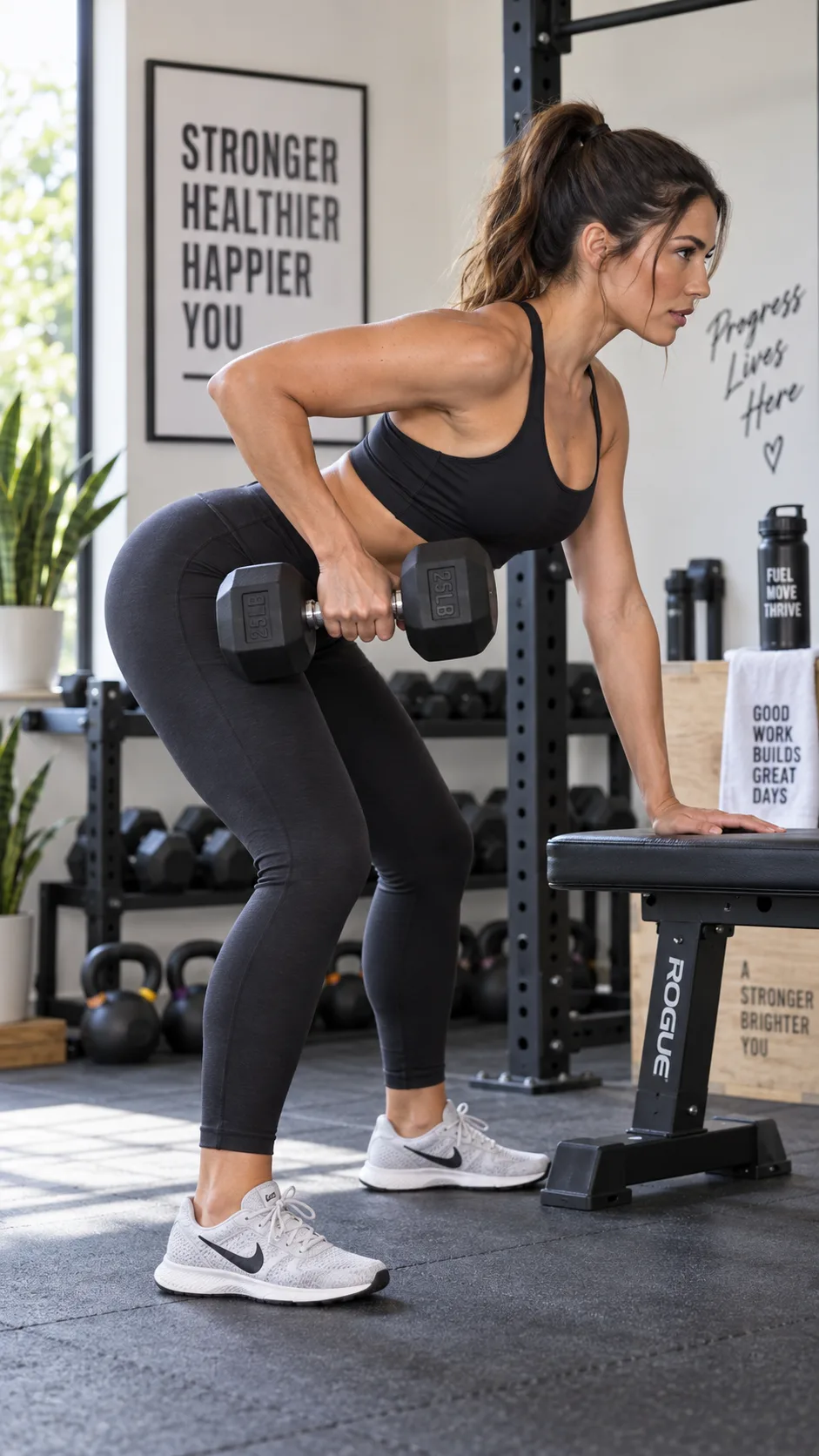
Hinge forward at your hips about 45 degrees, keeping your back flat and core braced. Let the dumbbells hang straight down. Pull one dumbbell up to your ribcage, squeezing your shoulder blade at the top. Lower it with control and repeat on the other side. This one builds a strong, sculpted upper back, which (bonus) also improves your posture dramatically.
Dumbbell overhead press
Stand tall with a dumbbell in each hand at shoulder height, palms facing forward. Press the weights straight up until your arms are fully extended overhead. Lower them back to shoulder height with control. Engage your core throughout. Don’t arch your lower back.
Dumbbell reverse lunges
Hold a dumbbell in each hand at your sides. Step one foot backward and lower your back knee toward the floor until both knees form roughly 90-degree angles. Push through your front heel to return to standing. Reverse lunges put less stress on your knees than forward lunges, making them the smarter choice for beginners.
Floor press
No bench? No problem. Lie on your back on the floor with knees bent and feet flat. Hold a dumbbell in each hand above your chest. Lower the weights until your upper arms gently touch the floor, then press them back up. The floor limits your range of motion slightly, which actually protects your shoulders. For more chest-focused work, our chest day workout guide has you covered.
Bicep curls, tricep extensions, and glute bridges
Bicep curls: Stand with dumbbells at your sides, palms forward. Curl the weights up without swinging your body. Control the lowering phase. That’s where half the muscle-building work happens.
Tricep overhead extension: Hold one dumbbell with both hands behind your head, elbows pointing toward the ceiling. Extend your arms to press the weight up, then lower it back down. Keep your elbows close to your head.
Weighted glute bridges: Lie on your back with knees bent. Place one dumbbell across your hips. Drive through your heels and squeeze your glutes to lift your hips toward the ceiling. Pause at the top for two seconds, then lower slowly.
How to progress this routine over time
Here’s where most beginners stall out: they do the same routine with the same weights for months and wonder why nothing changes. Your body adapts FAST. If you’re not challenging it progressively, you’re essentially maintaining, not building.
Follow this simple 4-week progression cycle:
- Weeks 1-2: Master the form with lighter weights. Focus on feeling each muscle work. Complete all prescribed sets and reps.
- Week 3: Add 1-2 reps per set OR reduce your rest periods by 10-15 seconds.
- Week 4: Increase your dumbbell weight by 2-5 lbs on exercises where you completed all reps with solid form.
Then reset the cycle with your new, heavier weights. This principle, progressive overload, is the single most important concept in strength training. The National Strength and Conditioning Association considers it the foundation of every effective training program.
Common mistakes that sabotage your results
Ever wonder why some women train consistently but never seem to change? It usually comes down to a handful of avoidable mistakes. I’ve made every single one of these, so learn from my stubbornness 🙂
Going too light for too long
If you can knock out all your reps while simultaneously texting, those dumbbells are too light. Challenge yourself. You should feel genuinely uncomfortable on those last 2-3 reps. Muscle growth requires muscle struggle. There’s no shortcut around that.
Rushing through reps
Momentum is NOT your friend when lifting dumbbells. Each rep should take about 2 seconds up and 2-3 seconds down. Slow, controlled movements force your muscles to do all the work instead of letting gravity and momentum take over. Quality absolutely crushes quantity here.
Neglecting your lower body
I get it. Arm workouts feel satisfying, and you can see the results quickly in the mirror. But your legs and glutes contain the LARGEST muscles in your body. Training them burns more calories, releases more growth-promoting hormones, and builds functional strength that carries over to daily life. Don’t skip leg day. Ever. Our leg workout gym guide for women gives you even more lower-body options.
Skipping rest days
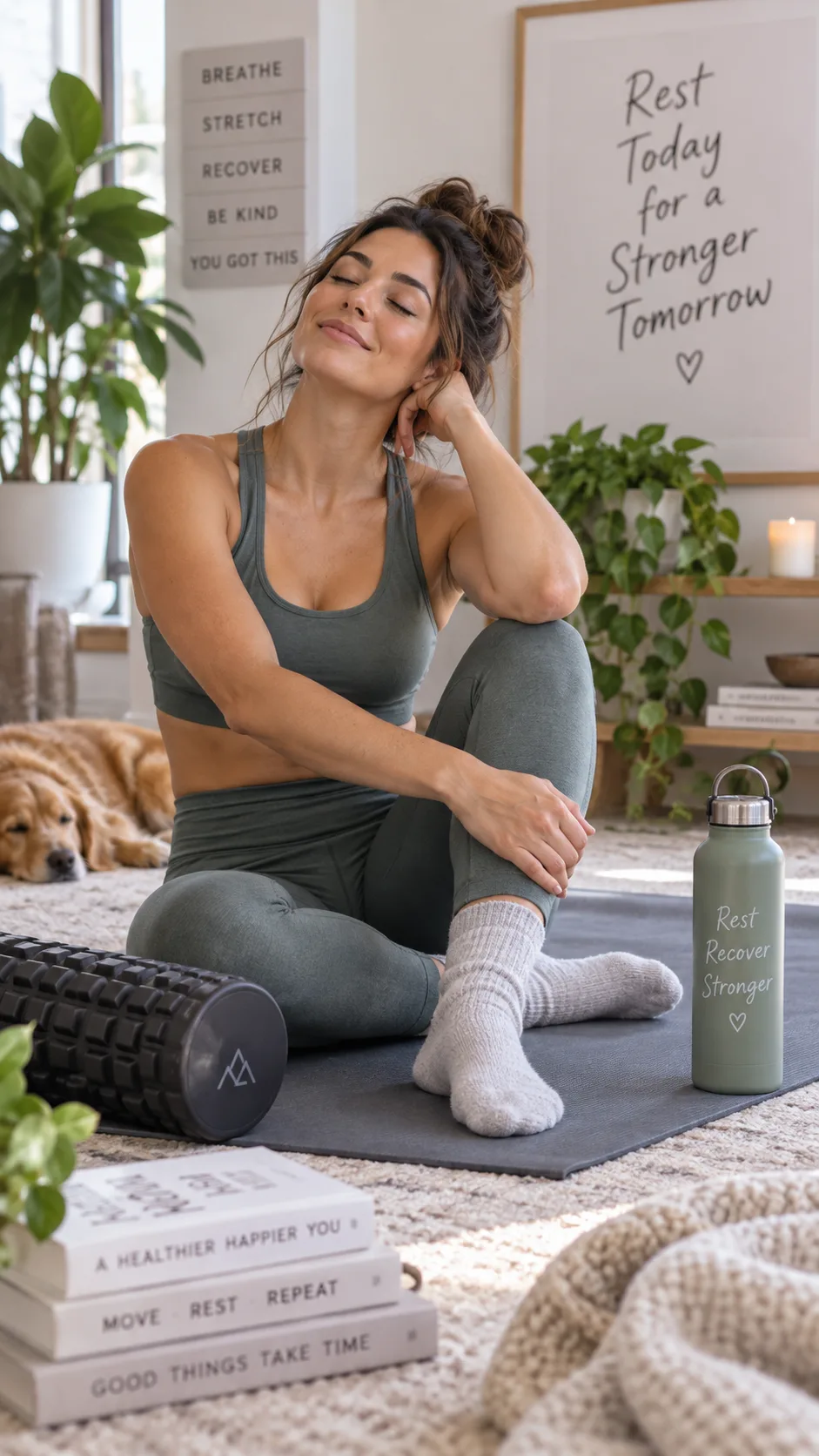
Your muscles don’t grow DURING the workout. They grow during recovery. Training the same muscles every day without rest leads to overtraining, injury, and burnout. Three full-body sessions per week with rest days between them hits the sweet spot for beginners. Use rest days for light walking, stretching, or yoga.
Nutrition tips to support your dumbbell training
You can follow the best dumbbells workout for women on the planet, and it won’t matter much if your nutrition is working against you. I’m not talking about restrictive diets or counting every calorie obsessively. Just a few foundational habits that make your training actually pay off.
Protein is non-negotiable. The Harvard Medical School recommends active women consume at least 0.36 grams of protein per pound of body weight daily, but for muscle building, research supports aiming closer to 0.7-1.0 grams per pound. Think chicken, fish, eggs, Greek yogurt, lentils, and protein powder if needed.
Eat enough carbohydrates to fuel your workouts: rice, oats, sweet potatoes, fruits. Carbs aren’t the enemy; they’re literally your muscles’ preferred energy source. And drink at LEAST half your body weight in ounces of water daily. Dehydrated muscles perform terribly and recover even worse.
Equipment you actually need (and what you can skip)
The beauty of a home dumbbells workout is how little equipment you need. Here’s your essentials list:
- Two pairs of dumbbells: one lighter pair (5-8 lbs) for upper body, one heavier pair (10-20 lbs) for lower body. Adjustable dumbbells save space and money if you can swing the upfront cost.
- A yoga mat or thick towel for floor exercises like glute bridges and floor press.
- Supportive shoes: flat-soled shoes or even barefoot training works well for stability during squats and deadlifts.
What can you skip? That $200 exercise bench (your floor works fine for now). Those $50 workout gloves (calluses build character). That entire rack of single-pound increment dumbbells (two versatile pairs handle 90% of what you need).
How to make this routine printable
I promised you a printable routine, so here’s how to make it happen. Copy the workout list from the routine section above into a simple document. Format it as a clean table with columns for Exercise, Sets, Reps, and Weight Used. Leave the weight column blank so you can fill it in with a pen as you progress.
Print multiple copies. Stick one on your fridge, one in your workout space, and keep one in your gym bag. In my opinion, having a physical copy you can check off after each set feels more satisfying than any fitness app. There’s something about putting pen to paper after crushing a set that just hits different.
Want to expand beyond dumbbells? A full-body resistance band workout makes an excellent complement on your off days. It’s portable and adds variety without overloading your joints.
What results can you realistically expect?
Let me keep expectations honest, because nothing kills motivation faster than unrealistic timelines. Here’s a realistic progression based on consistent training 3x per week:
- Weeks 1-2: You’ll feel sore (hello, DOMS), and movements will feel awkward. Totally normal. Your nervous system is learning new movement patterns.
- Weeks 3-4: Soreness decreases. Movements start feeling more natural. You’ll notice improved energy levels and better sleep.
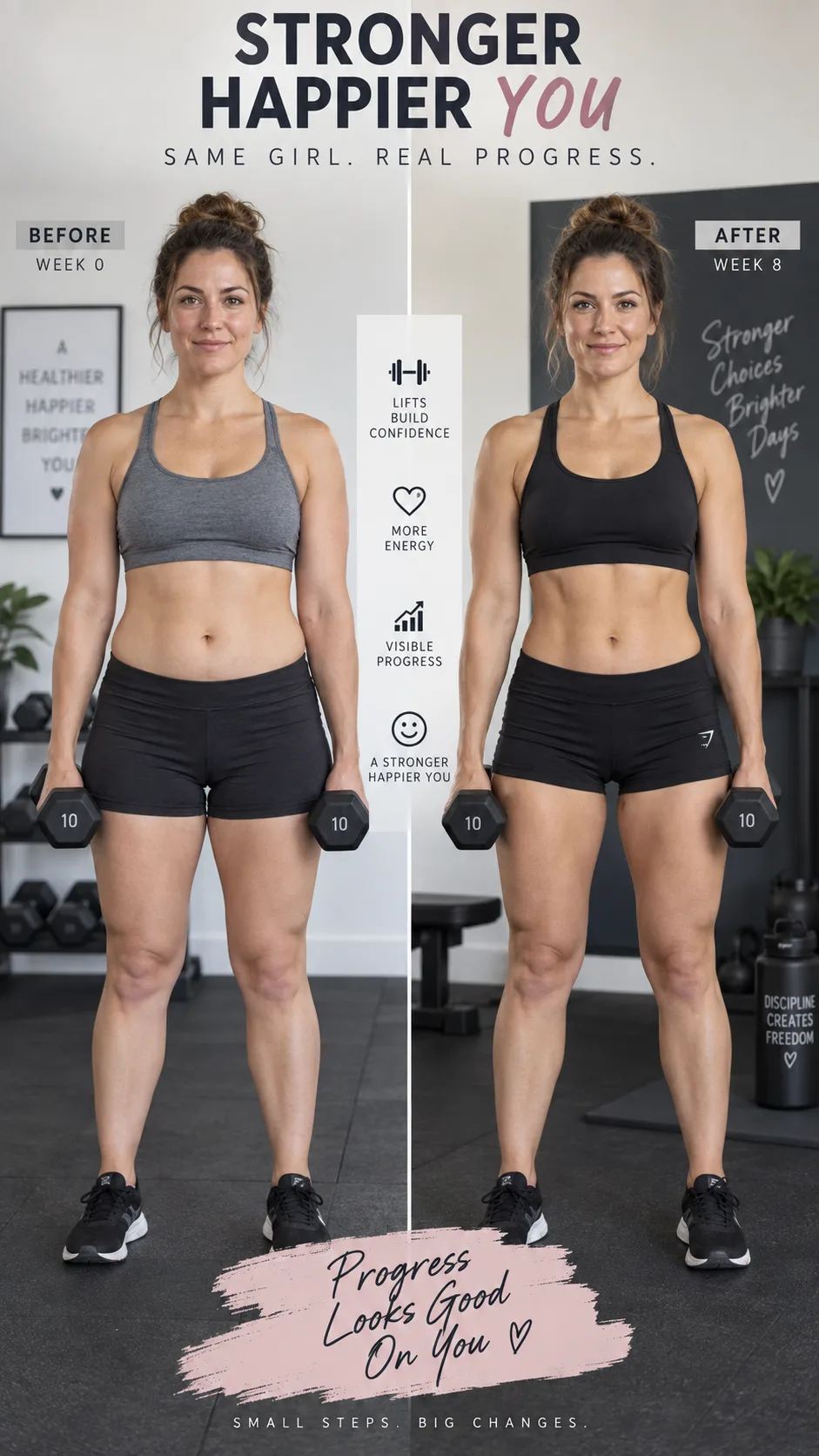
- Weeks 5-8: Visible muscle tone begins appearing, especially in arms and shoulders. Clothes start fitting differently. You’ll feel noticeably stronger.
- Weeks 9-12: Real, measurable strength gains. You’re lifting heavier dumbbells than you started with. Friends start asking what you’ve been doing differently.
According to research published in Sports Medicine, untrained women can expect to gain approximately 1-2 pounds of lean muscle per month during their first year of consistent resistance training. That might sound small, but on a female frame, 5-10 pounds of added muscle creates a DRAMATICALLY different physique.
Your dumbbells workout action plan
You now have everything you need: the exercises, the form cues, the progression strategy, the nutrition basics, and realistic expectations. A solid dumbbells workout for women doesn’t require complexity. It requires consistency, progressive challenge, and patience.
Print the routine. Set your three training days on your calendar. Pick up those dusty dumbbells that have been doubling as doorstops. Start with weights that challenge you but allow clean form, and bump them up every few weeks.
The best workout program is the one you actually do. This one takes under 45 minutes, requires minimal equipment, and works your entire body. You’ve got the plan. Now go make those dumbbells earn their keep.
