
Your back does more for you than almost any other muscle group, and you’ve probably been ignoring it. No shade, most of us do. We focus on abs, glutes, arms… basically whatever we can see in a mirror. But here’s the thing: a strong back changes everything. Your posture, the way your clothes fit, how confident you look standing in line at the grocery store.
And you don’t need a single piece of equipment to start building one. No dumbbells, no pull-up bar, no gym membership. Just your bodyweight, your living room floor, and about 20-30 minutes. Sound too good? Keep reading.
Why should women train their backs at home?
Let me be real with you: a weak back is behind most of the aches and postural issues women deal with daily. That nagging lower back pain after sitting at your desk? Weak back muscles. Those rounded shoulders you keep trying to correct? Same culprit. Training your back isn’t vanity. It’s functionality.
Here’s what consistent back training does for you:
- Improves posture dramatically, and you’ll literally stand taller within weeks
- Reduces back pain, especially if you sit at a desk or carry kids around
- Creates that sculpted V-shape that makes your waist look smaller
- Supports every other exercise, from push-ups to squats to carrying groceries
- Balances out all those front-body exercises you’ve been doing (all those crunches, anyone?)
According to the American Council on Exercise, strengthening the posterior chain (your back, glutes, and hamstrings) significantly reduces the risk of injury and improves overall athletic performance. So yeah, this matters.
Can you really build a stronger back without equipment?
Short answer: absolutely yes. Longer answer: your back muscles respond incredibly well to bodyweight exercises because they’re designed to work against gravity. Think about it. Pulling, extending, stabilizing your spine. Your back does all of this using your own body as resistance every single day.
Will bodyweight exercises get you the same results as heavy lat pulldowns? Eventually, no. But for building a solid foundation of strength, improving muscle definition, and fixing postural imbalances? Bodyweight back exercises are genuinely effective, especially for beginners and intermediates.
The secret is progressive overload through tempo, volume, and time under tension, not just adding more weight. Slow down your reps, add pauses, increase sets. Your muscles don’t know the difference between a barbell and gravity; they only know tension. And once you’re ready to level up, you can always grab some dumbbells and try a dumbbell back workout designed specifically for women.
The 7 best bodyweight back exercises for women
Here they are: the seven moves that will transform your back without leaving your house or spending a dime. I’ve personally used every one of these during times when getting to a gym just wasn’t happening (hello, 2020), and they genuinely work.
1. Superman Hold
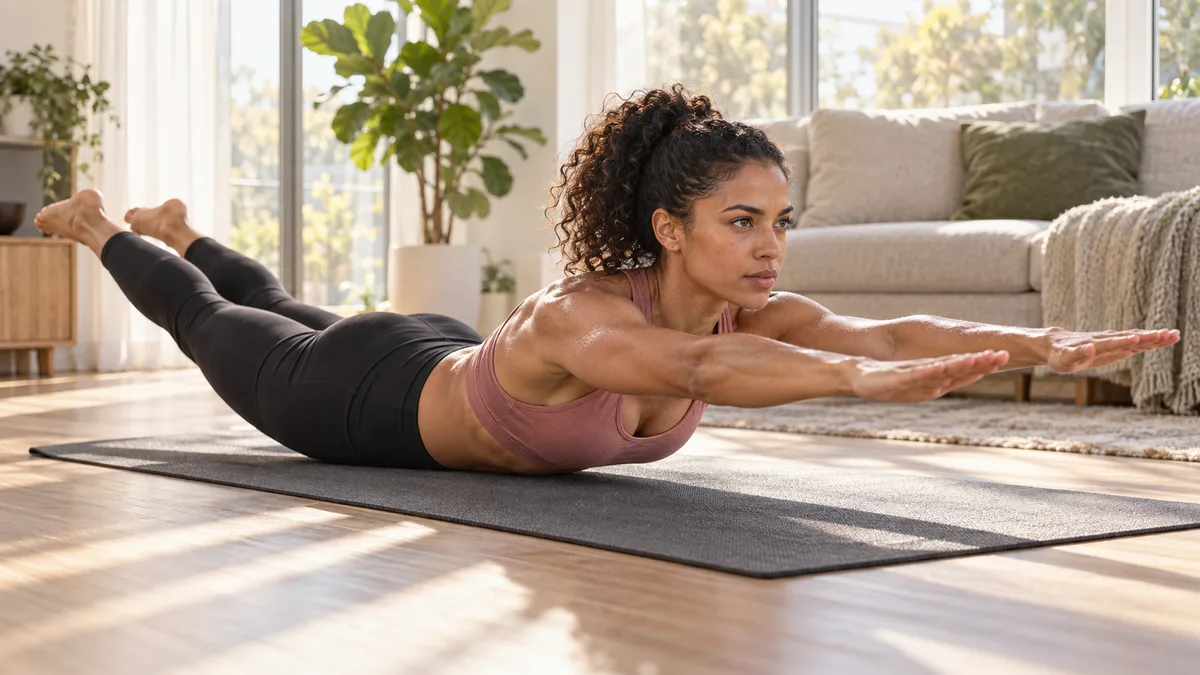
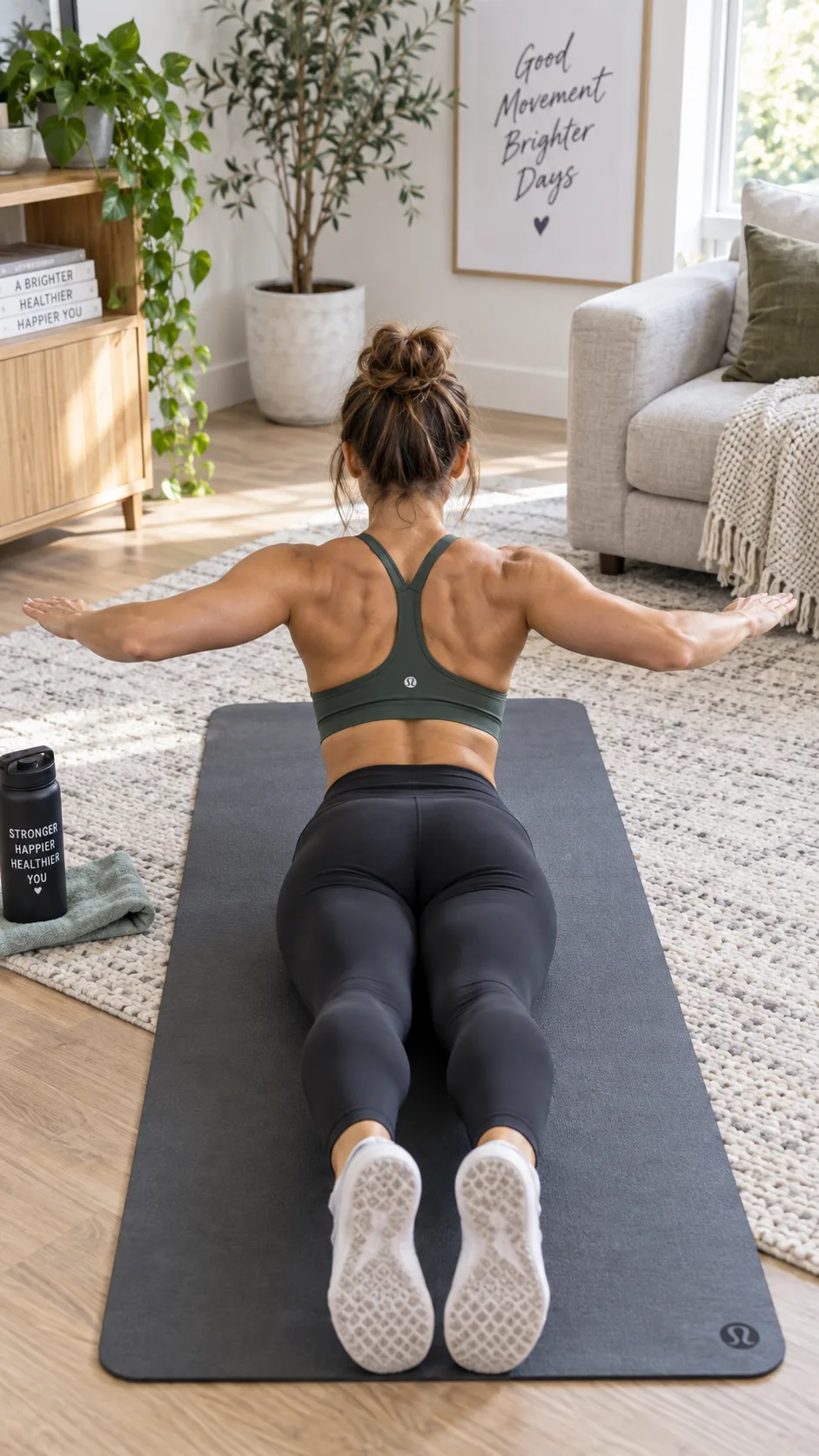
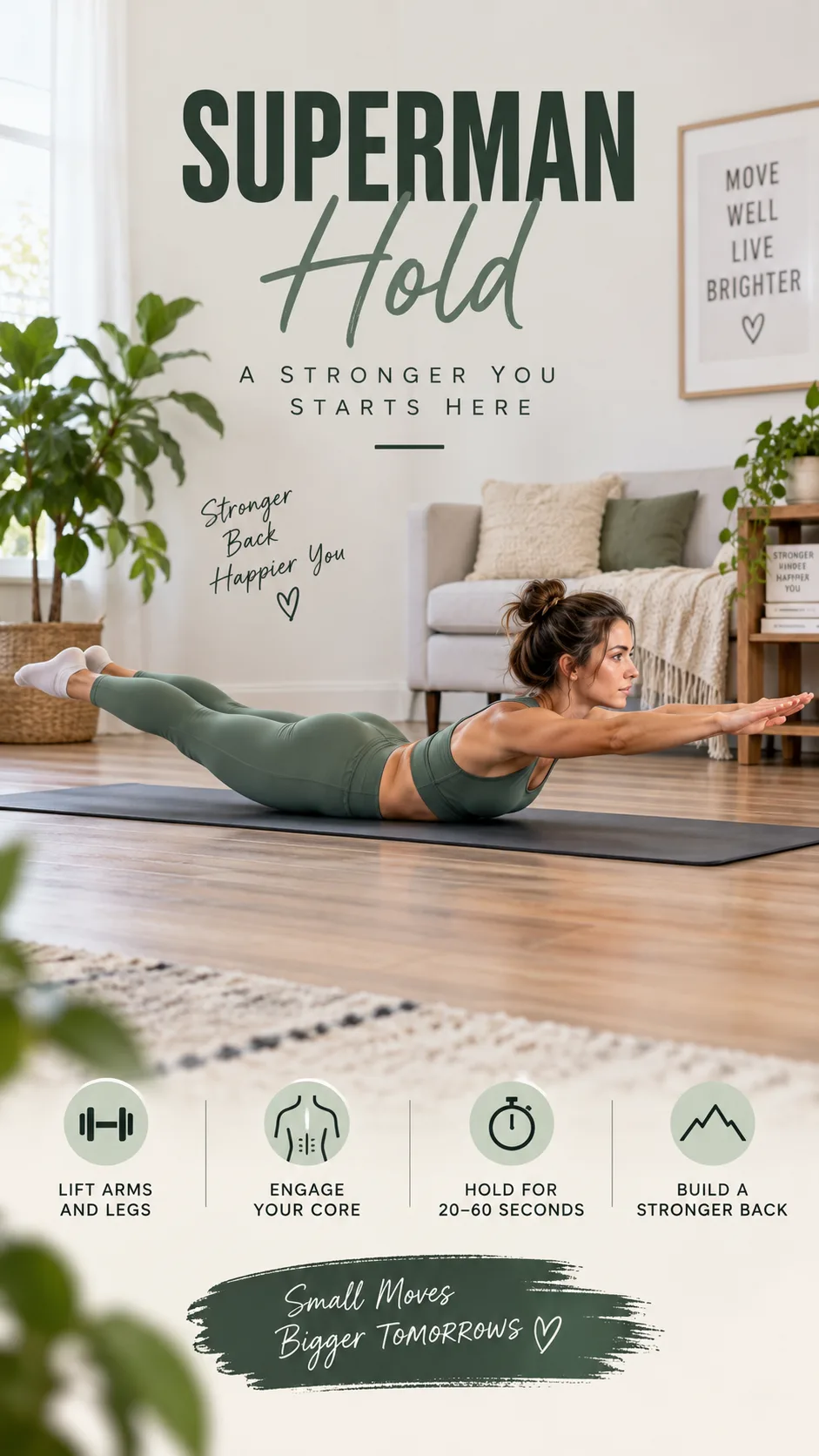
This one looks deceptively simple. Spoiler: it’s not. The Superman targets your erector spinae, glutes, and rear delts all at once. It’s the gold standard of bodyweight back exercises for a reason.
How to do it:
- Lie face down on the floor with arms extended overhead
- Simultaneously lift your arms, chest, and legs off the ground
- Squeeze your entire back and glutes at the top
- Hold for 2-3 seconds, then slowly lower back down
- Perform 3 sets of 12-15 reps
Pro tip: Don’t just fling yourself up. Control the movement. The slower you go, the more your muscles work. A rushed Superman is basically just flopping around on your carpet, and nobody wants that.
2. Prone Y Raises
Ever wonder why your upper back always feels tight and knotted? You probably have weak lower traps. Prone Y raises fix that. They target the lower and middle trapezius muscles that most people completely neglect.
How to do it:
- Lie face down with arms extended at a 45-degree angle (forming a Y shape)
- With thumbs pointing toward the ceiling, lift both arms as high as you can
- Squeeze your shoulder blades together at the top
- Hold for 1-2 seconds, then lower with control
- Perform 3 sets of 12-15 reps
These look embarrassingly easy until you’re on rep eight and your upper back is screaming. Trust the process 🙂
3. Reverse Snow Angels
This one is like making snow angels, except face down and significantly less fun. But your rhomboids, rear deltoids, and lats will thank you. It’s one of the best exercises for building that defined look across your upper back.
How to do it:
- Lie face down with arms by your sides, palms facing down
- Lift your arms, chest, and head slightly off the floor
- Slowly sweep your arms overhead in an arc (like a snow angel)
- Reverse the motion back to your sides. That’s one rep
- Perform 3 sets of 10-12 reps
Keep your arms lifted the entire time. The moment your hands touch the floor, you lose all that beautiful tension. And tension is where results live.
4. Bird Dog
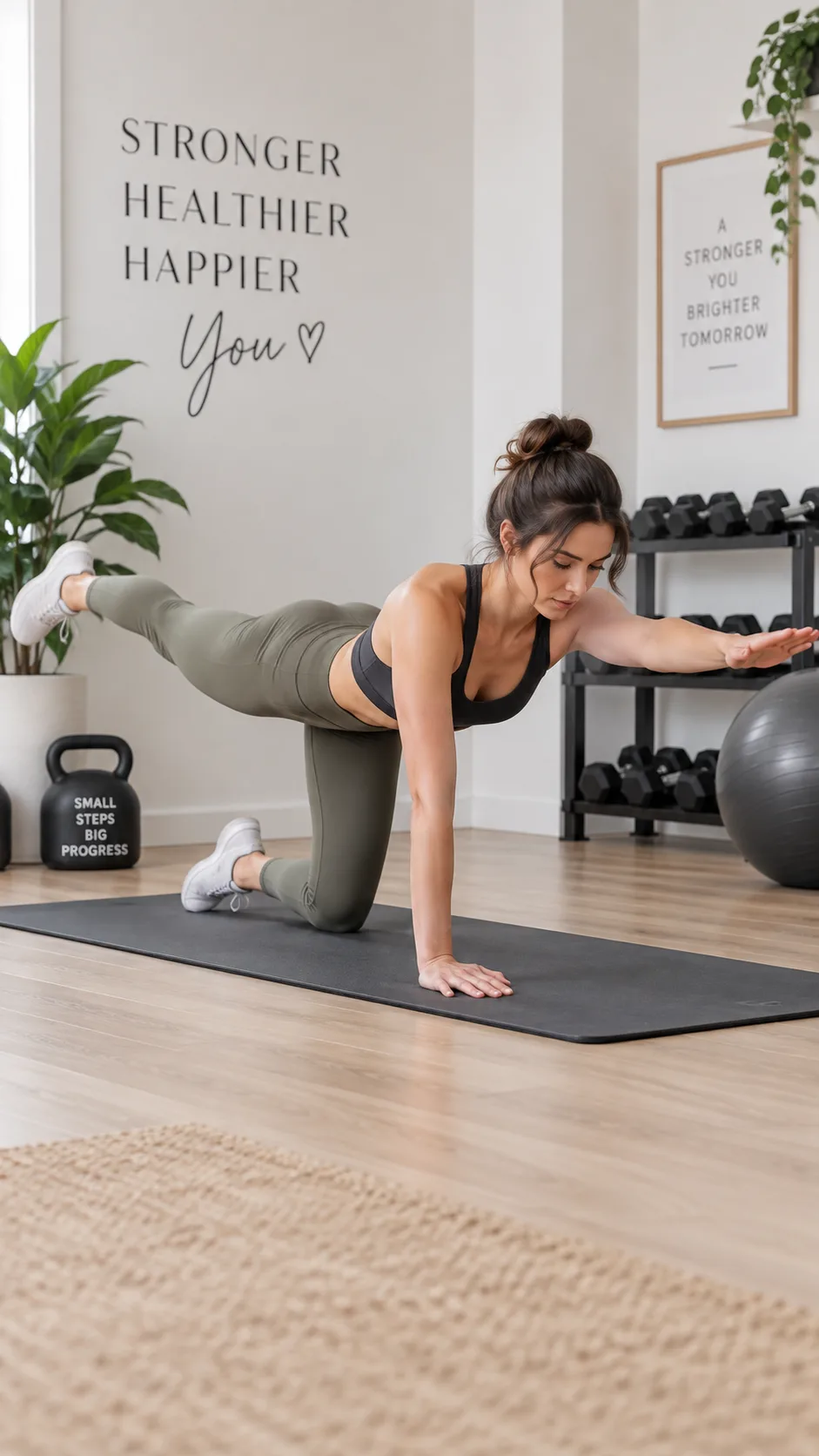
The bird dog is a core-and-back stability exercise that physical therapists everywhere absolutely love. It trains your erector spinae, multifidus, and deep core stabilizers to work together, which is exactly what they need to do in real life.
How to do it:
- Start on all fours with hands under shoulders and knees under hips
- Extend your right arm forward and left leg back simultaneously
- Keep your hips level. Don’t let them rotate or sag
- Hold for 2 seconds, then return to start
- Alternate sides for 3 sets of 10 reps per side
The Harvard Health Blog specifically recommends the bird dog as one of the best exercises for building a stronger, healthier back. If it’s good enough for Harvard, it’s good enough for your living room.
5. Prone I-T-Y-W Raises
Think of this as the ultimate upper back combo platter. You’ll hit your back from FOUR different angles in one sequence. This exercise targets your traps (all three portions), rhomboids, rear delts, and rotator cuff muscles.
How to do it:
- I: Lie face down, lift arms straight overhead (forming an I shape). Lower.
- T: Extend arms straight out to the sides, lift. Lower.
- Y: Arms at 45 degrees, lift. Lower.
- W: Bend elbows and pull them toward your waist while squeezing shoulder blades. Lower.
- That’s one full cycle. Perform 3 sets of 6-8 cycles
This exercise is sneaky-hard. By the second set, your entire upper back will feel like it’s on fire, in the best way possible. IMO, this single move provides more upper back activation than most gym machines.
6. Glute Bridge with Back Squeeze
Wait, a glute bridge for your back? Hear me out. When you add an intentional upper back squeeze at the top position, this exercise becomes a full posterior chain activator. Your lower back, glutes, AND upper back all get hammered simultaneously.
How to do it:
- Lie on your back with knees bent, feet flat on the floor
- Drive through your heels to lift your hips toward the ceiling
- At the top, actively press your upper back into the floor and squeeze your shoulder blades together
- Hold for 3 seconds, squeezing everything (glutes AND upper back)
- Perform 3 sets of 15 reps
This variation is especially great for anyone dealing with lower back pain, because it strengthens the back without loading the spine. That’s a win on both fronts.
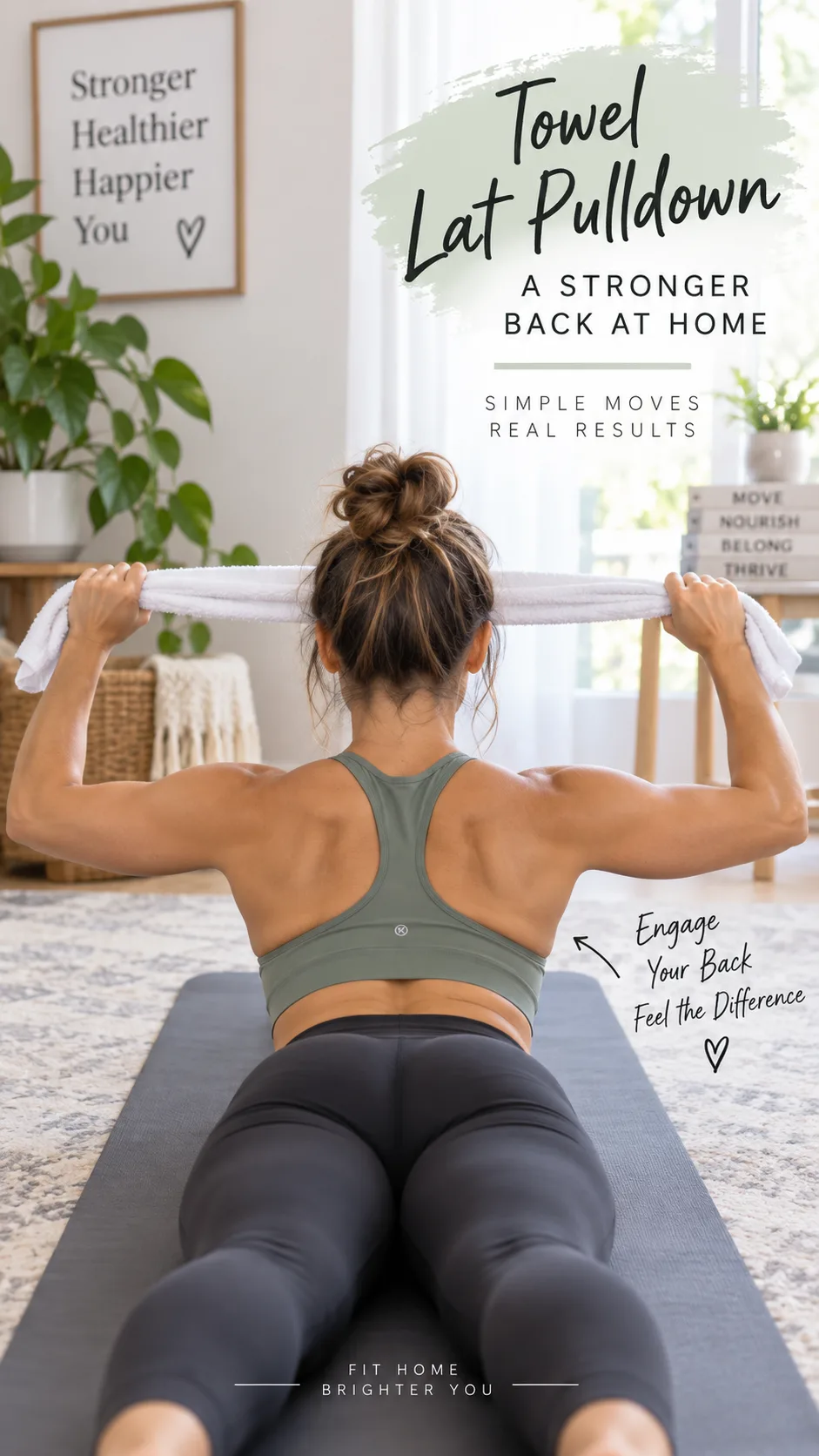
7. Prone Pull-Apart (Towel Lat Pulldown)
This is the closest you’ll get to a lat pulldown without any equipment. Grab a towel, a t-shirt, or even a resistance band if you have one lying around. This move directly targets your latissimus dorsi, the big wing-shaped muscles that create that gorgeous back definition.
How to do it:
- Lie face down, holding a towel taut between both hands overhead
- Pull the towel apart (creating tension) while pulling your elbows down toward your ribcage
- Squeeze your lats hard at the bottom position
- Slowly extend your arms back overhead while maintaining tension on the towel
- Perform 3 sets of 12-15 reps
The constant pulling-apart tension is what makes this exercise work. Without that tension, you’re just waving a towel around. Keep it TIGHT throughout every single rep.
Your complete at-home back workout routine
Here’s how to put all seven moves together into a structured workout you can do 2-3 times per week. The whole thing takes about 20-25 minutes. No excuses.
Warm-Up (3 minutes):
- 30 seconds of arm circles (forward and backward)
- 30 seconds of cat-cow stretches
- 30 seconds of thoracic rotations each side
- 60 seconds of gentle shoulder rolls and scapular squeezes
The Workout:
- Bird Dog, 3 sets x 10 reps per side
- Prone Y Raises, 3 sets x 12-15 reps
- Superman Hold, 3 sets x 12-15 reps
- Reverse Snow Angels, 3 sets x 10-12 reps
- I-T-Y-W Raises, 3 sets x 6-8 cycles
- Glute Bridge with Back Squeeze, 3 sets x 15 reps
- Towel Lat Pulldown, 3 sets x 12-15 reps
Rest 30-45 seconds between sets. If you’re a beginner, start with 2 sets per exercise and build up to 3 over two weeks. If you want to make it harder, slow down your tempo to a 3-second lift and 3-second lower on every rep.
Common mistakes that kill your results
Doing the exercises is only half the battle. Doing them correctly is what gets you results. Here are the mistakes I see most often, and I’ve made every single one of them myself.
Using momentum instead of muscle
Swinging and jerking through reps feels productive, but you’re basically cheating. Slow, controlled movement is non-negotiable. If you can’t do the exercise slowly, you’re not strong enough for that many reps yet. Drop the count and focus on quality. Your muscles will grow faster, I promise.
Forgetting to breathe
This sounds ridiculous, but so many people hold their breath during back exercises. Exhale during the effort (the lift) and inhale during the return. Proper breathing keeps your core engaged and prevents you from getting lightheaded mid-set. Nobody wants to faceplant into their yoga mat.
Neglecting the mind-muscle connection
Can you actually feel your back muscles working during each rep? Or are you just going through the motions? Research published in the Journal of Strength and Conditioning Research confirms that consciously focusing on the target muscle significantly increases its activation. So think about your back. Visualize those muscles contracting. It genuinely makes a difference.
Only training back once a week
With bodyweight exercises, 2-3 sessions per week is the sweet spot. Since you’re not loading heavy weights, your muscles recover faster. Once a week simply isn’t enough stimulus to drive meaningful change. Spread your sessions out with at least one rest day between them.
How to progress when bodyweight gets easy
Eventually (and this is a GREAT problem to have) these exercises will start feeling manageable. Here’s how to keep challenging yourself without buying equipment:
- Add tempo: Use a 4-second concentric (lift) and 4-second eccentric (lower) on every rep
- Add isometric holds: Pause at the top of each rep for 3-5 seconds
- Increase volume: Add a 4th set, or add 5 more reps per set
- Decrease rest time: Cut rest periods from 45 seconds to 20 seconds
- Superset exercises: Pair two back exercises back to back with no rest
And when you’re truly ready to take things further, consider building a full body workout routine that builds strength without overtraining. Combining your back work with a balanced program is how you go from “getting started” to “genuinely strong.” FYI, that transition happens faster than most people think.

Nutrition tips to support back muscle growth
You can’t train your way out of a bad diet. Your muscles need fuel to grow and recover, especially protein. Without adequate nutrition, all those Supermans and bird dogs are basically just mobility work.
Here’s what to focus on:
- Protein: Aim for 0.7-1 gram per pound of bodyweight daily. This gives your muscles the amino acids they need to repair and grow.
- Hydration: Dehydrated muscles perform worse and recover slower. Drink at least half your bodyweight in ounces of water daily.
- Anti-inflammatory foods: Berries, fatty fish, leafy greens, and turmeric help reduce exercise-induced inflammation and speed recovery.
- Adequate calories: You need to eat enough to support muscle growth. Under-eating while training hard just leads to fatigue and frustration.
The Mayo Clinic points out that proper nutrition and strength training work together synergistically. One without the other delivers subpar results. If you want specific meal ideas, check out this high protein meal plan designed for women who are building lean muscle.
How long before you see results?
Let’s set realistic expectations. You’ll likely feel a difference within 1-2 weeks, including less back tightness, better posture awareness, and that satisfying soreness that tells you something is actually changing. Visible muscle definition? That typically takes 6-8 weeks of consistent training combined with proper nutrition.
The posture improvements often come first, and honestly, they’re the most impactful change. People will ask if you got taller. You didn’t. You just stopped slouching because your back muscles can finally hold you upright. It’s a great feeling.
Consistency beats intensity every single time. Three 20-minute sessions per week for two months will outperform one hardcore hour-long session that you abandon after week two. Show up, do the work, repeat. That’s the whole formula.
Final thoughts: your back deserves better
Training your back at home with no equipment isn’t a compromise. It’s a completely legitimate way to build real strength and definition. These seven exercises cover your lats, traps, rhomboids, erector spinae, and rear delts from multiple angles. That’s a comprehensive back workout by any standard.
Start with the routine above, stay consistent for at least 6 weeks, and pay attention to your form over your rep count. Your back supports literally everything you do, from sitting at your desk to picking up your kids to crushing it at the gym when you do eventually go.
So roll out that mat, hit play on your favorite playlist, and give your back the attention it’s been waiting for. Twenty minutes, no equipment, zero excuses. Your future self, the one standing tall with that sculpted back, will be glad you started today.
