
If you’ve ever laid on a gym mat doing your 200th crunch while staring at the ceiling and questioning your life choices, you already know something feels off. Crunches are not the golden ticket to a strong core. They never were. And yet, every “beginner abs routine” on the internet treats them like the only exercise that exists.
Here’s the thing: your core is way more than just the rectus abdominis (that “six-pack” muscle everyone obsesses over). It’s a complex system of muscles that wraps around your entire torso, including your obliques, transverse abdominis, erector spinae, even your hip flexors and pelvic floor. Training your core properly means challenging ALL of those muscles, not just the one that looks good on Instagram.
So I put together 9 gym-based core moves that build functional strength, protect your spine, and yes, help you look better with your shirt off. No hundreds of crunches required. You’re welcome.
Why your crunch-heavy routine is holding you back
Before we get into the good stuff, we need to talk about why you should break up with your crunch addiction. Dr. Stuart McGill, one of the world’s leading spine biomechanics researchers, has spent decades studying what happens to your lumbar discs during repeated spinal flexion. Spoiler: it’s not great. Repeated crunching motions can contribute to disc herniation over time, especially under load. You can read more about his research through the BackFitPro resource center.
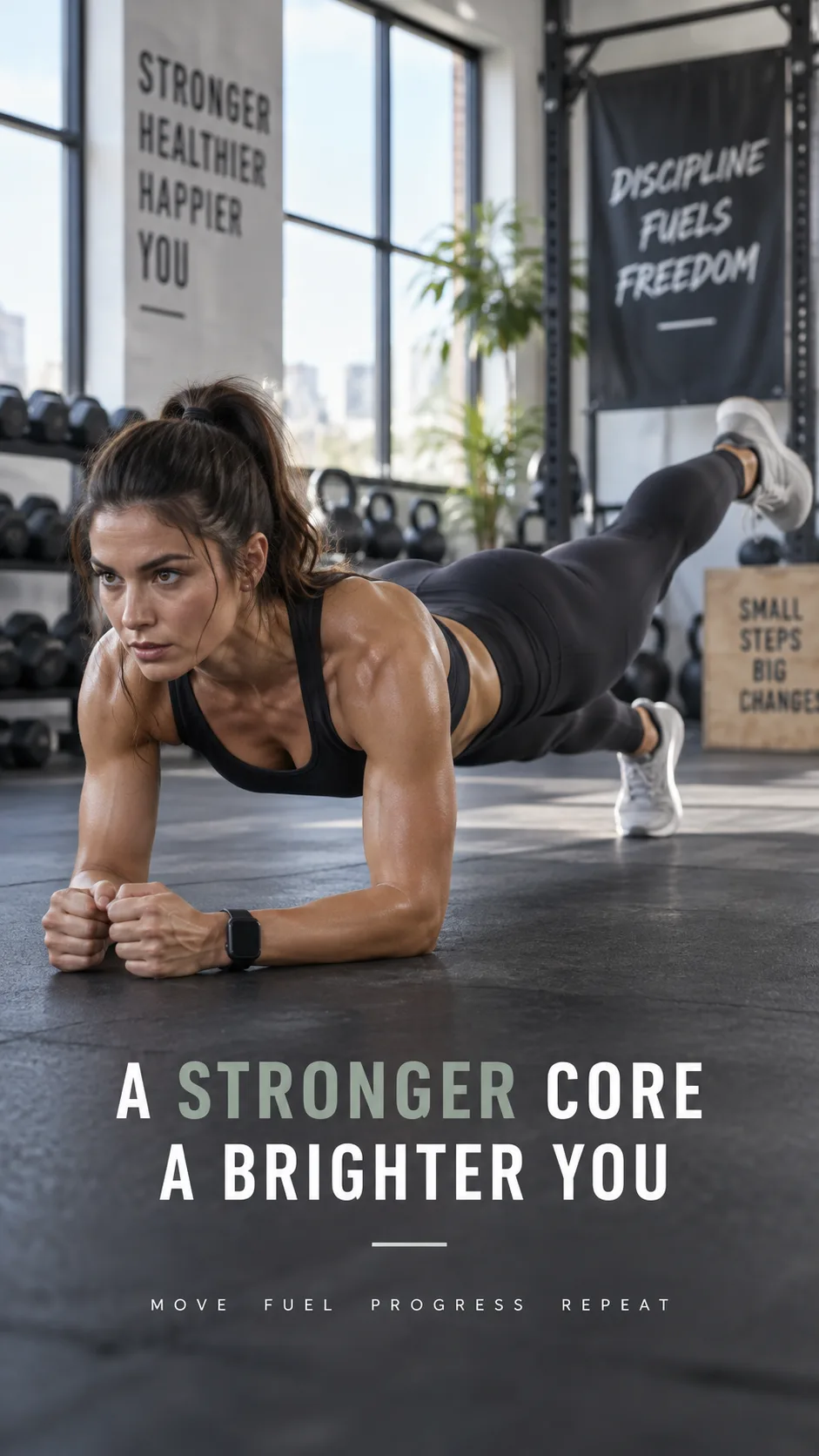
Beyond the injury risk, crunches only train your core in one plane of motion: sagittal flexion. Real life (and real sports) demand that your core stabilizes, rotates, and resists movement in EVERY direction. Ever tried catching yourself from slipping on ice? That’s anti-rotation and anti-lateral-flexion working together. Crunches don’t prepare you for that.
The smarter approach: train your core the way it actually functions, as a stabilizer, a force transferor, and a protector of your spine. These 9 exercises do exactly that.
The 9 best abs workout moves at the gym
I’ve organized these from most accessible to most challenging. If you’re newer to core training, start with the first few and work your way up. Each exercise targets your abs and surrounding core muscles in a way that crunches simply can’t touch.
1. Dead Bug
Don’t let the goofy name fool you. The dead bug is one of the most effective anti-extension exercises you can do. It teaches your deep core muscles to fire while your limbs move independently, which is basically what happens during every athletic movement.
- Lie on your back with arms extended toward the ceiling and knees bent at 90 degrees
- Press your lower back firmly into the floor. This is non-negotiable
- Slowly extend your right arm overhead while straightening your left leg toward the floor
- Return to start and repeat on the opposite side
- Perform 3 sets of 8-10 reps per side
Pro tip: If your lower back arches off the floor at any point, you’ve gone too far. Reduce your range of motion until you build the strength to maintain that flat-back position. Ego has no place here.
2. Pallof Press
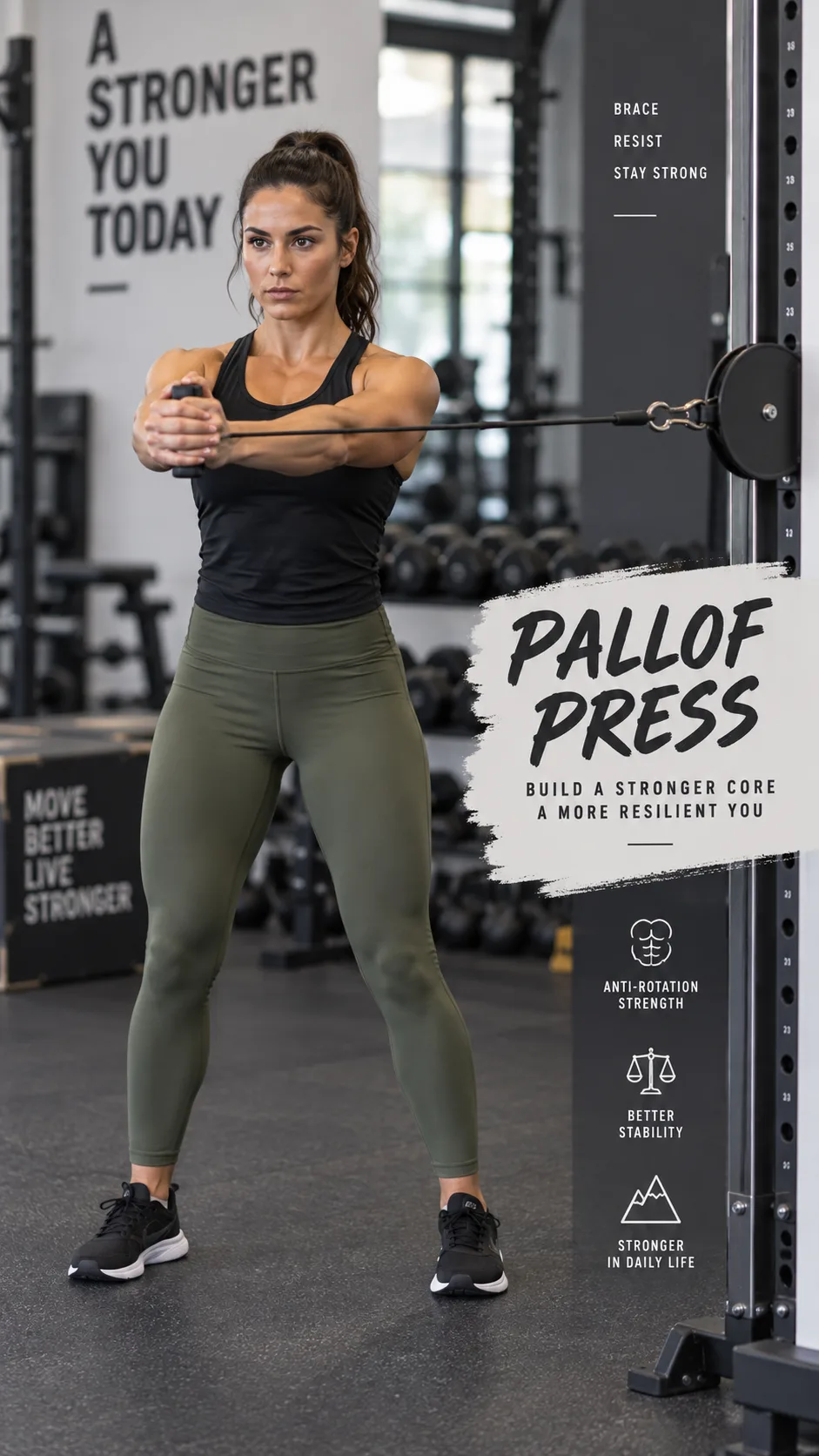
Ever heard of anti-rotation training? The Pallof press is its poster child. You stand sideways to a cable machine and press a handle straight out from your chest while your core fights like crazy to keep you from rotating. It’s sneakily brutal.
- Set a cable machine to chest height with a D-handle attachment
- Stand perpendicular to the machine, holding the handle at your sternum with both hands
- Brace your core and press the handle straight out in front of you
- Hold for 2-3 seconds, then bring it back to your chest
- Perform 3 sets of 10-12 reps per side
Why do I love this exercise so much? Because it trains your obliques and transverse abdominis in a way that directly transfers to rotational sports, lifting, and everyday movement. If you only add one new core exercise to your gym routine, make it this one.
3. Ab Wheel Rollout
This one humbles people FAST. The ab wheel rollout challenges your entire anterior core to resist extension as you roll forward. It’s essentially a moving plank on steroids, and your abs will feel every inch of it.
- Kneel on a mat and grip the ab wheel with both hands
- Brace your core as if someone’s about to punch you in the stomach
- Slowly roll the wheel forward, extending your body as far as you can control
- Pull yourself back to the starting position using your abs (NOT your hip flexors)
- Perform 3 sets of 6-10 reps
Important: Most people mess this up by letting their hips sag and lower back hyperextend. If you can’t maintain a neutral spine through the full range, shorten your rollout distance. Build up gradually. Your spine will thank you.
4. Hanging Leg Raise
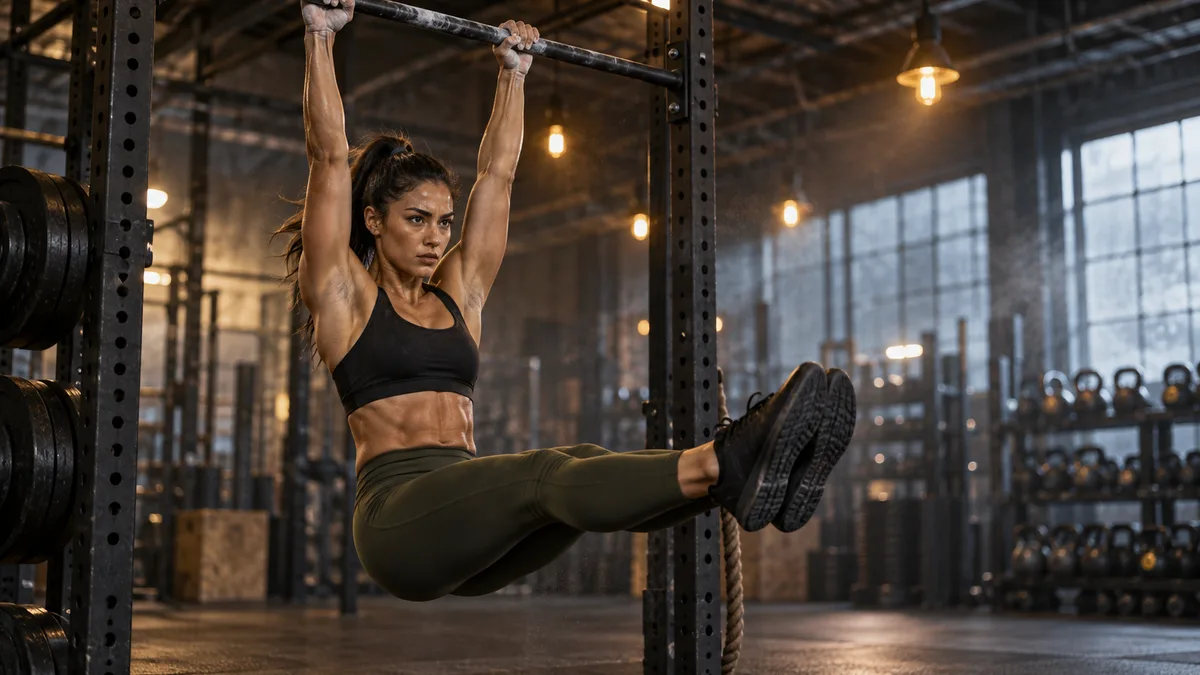
Want to know how to spot someone with genuinely strong abs at the gym? Watch if they can do strict hanging leg raises without swinging like a pendulum. This exercise targets your lower abs and hip flexors while demanding serious grip strength as a bonus.
- Hang from a pull-up bar with an overhand grip, shoulders engaged (don’t just dangle)
- Keep your legs straight and raise them until they’re parallel to the floor, or higher if you can
- Lower them slowly with control. The eccentric is where the magic happens
- Perform 3 sets of 8-12 reps
Can’t do straight legs yet? Start with hanging knee raises and progress from there. Absolutely no shame in that. I spent months on knee raises before I could do the full version cleanly. Consistency beats ego every single time.
5. Cable Woodchop
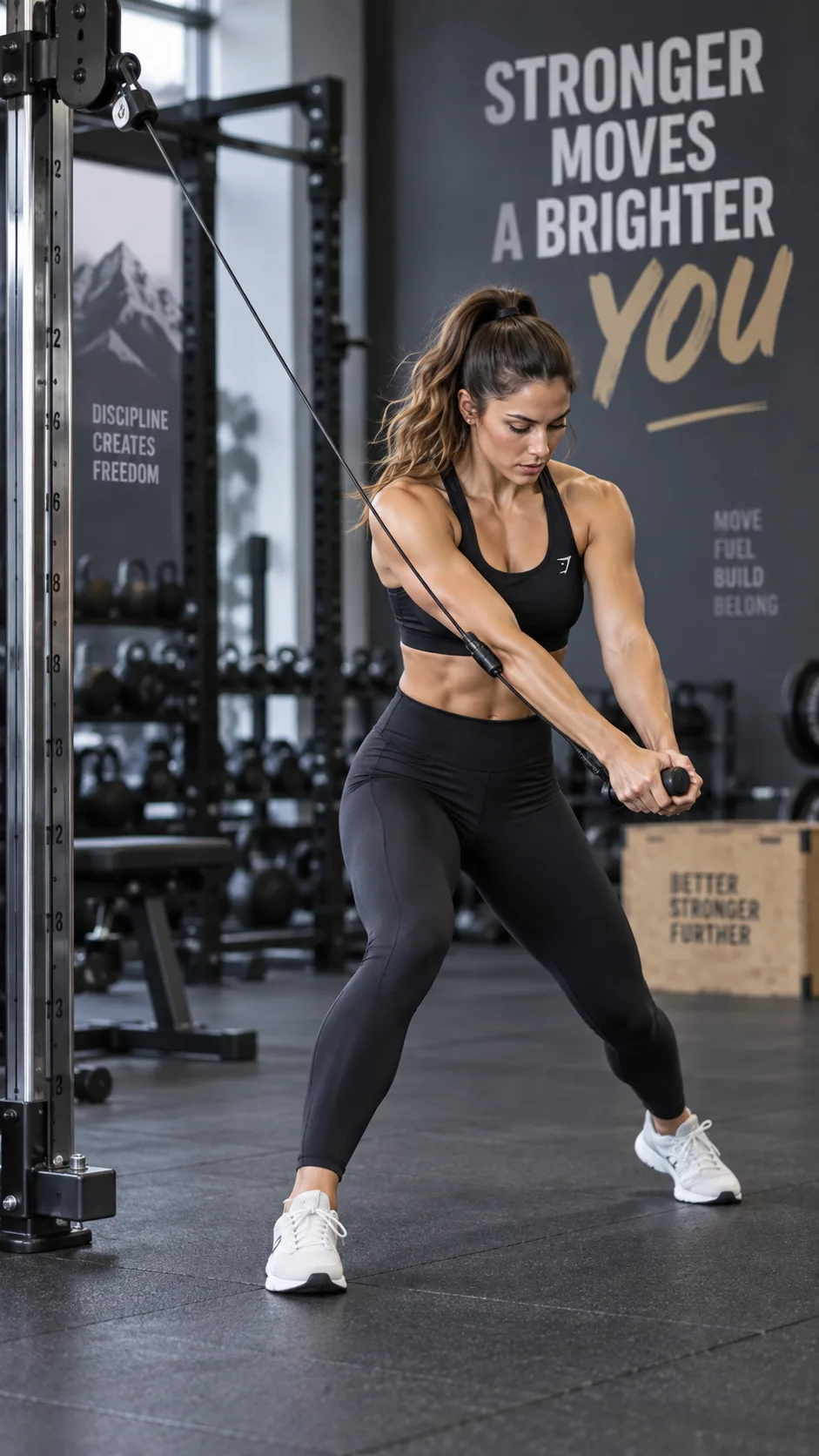
Your core rotates. Shocking, I know. But if you never train rotational movements, you’re leaving a massive gap in your core development. The cable woodchop fills that gap beautifully, and it feels surprisingly athletic.
- Set the cable to the highest position with a rope or handle attachment
- Stand sideways to the machine with feet shoulder-width apart
- Pull the cable diagonally across your body from high to low, rotating through your thoracic spine
- Control the return. Don’t let the weight stack yank you back
- Perform 3 sets of 10-12 reps per side
Remember this cue: Your hips should stay relatively stable while your upper body rotates. Think of your core as the engine driving the movement, not your arms. Your arms are just along for the ride.
6. Farmer’s Walk
Wait, walking is an abs exercise? You bet it is. The farmer’s walk (or farmer’s carry) forces your entire core to stabilize under heavy load while you move. It hammers your obliques, deep stabilizers, grip, traps, and basically everything else. It’s the exercise equivalent of a buy-one-get-ten-free deal.
- Grab the heaviest dumbbells or kettlebells you can carry with good posture
- Stand tall: chest up, shoulders back, core braced
- Walk in a controlled, steady pace for 30-50 meters (or 30-45 seconds)
- Perform 3-4 sets with 60-90 seconds rest between sets
In my opinion, farmer’s walks are the most underrated core exercise in any gym. They build the kind of real-world, functional core strength that makes everything else easier, from deadlifts to carrying groceries up three flights of stairs.
7. Cable Crunch (Yes, Really)
“Hold on, I thought you said no crunches!” Fair point. But the cable crunch is fundamentally different from the floor crunch everyone dreads. You’re training spinal flexion against resistance in a kneeling position, which gives you far better loading control and actually challenges your abs through their full contractile range.
- Kneel in front of a high cable with a rope attachment behind your head
- Hold the rope at the sides of your head. It stays in the same position throughout
- Crunch DOWN by flexing your spine, driving your elbows toward your knees
- Squeeze at the bottom, then slowly return to the starting position
- Perform 3 sets of 12-15 reps
The biggest mistake people make? Sitting back into their hips instead of actually curling their spine. Your hips shouldn’t move much. Focus on rolling your ribcage toward your pelvis. That’s where the contraction lives.
8. Landmine Rotation
This is one of those exercises that looks simple but absolutely torches your obliques and challenges your rotational control. All you need is a barbell wedged into a corner or a landmine attachment.
- Stand holding the end of the barbell at chest height with both hands, arms extended
- Rotate the barbell in an arc from one hip to the other, pivoting through your feet
- Control the movement. Don’t just swing the bar with momentum
- Perform 3 sets of 8-10 reps per side
This exercise shines for athletes, but it’s equally useful for anyone who wants a core that can generate and absorb rotational force. Think throwing, swinging, or even just twisting to grab something off the back seat of your car without throwing out your back.
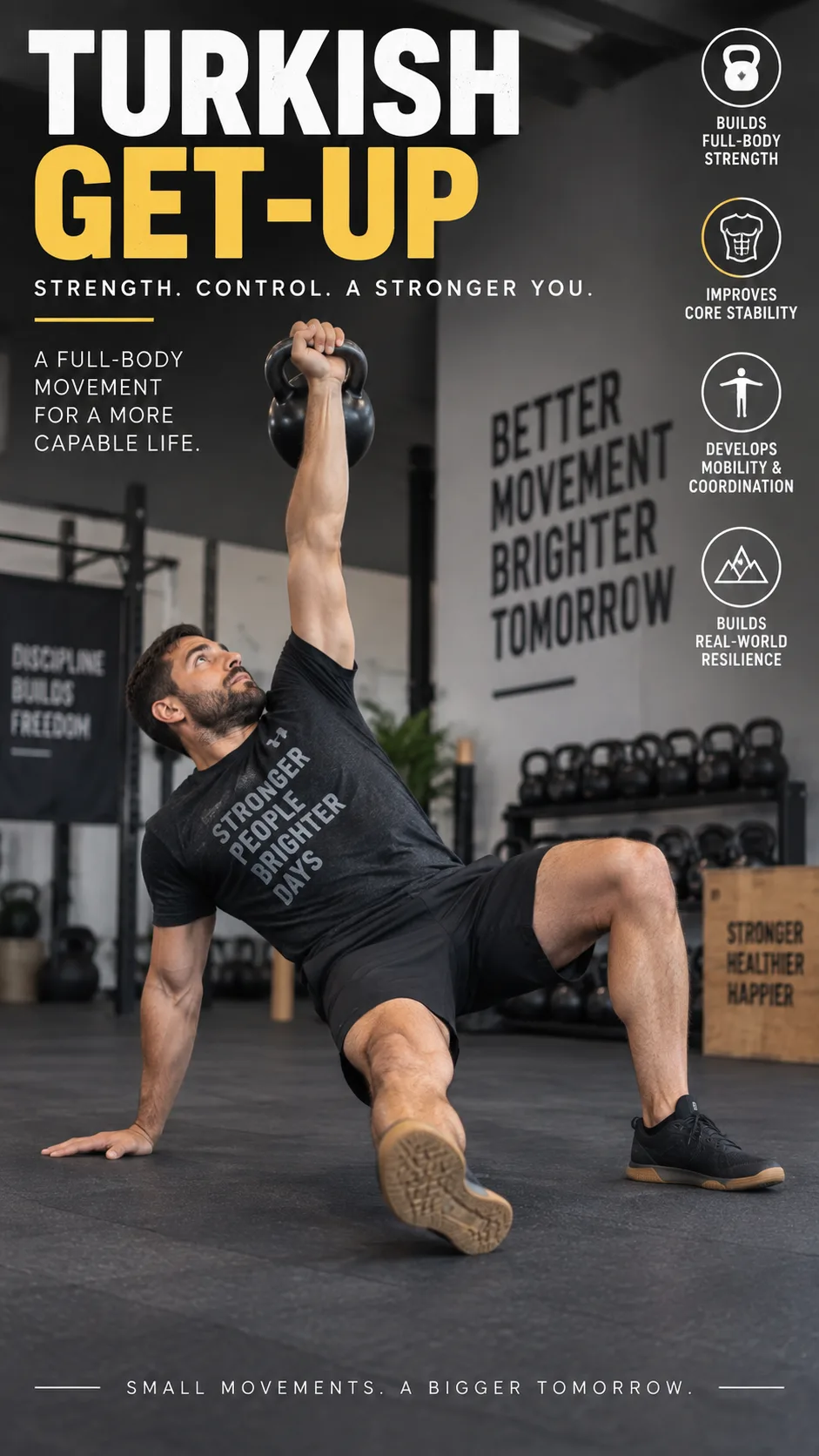
9. Turkish Get-Up
I saved the most complex (and arguably most rewarding) exercise for last. The Turkish get-up is a full-body movement that demands core stability through multiple planes of motion as you transition from lying on the floor to standing, all while holding a weight overhead. It’s the final boss of core exercises.
- Lie on your back holding a kettlebell in your right hand, arm locked out toward the ceiling
- Bend your right knee and plant that foot on the floor
- Roll onto your left elbow, then press up to your left hand
- Bridge your hips up and sweep your left leg underneath you into a kneeling position
- Stand up from the lunge position, keeping the kettlebell overhead the entire time
- Reverse the entire sequence to return to the floor
- Perform 2-3 sets of 3-5 reps per side
Start light. Seriously. I once watched a guy try to learn this with a 24kg kettlebell and it did not end well. Begin with just your shoe balanced on your fist to learn the pattern, then progress to a light kettlebell. The StrongFirst organization has excellent tutorials on proper get-up technique if you want to nail the finer details.
How to program these into your abs workout routine at the gym
Having 9 great exercises means nothing if you don’t know how to use them together. Here’s a practical framework you can follow based on your training schedule.
Option A: Dedicated core day (2x per week)
Pick 4-5 exercises from the list above and perform them as a circuit or in straight sets. Aim for about 15-20 total working sets across your core session. Rotate exercises every 3-4 weeks to keep challenging your muscles in new ways.
A sample session might look like:
- Dead Bug, 3 x 10 per side
- Pallof Press, 3 x 12 per side
- Ab Wheel Rollout, 3 x 8
- Cable Woodchop, 3 x 10 per side
- Hanging Leg Raise, 3 x 10
Option B: Tacked onto other workouts
If you already follow a structured program (push/pull/legs, upper/lower, etc.), add 2-3 core exercises at the end of each session. This approach works well because your core gets frequent stimulus without needing a dedicated day.
For example, after your leg workout at the gym, add dead bugs and Pallof presses. After upper body day, throw in hanging leg raises and landmine rotations. Easy.
Option C: Superset with compound lifts
My personal favorite approach. Pair a core exercise with a compound lift during your rest periods. Doing squats? Superset them with dead bugs. Bench pressing? Pallof presses between sets. You save time and keep your heart rate elevated. Wins all around.
The nutrition factor nobody wants to hear about
I can’t write an article about abs without addressing the elephant in the room. You cannot out-train a bad diet when it comes to visible abs. These 9 exercises will build a genuinely strong, functional core. But if you want to actually SEE that core, your nutrition needs to support fat loss.
The general consensus among sports nutritionists is that most men need to reach roughly 10-15% body fat (and women about 18-23%) before ab definition becomes visible. That’s primarily a nutrition game, not an exercise game. The American Council on Exercise has solid guidelines on healthy body fat percentages if you want specific benchmarks.
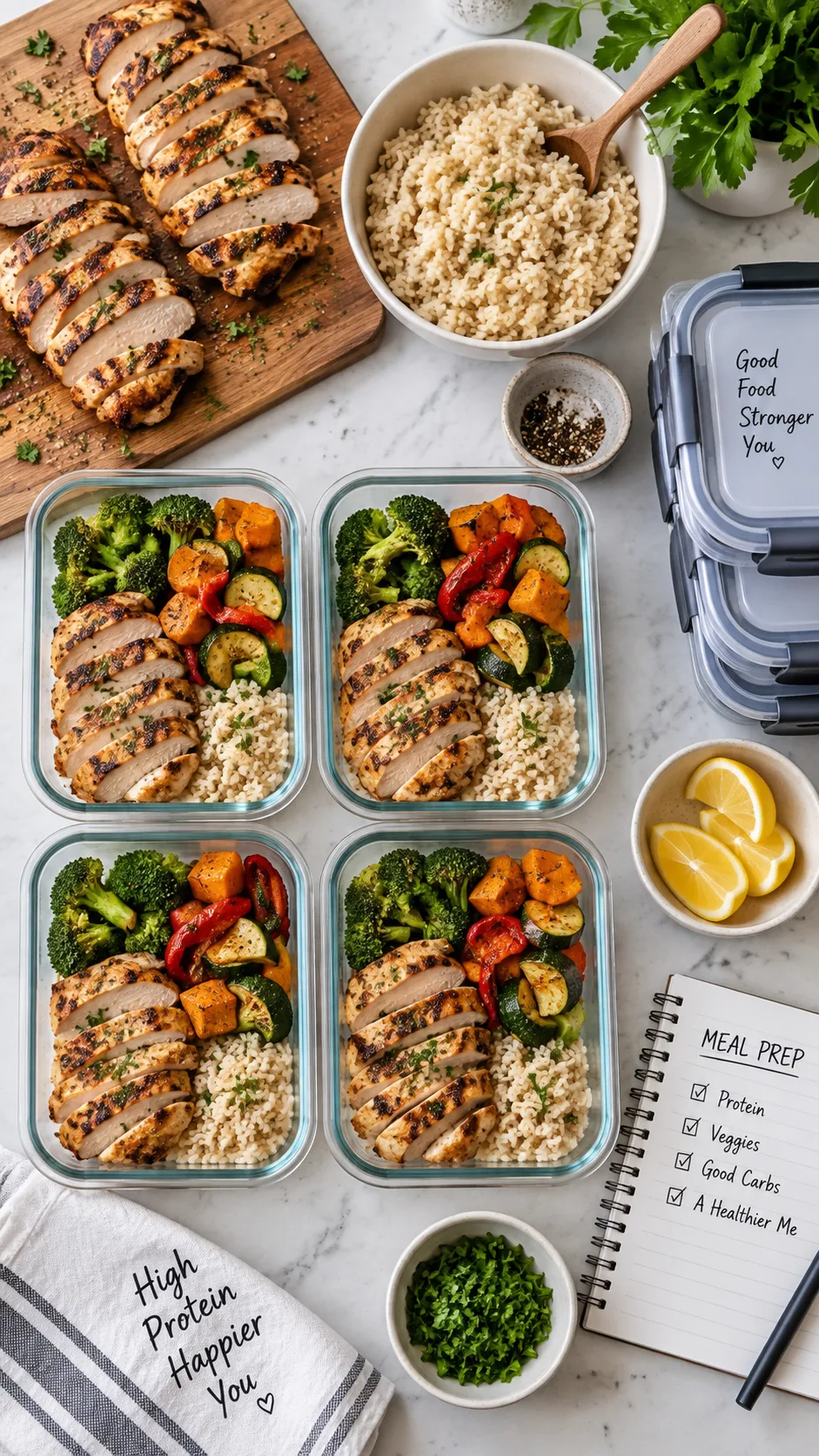
High-protein nutrition plays a huge role here. Protein supports muscle recovery, keeps you fuller longer, and has a higher thermic effect than carbs or fat. If you’re not sure where to start with your protein intake, check out our ultimate 110 grams of protein meal plan for a practical framework you can actually follow.
And if you’re working on overall body recomposition while keeping meals interesting, our guide on high-protein low-carb meal planning is worth bookmarking. Nutrition doesn’t have to be complicated. It just has to be consistent.
Common mistakes that sabotage your core training
Even with the right exercises, people still find creative ways to mess things up. Here are the most common pitfalls I see at the gym, and how to avoid them.
- Going too fast: Core exercises demand CONTROL. If you’re rushing through reps, you’re using momentum instead of muscle. Slow down. Feel every rep.
- Holding your breath: Breathe! Exhale during the exertion phase and inhale during the return. Proper breathing actually improves core activation through intra-abdominal pressure.
- Training abs daily: Your core muscles need recovery just like your chest or legs. 2-4 sessions per week is plenty. More isn’t better. It’s just more.
- Ignoring progressive overload: You add weight to your squats over time, right? Do the same for your core work. Add resistance, reps, or complexity as you get stronger.
- Only training the front: Your lower back extensors are part of your core too. Exercises like the farmer’s walk and Turkish get-up address this, but don’t neglect back extensions and bird dogs either.
How long until you see results?
Real talk? If you’re consistent with these abs workout routines at the gym and you’re eating in a slight caloric deficit with adequate protein, most people notice significant strength improvements within 4-6 weeks. Visible changes? That depends largely on your starting body fat percentage and how dialed in your nutrition is.
I’ve personally seen the biggest visual changes when I combined heavy compound lifts (squats, deadlifts, overhead press) with targeted core work like the exercises above. The compound lifts build overall muscle and boost your metabolism, while the dedicated core work sculpts and strengthens the muscles underneath. Together, they’re an unbeatable combination.
Don’t get discouraged if results take longer than you expected. Building a genuinely strong core, one that performs as well as it looks, is a long game. But it’s a game worth playing.
Your new core strategy
You don’t need to do 500 crunches to build strong, functional abs. In fact, you’re probably better off never doing another floor crunch again. These 9 exercises (dead bugs, Pallof presses, ab wheel rollouts, hanging leg raises, cable woodchops, farmer’s walks, cable crunches, landmine rotations, and Turkish get-ups) cover every function your core actually performs.
Pick 3-5 of them, program them intelligently into your training week, eat enough protein, and stay consistent. That’s the entire formula. No gimmicks, no infomercial gadgets, no “30 days to abs” nonsense.
Your core is the foundation of every movement you make, in the gym and in life. Train it like it matters, because it does. Now get off the floor, step away from the crunch mat, and go build some real core strength.
