

You’ve started workout plans before. You lasted about a week, got busy, and quietly told yourself you’d “restart Monday.” Sound familiar? Here’s the good news: a 30-day full-body workout challenge works differently because it builds consistency into every session, not just on the days you feel motivated.
This one is about building the habit, getting stronger, and proving to yourself that you can actually follow through. Thirty days is long enough to see real change and short enough to stay committed. Getting shredded in a month? That’s not how bodies work. But laying the groundwork for something lasting? That’s exactly the point.
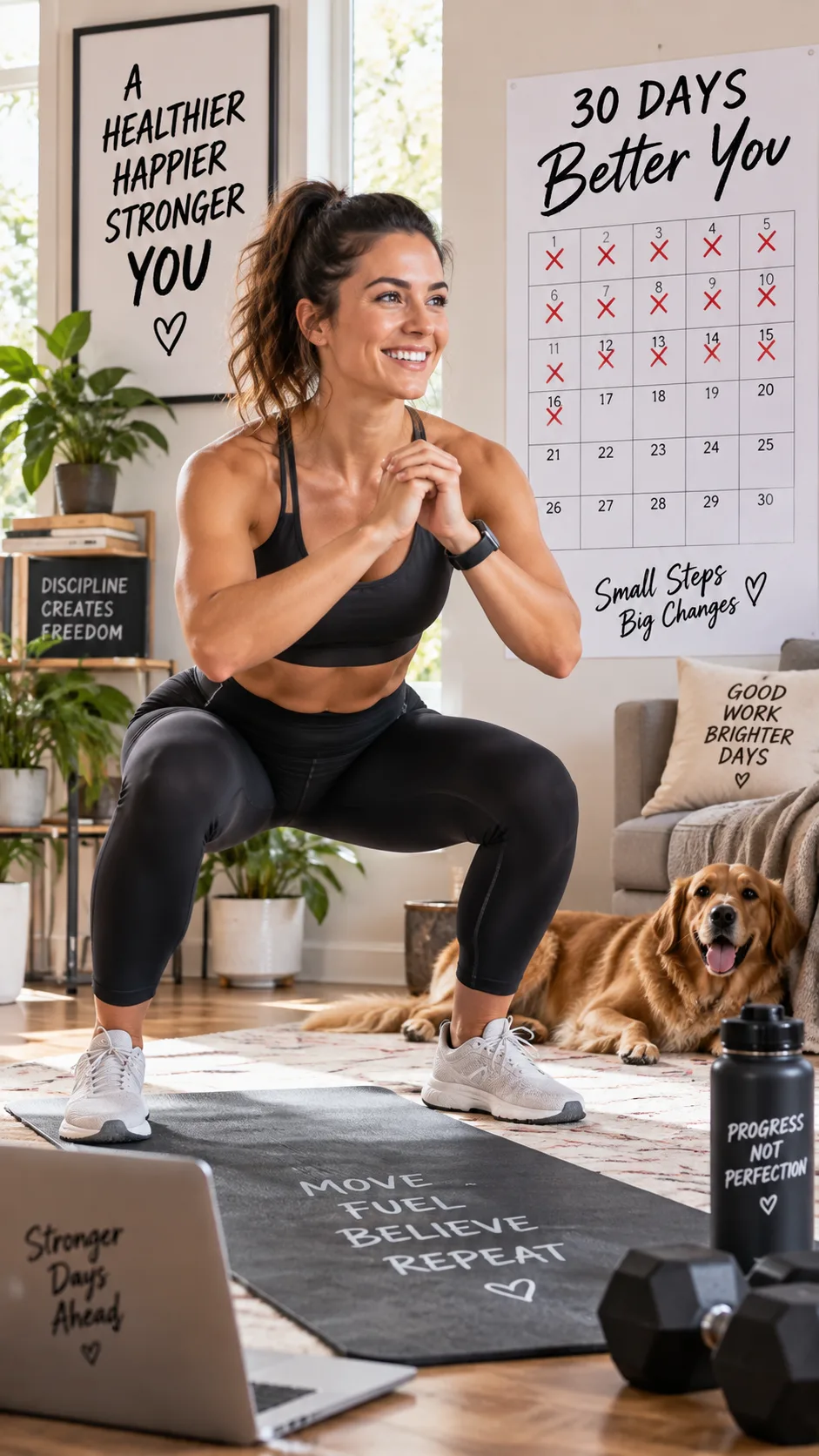
Why 30 days is the sweet spot for building a habit
Research from Harvard Health Publishing shows that consistent repetition over weeks turns a deliberate behavior into an automatic habit. Thirty days gives your brain enough reps to wire the routine in, without burning you out before the magic happens.
You don’t need to overhaul your life overnight. You just need to show up every day, especially the days you genuinely do not want to. That’s the entire point of the challenge. The results don’t come from any single great workout. They come from the streak.
The American College of Sports Medicine recommends at least 150 minutes of moderate activity weekly for healthy adults. A structured 30-day plan gets you well above that number without complicated scheduling or guesswork.
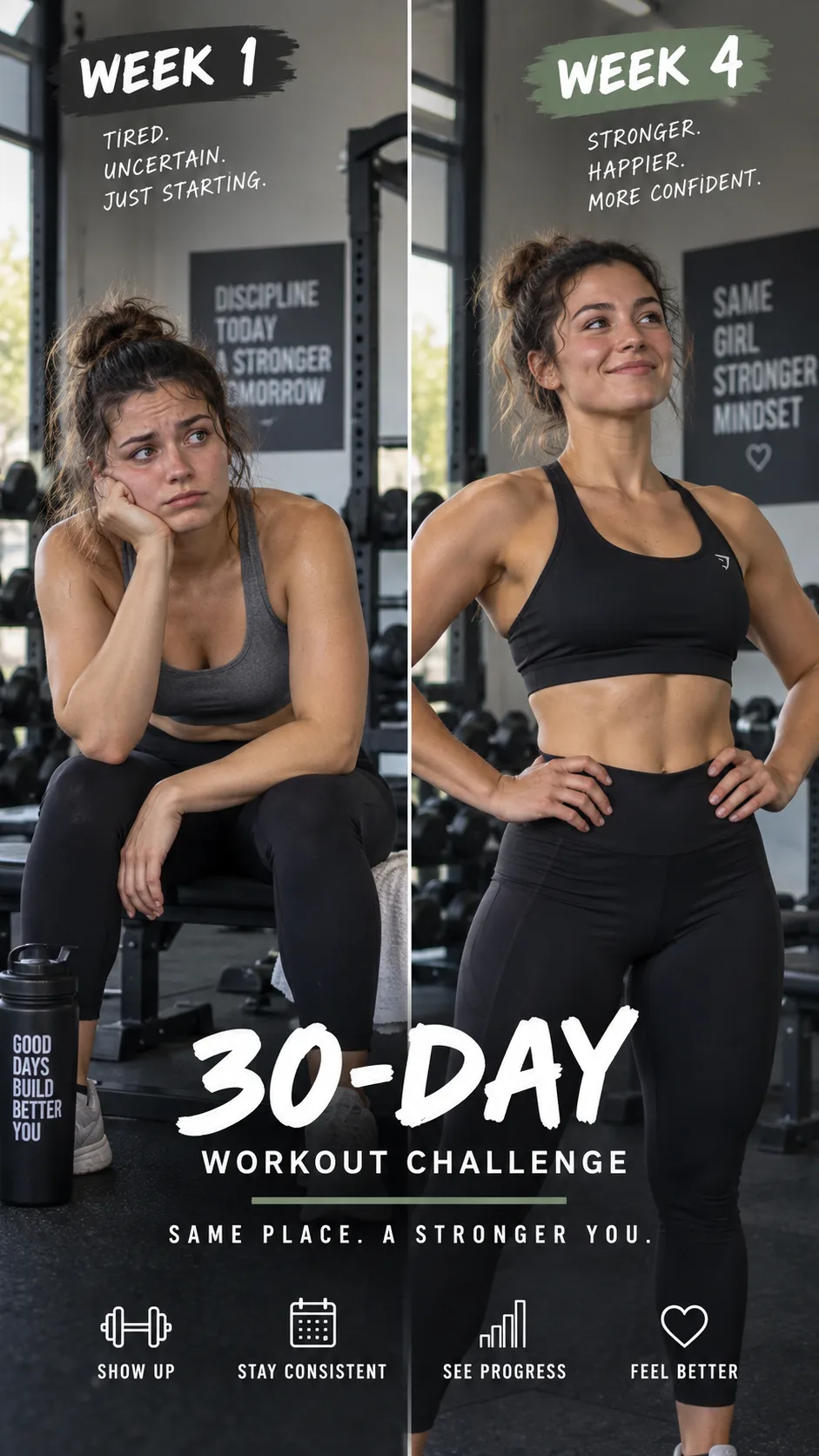
What to expect week by week
Each week of a 30-day workout challenge feels completely different, and knowing that in advance stops you from quitting when week three hits. And it will hit.
Week 1: Foundation
Week one feels surprisingly manageable. Your body is fresh, your motivation runs high, and everything feels exciting. Don’t go too hard here. Most people thrash themselves on day two and spend the rest of the month nursing sore muscles instead of training.
Focus on nailing your form. Learn the movements. Build the routine of showing up at the same time each day. The only goal this week: complete every single session.
Week 2: Building momentum
The initial excitement fades in week two and you start running on discipline instead. Your muscles begin adapting, soreness decreases, and you feel noticeably stronger on movements that hurt last week.
You also notice something interesting: you actually look forward to certain workouts. That’s your brain starting to pair exercise with reward. Lean into it hard.
Week 3: The grind (this is where most people fall off)
IMO, the mental battle in week three is harder than any physical session on the plan. Fatigue accumulates, novelty disappears, and skipping one workout feels incredibly reasonable. This is the most important week to push through.
Remind yourself why you started. Look at your week one and two data. And remember: one missed session doesn’t end the challenge, but telling yourself “I’ll restart next month” absolutely does.
Week 4: Peak performance
Week four feels like a different planet compared to week one. You’re stronger, your stamina has genuinely improved, and the workouts that flattened you on day one feel controllable. This is where the real transformation happens, in your body, and in how you see yourself.
You start to feel like a person who works out. That identity shift carries further than any fitness result.
Your 30-day full-body workout schedule
The plan uses a push/pull/legs plus full-body rotation to hit every muscle group without grinding any single area into the ground. One full rest day per week is non-negotiable. Your body needs it.
- Monday: Upper body push (chest, shoulders, triceps)
- Tuesday: Lower body (quads, hamstrings, glutes, calves)
- Wednesday: Upper body pull (back, biceps, plus core work)
- Thursday: Active recovery (walking, yoga, or mobility work)
- Friday: Full-body HIIT circuit
- Saturday: Full-body strength training
- Sunday: Complete rest
Each session runs 30 to 45 minutes. You don’t need a gym. The core plan requires zero equipment, though a set of dumbbells and a resistance band will accelerate your results significantly.
The exercises built into this plan
The plan centers on compound movements, exercises that work multiple muscle groups at once. These deliver the best results per minute of effort, which matters when you commit to 30 consecutive days.
Lower body essentials
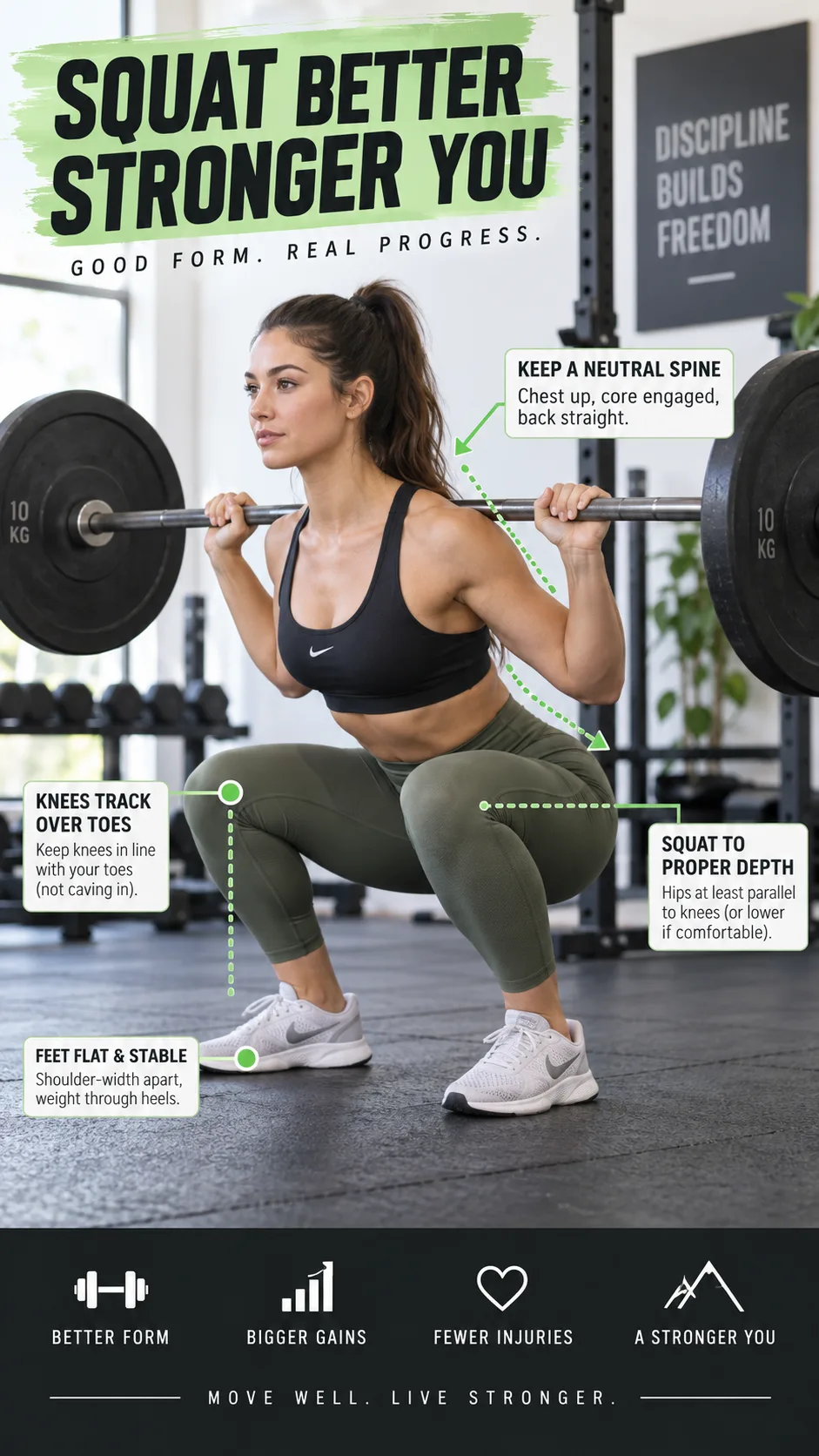
- Squats: the single most effective lower body movement, hitting quads, hamstrings, and glutes simultaneously
- Romanian deadlifts: builds hamstring and lower back strength most people badly need
- Reverse lunges: easier on the knees than forward lunges with equal muscle activation
- Glute bridges: activates the glutes more directly than almost any other exercise
- Calf raises: simple and consistently neglected, so add them every leg day
For a deeper breakdown of lower body training, this guide on good leg workouts at the gym covers the most effective exercises for building real lower body strength.
Upper body must-haves
- Push-ups: the classic exists for good reason. Modify on your knees at first if needed
- Dumbbell rows: builds the back muscles that fix posture and prevent injury
- Overhead press: develops shoulder strength and stability in one clean movement
- Bicep curls and tricep dips: arm isolation that complements compound pressing and pulling
Core work
- Plank holds: time-based, scalable, and genuinely brutal when done right
- Dead bugs: trains anti-rotation and deep core stability that transfer to every other lift
- Bicycle crunches: hits the rectus abdominis and obliques in the same movement
- Mountain climbers: core strength and cardio conditioning packed into one exercise
Progressive overload: the principle that stops plateaus
Ever wonder why some people train for years and never change? They do the same workout at the same intensity, forever. Progressive overload prevents that, and it’s baked into this 30-day plan from day one.
Progressive overload means you make each workout slightly harder over time. Add a rep, increase the weight by 2.5kg, cut your rest by 10 seconds, or clean up your technique. Small increases stack into dramatic long-term results. Mayo Clinic identifies progressively increasing workout intensity as one of the most evidence-backed methods for continued fitness improvement.
Here’s how the 30 days progressively build:
- Week 1: Learn the movements, 3 sets of 8 to 10 reps at moderate weight
- Week 2: Add 1 to 2 reps per set or a small weight increase on main lifts
- Week 3: Move to 4 sets per exercise; reduce rest periods by 15 to 20 seconds
- Week 4: Push to your working maximum on main lifts; test your personal bests
How to fuel your 30-day challenge
You can’t out-train poor nutrition. That’s not a cliche, it’s just math. Food is what lets your body recover, rebuild, and show up strong for the next session.
Protein sits at the top of the priority list during any workout challenge. Aim for 1.6 to 2.2g of protein per kilogram of body weight each day to support muscle repair and growth. At 70kg, that means roughly 112 to 154g of protein daily.
Hitting those numbers consistently without overthinking it? This high protein weekly meal plan lays out a practical week of eating that actually works without requiring your entire Sunday in the kitchen.
- Eat a protein-rich meal or snack within 90 minutes of finishing your workout
- Aim for 2 to 3 litres of water daily, and more on hard training days
- Don’t cut calories dramatically mid-challenge; your body needs fuel to perform and rebuild
- Prioritize whole foods: lean proteins, complex carbs, healthy fats, and vegetables at most meals
Rest, recovery, and not burning out
Rest days aren’t lazy days. Muscle growth happens during recovery, not during the workout itself. Training creates micro-tears in muscle fibers. Rest gives your body the time to repair those fibers stronger than before.
Your active recovery Thursday should look like this:
- A 20 to 30 minute walk at a pace where you can hold a conversation
- Gentle yoga or targeted mobility work for tight areas
- Foam rolling through major muscle groups (quads, hamstrings, lats, and calves)
- 10 minutes of focused stretching or breathwork before bed
Sleep matters as much as training itself. The Sleep Foundation reports that athletes who sleep 8 or more hours per night show significantly better performance, faster reaction times, and lower injury rates. There is no shortcut around sleep. Just get more of it.
Tips to actually finish what you start
FYI, motivation gets you started but systems keep you going. Here’s what actually works for people who complete 30-day challenges instead of abandoning them mid-week-two.
- Schedule workouts like appointments. Block the time in your calendar. Treat it like a meeting you cannot cancel on yourself.
- Lay out your kit the night before. Eliminate every possible friction point between you and the workout.
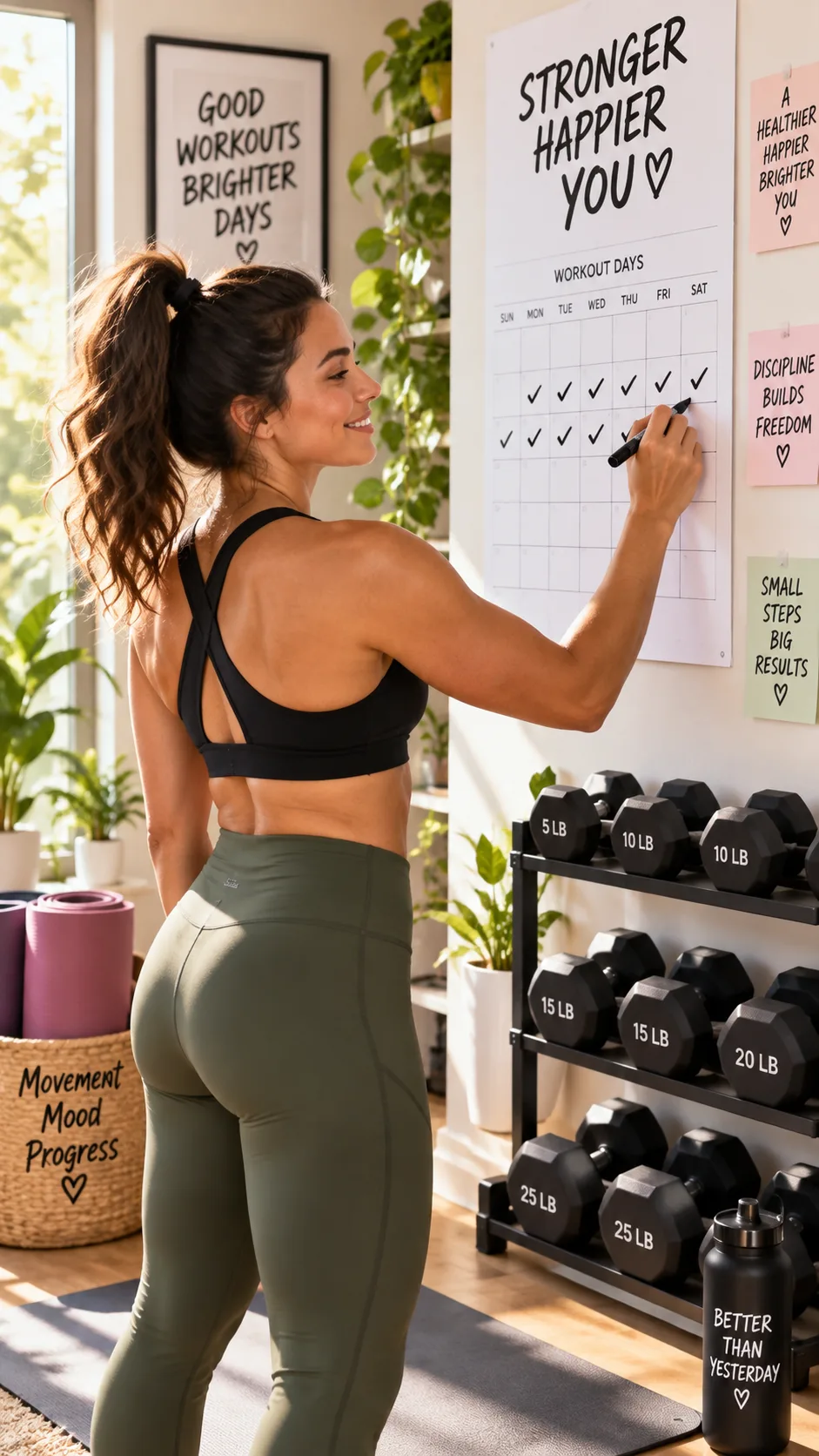
- Track your sessions visually. Use a habit tracker app, a notebook, or just cross off days on a printed calendar. Visible progress creates momentum.
- Find an accountability partner. Tell someone you’re doing this. Doing it alongside someone else multiplies your chances of finishing.
- Build a strong playlist. Music has a genuinely measurable positive effect on workout performance and enjoyment.
- Plan for imperfect weeks. Decide in advance that one missed session doesn’t end the challenge, but two consecutive misses means you restart the next morning without negotiation.
- Celebrate small wins. Completing week one matters. Surviving week three matters more. Acknowledge both.
Track progress without obsessing over the scale
Weight is a terrible primary metric during a workout challenge. When you build muscle and lose fat at the same time, the scale often barely moves, even as your body composition improves substantially. Don’t let the scale tell you a story that isn’t true.
These metrics give you a clearer, more honest picture:
- Progress photos: Front, side, and back shots on day 1, day 15, and day 30
- Performance numbers: Max push-ups, squat weight, plank hold time. Track these weekly
- Body measurements: Waist, hips, arms, and thighs capture changes the scale misses entirely
- Energy and sleep quality: Do you wake up feeling better? Does physical effort feel easier? Those improvements are real
Progress feels a lot more satisfying when you measure things that actually reflect what changes. And things will change. 🙂
What comes after day 30
You finished. Now what? The honest answer: the 30-day challenge is a launchpad, not the destination. The real win is that you built the habit and proved to yourself you can show up consistently over time.
- Repeat the plan at higher intensity or heavier weights to keep progressing
- Move to a longer structured program. A 12-week strength or hypertrophy plan builds naturally from here
- Add a new physical goal. Running, swimming, rock climbing, or any sport you’ve been curious about
- Maintain your base with 3 to 4 sessions per week as your permanent new normal
Wrapping it up
A 30-day full-body workout challenge works because it’s long enough to produce real results and short enough to genuinely commit to. You don’t need perfect conditions, a premium gym, or an expensive training program.
You need a solid plan, a willingness to push through week three when your brain invents a hundred reasons to skip, and the understanding that consistency beats perfection every single time. Start on day one. Build on it every day after that.
By day 30, you’ll be fitter, and you’ll be someone who finishes what they start. That carries well beyond any workout plan.
Ready to make sure your nutrition keeps pace with your training? This macro meal plan guide shows you exactly how to hit your numbers every day without losing your mind over tracking. Now go start day one.
