
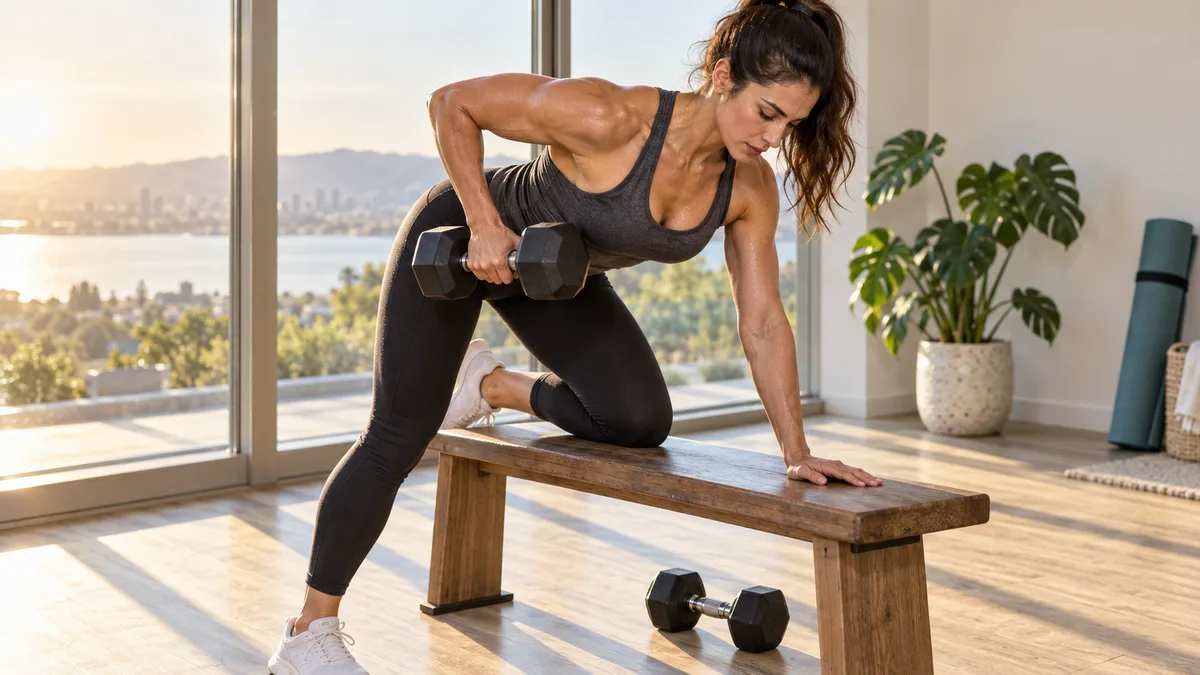
Your back does more work than you probably give it credit for. It holds you upright, powers every pull movement, and it’s one of the first things people notice when you walk away. Yet most women skip back day entirely. Sound familiar?
The good part: you don’t need a cable machine or a gym membership to build a strong, defined upper back. A pair of dumbbells and a bit of floor space will do the job. These 7 moves target every major muscle group across your upper and mid back, and they work whether you’re a complete beginner or already training regularly.
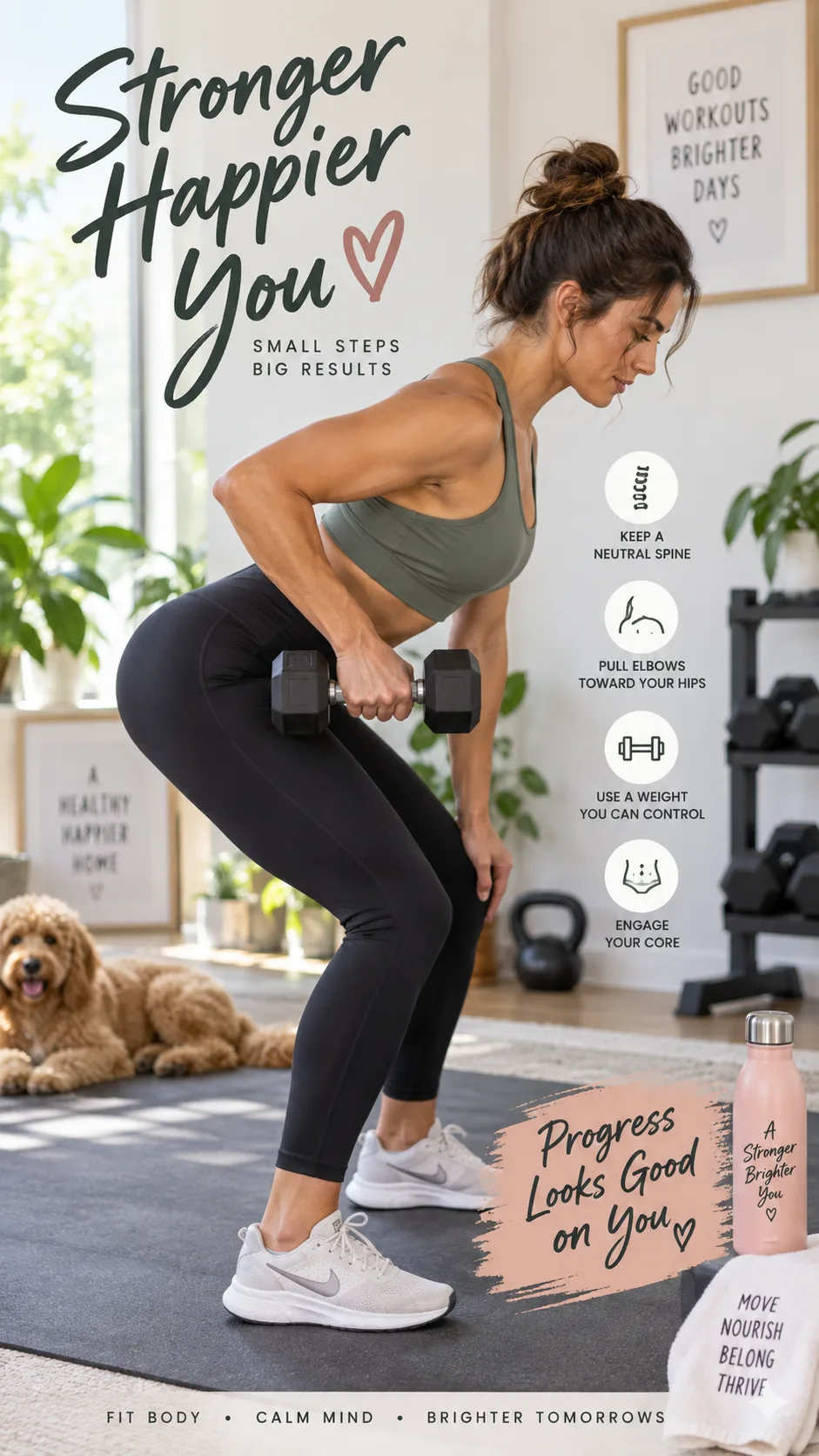
Why women should prioritize back training
A weak back is one of the leading causes of poor posture, neck tension, and chronic shoulder pain in women. Spending hours at a desk or hunched over a phone shortens your chest muscles and lets your upper back go completely slack.
Training your back counteracts all of that. It builds the rhomboids, trapezius, latissimus dorsi, and rear deltoids, the muscles responsible for pulling your shoulders back and keeping your spine healthy. A sculpted back also looks incredible in everything from tanks to backless dresses.
According to the American Council on Exercise (ACE), compound pulling movements like rows activate significantly more muscle fibers than isolation exercises, making them the most efficient use of your training time.
If you want to build a complete upper body program, check out this guide on arm and back workout for women that requires no equipment. It pairs perfectly with this dumbbell routine.
What you need before you start
- A pair of dumbbells (ideally two different weights: lighter for isolation work, heavier for rows)
- A flat surface or a bench for supported exercises
- A resistance band (optional but useful for warm-up)
- About 30 to 45 minutes of uninterrupted time
Not sure what weight to start with? For rows and compound moves, aim for a weight where the last 2 reps of each set feel genuinely hard. For reverse flyes and isolation work, go lighter. Your form will fall apart faster than you think with heavy weight on those.
The 7-move dumbbell back workout
Run through this as a straight set workout (complete all sets of one exercise before moving on) or as two supersets for a time-efficient training session. Rest 60-90 seconds between sets.
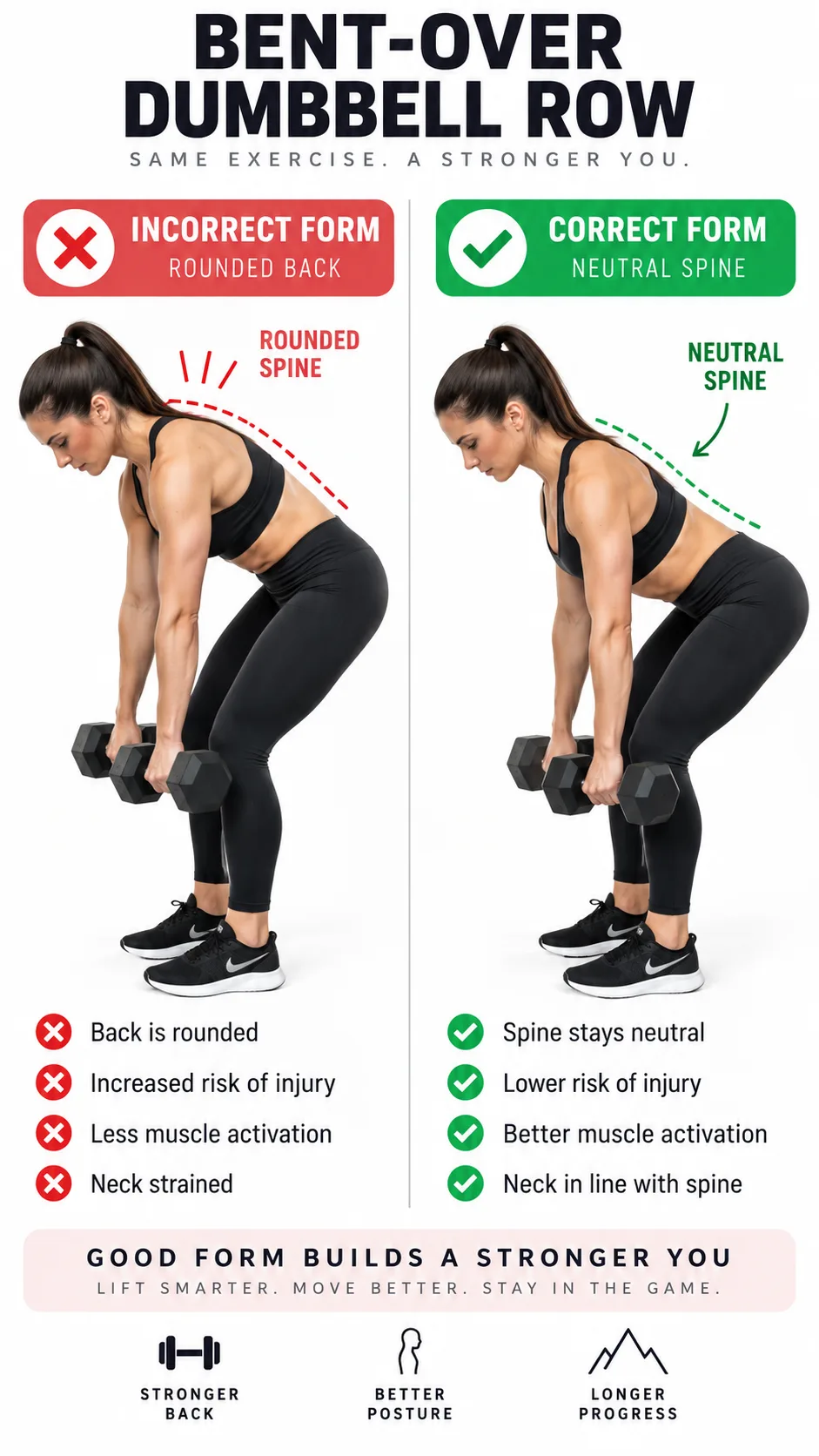
Move 1: Bent-over dumbbell row
Sets: 3 | Reps: 10-12 | Target: Lats, Rhomboids, Mid Traps
This is the best dumbbell back exercise you can do. Stand with feet hip-width apart, hinge at the hips until your torso sits at about 45 degrees, and let the dumbbells hang in front of you with palms facing in. Row both dumbbells toward your lower ribcage, squeezing your shoulder blades together at the top. Lower with control.
The biggest mistake people make here is turning it into a bicep curl. Keep your elbows close to your body and initiate the pull from your back. Think about trying to put your elbows in your back pockets.
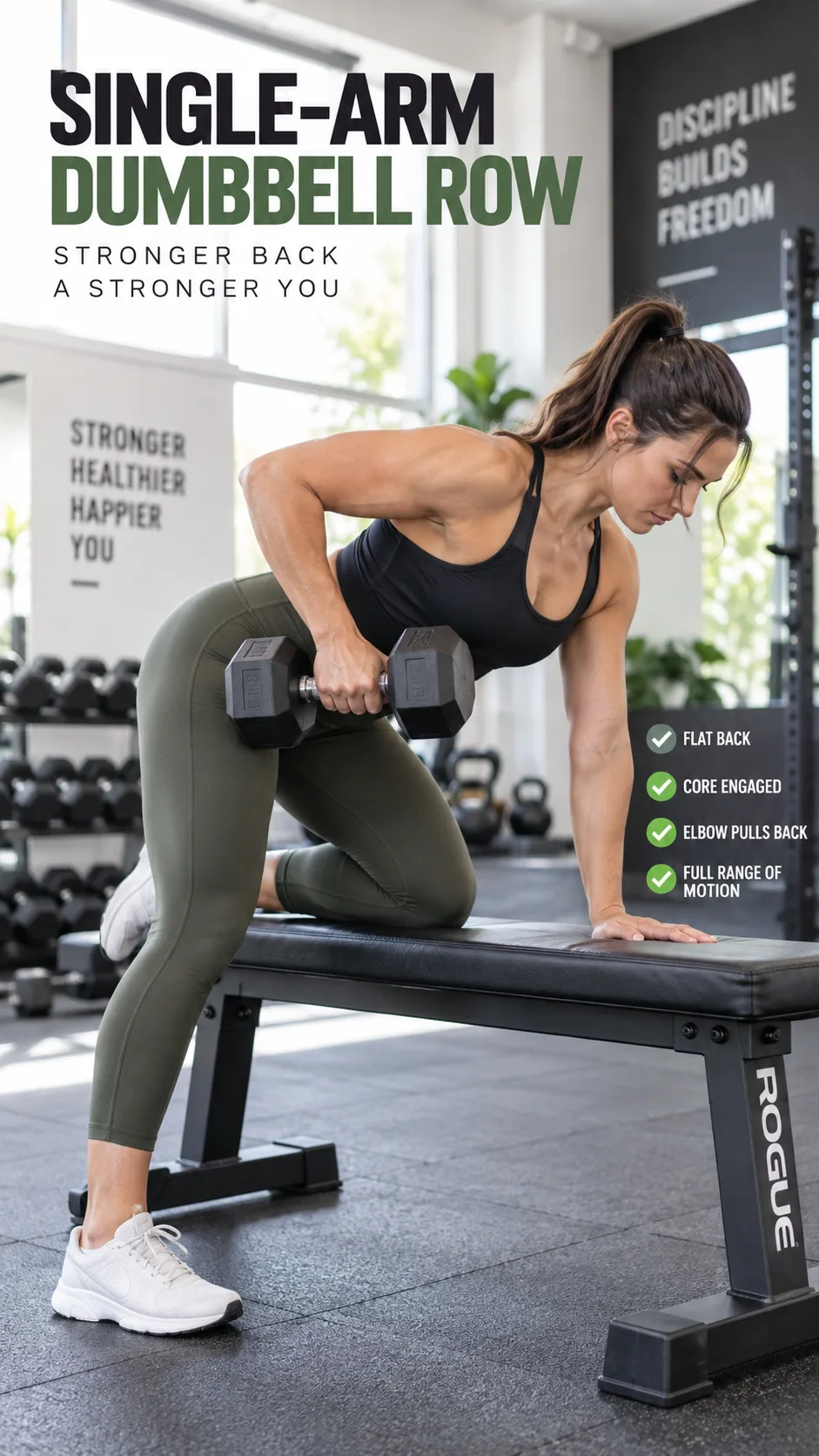
Move 2: Single-arm dumbbell row
Sets: 3 | Reps: 10-12 each side | Target: Lats, Rhomboids, Rear Delts
Place one hand and the same-side knee on a bench (or a sturdy chair) for support. Let your working arm hang straight down, dumbbell in hand. Drive your elbow up and back, pulling the weight toward your hip. Think of it as starting a lawn mower: controlled, powerful, deliberate.
The single-arm variation lets you really isolate each side and correct any muscle imbalances. Most people are noticeably stronger on their dominant side, and this exercise will even that out over time.
Move 3: Dumbbell Romanian deadlift
Sets: 3 | Reps: 10-12 | Target: Erector Spinae, Glutes, Hamstrings, Lower Traps
Hold a dumbbell in each hand in front of your thighs. Push your hips back (not down!) and hinge forward, letting the dumbbells slide down your legs while keeping your back flat. You should feel a deep stretch in your hamstrings before reversing the movement by driving your hips forward.
This move pulls double duty: it trains your lower back and erector spinae while also hitting your posterior chain. That makes it a great choice for anyone who wants to build strength from the hips up. According to Healthline, the Romanian deadlift is one of the most effective exercises for posterior chain development with minimal injury risk when you perform it correctly.
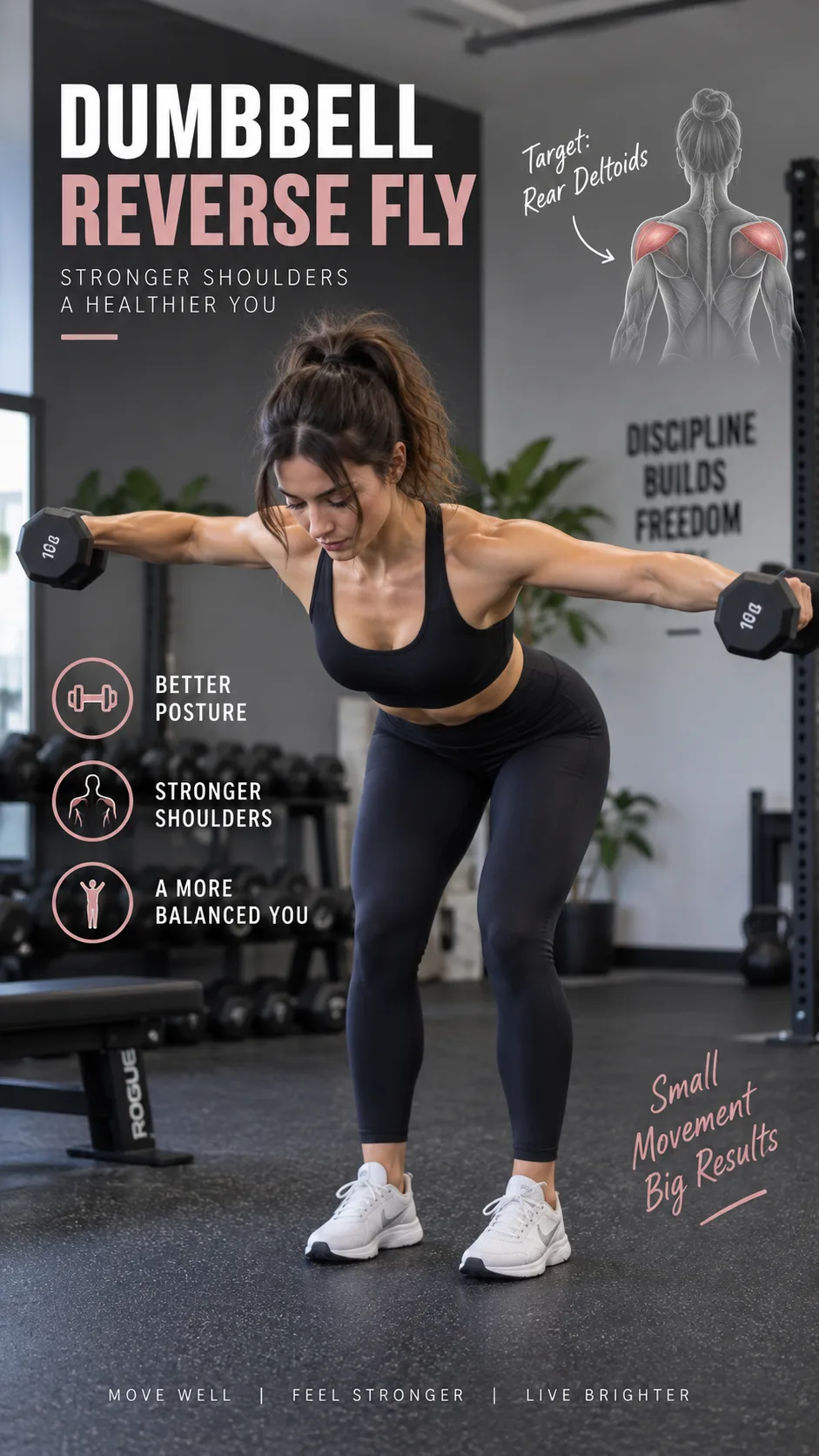
Move 4: Dumbbell reverse fly
Sets: 3 | Reps: 12-15 | Target: Rear Deltoids, Rhomboids, Mid Traps
Hinge forward at the hips, dumbbells hanging below you with a slight bend in your elbows. Open your arms out to the sides in a wide arc, squeeze your shoulder blades at the top, then lower slowly. This is not a speed exercise. Slow it down.
The rear deltoid is chronically underworked in most women’s training, which is exactly why so many people end up with rounded shoulders. This move fixes that. Use a lighter weight than you think you need. Ego has no place in a reverse fly.
Move 5: Renegade row
Sets: 3 | Reps: 8-10 each side | Target: Lats, Rhomboids, Core, Obliques
Start in a high plank position with a dumbbell in each hand. Without rotating your hips, row one dumbbell up toward your ribcage while the other hand stays grounded. Alternate sides. Your core works overtime to prevent rotation, and that’s exactly the point.
This move is sneaky hard. Your back, core, and shoulders all fire at once, making it one of the highest-return exercises in this entire list. If your hips keep swinging, widen your foot stance for a more stable base.
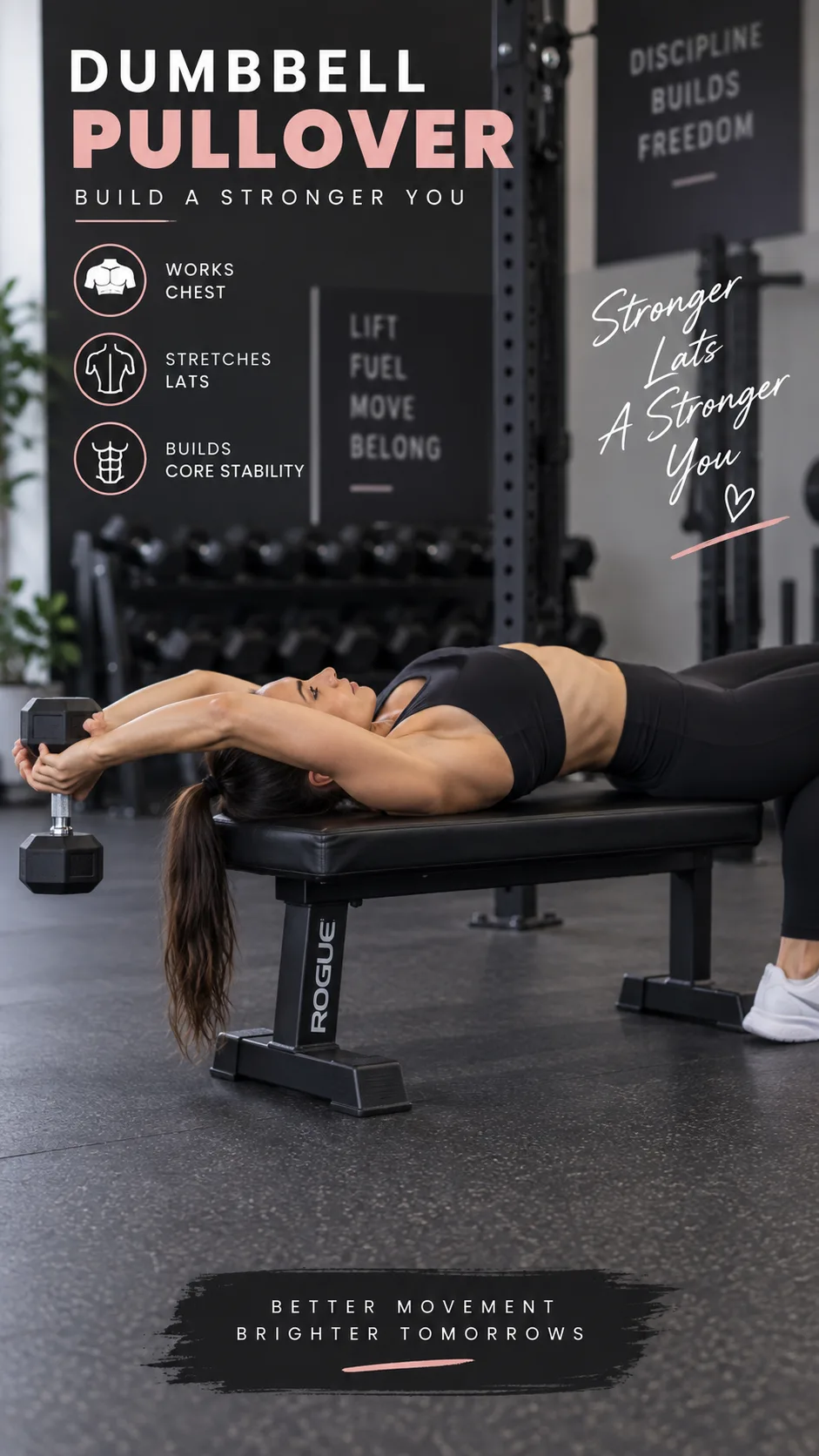
Move 6: Dumbbell pullover
Sets: 3 | Reps: 10-12 | Target: Lats, Serratus Anterior, Triceps, Chest
Lie on your back on a bench (or the floor with knees bent). Hold one dumbbell with both hands directly above your chest. Lower it back over your head in a slow arc, feeling a deep stretch through your lats and ribcage, then pull it back to the starting position.
The dumbbell pullover is old school. Bodybuilders have sworn by it for decades, and it remains one of the few exercises that directly trains the lat through a full range of motion without a cable or pull-up bar. Most people skip it, which honestly makes it even better for those who don’t.
Move 7: Dumbbell shrug to external rotation
Sets: 3 | Reps: 12-15 | Target: Upper Traps, Rotator Cuff, Rear Delts
Hold a dumbbell in each hand at your sides. Shrug your shoulders straight up toward your ears, hold for a beat, then rotate your arms outward so your elbows point back behind you before lowering. This combination move targets the upper traps and the often-neglected external rotators of the shoulder.
Healthy rotator cuffs are the unsung heroes of a pain-free upper body. Most people skip rotator cuff work until something hurts. Train it proactively instead. The National Academy of Sports Medicine (NASM) identifies external rotation as a necessary component of shoulder health and injury prevention for all fitness levels.
Sample workout structure
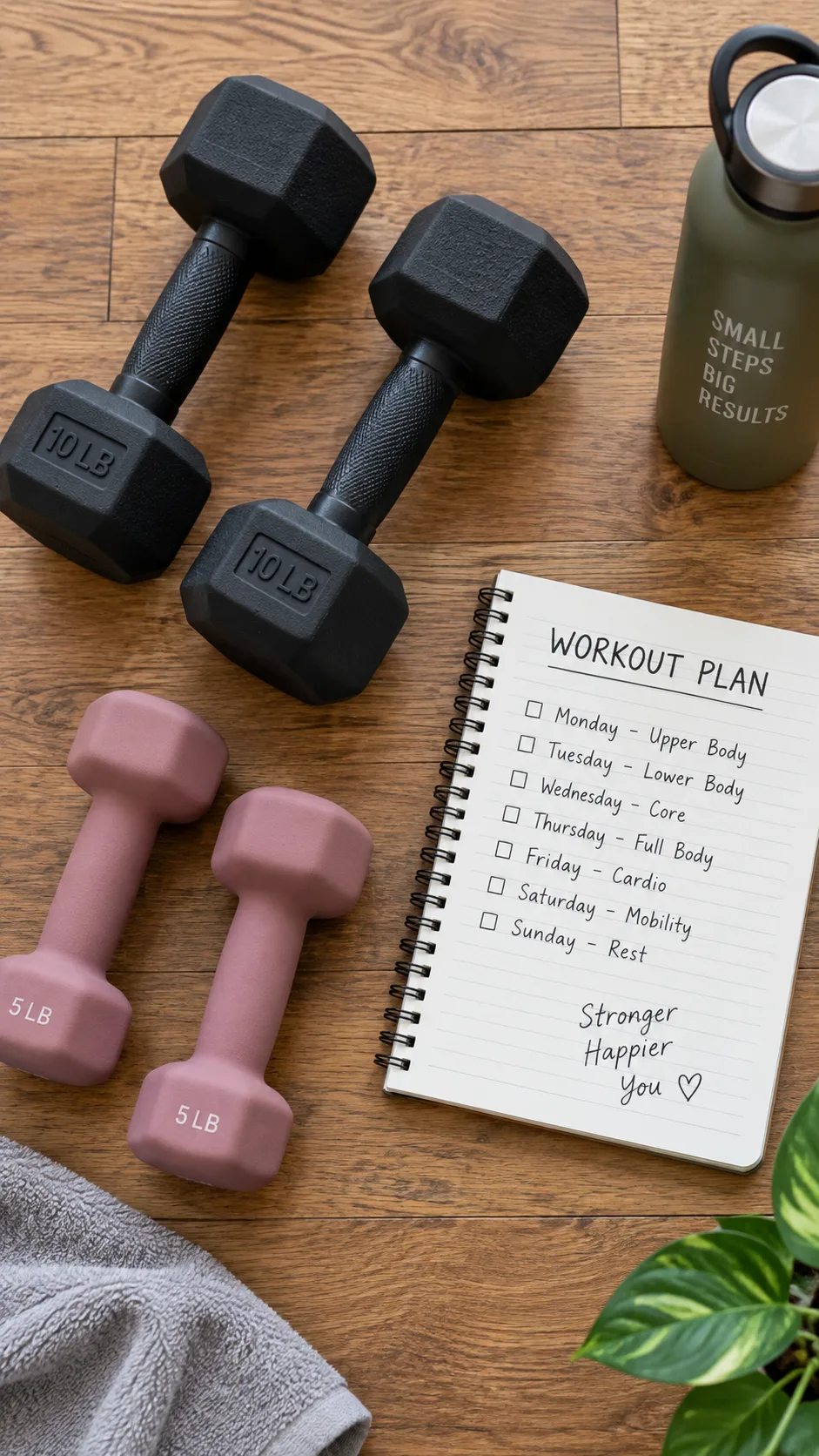
Here’s how to put all 7 moves together into one complete training session:
- Bent-Over Row, 3 sets x 10-12 reps
- Single-Arm Row, 3 sets x 10-12 reps (each side)
- Romanian Deadlift, 3 sets x 10-12 reps
- Reverse Fly, 3 sets x 12-15 reps
- Renegade Row, 3 sets x 8-10 reps (each side)
- Dumbbell Pullover, 3 sets x 10-12 reps
- Shrug to External Rotation, 3 sets x 12-15 reps
Total time: roughly 35-45 minutes depending on your rest periods. Train this workout 2-3 times per week, with at least one rest day between sessions to allow muscle recovery.
Watch: Full dumbbell back workout demonstration
Want to see these moves in action before you try them? This tutorial covers proper form for the primary exercises in this routine:
Common mistakes to avoid
Even experienced lifters make these errors. Fixing them will make every single rep more effective:
- Using momentum: Swinging the weight up means your back isn’t doing the work. Slow down and control the eccentric (lowering) phase.
- Flaring your elbows: On rows, keep elbows close to your torso. Wide elbows shift the work to your rear delts instead of your lats.
- Rounding your lower back: Especially on RDLs and bent-over rows. Keep a proud chest and a neutral spine. No exceptions.
- Neglecting the squeeze: At the top of every row, pause for a full second and actively squeeze your shoulder blades together. That contraction is where the real muscle-building stimulus lives.
- Going too heavy too soon: Back exercises suffer most from ego lifting. Prioritize form over weight, always.
How to progress over time
Doing the same weight for the same reps every week is called spinning your wheels. Your back muscles adapt quickly, so you need to progressively overload the workout to keep seeing results.
Here are three ways to progress without buying heavier dumbbells right away:
- Add reps: Once you can complete all sets at the top of the rep range with good form, add 1-2 reps per set before increasing weight.
- Slow the tempo: A 3-second lowering phase turns a manageable weight into a serious challenge. Try 3-0-1 tempo (3 seconds down, no pause, 1 second up).
- Reduce rest time: Cutting rest from 90 seconds to 60 seconds increases metabolic stress, a legitimate driver of muscle growth according to research published in the Journal of Strength and Conditioning Research.
Pairing this workout with the rest of your training
A dumbbell back workout works best as part of a balanced upper body program. If you train 3-4 days a week, consider pairing back day with biceps or shoulders. The muscle groups complement each other well.
If you eventually want to take your training to the gym and access cable machines and barbells, the back workout for women at the gym builds directly on what you’ll develop here. And if you want a comprehensive overview of all back training options, from home to gym, the full back workout guide for women covers everything in one place.
The most important thing, in my opinion, is consistency. Showing up twice a week, every week, beats any fancy routine you only stick to for two weeks.
Frequently asked questions
Will dumbbell back exercises make women bulky?
No, and this is one of the most persistent myths in women’s fitness. Women produce significantly less testosterone than men, and testosterone is the primary hormone responsible for rapid muscle hypertrophy. What strength training actually does is add shape, definition, and density to the muscles you already have. The result looks athletic and strong, not bulky.
How long until I see results?
Strength improvements start showing up within 2-3 weeks as your nervous system gets more efficient at recruiting muscle fibers. Visible changes in muscle definition typically take 6-8 weeks of consistent training, combined with adequate protein intake and recovery sleep. Set your expectations accordingly and trust the process.
Can I do this workout at home?
Absolutely. All 7 moves require only dumbbells and a flat surface. A bench helps for moves 2 and 6, but a sturdy chair or even the floor works perfectly well. The barrier to entry here is as low as it gets.
How much protein do I need to support muscle growth?
Aim for 1.6-2.2g of protein per kilogram of body weight per day if you’re actively trying to build muscle. Distribute it across your meals rather than trying to eat it all in one sitting. Your body can only absorb and use so much protein at a time for muscle protein synthesis.
The bottom line
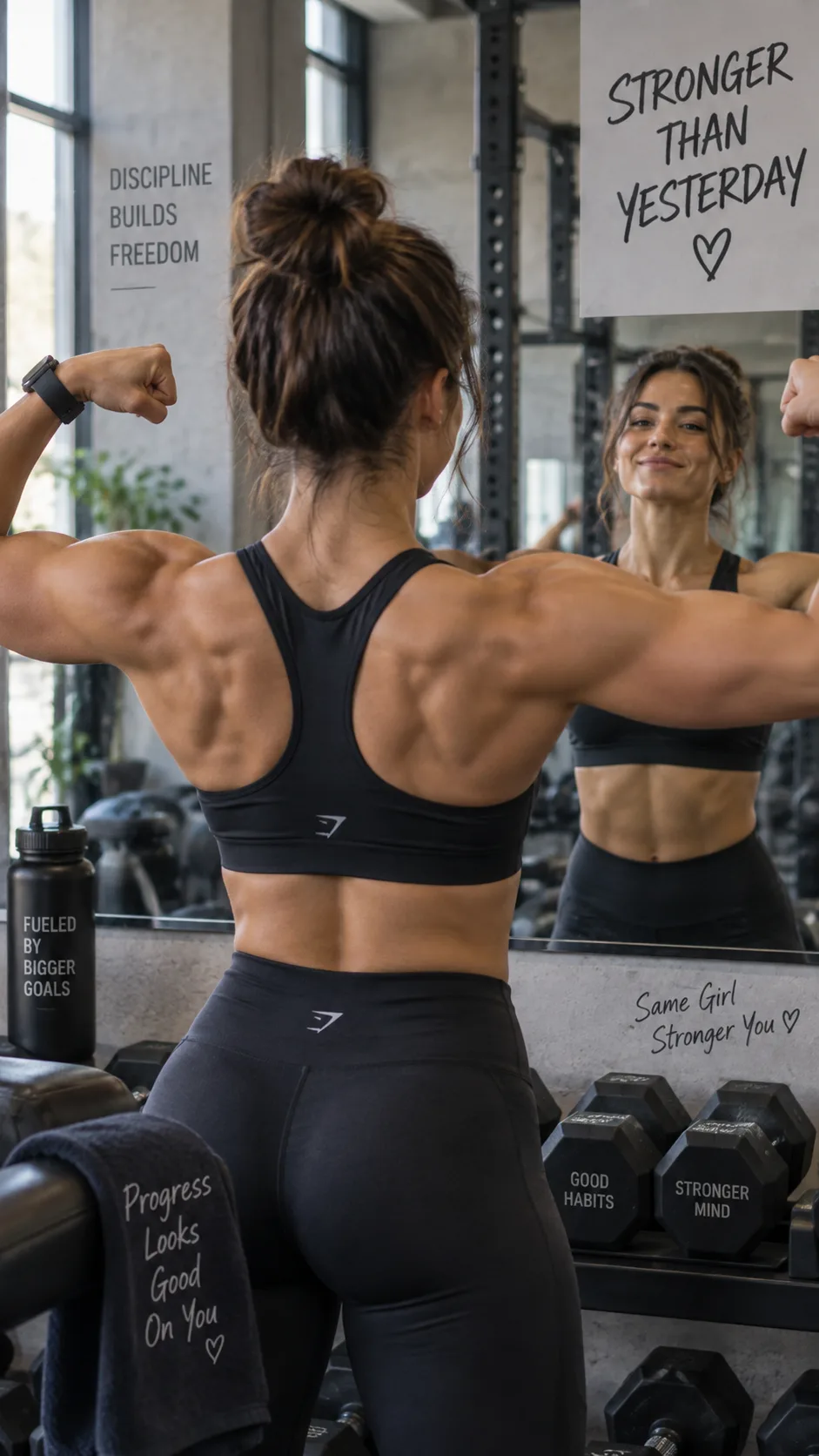
A stronger back changes your posture, your strength in other lifts, the way clothes fit, and even how much energy you carry through the day. These 7 dumbbell moves give you everything you need to build it, with nothing you don’t.
Start with two sessions per week, focus on form before load, and be patient. The results will come. The only thing standing between you and a sculpted upper back is showing up consistently, so put the dumbbells in your hands and get to work.
