
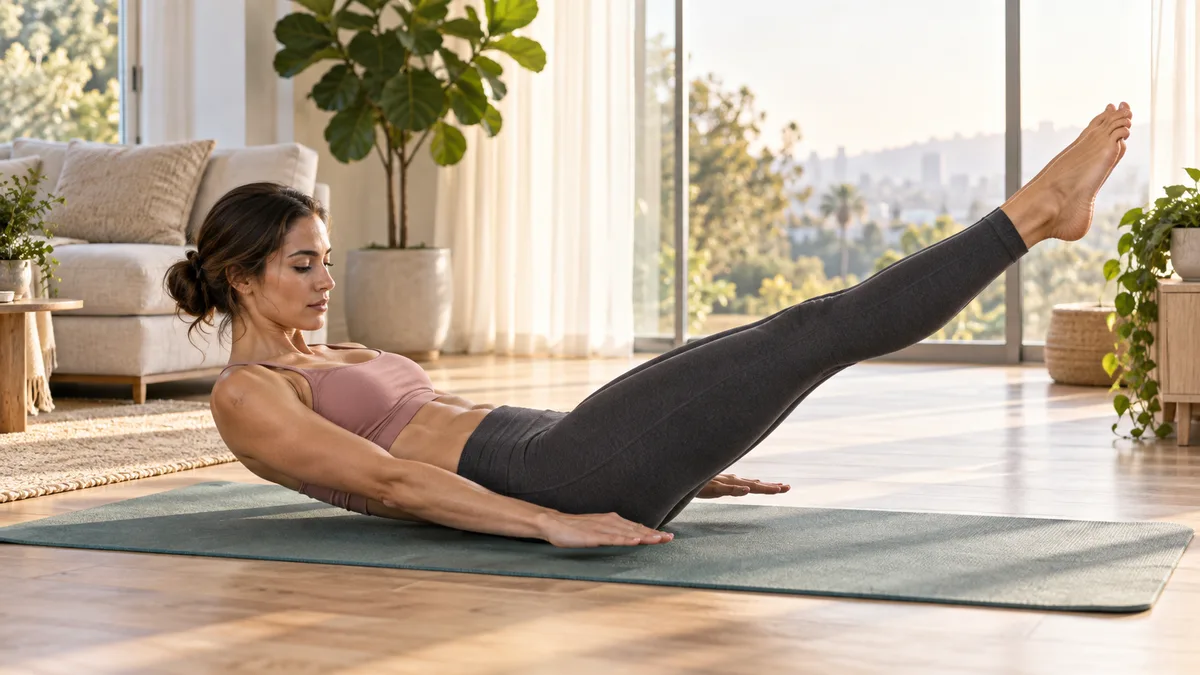
Your abs aren’t hiding because you’re not working hard enough. They’re hiding because most people train them wrong. Pilates fixes that. It targets the deep stabilising muscles that crunches completely ignore, and you don’t need a single piece of equipment to feel it working.
I started doing Pilates ab workouts during a period when I couldn’t get to a gym, mostly out of desperation. Within three weeks, my lower back stopped aching, my posture improved, and my core felt more switched-on during every other workout I did. That’s the Pilates effect in a nutshell.
This guide walks you through exactly what to do, why it works, and how to build a home Pilates ab routine that actually delivers results. No reformer required.
Why Pilates targets your core, not just your abs
Here’s something most people get wrong: your “core” isn’t just your six-pack. It’s a system of muscles that includes your transverse abdominis, multifidus, pelvic floor, and diaphragm. That’s the deep stabilising layer that holds your spine in place and generates real functional strength.
Standard gym exercises like sit-ups and crunches mainly hit the rectus abdominis, the outermost muscle. They barely touch the deeper layers. Pilates specifically targets the transverse abdominis, the muscle that pulls your belly button toward your spine and acts like a natural corset.
Research published in the Journal of Orthopaedic & Sports Physical Therapy found that Pilates training significantly improves core muscle activation compared to conventional exercise. That’s not marketing. That’s measurable, reproducible data.
Ever wondered why Pilates practitioners tend to look lean and long rather than bulky? It’s because the method builds endurance and control in stabilising muscles, not just raw size in superficial ones.
What you actually need before you start
One of the best things about a home Pilates ab workout is how little setup it requires. Here’s the full list:
- A yoga mat or a carpeted surface
- Comfortable, fitted clothing (baggy clothes make it hard to check your form)
- Bare feet or grip socks
- About 20 to 30 minutes
- A genuine willingness to move slowly and deliberately
That last one isn’t a joke. Pilates is about quality over quantity. You’ll do fewer reps than a traditional ab circuit, but you’ll feel each one in a way that shows you exactly which muscles are working, or which ones aren’t engaging yet.
If you’re brand new to floor-based Pilates, check out this mat Pilates workout guide for beginners before jumping into the ab-focused routine below. It gives you the foundational movement patterns that make everything in this article more effective.
The core Pilates ab exercises: your home workout routine
Perform this sequence in order. Rest 15 to 20 seconds between exercises. Complete the full circuit 2 to 3 times for a complete session.
1. The Hundred
The Hundred is the classic Pilates warm-up, and it’s genuinely one of the most effective core exercises in existence. Lie on your back, lift your legs to a 45-degree angle (or keep knees bent for an easier version), and raise your head and shoulders off the mat. Pump your arms up and down in small, controlled pulses, 5 pumps on an inhale, 5 on an exhale, for 10 full breath cycles.
That’s 100 arm pulses total. Your deep abs will be on fire by rep 60. Good.
2. The Roll-Up
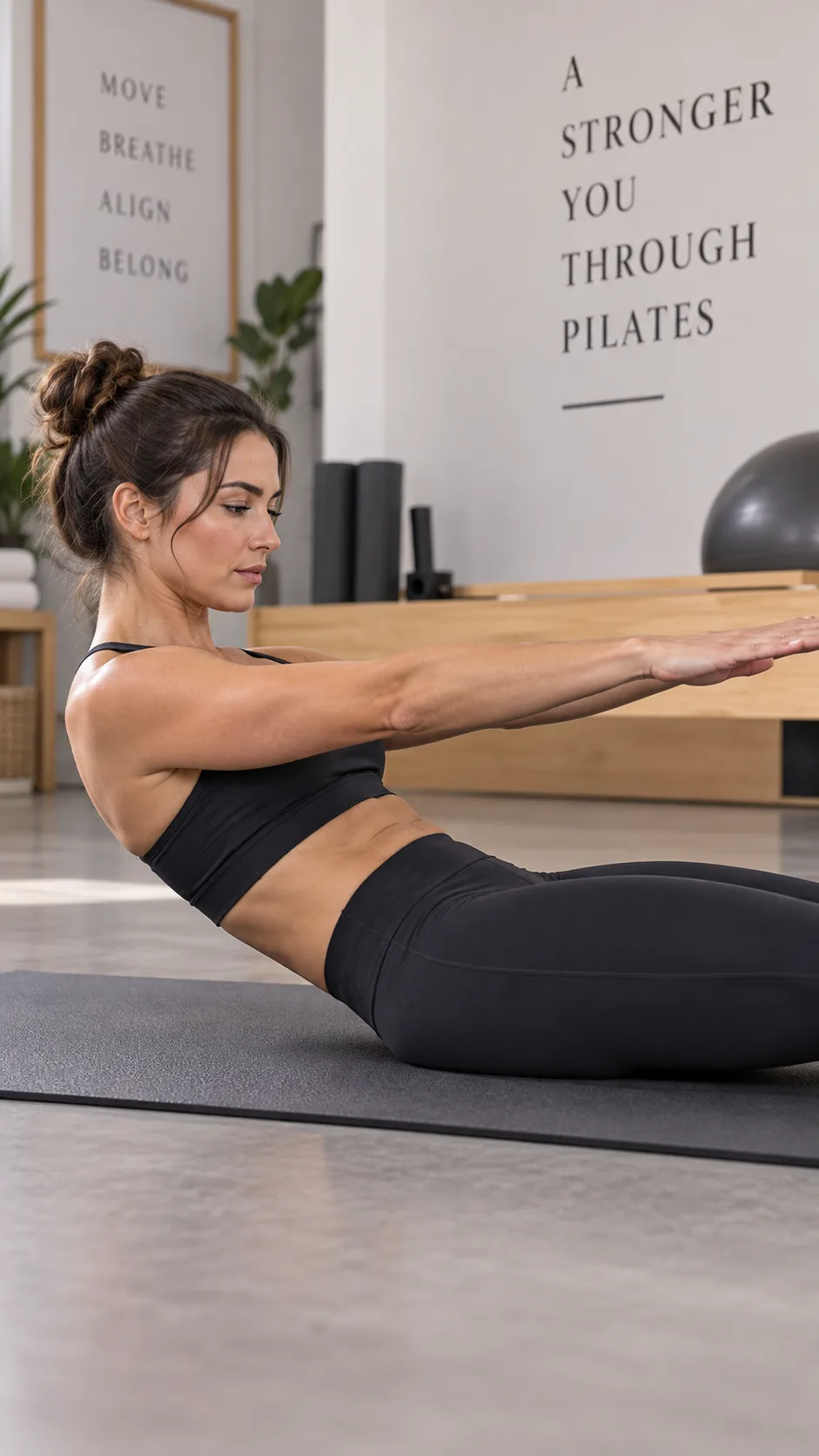
Lie flat with arms extended overhead. Slowly peel your spine off the mat one vertebra at a time, reaching toward your feet, then roll back down with the same control. No momentum allowed. If you jerk up using your neck or hip flexors, you’re cheating the exercise and missing the point entirely.
Aim for 8 to 10 reps. The roll-up builds spinal articulation and deep abdominal strength at the same time.
3. Single Leg Stretch
Lie on your back, lift both knees to your chest, then raise your head and shoulders. Extend one leg long while pulling the other knee in, switching legs in a controlled rhythm. Keep your lower back pressed into the mat throughout.
This is where most people discover their hip flexors dominate everything. The goal is to keep the movement ab-driven, not leg-driven. Do 10 reps on each side.
4. Double Leg Stretch
Both knees pulled into the chest, head and shoulders lifted. Inhale and extend both arms and legs simultaneously, reaching long in opposite directions. Exhale and pull everything back in. Your lower back should stay glued to the mat the entire time. The second it peels off, you’ve gone too far.
This is brutally effective for the lower abs. Do 10 reps.
5. Criss-Cross
Hands behind your head, knees bent and raised. Extend one leg as you rotate the opposite shoulder toward the bent knee. Switch sides in a slow, deliberate motion. This is not a bicycle crunch done fast. It’s a rotation exercise where the elbow travels toward the opposite hip crease, not the knee.
Slower is harder here. Do 10 reps on each side.
6. Leg Circles
Lie flat, extend one leg toward the ceiling. Keep both hips pressed into the mat while you draw large circles with the raised leg. The stability challenge here is everything. Your core works to prevent your hips from rocking as your leg moves. Do 5 circles in each direction, then switch legs.
7. Pilates Swimming
Lie on your stomach, arms extended overhead. Lift your arms, legs, and chest slightly off the mat, then flutter your opposite arm and leg up and down in small, rapid pulses. Inhale for 5 pulses, exhale for 5 pulses. This works the posterior core, the muscles along your spine that most “abs” workouts completely neglect.
Most people have a much weaker posterior chain than anterior. Pilates Swimming starts fixing that imbalance. Do 30 to 50 pulses total.
8. The Teaser
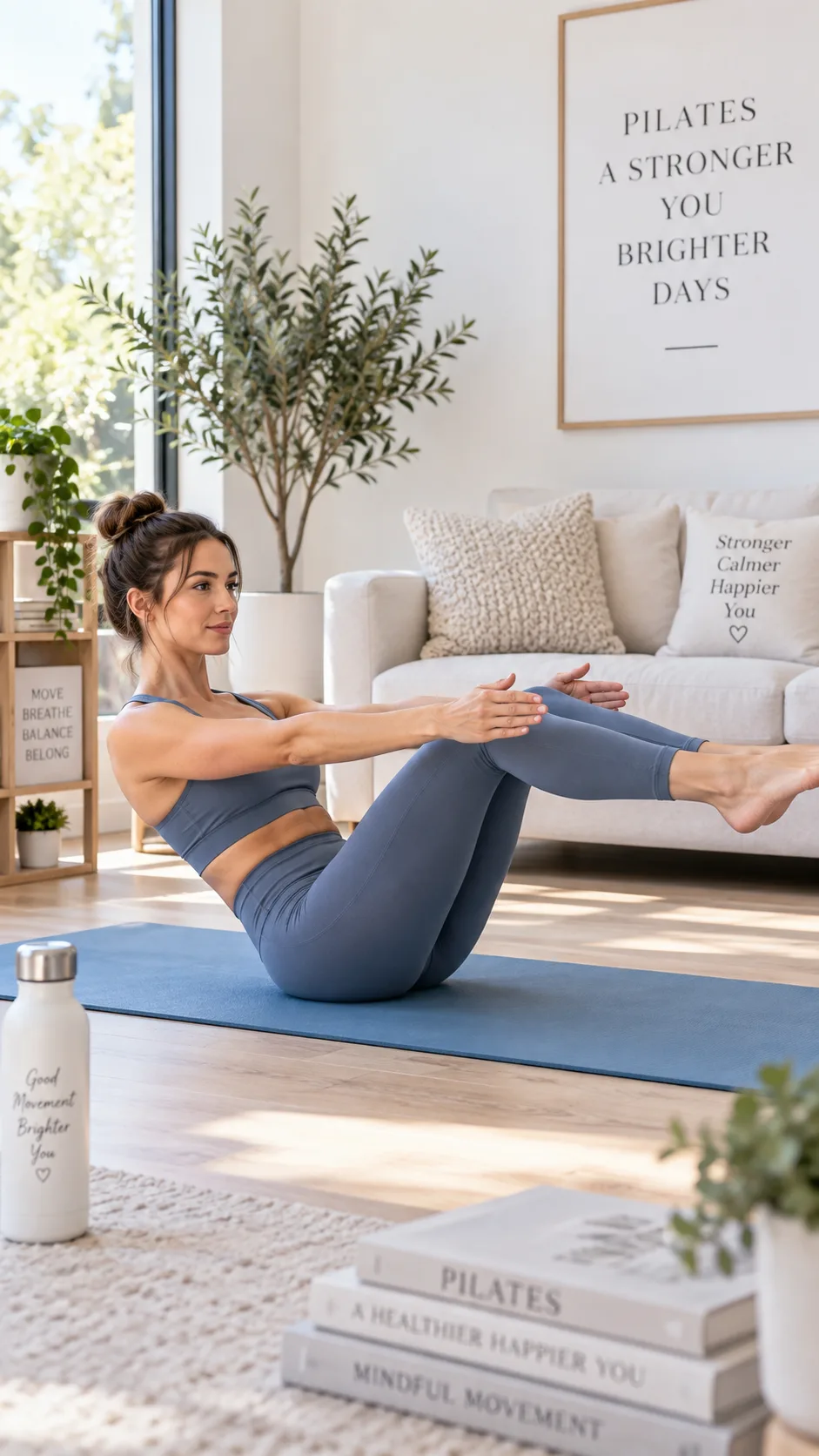
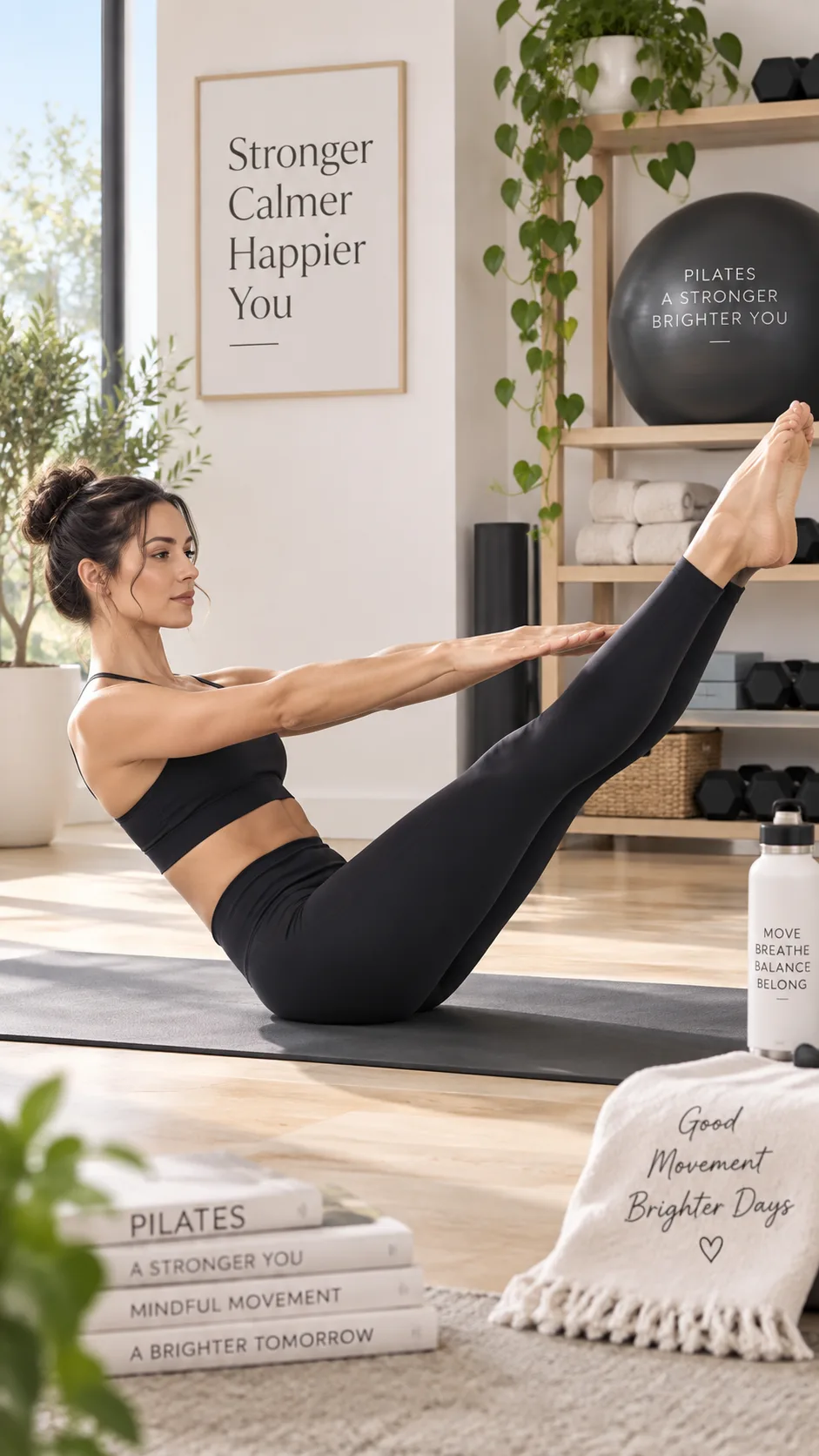
This is the advanced one. Lie flat, then simultaneously lift your legs (straight) and your torso into a V-shape, balancing on your tailbone. Hold for a breath, then lower back down with control. If you can’t do the full teaser yet, keep your knees bent. That’s not a regression, it’s the correct progression.
Do 5 to 8 reps. When you nail this one, you’ll know your deep core has genuinely strengthened.
How to structure your Pilates ab routine
Here’s a simple weekly structure that works whether you’re a beginner or have been doing Pilates for a while:
- Beginner (0 to 4 weeks): Do exercises 1 through 5 only, 2 to 3 times per week. Focus entirely on form, not reps.
- Intermediate (4 to 8 weeks): Add exercises 6 and 7, increase to 3 to 4 sessions per week, complete the circuit twice.
- Advanced (8+ weeks): Full circuit including the Teaser, 3 to 5 times per week, complete 3 rounds.
Rest days matter. Your core muscles need 48 hours to recover just like any other muscle group. Training every single day without rest doesn’t accelerate results. It stalls them. Work hard on your training days and actually rest on the others.
Pilates pairs brilliantly with walking, swimming, or yoga on rest days. Those activities don’t fatigue your core the same way, so you stay active without compromising recovery.
The breathing pattern that makes Pilates work
This is the part most beginners skip, and it’s genuinely important. Pilates uses a specific breathing technique called lateral thoracic breathing, where you breathe into the sides and back of your ribcage rather than into your belly.
Why does this matter? Because breathing into your belly releases your core engagement. When you breathe laterally, your deep abdominals stay activated throughout the movement. Inhale to prepare, exhale on the effort. That’s the basic rule for every exercise in this routine.
The Pilates Foundation has excellent resources on breathing technique if you want to go deeper on this. It’s one of those small adjustments that completely changes how every exercise feels.
Common mistakes that kill your results
Pilates looks deceptively easy from the outside. It’s not. Here are the mistakes that hold most people back:
- Pulling on the neck: When hands are behind your head, your hands support weight. They don’t yank. Neck strain means your abs aren’t working hard enough.
- Rushing through reps: Slower is always harder in Pilates. If an exercise feels too easy, slow it down before adding reps.
- Forgetting to breathe: Holding your breath spikes blood pressure and kills core engagement. Breathe through every rep.
- Letting the lower back arch: In every supine exercise, your lumbar spine should stay neutral or slightly imprinted on the mat. The moment it arches, you’ve lost core control.
- Skipping the warm-up: The Hundred exists for a reason. Don’t skip it to get to the “harder” exercises. It primes your deep core for everything that follows.
