Curious how to eat so the medication helps, not hinders, your weight goals?
You can keep hunger and side effects in check while still getting the nutrients your body needs. Aim for about 1,400-1,600 calories per day to support steady weight loss and protect muscle mass.
Focus on simple swaps: lean chicken or fish, brown rice and plenty of vegetables. These foods help stabilize blood sugar and preserve muscle as you lose weight.
Plan snacks with seeds, healthy fats and fruit, and drink water often. Mindful eating helps manage nausea and changes in appetite caused by medication.
This short guide gives practical ideas for daily eating that balance nutrients, control calories and support long-term lifestyle changes for obesity management and better health.
Key Takeaways
- Aim for 1,400-1,600 calories per day to support weight loss while keeping nutrients balanced.
- Include lean protein, brown rice, vegetables and healthy fats to stabilize blood sugar.
- Manage side effects like nausea with regular eating and hydration.
- Use seeds, fruits and smart snacks to curb appetite and protect muscle.
- Focus on sustainable changes to support long-term weight management and overall health.
Understanding How Wegovy Affects Your Appetite
Semaglutide acts like a gut hormone, changing signals between your stomach and brain.
As a GLP-1 receptor agonist, this medication slows stomach emptying and reduces hunger cues. You may notice you feel full sooner and crave less high-calorie food.
Many people see their blood sugar levels stabilize, which supports better metabolic health and aids steady weight loss. That stability can make it easier to stick to a sensible diet and daily calorie goals.
Because digestion slows, try smaller, frequent meals during the day to limit nausea and other digestive side effects. Track your calories so you still get enough nutrients even if your appetite drops.
- Signals from the drug reduce cravings and help with weight management.
- Slower gastric emptying can cause nausea; small portions often help.
- Monitoring calories supports muscle preservation and long-term loss.
| Effect | What You May Notice | Simple Action |
|---|---|---|
| Reduced appetite | Smaller portions feel satisfying | Eat nutrient-dense snacks |
| Slower digestion | Possible nausea or fullness | Try smaller, more frequent meals |
| Stabilized blood levels | Fewer sugar swings | Prioritize protein and fiber |
Essential Nutrients for Your Wegovy Meal Plan
Putting protein and fiber first supports appetite control and steady weight loss without starving.
Prioritizing Protein Intake
Protein helps preserve muscle and keeps you feeling full between meals.
Registered Dietitian Rita Faycurry, RD, recommends aiming for 1-1.2 grams of protein per 2.2 pounds of body weight to support metabolic health.
Include chicken, beans, fish, or dairy at each meal to hit your daily target and protect muscle while you lose weight.
The Role of Fiber-Rich Foods
Fiber from vegetables, fruits, and whole grains helps steady blood sugar and eases digestion.
It also reduces constipation and supports a lower-calorie day without leaving you hungry.

- Combine protein with healthy fats like seeds and olive oil for sustained energy.
- Choose complex carbohydrates and whole grains over refined options.
- Drink water regularly to support digestion and nutrient delivery.
| Nutrient | Why it matters | Quick sources |
|---|---|---|
| Protein | Preserves muscle, reduces appetite | Chicken, beans, fish, Greek yogurt |
| Fiber | Stabilizes blood sugar, aids digestion | Vegetables, fruits, oats, whole grains |
| Healthy fats | Supports hormones and satiety | Seeds, olive oil, fatty fish |
Managing Common Digestive Side Effects Through Diet
Digestive upset can pop up early, but you can ease most symptoms with simple eating habits.
Foods to limit for digestive comfort
Avoid high-fat, fried, and very spicy foods that can aggravate nausea, bloating, or diarrhea. These foods often slow digestion or trigger reflux.
Instead, eat smaller, frequent meals throughout the day. This helps your body process food without overloading your stomach.

Quick practical tips
- Prioritize lean protein and fiber-rich vegetables to support weight loss and steady blood sugar.
- Track daily calories and nutrition intake so you don’t skip meals and worsen side effects.
- Swap processed foods and sugary drinks for whole foods and water to improve overall health.
- If symptoms persist, choose easily digestible foods, plain grains, cooked vegetables, and broiled fish, until your body adapts.
| Symptom | Foods to Limit | Gentler Options |
|---|---|---|
| Nausea / Bloating | Fried, greasy, spicy | Plain toast, steamed vegetables, lean protein |
| Diarrhea | High-fat, sugary drinks | Banana, rice, simple broths |
| Constipation | Low-fiber processed food | Fiber-rich vegetables, water, legumes |
Strategies for Consistent Meal Preparation
Set aside one day each week to prep foods so healthy choices are effortless.
Batch Cooking Basics
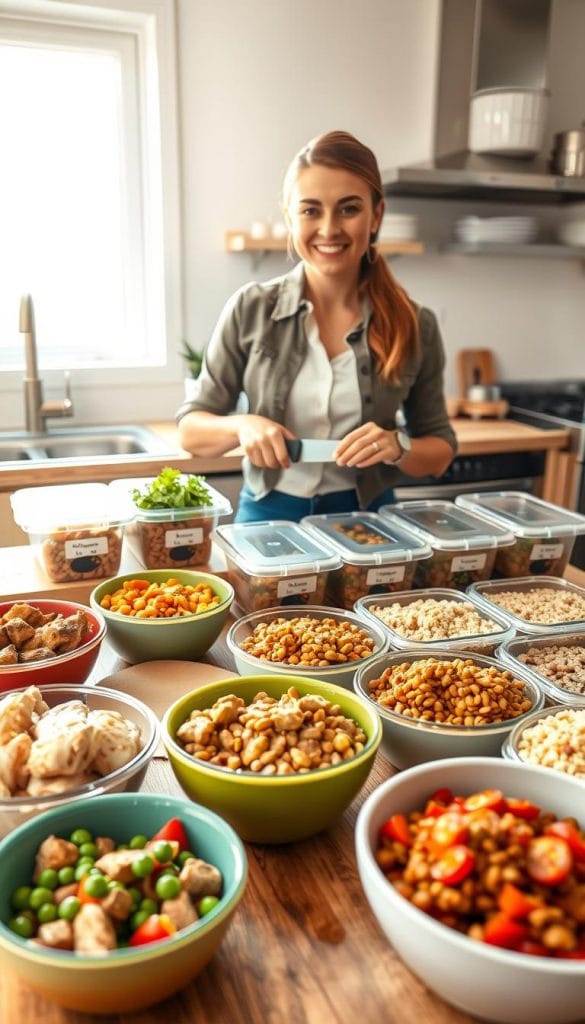
Batch cooking saves time and keeps protein-rich options ready. Cook chicken, beans, or fish and a pot of rice or whole grains.
Portion these into single-serve containers so you can grab a balanced meal during a busy day.
Smart Storage Solutions
Store food in clear, stackable containers to see what you have at a glance. Use freezer-safe bags for grains and cooked rice to extend freshness.
Prepare snacks like pre-chopped vegetables and seeds now to avoid less-healthy choices later.
Labeling for Food Safety
Label containers with the date and contents to track freshness and nutrition. This reduces waste and helps you meet daily protein and calorie targets.
Stay hydrated, aim for at least 72 oz of water for women or 100 oz for men, to help manage medication side effects and digestion effects.
- Batch cook staples to protect your weight goals.
- Organize containers and labels to track intake all week.
- Prep snacks ahead so you stick with better foods and nutrition.
| Task | Why it helps | Quick tip |
|---|---|---|
| Batch cook proteins | Protein preserves muscle and eases hunger | Cook 3-4 portions at once |
| Store grains & rice | Quick carbs for energy | Freeze in portions |
| Label containers | Food safety and tracking | Use date stickers |
Incorporating Lean Proteins and Healthy Fats
Make protein the backbone of each plate so you protect muscle during weight loss.
Choose lean sources like chicken and fish at most meals. These proteins help preserve muscle while you lose weight.
Include small amounts of healthy fats, olive oil, seeds, or avocado, to stay satisfied without overshooting calories.
Fill half your plate with vegetables to add fiber and bulk. Veggies lower calorie density and keep you full longer.
Pick high-quality foods so your diet supports energy and prevents loss of lean tissue. Watch portion sizes for fats; they are calorie-dense.
Plan simple combos: grilled chicken, a side of greens, and a drizzle of olive oil. That balance keeps you energized and on track.
- Protein preserves muscle and curbs appetite.
- Healthy fats add nutrients and flavor in small portions.
- Vegetables boost fiber with few calories.
| Food | Benefit | Portion tip |
|---|---|---|
| Chicken (grilled) | High protein, low fat | 3-4 oz per serving |
| Fish (salmon, broiled) | Protein + omega-3 fats | 3-4 oz 2-3 times weekly |
| Seeds & olive oil | Healthy fats, micronutrients | 1 tbsp seeds; 1 tsp oil |
| Vegetables | Fiber, low calories | Half the plate each meal |
Balancing Complex Carbohydrates for Energy
Choosing the right carbohydrates helps your energy last from morning to night.
Complex carbohydrates like brown rice and whole grains give steady fuel and help stabilize blood sugar through the day. They release glucose slowly so you avoid quick sugar spikes that can wreck focus or drive cravings. Easy High-Protein GLP-1 Meals to Preserve Muscle While You Lose Weight covers the same topic from another angle.
Replace refined grains with fiber-rich options and vegetables to keep your calories per day balanced while supporting weight loss. These foods support your body when you eat less overall and help maintain energy for daily activities.
How to pick better grains
- Choose whole-grain bread, oats, or brown rice instead of white rice and refined cereals.
- Include a small portion of grains with protein and healthy fats to slow digestion and curb cravings.
- Plan snacks that blend whole grains and vegetables so you get steady energy between meals.
| Choice | Why it helps | Quick swap |
|---|---|---|
| Whole grains | Slow glucose release, more fiber | Oats or brown rice |
| Refined grains | Cause sugar spikes, less fiber | White bread, instant rice |
| Vegetables + grains | Lower calorie density, more fullness | Veggie stir-fry with rice |
Mindful Eating Habits for Long-Term Success
Slow down and pay attention to how your body signals hunger and fullness during each eating moment.
Start by pausing before you eat. Take a breath and ask if you are truly hungry or just bored.
Listen to hunger cues to manage appetite and avoid extra calories. Eating slowly helps you stop when you feel satisfied.
Keep regular meals and snacks to support stable blood sugar and steady weight loss. Small, protein-rich bites plus healthy fats protect muscle and keep energy even through the day.
Avoid distractions like TV or your phone. When you focus on food, you notice flavor, portion size, and when you are done.
Stay hydrated, water reduces false hunger and eases side effects of medication. Choose nutrient-dense foods and seeds for smart snacks that meet protein and fat needs.
Be patient with your body. Weight management is a gradual process. Consistent mindful eating builds a sustainable lifestyle and better long-term health.
- Pause and check hunger before each meal.
- Include protein and healthy fats with every meal to protect muscle.
- Drink water and pick nutrient-dense snacks to steady intake.
| Habit | Why it helps | Quick tip |
|---|---|---|
| Slow eating | Reduces calories and overeating | Set fork down between bites |
| Regular snacks | Stabilizes blood sugar | Protein + seeds |
| Focused meals | Improves appetite control | No screens at table |
Conclusion
,
Build each day around lean protein, fiber-rich vegetables, and whole grains to keep progress steady. This balanced approach helps support steady weight loss while keeping you energized and satisfied.
Focus on consistent nutrition and mindful eating to manage side effects and hold your gains. A tailored wegovy meal plan can help, but your needs are unique.
Work with a healthcare provider or registered dietitian to fine-tune your choices. Stay persistent with healthy habits and this structured approach will help you reach lasting results and better health.
FAQ
How does the medication change your appetite and eating habits?
The medication often lowers your appetite and can reduce cravings, which may make eating smaller portions easier. You might feel full faster or skip meals without intending to, so focus on nutrient-dense foods and regular timing to keep energy steady and protect muscle mass.
How much protein should you aim for daily to support weight loss and muscle retention?
Aim for roughly 0.6-0.8 grams of protein per pound of body weight, depending on activity level. Include lean options like chicken, fish, eggs, Greek yogurt, legumes, and seeds across meals and snacks to preserve muscle while losing fat.
What role does fiber play in blood sugar and appetite control?
Fiber slows digestion, helps steady blood sugar levels, and promotes fullness. Choose vegetables, fruits, beans, and whole grains such as brown rice or oats to improve satiety and reduce sugar spikes after eating.
Which carbohydrates are best for steady energy during the day?
Prioritize complex carbohydrates like whole grains, brown rice, quinoa, and starchy vegetables. These provide longer-lasting energy than refined carbs and help prevent rapid blood sugar swings that trigger hunger.
How can you manage nausea or digestive changes with food choices?
Eat smaller, more frequent meals and pick bland, low-fat options when symptoms appear. Ginger, plain crackers, steamed vegetables, and lean proteins often ease nausea. Avoid greasy, highly processed, or very spicy foods until your stomach settles.
Are healthy fats important while using this medication, and which ones should you choose?
Yes. Healthy fats support nutrient absorption and satiety. Choose avocado, olive oil, nuts, seeds, and fatty fish like salmon. Limit trans fats and excessive saturated fats to support heart health.
How many calories should you eat each day for safe weight loss?
Calorie needs vary by age, sex, weight, and activity. A modest deficit of 300-500 calories per day typically produces steady loss. Work with a dietitian or clinician to set a target that preserves muscle and meets nutrient needs.
What snacks help control appetite between meals?
Combine protein and fiber for lasting satisfaction. Good choices include Greek yogurt with berries, hummus with raw veggies, a small handful of nuts with an apple, or cottage cheese with sliced cucumber.
How should you plan and store food to stay consistent with your goals?
Use batch cooking to prepare proteins, grains, and roasted vegetables in advance. Store portions in clear containers, label them with dates, and freeze meals you won’t eat within a few days. This reduces decision fatigue and supports healthier choices.
Can this approach affect your blood sugar if you have diabetes?
Yes, the combination of appetite changes and altered intake can affect blood sugar. Monitor levels closely, adjust carbohydrate distribution, and coordinate with your healthcare team to modify medications if needed.
What foods should you limit to reduce digestive discomfort and bloating?
Limit fried foods, large servings of high-fat meals, excessive sugar, and very high-FODMAP foods if you’re sensitive. Carbonated drinks and sugar alcohols in some diet products can also cause gas and bloating.
How can you make sure you still get enough nutrients while eating less?
Prioritize high-quality protein, colorful vegetables, whole grains, and healthy fats. Consider a multivitamin only if recommended by your clinician. Regularly review blood work and nutrient intake with a registered dietitian to catch gaps early.
Is resistance training important while trying to lose weight with reduced appetite?
Yes. Strength training preserves muscle mass and supports metabolic health. Combine resistance workouts with adequate protein intake to protect lean tissue and maintain strength as you lose weight.
How many meals per day work best when appetite is reduced?
There’s no single best pattern. Many people do well with three smaller meals and one or two protein-rich snacks. Listen to hunger cues and aim for consistent protein at each eating occasion to stabilize blood sugar and satiety.
What hydration tips help with appetite and digestion?
Drink water throughout the day and sip before meals to help control portion sizes. Limit sugary beverages. If you feel dehydrated or lightheaded when appetite drops, increase fluids and electrolytes as needed.
When should you contact a healthcare provider about side effects like severe nausea or dizziness?
Contact your provider if you have ongoing vomiting, dehydration, fainting, rapid heart rate, or an inability to eat for more than 24-48 hours. Also seek help if you notice worrying changes in blood sugar or new gastrointestinal pain.
How can you balance social eating and dining out while staying on track?
Look for grilled or baked protein options, vegetable sides, and whole-grain or legume-based dishes. Ask for dressings on the side and control portions by sharing plates or boxing half before you start eating.
Are there specific grains or side dishes that support steady weight loss?
Choose whole grains like brown rice, farro, barley, and quinoa instead of refined rice or white bread. Pair grains with protein and vegetables to slow digestion and reduce post-meal sugar spikes.
Can seeds and nuts help with hunger and nutrition?
Yes. Seeds and nuts provide healthy fats, protein, and fiber that increase fullness. Keep portions modest, about a small handful, because they are calorie-dense.
What lifestyle habits support long-term success beyond food choices?
Prioritize sleep, manage stress, stay active (including resistance training and daily movement), and build a routine of cooking and planning. These habits help regulate appetite, blood sugar, and overall well-being.