

You may feel a quiet tug when an invitation arrives — a mix of joy and a little worry about how your body will react.
Many people on medications that change appetite find dinner parties and nights out confusing. Your body sends new signals, and large portions can feel overwhelming.
Understanding the effects of your treatment is the first step to reclaiming gatherings without shame. With a bit of planning, you can protect your health while still enjoying friends and the world around you.
Expect to learn practical tips for managing appetite shifts, talking about your medication with others, and keeping connection at the center of your nights out. You are not alone in this, and you can shape how your weight and disease care fit into real life.
Key Takeaways
- Recognize that appetite changes are a normal effect of treatment and plan accordingly.
- Prepare brief ways to explain your medication to people when needed.
- Choose small portions or focus on conversation instead of large plates.
- Protect your health by prioritizing treatment routines during gatherings.
- Enjoy social life by reframing events around connection, not just food.
Understanding Your New Relationship with Food
Your appetite may feel like a quiet whisper now, even when a full plate sits in front of you. This change can be surprising, but it is a normal response to treatment.
What Has Changed
You will likely notice that a standard dinner portion looks large and often goes unfinished. Many people report feeling full after just a few bites — that is a common effect of certain medications.
- Your appetite has shifted; a single plate may feel overwhelming.
- Your protein needs remain important, so pick options that support muscle and nutrition.
- Think of treatment as a tool for long-term health, not a restriction on joy.
The Mindset Shift
Embrace a new lifestyle where health and comfort guide choices. You are the same person today, but your priorities at the table may change.
Focus on the benefits of weight loss and improved well-being instead of the disease that led you here. Remember: connection with friends and the world around you does not depend on how much you eat.
Strategic Planning Before GLP-1 Social Events
A little planning before you step out makes crowded dinners easier to handle.

Fuel first: eat 20–30g of protein about 15–30 minutes before you leave. Greek yogurt, a protein bar, or a hard-boiled egg are quick options that sit well in your body.
Why this works: protein helps manage appetite and reduces the chance you’ll feel nauseous or overeat when a full plate arrives.
- Create a simple routine at home so your meal management is consistent no matter the occasion.
- Carry a bottle of water to stay hydrated — it supports digestion and helps you feel steady.
- Plan meals for the week to prioritize high-quality proteins that keep you satisfied all day.
- Prepare a short response in case people ask about weight or medication. Practicing a line protects your care and confidence.
With these small steps you control the night instead of letting the situation control you. This approach protects your health and keeps connection at the center of the gathering.
Navigating Restaurant Dining and Menus
Choosing the right dish at a table full of options can help you stay comfortable all evening. A little planning before you sit down makes strong choices easier.
Ordering Strategies
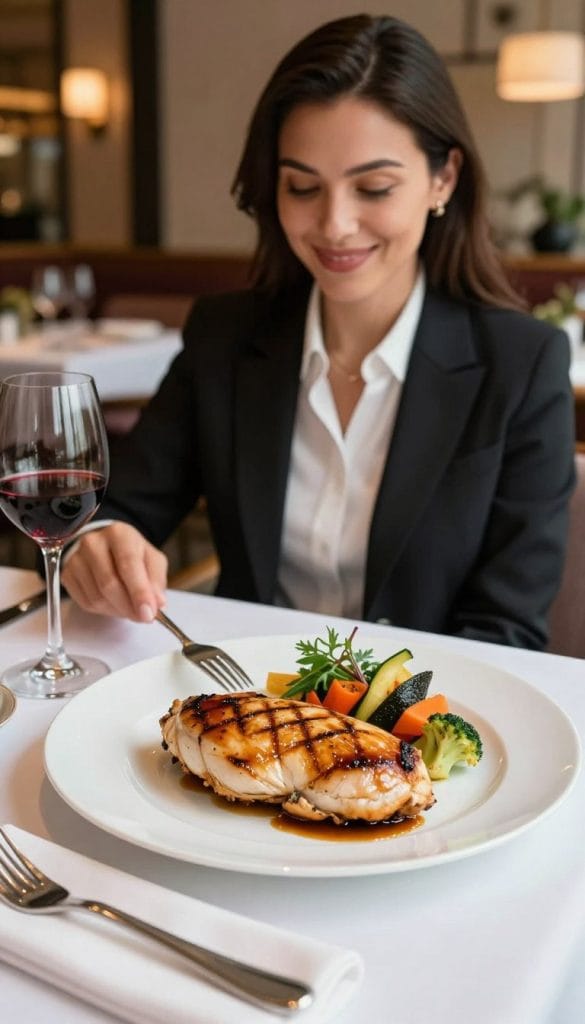
Research the menu online during the week so you have a plan before you arrive. Look for grilled chicken, salmon, or shrimp as protein-first choices.
- Pick grilled chicken or salmon over fried items; they are gentler on your body and support nutrition.
- Ask for your vegetables as a plain side or steamed to avoid heavy sauces.
- If portions look large, request a box and pack half to take home as part of your routine.
- Drink water before you order and wait about 20 minutes to check if your appetite matches your plate.
The Appetizer Approach
Order an appetizer as your main to control portion size and keep the meal pleasant. A salad with grilled chicken or a shrimp plate gives protein without excess.
- Focus your plate on proteins and a side of greens.
- Skip heavy starches or share them with someone at the table.
Managing Social Pressure and Food Pushers
Pressure to eat can feel loud at gatherings, even when your body says otherwise. You can protect your health and still enjoy the company with a few simple tactics.

Effective Scripts for Polite Refusals
Keep responses short and calm. Try lines like “I’m just eating differently these days.” or “Thanks — I’m full from a protein-rich meal.”
- Redirect the conversation: Ask about the other person’s day to stop plate monitoring.
- Hold a drink: A sparkling water with lime keeps your hands busy and reduces offers from the table.
- Skip heavy sides: It’s fine to focus on grilled chicken, salmon, salad, or vegetables instead of bread or crackers.
- Protect your routine: Mention stomach health or medication care if you need a firm exit without details.
Managing pressure is a skill. With practice, these tips make it easier to enjoy the event while keeping control of your meal and appetite.
Creative Ways to Socialize Without Food
When you want company, pick shared moments that don’t depend on a plate. Choosing activities gives you control and keeps the focus on connection.
Try game or puzzle nights at your table to laugh and collaborate. A board game or a cooperative puzzle makes conversation the highlight, not the food on the table.
Move together: sign up for a dance class, karaoke, or a group hike. Fresh air and movement are great for your health, and a water bottle keeps you comfortable.
- Host a picnic but plan activities like frisbee so the plate is secondary; pack simple foods like grilled chicken or a small salad if you want.
- Volunteer with friends to build community and do meaningful work without snacks stealing the scene.
- Try art nights, comedy clubs, or book groups as low-pressure options that avoid cake or crackers becoming the focus.
Pick activities that match your goals. That way you stay consistent with your routine and still enjoy time with friends.
Embracing Your New Lifestyle and Conclusion
Settling into this way of living helps you join dinners and outings with calm confidence. You can enjoy an event without making food the focus. Use a protein foundation and simple routines to steady appetite and support overall health.
It is fine to take half a meal home or skip the cake. These small choices protect your weight and nutrition while letting you connect with people you love.
Keep water nearby, follow your medication plan, and trust your body. These tips make gatherings easier each week. You are doing important treatment work—give yourself credit and keep prioritizing care today.