Curious if a 21-day spiritual reset can truly change how you feel? This guide helps you pair faith with sensible food choices so you can focus on renewal.
The Daniel Fast comes from a biblical practice that emphasizes prayer and simple nourishment. You’ll get a clear structure to follow, with thoughtful recipes and a daily approach that keeps decision fatigue low.
Every dish is designed to support your energy and intent. The goal is to help you stay satisfied while you center your mind and spirit.
Key Takeaways
- You’ll receive a step-by-step guide to move through the full 21-day commitment.
- Meals are crafted to nourish your body and sustain focus during prayer.
- The curated recipes reduce stress around daily food choices.
- This roadmap balances spiritual goals with practical eating tips.
- Follow it to feel energized and aligned throughout the process.
Understanding the Biblical Roots of the Daniel Fast
Scripture preserves two distinct episodes that form the basis for this fasting tradition. These passages give clear examples of intentional eating choices tied to prayer and humility. You’ll see how simple foods and time-limited restraint shaped spiritual focus.
The Ten Day Test
Daniel 1:12 records a ten-day test where Daniel and his companions ate only vegetables and water. The point was practical: a simple diet sustained them better than the palace offerings.
The Three Week Mourning
Daniel 10:3 describes three weeks of intense mourning. During that time he avoided choice foods, meat, and wine to seek clarity and closeness to God.
- The ten-day account highlights vegetables and water as sufficient to nourish the body.
- The three-week period shows restraint from meat and wine to sharpen spiritual focus.
- These biblical foods and timelines form the foundation for the modern daniel fast tradition across these days and weeks.
- Understanding this context helps you honor the practice while choosing appropriate rice, grains, and plant-based foods each day.
Preparing Your Heart and Mind for the Journey
Begin your journey by quieting your heart and choosing purpose over habit. Set a clear intention and ask the Holy Spirit to guide you before you begin.
Dr. Rex Russell highlights eating whole, clean foods as part of honoring God. Use that teaching to shape your mindset and habits.
Mentally prepare for challenge by naming your reasons. Reflect on motivation when cravings or doubt arise.
- Establish a short daily routine of prayer and meditation.
- Journal prayers and emotions to track spiritual growth.
- Remind yourself that renewal often starts with small, steady choices.
| Focus | Spiritual Action | Practical Action |
|---|---|---|
| Intention | Pray for clarity and commitment | Write a concise purpose statement |
| Guidance | Seek the Holy Spirit in prayer | Choose whole foods as described by Russell |
| Discipline | Set short prayer intervals daily | Plan simple, repeatable meals for consistency |
| Reflection | Review journal entries weekly | Adjust routines based on your emotional state |
Keep your focus simple. The best way to remain steady is daily prayer, honest reflection, and consistent food choices. Embrace this season as a time for quiet growth.
Essential Guidelines for Your Daniel Fast Recipes 21 Day Meal Plan
Knowing what to avoid and what to include brings clarity to each food choice. This guide covers clear exclusions so you can keep your focus on the spiritual purpose and physical health.
What to exclude: avoid meat, dairy, added sugar, processed foods, caffeine, alcohol, and leavened bread. Checking labels helps you spot hidden additives and non-compliant ingredients.
Plan your daily intake to meet nutrition goals. Choose whole grains, legumes, fruits, vegetables, nuts, and seeds to supply steady energy across the days of the diet.
- Verify each ingredient on labels to avoid refined sugar and chemicals.
- Favor nutrient-dense recipes that replace processed snacks.
- Prep ingredients in advance and keep your written plan visible for consistency.
| Focus | Action | Benefit |
|---|---|---|
| Ingredients | Read labels, choose whole foods | Reduce hidden sugar and additives |
| Consistency | Prep weekly, keep reminders | Fewer temptations |
| Nutrition | Balance proteins and carbs from plants | Sustained energy each day |
Follow this guide across the full period to appreciate simplicity and to strengthen both body and spirit through intentional eating and disciplined devotion.
Nutritional Considerations for Sustained Energy
Keep your energy stable so your focus stays on spiritual growth rather than hunger. Aim for consistent, nutrient-rich choices that support both concentration and physical well-being.
Managing Caloric Intake
Target a daily range of 1,400-1,800 calories. That gives your body the fuel it needs while you follow this intentional diet.
If you feel tired or lightheaded, raise portions of whole grains and legumes before changing routines. Balance helps prevent fatigue and supports steady prayer and activity.
Prioritizing Plant Based Protein
To maintain strength, prioritize plant protein sources. Lentils, chickpeas, beans, and a variety of nuts provide sustained energy and amino acids.
- To maintain your energy during the daniel fast, focus on lentils, chickpeas, and nuts as regular staples.
- Your body needs a minimum of 1,400-1,800 calories per day to function well during this spiritual practice.
- Drink plenty of water to help your body detox and adjust to whole, unprocessed foods.
- If energy dips, increase complex carbs and protein to keep you fueled and focused.
Listen to your body. Adjust portions and food choices if you feel weak. Thoughtful nutrition keeps your mind clear and your spirit steady through the daniel fast. Budget Meal Planning applies the same idea to meal planning.
Stocking Your Pantry with Whole Food Staples
Lean on shelf-stable staples like brown rice and oats to keep your menu steady and wholesome.
Start with whole grains and base ingredients. Keep brown rice, oats, quinoa, and other whole grains on the shelf. These give you quick, filling options for breakfasts and bowls.
Include a variety of legumes and beans. Lentils, chickpeas, and black beans supply protein and fiber. Store them dry or canned with no additives.
- Fresh fruits and vegetables should be the foundation of your intake.
- Keep raw nuts and seeds for quick, compliant snacks.
- Buy quality organic ingredients from retailers like Azure Standard or Thrive Market when possible.
Organize by use. Group grains, legumes, nuts, and spices so you can prep fast. Check labels to ensure pure ingredients and no hidden sugars or preservatives.
| Category | Examples | Benefit |
|---|---|---|
| Grains | Brown rice, oats, quinoa | Steady energy and versatility |
| Legumes | Lentils, chickpeas, beans | Plant protein and fiber |
| Nuts & Seeds | Almonds, walnuts, chia | Quick snacks and healthy fats |
| Produce | Leafy greens, root vegetables, fruits | Vitamins and mineral variety |
Having a stocked kitchen makes it easier to follow your diet. When staples are ready, you can stay focused on the spiritual purpose and on nourishing your body with true daniel fast food choices.
Navigating Potential Challenges and Side Effects
Early withdrawals from caffeine or sugar often cause brain fog and tiredness as your body adjusts. Those changes can feel unsettling, but knowing what to watch for helps you stay safe and focused.
Addressing Mental Fog and Fatigue
If you notice mental fog, anxiety, heart palpitations, or hand tremors, pause and assess. These symptoms can simply reflect withdrawal from caffeine or sugar.
In some cases, such signs point to underlying conditions such as Hashimoto’s Thyroiditis. If symptoms persist or worsen after several days, seek medical advice promptly.
- Rest when you feel overwhelmed and check that your food intake meets basic caloric needs.
- Prioritize hydration and sleep to reduce side effects that often show up in the first week.
- Keep a daily log of how you feel so you can spot patterns and adjust your foods accordingly.
| Symptom | Possible Cause | Immediate Action |
|---|---|---|
| Mental fog or fatigue | Caffeine/sugar withdrawal or low calories | Increase whole grains, hydrate, rest |
| Anxiety or palpitations | Nutrient imbalance or thyroid issue | Monitor closely and contact a provider |
| Hand tremors | Electrolyte shifts or medical condition | Eat balanced snacks, seek medical care |
Remember: this season should support spiritual growth, not cause undue harm. If you feel worse after a few days, consult a healthcare professional so you can continue with safety and purpose.
Breakfast Ideas to Start Your Day with Purpose
Start your morning with simple, nourishing breakfasts that keep you focused and energized. A strong morning routine helps you honor your intent and stay steady through each set of spiritual days.
Hearty oats made with water, fresh berries, and a sprinkle of nuts and seeds give steady energy and comfort. Add a spoonful of almond butter for extra protein.
A smoothie bowl with spinach, banana, and almond butter is an easy way to add vegetables and protein to your first meal. Blend with water and top with berries for texture.
- Savory bowls of quinoa or brown rice with sautéed veggies and herbs provide satisfying warmth.
- Chia seed pudding sweetened with fresh fruit makes a light, portable option you can prep the night before.
- Try oats, grains, or beans in varied combos so your mornings stay interesting and nourishing.
These breakfast ideas support both body and spirit. Prepare ingredients ahead to save time and keep your focus where it belongs.
Hearty Lunch Options for Midday Nourishment
Lunch should revive your focus with simple, nutrient-dense choices you can prepare quickly. Choose foods that fuel your afternoon and support your spiritual focus without long prep time.
A large salad with mixed greens, cucumbers, tomatoes, and chickpeas gives a refreshing, filling option. Toss in leftover brown rice for extra heft and fiber.
Lentil soup is a classic daniel fast choice. It’s packed with protein and vegetables and warms you on cooler afternoons.
- Try a quinoa and black bean bowl topped with fresh salsa for flavor and staying power.
- Homemade lemon-tahini dressing adds zest without processed oils or additives.
- Include a variety of beans and lentils across your lunches to meet your protein needs.
- Stay hydrated with water during lunch to aid digestion and clarity.
| Lunch Type | Main Protein | Prep Time |
|---|---|---|
| Salad with brown rice | Chickpeas / beans | 10-15 min |
| Lentil soup | Lentils | 30-40 min (batch cook) |
| Quinoa & black bean bowl | Black beans | 15-20 min |
Keep lunches simple and repeatable. These options let you focus on prayer and reflection while eating well through the days of your practice.
Satisfying Dinner Recipes for Your Evening Meal
End your day with dinners that balance whole grains, beans, and plenty of vegetables. These easy ideas help you finish evenings feeling nourished and calm.
Try a vegetable stir-fry over brown rice using seasonal veggies, ginger, and a splash of water-based sauce. It’s fast, flexible, and perfect for using what’s on hand.
Baked sweet potatoes topped with black bean and corn salsa offer comforting texture and solid protein from beans. Quinoa bowls with roasted Brussels sprouts and cauliflower deliver crisp contrast and whole grains in one bowl.
Lentil and vegetable curry warms you after a busy day. Mix in almond butter for a creamy sauce that still follows the rules of the practice.
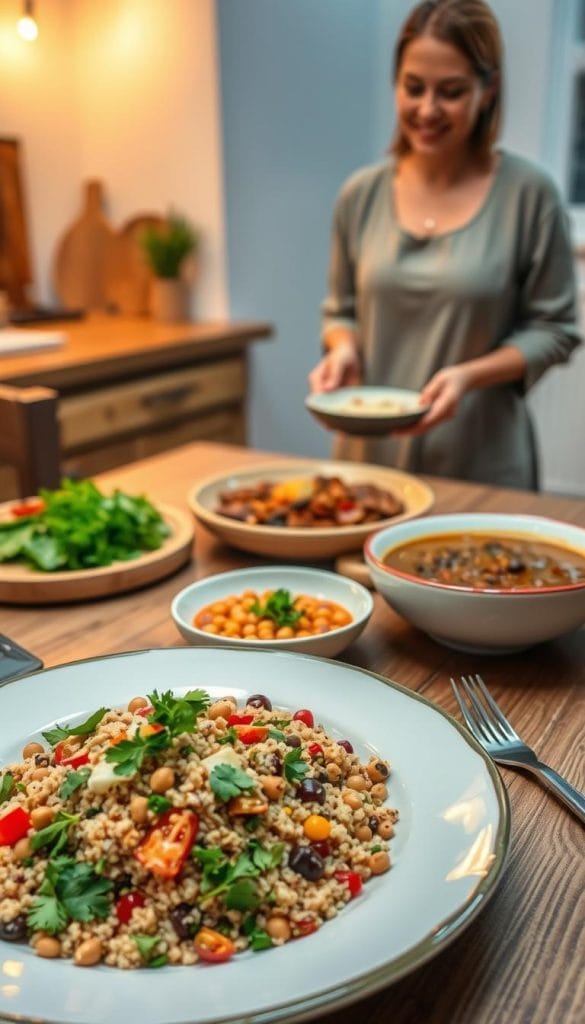
- Scale these dishes for family servings and adapt spices to taste.
- Balance grains, legumes, and veggies to meet protein and fiber needs.
- Cook larger batches so leftovers serve as quick lunches on subsequent days.
| Dish | Main Protein | Grain/Base | Prep Time |
|---|---|---|---|
| Vegetable stir-fry | Tofu or mixed beans | Brown rice | 15-20 min |
| Sweet potato bowl | Black bean | Roasted sweet potato | 30-35 min |
| Quinoa bowl | Mixed beans | Quinoa | 25-30 min |
| Lentil curry | Lentils | Whole grains or rice | 35-45 min (batch) |
Healthy Snack Choices to Keep You Fueled
Small, wholesome bites can stop cravings and help you stay focused on your purpose. Keep snacks ready so you avoid processed options when the day gets busy.
Quick ideas: apple slices with almond butter, carrot sticks with homemade hummus, and fresh berries or a small fruit salad for a natural sweet fix.
A handful of raw nuts and seeds gives a fast protein boost. Rice cakes topped with avocado or nut butter work for a light, filling option. Plant Based Diet covers the same topic from another angle.
- Keep unsweetened almond milk on hand for smoothies or oats at breakfast.
- Choose bean-based dips and veggie sticks to add vegetables and fiber to snacks.
- Always read labels to avoid added sugar and hidden additives in packaged foods.
| Snack | Main Benefit | Prep |
|---|---|---|
| Apple + almond butter | Fruit + healthy fat | 2 minutes |
| Carrot + hummus | Veggies + protein | 5 minutes |
| Rice cake + avocado | Complex carbs + fat | 3 minutes |
| Nuts & seeds mix | Energy & protein | Ready-to-eat |
These snack options support your daniel fast journey by keeping energy steady between meals. Stock them so your plan stays simple and focused.
Staying Hydrated with Compliant Beverages
Choose simple, clean beverages to support both your body and your spiritual focus. Aim to drink at least 8 cups of water each day to stay hydrated and help digest high-fiber food choices.
Unsweetened herbal teas are a warm, soothing option during prayer and reflection. A splash of almond milk can make a morning tea or coffee alternative more enjoyable without breaking the guidelines.
Freshly pressed veggie juice adds concentrated nutrients and can balance low-energy moments. Avoid caffeinated drinks, energy drinks, and alcohol, these do not align with the practice.
- Infuse water with lemon or cucumber for variety.
- Use herbal teas for comfort and hydration.
- Keep beverages simple so your focus stays on prayer and renewal.
| Beverage | Benefit | When to use | Notes |
|---|---|---|---|
| Plain water | Hydration, aids digestion | Throughout the day | Target 8+ cups daily |
| Herbal tea (unsweetened) | Comfort, variety | Morning or evening | No added sugar |
| Fresh vegetable juice | Concentrated nutrients | With or between meals | Best fresh, include leafy veggies |
| Almond milk splash | Creaminess, mild protein | In tea or smoothies | Use unsweetened milk |
Budget Friendly Strategies for Your Grocery List
Smart shopping choices cut costs and keep your pantry ready for spiritual focus. Simple habits help you buy nutritious foods without overspending during this season.

Shopping Seasonally
Buy vegetables and fruits that are in season to get the best price and flavor.
Seasonal produce lasts longer and often requires less processing, so you reduce waste and save money.
Buying Staples in Bulk
Stock staples like brown rice, oats, quinoa, and dried beans to lower your per-unit cost.
Bulk nuts and seeds, lentils, and black bean packs give you flexible ingredients for many meals.
Cooking from Scratch
Making your own salad dressing, bread, or bean spreads cuts costs and removes hidden sugar and additives.
Batch-cook soups and grains so leftovers serve as quick lunches or dinner repeats across the days.
- Use frozen fruits and veggies on sale to extend variety and prevent spoilage.
- Plan menus around whole grains and legumes to keep nutrition high and budgets low.
- Avoid processed convenience items; simple preparation saves money and supports your intent.
| Strategy | Examples | Benefit |
|---|---|---|
| Seasonal shopping | In-season fruits, leafy greens | Lower cost, better taste |
| Bulk buying | Brown rice, oats, dried beans | Long shelf life, cheaper per serving |
| Cook from scratch | Homemade dressing, bread, soups | Fewer additives, more savings |
Every dollar saved on groceries is a small act of discipline. Focus on whole grains, legumes, and simple ingredients so your food supports both body and spirit.
Tips for Dining Out While Maintaining Your Fast
Dining away from home doesn’t have to derail your commitment when you know what to ask for. Choose restaurants that offer fresh salad options and a simple olive oil and lemon dressing. This gives you a safe, filling start to a public meal.
Look for plain, baked items like a baked potato and steamed vegetables. Ask to skip butter, sour cream, or cheese. You can also combine steamed broccoli and brown rice for a hearty plate.
- Be cautious: many dishes use meat stocks or hidden dairy, so ask how food is prepared.
- Avoid fast food chains; their items often contain additives, sugar, or processed oils.
- If uncertain, ask the server for ingredient details or for simple swaps like olive oil instead of milk-based sauces.
- Choose a calm setting that supports your prayer and focus so your public meals align with your purpose.
| Request | Why | Example |
|---|---|---|
| Olive oil & lemon | Clean dressing | Side salad |
| Steamed sides | Low risk ingredients | Broccoli, carrots |
| Ask about stocks | Avoid hidden meat | Soups, sauces |
The Role of Prayer and Spiritual Discipline
Let your kitchen become a place of worship, where chopping and stirring join your prayers.
Prayer is the heartbeat of the daniel fast. It transforms a simple change in diet into a true act of devotion. When you prepare each meal, pause and ask for clarity, wisdom, and a deeper connection with the Holy Spirit.
The discipline of avoiding certain grains and beans is a physical reminder of your daily dependence on God. Matthew 6:16 teaches humility in fasting, focus on inward growth rather than outward show.
Keep prayer central during busy hours. Offer brief petitions while you rinse rice, stir a pot, or set the table. These small moments sustain a prayerful posture all through your routine.
- Pray while you prep to connect intention with action.
- Use the provided recipes and simple food choices as tools, not the goal.
- Let discipline lead you into deeper trust, not pride.
| Action | When | Benefit |
|---|---|---|
| Quiet prayer before eating | Each meal | Centering and gratitude |
| Short petitions during prep | While cooking rice or washing grains | Consistent spiritual focus |
| Reflective journaling | Evening | Track growth and humility |
Listening to Your Body During the Process
Pay close attention to signals from your body as you move through these weeks. Small changes in energy, mood, or digestion are normal when you shift to whole foods.
If you feel lightheaded or weak, increase plant protein like lentils or beans. Boost complex grains such as rice or quinoa and add nuts and seeds to snacks.
Track how different foods, oats, fruits, veggies, or almond milk, affect digestion. Adjust portions and ingredients so each meal leaves you comfortable and energized.

Withdrawal from sugar or processed items can cause temporary discomfort in the first few weeks. If symptoms persist or you have a condition like Hashimoto’s Thyroiditis, consult your doctor promptly.
- Honor your body as sacred; rest when needed.
- Keep a short daily journal of physical and spiritual notes.
- Prioritize water, whole grains, beans, and balanced salads to steady energy.
| Signal | Likely Cause | Action |
|---|---|---|
| Lightheadedness | Low calories or low protein | Add lentils/beans, extra rice or quinoa |
| Digestive upset | New high-fiber foods | Reduce portion size, increase water, eat cooked veggies |
| Persistent fatigue | Underlying condition or nutrient gap | See provider, adjust nuts/seeds and grains |
| Mild withdrawal | Reduced sugar/caffeine | Rest, hydrate, small fruit or oats snack |
Conclusion
Concluding this period can help you carry new clarity into ordinary routines.
You completed a meaningful spiritual and physical challenge. Celebrate how the daniel fast strengthened prayer, discipline, and care for your body.
Bring forward simple habits: a brown rice bowl, a quick salad with beans, or a calm, faithful meal when you need steadiness. Use the recipes you liked as a practical way to eat with purpose.
Reflect on what changed each day and let that growth guide your choices. May the peace you found continue to shape how you eat, pray, and live.
FAQ
What is the 21-day Daniel fast and how does it differ from other fasts?
The 21-day Daniel fast follows the biblical practice of eating only whole plant-based foods for spiritual focus and health. You avoid meat, dairy, sweeteners, and processed items while emphasizing fruits, vegetables, whole grains like brown rice and quinoa, legumes such as lentils and black beans, nuts and seeds, and water or approved beverages. It’s more restrictive than intermittent fasting because it centers on food choices rather than meal timing.
Can you get enough protein without meat and dairy during the fast?
Yes. You meet protein needs by combining legumes, beans, quinoa, oats, nuts, and seeds across meals. Lentils, black beans, chickpeas, and tofu (if allowed) are excellent sources. Pairing grains and legumes helps provide complete amino acid profiles. Track portions and include a protein-rich option at each meal to sustain energy.
Are whole grains like brown rice and quinoa allowed every day?
Yes. Whole grains such as brown rice, quinoa, barley, and oats are staples. They provide steady energy and fiber. Rotate grains through breakfasts, lunches, and dinners to keep meals varied and satisfying. Opt for plain or lightly seasoned preparations without added sugar or animal-derived broths.
What beverages can you drink during the fast?
Water is your primary beverage and should be the focus. Herbal teas and unsweetened plant milks like almond milk (without additives) are usually acceptable. Avoid coffee with cream, juice with added sugar, and alcohol. Always check your fast guidelines if you’re following a specific spiritual community’s rules.
How can you manage hunger and cravings for sweets or processed foods?
Plan meals with protein, fiber, and healthy fats from nuts and seeds to curb cravings. Keep fruit, raw veggies, and small portions of nuts available as snacks. Preparing satisfying dishes like hearty salads with beans, grain bowls with veggies, or oatmeal with berries helps replace sugar-driven habits.
Are grains and legumes okay if you have digestive sensitivity?
Many people tolerate cooked and soaked legumes or sprouted grains better. Start with smaller servings and increase gradually. Choose easy-to-digest options like well-cooked lentils and white rice if needed. If you have a medical condition or severe sensitivity, consult a healthcare professional before starting.
Can you follow the fast on a tight grocery budget?
Absolutely. Buy staples like brown rice, oats, dried beans, and lentils in bulk. Shop seasonal produce, frozen vegetables, and store-brand nuts to cut cost. Cooking from scratch and planning simple meals, stews, soups, grain bowls, stretches ingredients and reduces waste.
How do you adapt the plan for active days or exercise routines?
Focus on balanced meals with complex carbs and plant protein before workouts, oatmeal with nut butter or a quinoa salad with beans work well. Replenish with a post-exercise meal that includes grains, legumes, and vegetables. Monitor energy and adjust portion sizes or snack timing as needed.
Is sugar completely banned, and what about natural sweeteners?
Refined sugars and sweeteners are typically prohibited. Small amounts of whole fruit provide natural sweetness and are encouraged. Some people permit minimal use of dates or maple in recipes, but follow the specific rules you set for your fast to stay aligned with your spiritual goals.
How should you transition off the fast once 21 days are over?
Reintroduce foods gradually, starting with simple plant-based options, then add dairy or lean animal products slowly if you plan to. Continue emphasizing whole foods to preserve benefits. Use this period to reflect on habits you want to keep, more whole grains, legumes, and vegetables, and incorporate them into your regular diet.
Can children or pregnant women participate?
Children, pregnant or nursing women, and people with certain medical conditions should consult a healthcare provider before changing their diets. Modifications may be necessary to ensure adequate calories, vitamins, and minerals for growth and pregnancy needs.
What pantry staples should you stock before starting?
Build a pantry with brown rice, quinoa, oats, dried or canned beans and lentils, nuts and seeds, whole-grain breads if allowed, canned tomatoes, olive oil, herbs, and spices. Keep frozen vegetables and fruits on hand for convenience and variety.
How do you handle dining out while maintaining the fast?
Look for plant-forward menu items: vegetable plates, grain bowls, salads with beans or quinoa. Ask restaurants to skip cheese, dressings with dairy, or added sugars. Simple requests, olive oil instead of butter, steamed veggies, brown rice, help you stay on track.
Will this eating pattern support weight loss or improved health markers?
Many people experience weight loss, better blood sugar control, and improved digestion due to reduced processed foods and increased fiber. Results depend on portion control and food choices. For targeted health goals, consult a dietitian to tailor the approach to your needs.
What are easy breakfast ideas to start the day strong?
Try oatmeal with berries and chopped almonds, a quinoa porridge with cinnamon and fruit, or whole-grain toast topped with mashed avocado and sunflower seeds. Smoothies made from greens, berries, and unsweetened plant milk also work if allowed by your fast’s guidelines.