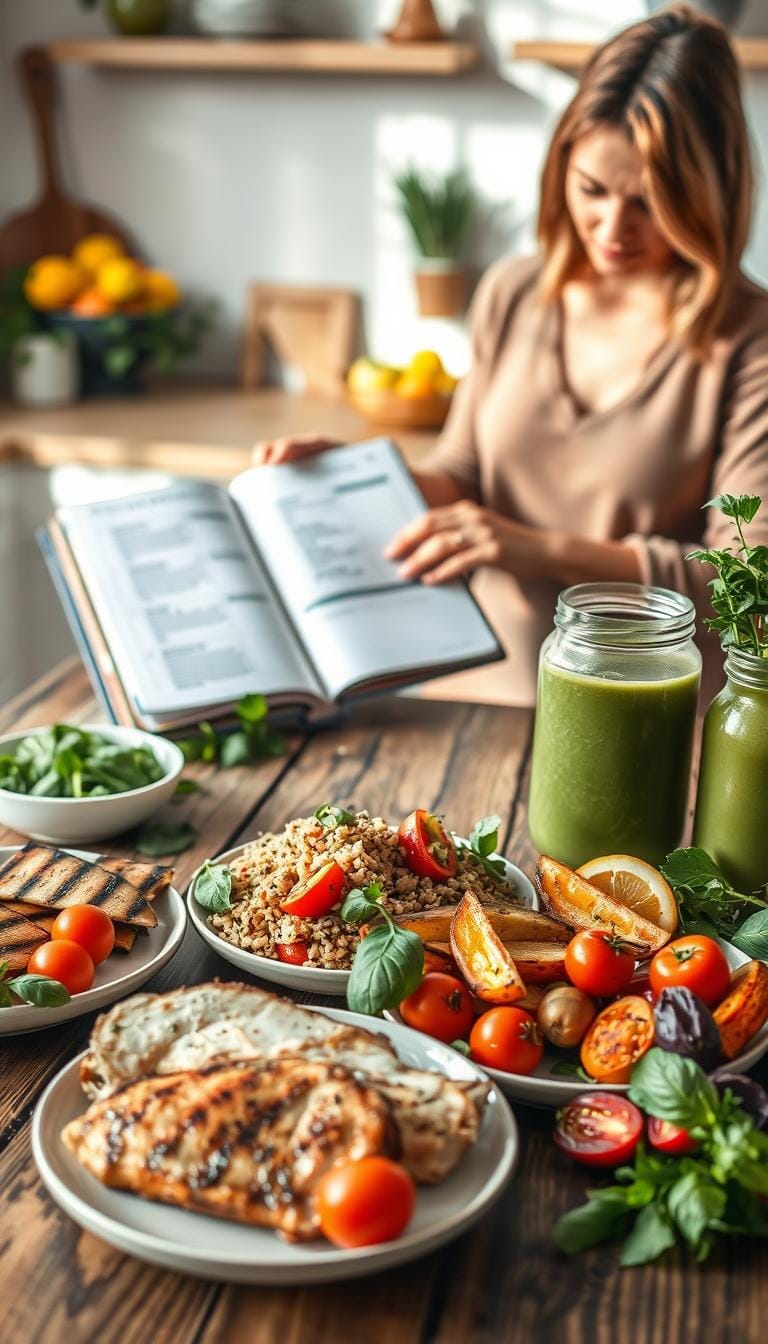
Want to know how a simple swap can change your whole day? You can fuel your mornings and afternoons with real foods that keep energy steady. This guide shows you how to build a week of tasty, nourishing meals without fuss.
Start with a light salad: the Taste of Home Test Kitchen in Milwaukee created a refreshing mix of strawberries and baby spinach that fits the idea. Each 1-3/4 cup serving has about 260 calories, 12g fat, 397mg sodium, and 23g protein.
You’ll learn simple ways to add fiber and lean protein like chicken to lunch and dinner. This approach helps you save time, support good nutrition, and enjoy every bite while avoiding processed foods.
Key Takeaways
- Commit to whole foods for steady energy through the day.
- A light strawberry and spinach salad makes an easy, nutrient-dense lunch.
- Track portions such as the 1-3/4 cup serving to manage calories and sodium.
- Include lean protein and fiber to keep you full longer.
- Plan your time so breakfast, lunch, dinner, and a side are ready when needed.
Understanding the Philosophy of Clean Eating
Think of your plate as a shortlist of simple items that deliver true nutrition.
You focus on whole food that keeps its natural value. Choose items with short, familiar ingredients and avoid long, confusing lists.
Defining Whole Foods
Whole foods are minimally processed. They give you fiber, vitamins, and real nutrition without added fillers.
Minimizing Additives
Look for products that skip preservatives and artificial additives. Even some processed options, like whole-grain bread, still offer benefits when they keep their original nutrients.
- Prefer items with a short ingredient list.
- Prioritize foods that read like something you recognize.
- Check labels and favor fewer, clearer components.
| Type | Example | Processing Level | Nutrition Impact |
|---|---|---|---|
| Minimally processed | Oats, brown rice | Low | High fiber, intact vitamins |
| Moderately processed | Whole-grain bread | Medium | Good nutrients if not refined |
| Highly processed | Shelf snacks, ready sauces | High | Often high in additives |
Why You Should Adopt a Clean Eating Meal Plan
Choosing whole, familiar foods gives your body steady fuel and clearer focus throughout the day.
You don’t have to follow extreme rules to get results. Unlike fad diets that cut entire nutrient groups, this approach offers balance and variety.
Benefits at a glance:
- You get vegetables, fruits, and lean protein that help you perform at your best.
- The approach is flexible, you won’t need to manipulate timing of your food to stay on track.
- Focusing on whole foods supplies the essential nutrition your body needs for steady energy.
This diet aims to make you feel and look good without strict calorie counting. You’ll enjoy a wide range of healthy foods that support long-term goals.
Essential Pantry Staples for Your Kitchen
Choose pantry items that mix and match easily to build simple, nutrient-rich plates.
Stocking Your Cupboard
Keep a few reliable staples so you can prepare something nourishing any day of the week. A small set of core ingredients saves time and reduces stress when life gets busy.
Store whole grains, canned beans, nuts, and olive oil. Add shelf-stable proteins like canned tuna and quality spices. Keep whole-grain bread and a jar of nut butter for quick breakfasts or snacks.
- Whole grains: oats, brown rice, quinoa
- Proteins: canned beans, tuna, lentils
- Healthy fats: olive oil, nuts, seeds
- Fresh basics: onions, garlic, lemons (rotate weekly)
| Category | Suggested Items | Why it Helps |
|---|---|---|
| Grains | Oats, brown rice, quinoa | Fill you up and pair with many dishes |
| Proteins | Canned beans, tuna, lentils | Long shelf life and quick to prepare |
| Fats & Flavors | Olive oil, nuts, spices | Add taste and satiety to recipes |
| Bread & Quick Picks | Whole-grain bread, nut butter | Fast options for busy days |
How to Shop for Whole Foods on a Budget
You can eat well on a budget when you pick frozen or canned options with simple labels.
Look for frozen fruits and vegetables or canned items that list no extra sugar or additives. They keep nutrients and cost less than some fresh produce.
Buy staples like whole-grain bread in bulk or when it’s on sale. That saves money and gives you reliable ingredients for many quick dishes.
- Read labels so hidden ingredients don’t raise the price or lower nutrition.
- Plan your trips to avoid impulse buys and to use weekly store sales.
- Focus your budget on versatile items you can use in several recipes.
| Buy Type | Example | Why it Helps |
|---|---|---|
| Fresh | Leafy greens, tomatoes | Best for short-term use and flavor |
| Frozen/Canned | Peas, berries, beans | Lower cost, long shelf life, minimal additives |
| Staples | Rice, oats, canned tuna | Versatile and budget-friendly |
Preparing Your Weekly Meal Plan
Set aside one afternoon to map out what you’ll eat for the coming week. This small habit saves you time and removes daily guesswork.
Dedicate a single block of time each week to write a simple shopping list and pick recipes. When you do this, you keep your eating habits consistent and avoid last-minute choices that derail goals. High Protein Meal Plan applies the same idea to meal planning.
Choose a variety of food groups so every day includes vegetables, protein, whole grains, and healthy fats. A balanced approach gives your body steady energy and helps you stay satisfied.
Map out your main meals and a couple of easy swaps for busy nights. This reduces impulse buys and supports long-term success.
- Save time each weekday by prepping ingredients in one session.
- Rotate two or three core recipes to keep variety without overwhelm.
- Use leftovers smartly to cut cooking time and waste.
Mastering Breakfast for Sustained Energy
Start your day with a quick routine that locks in steady energy for hours.

Quick Morning Options
You can make a balanced breakfast in under 10 minutes. Try a bowl with oats, a cup of berries, and a spoonful of nut butter. This gives fiber and slows digestion so you feel fuller longer.
Or toast whole-grain bread and top it with sliced avocado and a side of lettuce or a small salad. Add a hard-boiled egg or grilled chicken if you want more protein.
Balancing Macros
Aim for protein, healthy carbs, and a little fat. That mix controls calories and keeps your focus through the morning.
- Protein: eggs, Greek yogurt, or grilled chicken (2 oz).
- Carbs: a cup of fruit or whole grains for steady energy.
- Fat: a drizzle of olive oil or a few nuts for satiety.
| Breakfast Type | Example | Prep Time | Calories (est.) |
|---|---|---|---|
| Quick Bowl | Oats + cup berries + yogurt | 5 minutes | 300-350 |
| Protein Toast | Whole-grain toast + egg + lettuce | 8 minutes | 320-380 |
| Savory Bowl | Quinoa + grilled chicken + greens | 10 minutes (leftovers) | 350-420 |
Plan your breakfasts ahead so you don’t skip them on busy mornings. A little prep saves time and keeps your day on track.
Crafting Nutrient Dense Lunches
Build a lunch that powers your afternoon with a simple cup of greens and a lean protein. Start with a cup of lettuce or mixed greens, add 3-4 ounces of grilled chicken, and finish with a light drizzle of oil or a squeeze of lemon.
You can prepare this in about 15 minutes. Swap the chicken for canned tuna or beans when you need variety.
Add a small cup of whole grains or a side of raw veggies to raise fiber and keep calories steady through the rest of the day. Planning your lunch as part of your weekly plan helps you avoid processed options that often spike calories.
- Quick prep: chop greens, warm protein, portion a cup of grains.
- combo ideas: lettuce + chicken + quinoa; greens + tuna + cucumber.
- Pack dressings separately to keep lunches light and fresh.
| Component | Portion | Benefit |
|---|---|---|
| Leafy greens | 1 cup | Low calories, high volume |
| Lean protein | 3-4 oz chicken | Sustains energy and supports fullness |
| Grains or veg side | 1 small cup | Boosts fiber and balances carbs |
Simple and Satisfying Dinner Ideas
When time is short, bold flavors like garlic and lemon turn basic proteins into satisfying dinners.
Cooking with Garlic and Lemon
Start with a protein such as shrimp or chicken and a hot pan. Sauté garlic in a splash of oil for 30 seconds, then add protein and a squeeze of lemon.
This can be ready in about 20 minutes. Serve with a cup of whole-grain pasta or a light salad that includes a cup of fresh lettuce. The combination keeps calories reasonable and boosts fiber.
- Shrimp sautéed with garlic and lemon is fast and low in added calories. It works well over pasta or rice.
- Grilled chicken with roasted lemon and garlic pairs nicely with a green side and adds protein for the day.
- Try a thin-crust pizza on whole-grain base topped with garlic, lemon zest, and light cheese for a satisfying, lighter option.
| Dish | Prep Time | Best Side |
|---|---|---|
| Shrimp with garlic & lemon | 20 minutes | Whole-grain pasta, 1 cup lettuce |
| Pan-seared chicken | 25 minutes | Roasted veg, small pasta |
| Light whole-grain pizza | 15-20 minutes | Simple salad (1 cup) |
Plan a few of these dinners for the week. When you do, you save time and finish the day with food that feels both simple and satisfying.
Incorporating Healthy Fats Like Olive Oil
A single tablespoon of olive oil lifts a simple salad and supports nutrient uptake. Use that spoon to dress a cup of fresh lettuce or to finish a side of grilled chicken.
Why it helps: olive oil boosts absorption of fat-soluble vitamins and helps fiber do its job. It adds rich flavor so you enjoy what you eat without extra fuss.
Measure the oil to control calories. One tablespoon has about 120 calories, so tracking it keeps your totals in check. A small drizzle at serving time makes a big difference in taste and nutrition.
Try this: toss a cup of greens, add sliced chicken, and finish with a tablespoon of olive oil and lemon. The combination brings texture, healthy fat, and a flavor that helps you stick with your plan through the day.

- Use measured tablespoons to limit extra calories.
- Add oil to roasted veg or lean protein for more satiety.
- Rotate olive oil with herbs and citrus for variety.
The Role of Lean Protein in Your Diet
Adding a measured portion of lean protein turns a simple plate into a satisfying one.
Lean protein helps you maintain muscle and stay full through the day. Aim to include a source at each meal to keep calories steady and hunger at bay.
Try adding a cup of greens as a side when you serve chicken or another lean protein. That small swap adds fiber and volume without many extra calories.
Prepare proteins with minimal oil and fresh herbs to preserve flavor and nutrition. With modest prep time, you give your body the building blocks it needs to recover and perform. 100g Protein Meal Plan applies the same idea to meal planning.
- Portion protein to control calories and support muscle.
- Pair protein with a cup of leafy greens or a small salad for fiber.
- Rotate chicken, fish, beans, and lean cuts to keep variety.
| Portion | Example | Benefit |
|---|---|---|
| 3-4 oz | Grilled chicken | Supports muscle, ~100-150 calories |
| 1 cup | Leafy greens | Adds fiber and volume |
| 1-2 tbsp | Olive oil (for finish) | Enhances flavor, aids nutrient uptake |
Maximizing Fiber with Vegetables and Grains
A simple swap, choose sweet potatoes or a cup of quinoa, can raise fiber and keep you full.
Include colorful vegetables and whole grains to boost daily fiber. Roast sweet potatoes or cauliflower for an easy side that adds texture and nutrients.
Sweet potatoes are nutrient-dense. Half a baked potato or a small sweet potato gives fiber and vitamins while keeping calories reasonable.
Benefits of Sweet Potatoes
They offer beta-carotene and slow-release carbs. That helps steady energy for the rest of the day and reduces snacking.
Using Quinoa and Rice
Serve a cup of quinoa or brown rice as a side to add protein and complex carbs. Quinoa gives a little extra protein, while rice stretches your portions affordably.
- Mix grains and veggies to vary texture and flavor.
- Pair a cup of grains with a cup of roasted vegetables for balance.
- Finish plates with a teaspoon of oil or a squeeze of lemon to lift flavors without many calories.
| Ingredient | Typical Portion | Fiber & Benefit |
|---|---|---|
| Sweet potato | Half baked potato | High fiber, vitamin A |
| Quinoa | 1 cup cooked | Fiber + plant protein |
| Brown rice | 1 cup cooked | Complex carbs, fiber boost |
| Cauliflower | 1 cup roasted | Low calories, adds volume |
Smart Snacking with Fruits and Nuts
Small, portable bites of whole foods make it easier to stay on track during busy afternoons.
Grab a cup of fresh fruits or a small handful of nuts for a quick energy boost. These options give you natural sugars, healthy fat, and protein without a lot of added calories.
Pairing a cup of berries with a few almonds adds texture and keeps hunger at bay until your next meal. Add a side of kale chips or crunchy veggies to increase fiber without raising calories for the rest of the day.
- Pack snacks in advance so you have healthy options when you are short on time.
- Choose whole fruits and nuts over processed bars to avoid empty calories.
- Rotate snacks: a cup of fruit one day, a small nut mix the next, or kale crisps when you want crunch.
Tip: If you eat chicken at lunch, plan snacks that won’t spoil that protein in the fridge. A clear snack strategy helps you keep steady energy and supports your overall goals each day.
Avoiding Highly Processed Foods
Reducing packaged goods with long ingredient lists makes it easier to know what you’re actually eating.
Avoiding highly processed foods is one of the best steps you can take to raise your daily energy and reduce hidden sugars and fats. Read the ingredient list on packaged items and skip products with additives or long chemical names.
Focus on whole, unprocessed ingredients when you build a quick meal. Fresh produce, plain grains, and simple proteins give taste and nutrition without surprises.
- Limit items with long ingredient lists; they are often the most processed.
- Use a teaspoon of olive oil at serving time instead of sauces with many additives.
- Prioritize fresh, natural foods that support steady energy and clear nutrition.
| Feature | Typical Ingredient | Processing Level | Why to Avoid |
|---|---|---|---|
| Ultra-processed snack | Hydrogenated oils, high fructose corn syrup | High | Added sugars, trans fats, low nutrient density |
| Moderately processed | Whole-grain bread, canned beans | Medium | Often okay if ingredient list is short |
| Whole, unprocessed | Fresh vegetables, plain oats, chicken | Low | Higher fiber, vitamins, predictable nutrition |
Tips for Successful Meal Prep
Set aside one reliable block of time each week to prep proteins, grains, and veg so weekdays go smoothly.
Cook once, assemble all week. Roast a few chicken breasts, cook a cup of quinoa, and chop a mix of vegetables. When the fridge holds ready items, you save time every day.
Keep small, labeled containers so you can grab a cup of grains or a cup of protein and build a quick plate. This makes lunch and dinner simple and consistent.
- Focus on versatile ingredients that pair in many ways.
- Use measured oil at serving to control calories and add flavor.
- Include a slice of whole-grain bread as a quick carb when you need it.
| Prep Item | Portion | Quick Use |
|---|---|---|
| Quinoa | 1 cup cooked | Base for bowls or sides |
| Grilled chicken | 1 cup chopped | Top salads or sandwiches |
| Roasted veg | 1-2 cups | Side or mix-in for wraps |
Variety in the fridge helps you stick to healthy habits even on the busiest day. With simple cooking and a tidy routine, your foods work harder so you don’t have to.
Adjusting Portions for Your Calorie Needs
Scaling portions is a practical tool to match food to your activity and goals.
Start by rethinking staples. Try serving half of your usual portion of grains and double the vegetables. That swap lowers calories while adding volume and fiber.

Listen to your hunger cues and adjust portions based on how active your day will be. If you exercise, add a bit more protein or a small extra portion of grains.
Watch the little additions, like a tablespoon of oil, since they add calories fast. Measure when you need to stay on target.
- Balance: pair protein, vegetables, and a modest grain portion to support nutrition.
- Practical tip: plate food in smaller dishes to avoid automatic overeating.
- Check labels so you know how many calories are in packaged items you use.
| Swap | Old Portion | Suggested Portion |
|---|---|---|
| Grains | 1 cup | 1/2 cup |
| Vegetables | 1 cup | 2 cups |
| Fat finish | 2 tbsp oil | 1 tbsp oil |
Conclusion
Small, consistent swaps in your kitchen lead to big health gains over time.
Start with easy steps: stock fresh ingredients, prep a few favorites, and pick portions that fit your day. These habits boost energy and help you stick with a steady routine.
Make a strong, consistent habit of simple choices like measured oil for flavor and a cup of greens with protein. That single habit raises nutrition without extra fuss.
Be patient and plan ahead. Every smart choice, breakfast, lunch, or dinner, adds up. Begin today and enjoy the lasting benefits of a more mindful approach to food.
FAQ
What is a whole-food weekly plan and how does it differ from standard dieting?
You’ll focus on unprocessed foods like vegetables, fruits, lean chicken, shrimp, quinoa, rice, and sweet potatoes rather than packaged products. That means fewer additives, predictable calories, more fiber, and meals made with real ingredients such as olive oil, garlic, and lemon for flavor.
How do I start stocking my pantry for simple, healthy meals?
Keep staples on hand: olive oil, whole grains (quinoa, brown rice, pasta), canned tomatoes, garlic, dried herbs, legumes, and a variety of frozen and fresh vegetables. Add bread or wraps for quick lunches and nuts or fruit for snacks to stay satisfied between meals.
Can I follow this approach on a tight grocery budget?
Yes. Buy seasonal produce, shop sales, choose store-brand grains, and lean proteins like chicken thighs or canned tuna. Use sweet potatoes and cauliflower as versatile, low-cost sides. Batch-cook grains and legumes to lower per-serving costs.
What are quick breakfasts that keep your energy steady all morning?
Try overnight oats with berries and a spoonful of olive oil-free nut butter, scrambled eggs with spinach and tomato, or Greek yogurt topped with fruit and a sprinkle of oats. These balance protein, fiber, and healthy fats for lasting energy.
How do I make lunches that stay filling without extra calories?
Build bowls with a base of greens or quinoa, add roasted vegetables, a lean protein like grilled chicken or shrimp, and a drizzle of olive oil and lemon. Include a portion of complex carbs, sweet potato or brown rice, for sustained fullness.
What are simple weekday dinners that require minimal time?
Roast a tray of vegetables and a lean protein with garlic, olive oil, and lemon for 25-35 minutes, or sauté shrimp with greens and serve over quinoa. One-pan dishes and sheet-pan meals cut prep and cleanup time.
How important is olive oil and how much should I use?
Olive oil provides heart-healthy monounsaturated fats and enhances absorption of fat-soluble nutrients. Use it for cooking and dressings in moderation, about 1 tablespoon per serving, so you control added calories.
How can you add more fiber to your daily intake?
Include vegetables, fruits, whole grains, legumes, and starchy vegetables like sweet potatoes. Swap white rice for brown rice or quinoa and add a side salad or steamed veggies to each main course to boost fiber and improve digestion.
What role does lean protein play and how much do you need per day?
Protein supports muscle repair and satiety. Aim for a palm-sized portion (about 3-4 ounces) at meals, adjusting up or down based on your calorie needs. Good options include chicken, turkey, shrimp, tofu, and legumes.
Are snacks allowed and which are best between meals?
Yes, smart snacks prevent overeating later. Choose fruit with nut butter, a small handful of nuts, Greek yogurt, or cut veggies with hummus. These provide a mix of protein, fiber, and healthy fats to keep you satisfied.
How do you avoid highly processed foods without feeling deprived?
Cook simple versions of your favorites: homemade pizza on whole-grain flatbread with vegetables and a light cheese, or pasta tossed with olive oil, garlic, and roasted veggies. Keep treats occasional and focus on flavorful whole ingredients.
What are time-saving meal-prep tips to keep you on track?
Batch-cook grains, roast multiple vegetable trays, and portion proteins into containers for the week. Pre-wash greens and chop garlic and herbs ahead. Label containers by day to streamline busy mornings and dinners.
How can you tweak portions to match your calorie goals?
Track servings: a cup of cooked grains, a medium sweet potato, or a palm-sized protein portion. Reduce added oils or starchy sides to lower calories, or increase veggies and lean protein to stay full while meeting your target.
Can you include favorites like pasta, pizza, or bread without derailing progress?
Yes, choose whole-grain pasta, a modest slice of vegetable-topped pizza on whole-grain crust, and portion-controlled servings of bread. Pair them with vegetables and lean protein to balance calories and nutrients.
How do garlic and lemon improve recipes and nutrition?
Garlic adds depth and potential immune support; lemon brightens flavors and reduces need for excess salt. Use them together to uplift dishes like roasted vegetables, grilled fish, and salad dressings without adding many calories.