
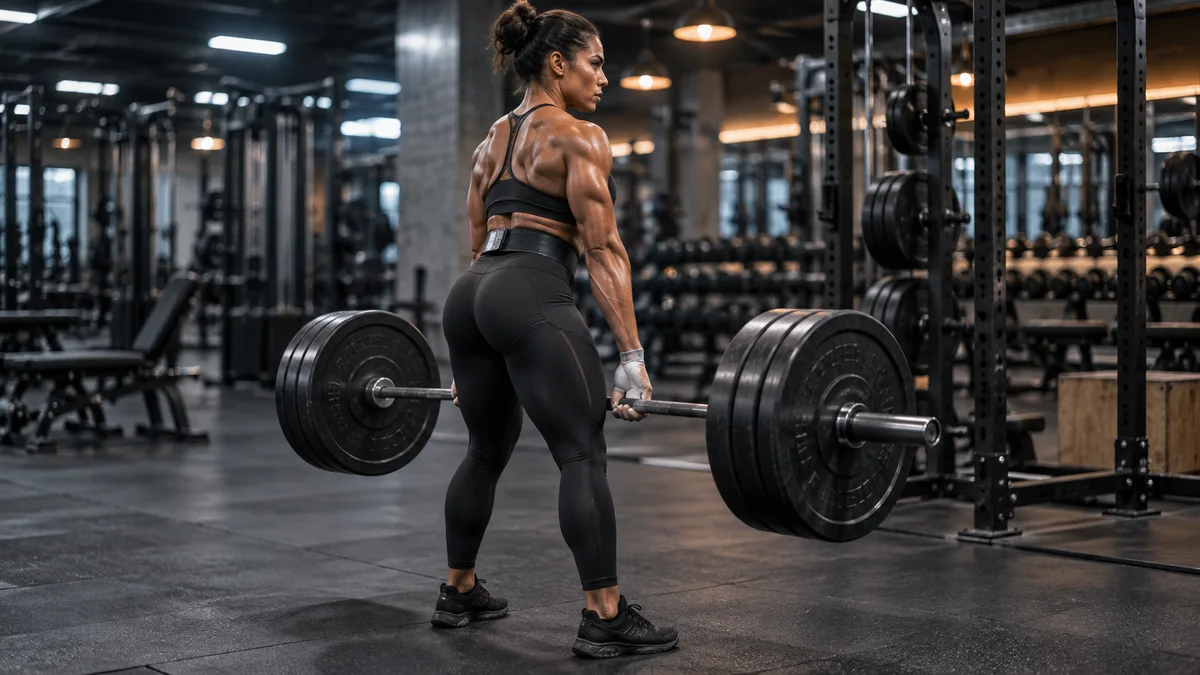
Your lower back does more work in a single day than most people realize, and yet it’s probably the last thing on your training list. If your gym routine is all squats, hip thrusts, and the occasional lat pulldown, you’re leaving serious strength and definition on the table.
Why your lower back deserves its own focus
Here’s what most fitness content glosses over: a strong lower back isn’t just about how you look. It’s the anchor of your entire posterior chain. Every deadlift, squat, hinge, and carry flows through your lumbar spine and the muscles surrounding it.
Weak lower back muscles contribute directly to poor posture, hip instability, and chronic lower back pain. The American College of Sports Medicine estimates that up to 80% of adults experience lower back pain at some point in their lives. A lot of that is preventable with consistent, targeted strength training.
And the visual payoff? A developed lower back creates that coveted taper from the waist and adds a sleek, muscular detail that pulls the whole back together. Nobody talks about this enough.
The muscles you’re actually targeting
Understanding what you’re training helps you train it better. The lower back isn’t one muscle. It’s a team.
- Erector Spinae: The long muscles running alongside your spine. They extend and stabilize the back and give it that defined, vertical column look.
- Multifidus: Deeper stabilizers along the spine. You can’t see them, but they’re critically important for spinal support and injury prevention.
- Quadratus Lumborum (QL): The deep muscle connecting your pelvis to your lower ribs. A huge player in lateral stability.
- Glutes and Hamstrings: Not lower back muscles in the strict sense, but they work as a unit with the lower back in every hinge movement.
When people say “train your lower back,” they really mean train the full posterior chain. These muscles don’t fire in isolation.
Before you start: a few things worth knowing
If you’ve ever thrown out your back doing something embarrassingly simple (like picking up a pencil), this section is for you. Lower back training rewards patience and form above everything else.
- Warm up first. Cold, stiff muscles and heavy loads are a bad combination. Spend 5 to 10 minutes on light cardio and dynamic stretches like hip circles and cat-cow.
- Start lighter than you think you need to. Ego lifting in back exercises is how people end up on the physiotherapy table.
- Brace your core. A tight core protects your spine. Think about pulling your belly button toward your spine before every rep.
- Hinge, don’t round. Most lower back exercises rely on a hip hinge, which means pushing the hips back while keeping the spine neutral. Rounding the lower back under load is the main culprit for injury.
According to the National Academy of Sports Medicine, corrective attention to lumbar positioning during compound lifts significantly reduces injury risk and improves long-term training outcomes. Boring-sounding advice that genuinely matters.

The best lower back exercises for women at the gym
These are the moves that actually work. No gimmicks, no fluff. Each one targets the lower back either as the primary mover or a major stabilizer.
1. Romanian Deadlift (RDL)
The RDL is probably the single best lower back exercise for women. It trains the entire posterior chain through a full range of motion, places massive tension on the erector spinae, and builds that long, defined look through the back of the body.
- Stand with feet hip-width apart, barbell or dumbbells in front of your thighs
- Push your hips back while lowering the weight along your legs, keeping it close to the body
- Feel the stretch in your hamstrings, then drive the hips forward to return to standing
- Keep the spine neutral throughout. No rounding, no overextending
Recommended sets/reps: 3 to 4 sets of 8 to 12 reps. Focus on the slow, controlled lowering phase. That’s where most of the benefit lives.
2. Hyperextensions (Back Extensions)
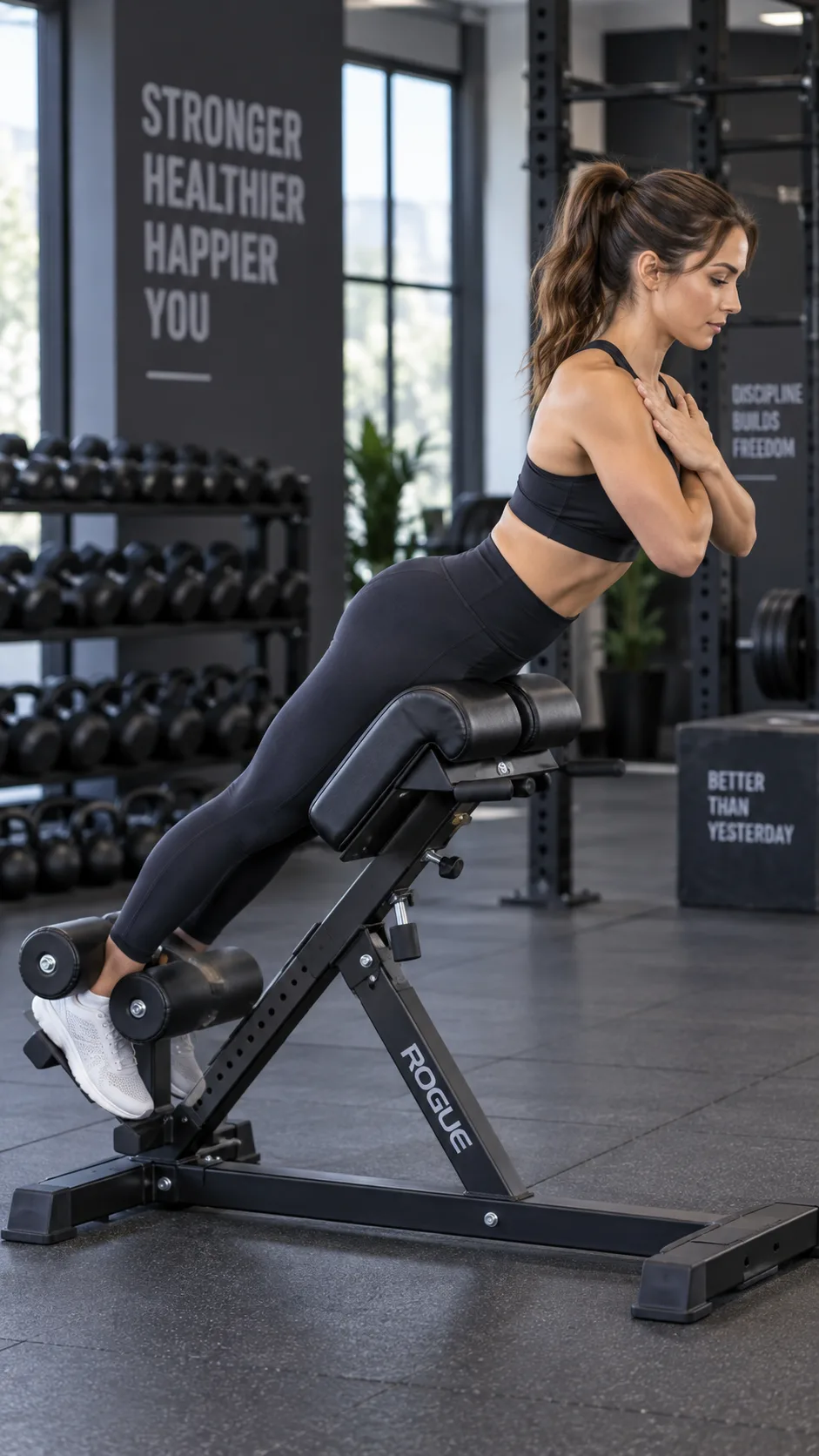
The hyperextension machine is underused and underrated. It directly isolates the erector spinae and gives you real, focused lower back work in a controlled environment. It works equally well for beginners and experienced lifters.
- Position yourself on the hyperextension bench with thighs resting on the pad, feet secured
- Cross your arms over your chest or hold a weight plate for added resistance
- Lower your torso toward the floor with control, then raise it back to parallel. Don’t hyperextend at the top
- Squeeze the glutes and lower back at the top of each rep
Recommended sets/reps: 3 sets of 12 to 15 reps. Add a weight plate once bodyweight feels too easy. This machine is often empty at the gym, so take full advantage.
3. Good Mornings
Good mornings look deceptively simple. They’re not. A barbell rests on your upper back, you hinge at the hips and lower your torso toward parallel, then return upright. The lower back and hamstrings carry the load, making this one of the most effective strengthening exercises you can do.
- Start with a very light barbell until you’re confident in the movement pattern
- Keep a proud chest and neutral spine throughout the hinge
- Push the hips back, lower until you feel tension in the hamstrings, then drive up
Recommended sets/reps: 3 sets of 10 to 12 reps. Go light first. This exercise punishes poor form immediately.
4. Seated Cable Row
Wait, isn’t the cable row a middle back exercise? Mostly, yes. But done correctly, it requires significant lower back stabilization through the entire range of motion. It also builds the thickness and density that makes a back look defined from every angle.
- Sit upright on the cable row machine, slight forward lean at the start of each rep
- Pull the handle to your lower abdomen and drive the elbows back
- Control the return. Don’t let the weight yank you forward and round your lower back
Check out our Chest and Back Workout Women Need for a Stronger, More Sculpted Upper Body for how to program this alongside your upper back work.
5. Deadlift (Conventional)
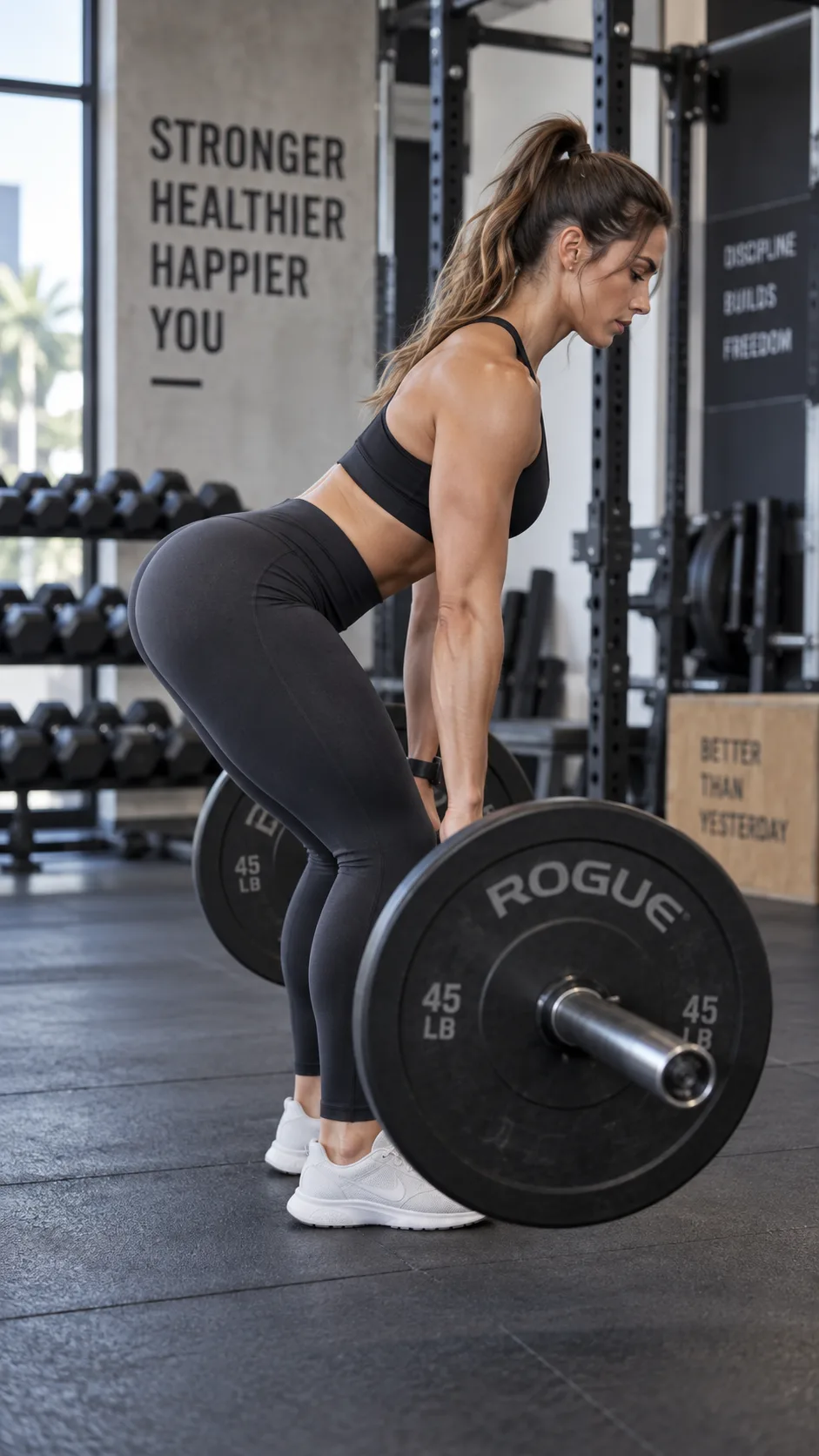
The conventional deadlift is the king of posterior chain exercises. Full stop. It builds strength and muscle across the entire back, glutes, and hamstrings, with the lower back acting as a primary stabilizer through every pull.
- Stand with feet hip-width apart, barbell over midfoot
- Hinge to grip the bar just outside your knees, set your back flat, and brace your core hard
- Drive through the floor and stand tall. Don’t jerk the bar or let the hips shoot up first
- Lower the bar with control
Recommended sets/reps: 3 to 5 sets of 5 to 8 reps. This is a heavy compound movement, so treat it like one. Mayo Clinic research consistently links progressive resistance training of the lower back and posterior chain with reduced chronic back pain in women.
6. Bird-Dog (Machine Variation or Bodyweight)
Not the flashiest exercise, but the bird-dog trains the deep stabilizers of the lower back that heavier lifts can miss. It builds the neuromuscular coordination that protects your spine when things get heavy.
- Start on all fours, hands under shoulders, knees under hips
- Extend the opposite arm and leg simultaneously, keeping the hips square
- Hold for two seconds at extension, then return without dropping your spine
Recommended sets/reps: 3 sets of 12 to 15 reps per side. Use this as a warm-up or finisher, not your main movement.
A sample lower back workout routine for the gym
Here’s how to put these exercises together into a focused lower back session. This works on its own or as part of a larger back day.
- Warm-Up (5 to 10 min): Treadmill walk or light bike, followed by cat-cow, hip circles, and glute bridges
- Romanian Deadlift: 4 sets x 10 reps
- Conventional Deadlift: 3 sets x 6 reps (heavier, focus on form)
- Hyperextension: 3 sets x 12 to 15 reps
- Good Mornings: 3 sets x 10 reps (light to moderate weight)
- Seated Cable Row: 3 sets x 12 reps
- Bird-Dog: 3 sets x 12 reps per side (cool-down pace)
Total time: roughly 50 to 65 minutes depending on your rest periods. Rest 90 seconds to 2 minutes between sets for compound lifts, 60 seconds for isolation work.
Common mistakes that stall your progress
Training hard and not seeing results? One of these is probably the reason.
- Rounding the lower back under load: The number one cause of injury and wasted effort. If your back rounds when you lift, the weight is too heavy. Drop it.
- Skipping the warm-up: Cold muscles under load is asking for trouble. The warm-up is not optional.
- Only training the lower back in isolation: The posterior chain works as a system. Train it as a system. Include deadlifts, RDLs, and rows alongside your targeted lower back work.
- Overtraining the lower back: Unlike biceps, your lower back also acts as a stabilizer in squats, deadlifts, and many other compound movements. It accumulates fatigue fast. Two targeted sessions a week is plenty.
- Neglecting core strength: The core and lower back are partners. A weak core puts your lumbar spine under more stress during every lift. Train your core 🙂
How often should you train your lower back?
Two dedicated lower back sessions per week hits the sweet spot for most women. That gives enough frequency to stimulate growth and enough recovery time to avoid overuse.
Keep in mind that if you’re also deadlifting and squatting on other days, your lower back is already getting indirect work. More isn’t always better. Recovery is where muscle actually gets built. Check out this Gym Workout Days Schedule for a weekly split that balances all your muscle groups without burning out.
The American Council on Exercise recommends allowing 48 to 72 hours of recovery between sessions targeting the same muscle group, and that absolutely applies to lower back training.
Fueling your lower back gains
Muscles don’t grow from exercise alone. They grow from the combination of training stimulus and adequate nutrition. If you’re training hard and not eating enough protein, your back won’t change as fast as it could.
Aim for 0.7 to 1g of protein per pound of bodyweight daily. For most women, that’s somewhere between 100 and 160g of protein per day depending on size and training volume. Sound like a lot? It doesn’t have to be complicated. Our High Protein Meal Plan for Women makes hitting that target genuinely manageable.
Sleep matters too. Healthline summarizes research showing that muscle protein synthesis peaks during deep sleep, which means cutting corners on sleep directly limits your results in the gym. In my opinion, sleep is the most underrated recovery tool there is.

The bigger picture: your back as a complete unit
Your lower back doesn’t exist in a vacuum. It connects to your glutes below and your thoracic spine above. Training it well means thinking about the full back, not just one segment.
If you want to extend this work into a complete back development program, take a look at our Full Back Workout for Women: Sculpt a Strong, Defined Back at Home or the Gym. It covers everything from the lats down to the lower back in one cohesive routine.
A complete posterior chain also includes your glutes, and strong glutes take load off the lower back during heavy lifts. Training the back and glutes together is smart programming and built-in injury prevention.
Wrapping up
Your lower back is one of the most important and most neglected muscle groups in women’s training. Build it up and you get better posture, less pain, stronger lifts, and a back that actually looks like you put the work in.
Stick with the fundamentals: Romanian deadlifts, hyperextensions, good mornings, and conventional deadlifts. Train with intention, brace your core, keep the spine neutral, and give yourself enough recovery time between sessions. The results come, but they come to people who show up consistently with good form, not people who load up the bar before they’re ready.
Start with one of these exercises this week. Build from there. Your future self will be genuinely glad you did.
