

You’ve been showing up. Three, four, maybe five days a week. You grind through sets, chase the pump, scroll through your phone between exercises, and leave the gym feeling like you did something. But here’s the uncomfortable truth: showing up without a real plan is just cardio with extra steps.
If your body looks roughly the same as it did six months ago, your routine isn’t the problem. Your lack of a routine is. And I say that as someone who spent an embarrassing two years doing random “bro splits” before realizing I was essentially just renting gym space.
So let’s fix that. Right now. This is the size-and-strength routine that delivers real results for men who want to build serious muscle without living at the gym.

Why most body building workouts for men fail spectacularly
Here’s what nobody tells you when you first pick up a dumbbell: effort without structure produces almost nothing. You can train until you’re drenched in sweat and still leave gains on the table because your programming is a mess.
The biggest mistakes I see guys make (and ones I made myself for way too long) fall into a few predictable buckets:
- Program hopping: Switching routines every two weeks because some Instagram influencer posted a “crazy chest destroyer” video
- Junk volume: Doing 25+ sets per muscle group thinking more is always better (it’s not)
- Ignoring progressive overload: Lifting the same weight for the same reps month after month and wondering why nothing changes
- Skipping compound movements: Prioritizing cable flyes over bench press because compounds are “boring”
- Zero periodization: Training at the same intensity year-round with no deload weeks or phase changes
Sound familiar? Don’t worry. Recognizing the problem is literally step one. Research published in the Journal of Strength and Conditioning Research shows that structured periodized programs consistently outperform non-periodized training for both strength and hypertrophy. Translation: having a plan beats winging it. Every single time.
The foundational principles behind this routine
Before I hand you the actual workout split, you need to understand WHY it works. Because if you understand the “why,” you won’t be tempted to scrap it for the next shiny program that crosses your feed.
Progressive overload is non-negotiable
Your muscles grow because you force them to handle more stress over time. That’s it. That’s the secret. You either add weight, add reps, add sets, or slow down your tempo. If you’re not progressing in at least one of these variables every couple of weeks, you’re maintaining, not building.
I keep a simple training log in my phone’s notes app. Nothing fancy. Just the exercise, weight, sets, and reps. When I look back and see the numbers climbing, I know the program is working. When they plateau for more than three weeks, I know something needs to change.
Compound movements build the foundation
Squats, deadlifts, bench press, overhead press, barbell rows, and pull-ups. These aren’t glamorous. They won’t get you likes on TikTok. But they recruit the most muscle fibers, stimulate the greatest hormonal response, and build the kind of dense, functional muscle that isolation exercises simply can’t replicate alone.
Isolation work has its place (we’ll get to that), but it’s the dessert, not the main course.
Volume and intensity: finding the sweet spot
Research from Brad Schoenfeld’s meta-analysis on training volume suggests that 10-20 sets per muscle group per week hits the optimal range for hypertrophy in most trained individuals. Going beyond 20 sets typically produces diminishing returns and can impair recovery.
This routine keeps you right in that productive zone. Enough stimulus to grow, not so much that you’re crawling to your car after every session.

The size-and-strength split: your complete weekly plan
This program uses an Upper/Lower Push-Pull-Legs (PPL) hybrid spread across five training days. It blends heavy strength work with moderate-rep hypertrophy training, so you build muscle that’s both big AND strong. Ever wonder why some guys look massive but can barely bench their bodyweight? They skipped the strength component. Don’t be that guy.
Day 1: Upper body, strength focus
- Barbell Bench Press, 4 sets x 5 reps (heavy, 85-90% 1RM)
- Weighted Pull-Ups, 4 sets x 5 reps
- Overhead Press, 3 sets x 6 reps
- Barbell Row, 3 sets x 6 reps
- Face Pulls, 3 sets x 12-15 reps
Rest 3-4 minutes between heavy compound sets. Yes, that feels like an eternity. Yes, it matters. Your central nervous system needs that recovery to produce maximum force on the next set.
Day 2: Lower body, strength focus
- Barbell Back Squat, 4 sets x 5 reps (heavy)
- Romanian Deadlift, 4 sets x 6 reps
- Bulgarian Split Squats, 3 sets x 8 reps per leg
- Leg Curl, 3 sets x 10 reps
- Standing Calf Raises, 4 sets x 12 reps
Day 3: REST. Seriously, rest. Growth happens when you recover, not when you train. Go for a walk. Eat a steak. Take a nap. Your muscles will thank you.
Day 4: Push, hypertrophy focus
- Incline Dumbbell Press, 4 sets x 8-10 reps
- Flat Dumbbell Flyes, 3 sets x 12 reps
- Seated Dumbbell Shoulder Press, 3 sets x 10 reps
- Lateral Raises, 4 sets x 15 reps (light, controlled)
- Tricep Dips or Cable Pushdowns, 3 sets x 12 reps
- Overhead Tricep Extension, 3 sets x 12 reps
Day 5: Pull, hypertrophy focus
- Lat Pulldown (wide grip), 4 sets x 10 reps
- Seated Cable Row, 4 sets x 10 reps
- Chest-Supported Dumbbell Row, 3 sets x 12 reps
- Barbell Curl, 3 sets x 10 reps
- Hammer Curls, 3 sets x 12 reps
- Rear Delt Flyes, 3 sets x 15 reps
Day 6: Legs, hypertrophy focus
- Leg Press, 4 sets x 12 reps
- Walking Lunges, 3 sets x 12 reps per leg
- Leg Extensions, 3 sets x 15 reps
- Lying Leg Curl, 3 sets x 12 reps
- Seated Calf Raises, 4 sets x 15 reps
Day 7: REST. Another full recovery day. You earned it.

How to actually progress on this program
This is where the real work happens, and where most people completely drop the ball. Progressive overload must be systematic, not random.
For strength days (Days 1 and 2)
Start with a weight you can handle for all prescribed sets and reps with solid form. When you complete every rep across every set, add 5 lbs to upper body lifts and 10 lbs to lower body lifts the following week. If you miss reps, stay at the same weight until you get them all.
This linear approach works beautifully for beginner and intermediate lifters. You’ll be shocked how quickly the numbers climb when you follow a consistent plan. I added 60 lbs to my squat in four months using this exact method after years of spinning my wheels.
For hypertrophy days (Days 4, 5, and 6)
Use the double progression method. Pick a rep range (say 8-12). Start at the bottom of the range with a given weight. Each session, try to add one rep per set. When you hit the top of the range across all sets, bump up the weight by 5 lbs and drop back to the bottom of the range.
It’s simple, it’s trackable, and it works. No complicated percentage-based periodization needed at this stage.
The nutrition side: you can’t out-train a bad diet
I know, I know. You came here for the workout. But ignoring nutrition while trying to build muscle is like trying to build a house without buying lumber. It doesn’t matter how skilled the carpenter is.
Calories: the math you can’t skip
To build muscle, you need a caloric surplus of roughly 250-500 calories above your maintenance level. Too small and you won’t grow. Too large and you’ll gain unnecessary fat that you’ll just have to diet off later.
Calculate your maintenance calories using a TDEE calculator, add 300 calories, and track your weight weekly. Gaining 0.5-1 lb per week? Perfect. Gaining more? Pull back slightly. Gaining nothing? Eat more.
Protein: the muscle-building macro
Aim for 0.8-1 gram of protein per pound of bodyweight daily. This isn’t bro-science. It’s well-supported by the literature. A 180 lb man should target 144-180 grams of protein per day spread across 4-5 meals.
Good sources include chicken breast, lean beef, eggs, Greek yogurt, whey protein, fish, and cottage cheese. And before someone asks: yes, you can absolutely build muscle on a plant-based diet too. It just requires more planning. Check out our guide on body building workout plans for nutritional strategies that apply to all lifters regardless of gender.
Sleep: the most underrated anabolic
Get 7-9 hours. Period. Your body releases the majority of its growth hormone during deep sleep. Chronically sleeping 5-6 hours literally sabotages your gains at a hormonal level. No pre-workout supplement on earth compensates for bad sleep.

Common mistakes that will sabotage your results
Even with a perfect program, these errors can stall your progress hard. I’ve made every single one of them, so learn from my suffering 🙂
Ego lifting
Nobody in the gym cares how much you bench. Literally nobody. Use a weight you can control through a full range of motion. Half-rep bench presses with 315 build less muscle than full-range presses with 225. Your joints will also last much longer. Trust me on this one.
Neglecting the back
Most guys train what they see in the mirror: chest, shoulders, biceps. Meanwhile, their back (the largest muscle group on their body) gets two lazy sets of machine rows. A thick, well-developed back creates that V-taper that makes you look like you actually lift. Train your pull movements with the same intensity as your push movements.
Skipping deloads
Every 6-8 weeks, take a deload week where you reduce your training volume and intensity by about 40-50%. Your body accumulates fatigue over time, and deloads allow your connective tissues, nervous system, and muscles to fully recover and come back stronger. This isn’t laziness. It’s strategic recovery.
Chasing soreness instead of progress
Soreness does NOT equal a good workout. Soreness means your body encountered a novel stimulus. Once you adapt to a movement pattern, you’ll experience less soreness, and that’s fine. The barometer for progress is whether your numbers go up, not whether you can’t walk down stairs the next day.
How long until you see real results?
Let’s set realistic expectations so you don’t bail after three weeks. With consistent training, adequate nutrition, and proper recovery, here’s a rough timeline for natural body building men:
- Weeks 1-4: Neurological adaptations. You get stronger quickly as your nervous system learns the movements. Visible muscle change? Minimal.
- Weeks 4-12: Noticeable changes begin. Shirts fit tighter. People start asking if you’ve been working out. This is where the compound effect kicks in.
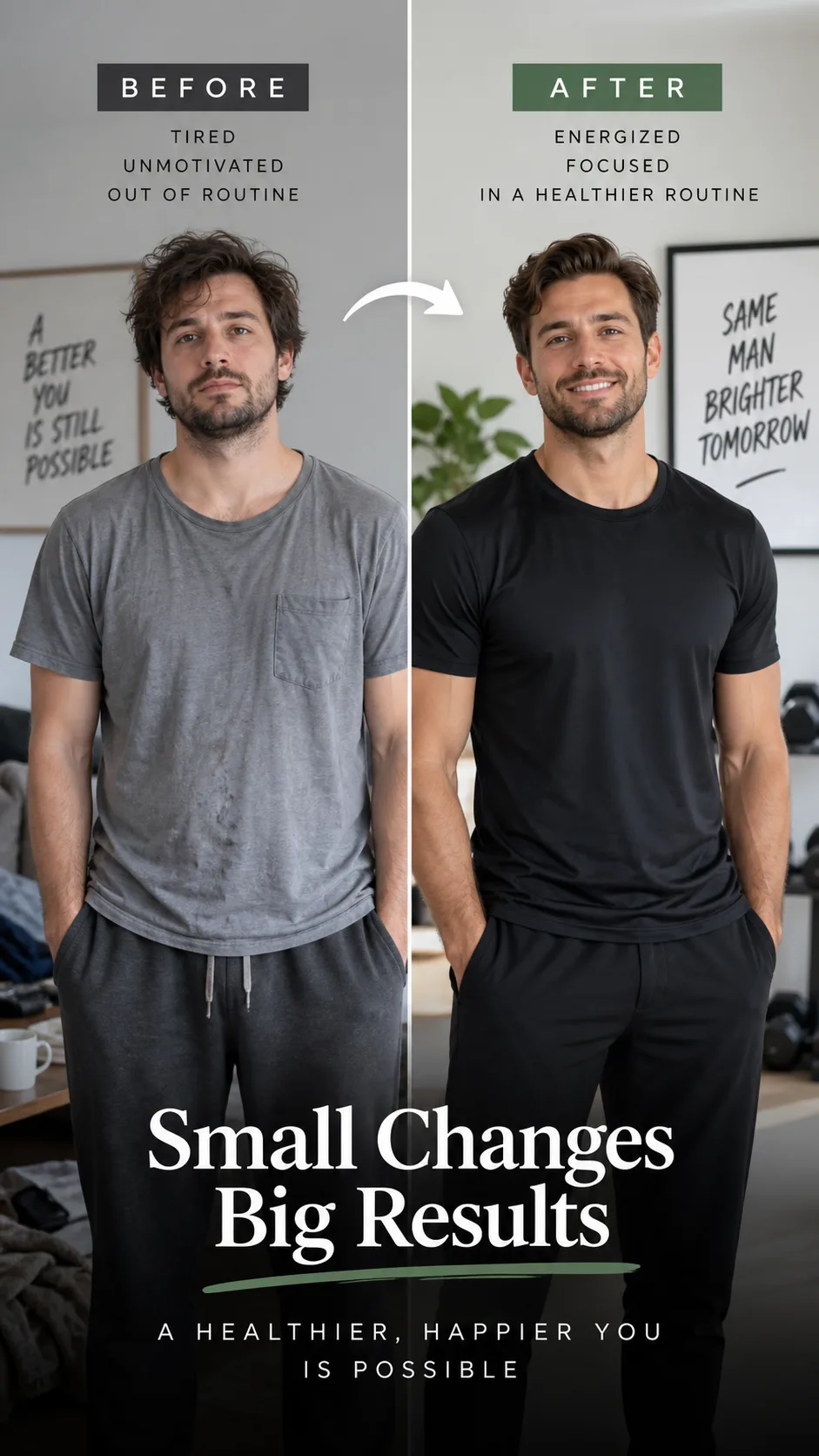
- Months 3-6: Significant transformation. If you’ve been eating and training consistently, you’ll genuinely look different. This is when the habit becomes the lifestyle.
- Months 6-12: Major results. You’ve built a foundation of real muscle and strength. Beginners can realistically gain 15-25 lbs of lean muscle in their first year of serious training.
In my experience, the first three months are the hardest because you’re putting in maximum effort with minimal visible payoff. Push through. The results compound once you cross that threshold.
And if you’re looking for a training partner to share this journey with, our women’s body building workout guide uses complementary programming principles that pair well with this routine for couples who train together.
Supplements: what’s actually worth your money
The supplement industry generates billions by selling hope in powder form. Let me save you some cash: 90% of supplements do absolutely nothing meaningful. Here’s what the Examine.com research database supports with real evidence:
- Creatine Monohydrate, 5 grams daily. The single most researched and effective supplement for strength and muscle building. Cheap, safe, and proven. Just take it.
- Whey Protein, a convenient way to hit your daily protein target. Not magic, just food in powder form.
- Caffeine, improves workout performance. Coffee works fine. You don’t need a $50 pre-workout.
- Vitamin D, if you live somewhere that doesn’t get much sun, a deficiency can impair testosterone production and recovery.
That’s it. Everything else is either unproven, marginally effective, or outright snake oil. Save your money for quality food instead.
Stop planning, start executing
You now have everything you need: the split, the progression model, the nutrition framework, and the knowledge to avoid the most common pitfalls. The only variable left is whether you actually follow through.
Here’s my honest advice after years of trial and error: pick this program, commit to it for 12 weeks minimum, track your lifts, eat enough protein, sleep enough, and let the process work. Don’t tweak it after week two. Don’t add five extra exercises because you saw a cool video. Trust the fundamentals.
The guys who build the most impressive physiques aren’t the ones with the most complex programs. They’re the ones who show up consistently and do the basics exceptionally well. That’s not glamorous advice, but it’s the truth, and the truth builds muscle way faster than hype ever will.
Now go pick up something heavy. Your future self is counting on it.
