
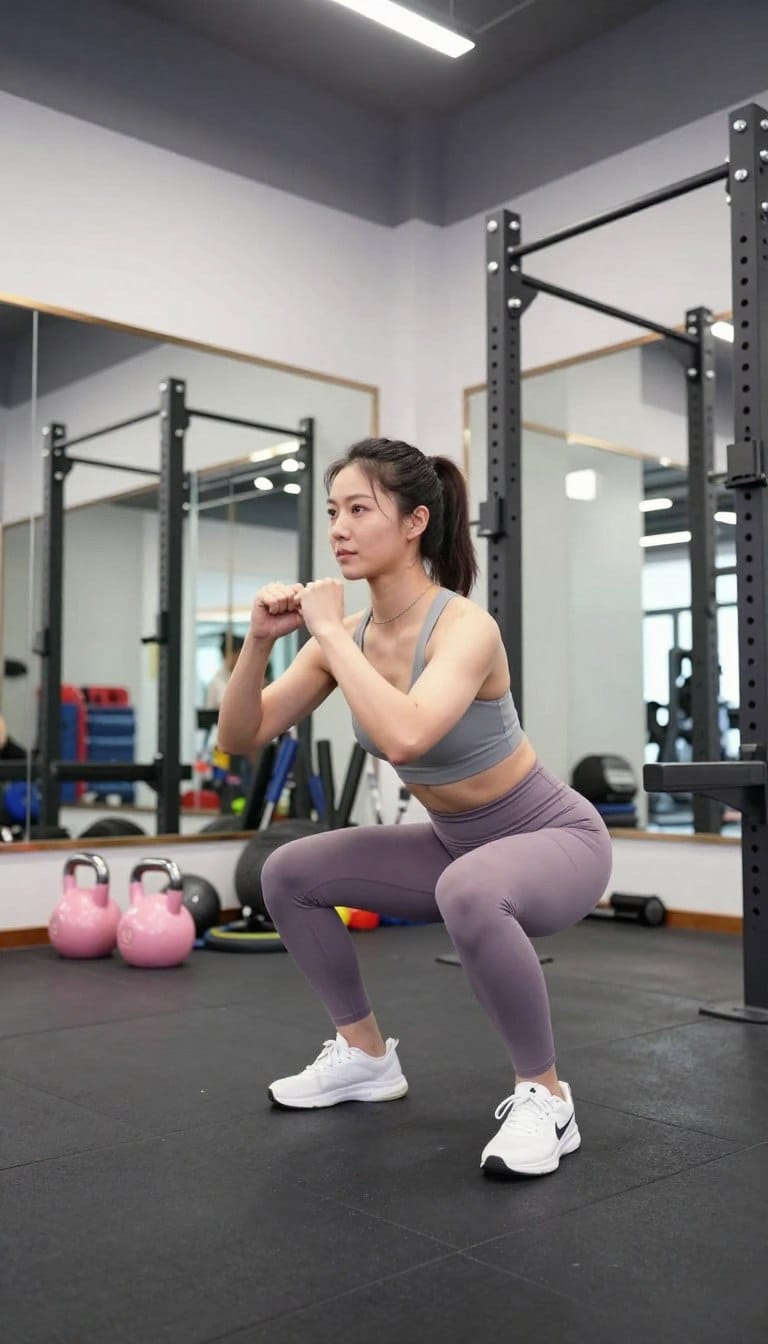
Ever wondered which moves will actually sculpt your legs and boost strength the fastest? This short guide puts you on a clear path to smarter training and better results.
Focus on the four big muscle groups—quads, hamstrings, glutes, and calves—to build balance and power. Compound movements like the barbell squat and deadlift help you lift more weight and stimulate growth. Small tweaks to your starting position and foot placement make a big difference in form and safety.
Plan to use 3 sets of 8–10 reps for most exercises. Mix machine and bodyweight moves, and include lunges, goblet squat, and bulgarian split squat for full coverage. Consistency, correct reps, and steady progression will shape your thighs and glute muscles over time.
Key Takeaways
- Target quads, hamstrings, glutes, and calves for balanced leg strength.
- Use compound moves like barbell squat and deadlift to maximize growth.
- Perform 3 sets of 8–10 reps and prioritize clean form and starting position.
- Mix machine, bodyweight, and free-weight movements for variety and progress.
- Foot placement and neutral spine help protect knees and boost power.
Why You Should Prioritize Your Lower Body Training
Strong leg training gives you more than bigger thighs — it boosts hormones, balance, and daily performance.
When you focus on your legs, you trigger hormonal responses like elevated growth factors that help your entire body adapt and grow. This makes consistent training more efficient.
Working your legs also improves balance and coordination. Better stability cuts your risk of injury and makes sport and daily tasks easier.
- Leg muscles are among the largest in your body, so prioritizing them boosts total strength.
- Regular workout sessions for the legs raise human growth hormone, aiding recovery across the body.
- Focused training creates a symmetrical, functional physique and better movement control.
| Benefit | What It Does | Why It Matters |
|---|---|---|
| Hormone Response | Increases growth factors | Speeds recovery and muscle gains |
| Balance & Coordination | Enhances joint stability | Reduces injury risk in sport and daily life |
| Functional Strength | Improves lifting and movement | Makes workouts and tasks easier |
| Symmetry | Builds aesthetic and usable power | Supports posture and long-term performance |
Understanding the Primary Muscle Groups in Your Legs
Knowing what each muscle group does makes your training more efficient and safer.
The Role of Quads and Hamstrings
Quads are the large four-headed muscle group at the front of the thigh. They drive knee extension and power most pushing motions in a leg session.
Hamstrings sit on the rear of the upper thigh. These three-headed muscles control knee flexion and help stabilize your knee and hip during movement.
The Power of Gluteal Muscles
The glutes are the largest and most powerful muscle group in the body. They handle hip extension, aid spinal alignment, and generate force for running and jumping.
When you train quads, hamstrings, and glutes together, your overall lower body strength improves. These muscles work as a team to support posture, balance, and daily movement.
- You have four primary muscle groups: quads, hamstrings, glutes, and calves.
- Training each group targets specific functions and reduces imbalances.
| Muscle Group | Main Function | Common Exercise |
|---|---|---|
| Quads | Knee extension, forward drive | Squat, leg press |
| Hamstrings | Knee flexion, hip stability | Romanian deadlift, hamstring curl |
| Glutes | Hip extension, posture support | Hip thrust, glute bridge |
| Calves | Ankle plantarflexion, push-off power | Calf raise |
Essential Equipment for Your Lower Body Workout Gym Routine
Smart equipment choices make challenging exercises safer and more effective.
Start with free weights: barbells and dumbbells. They let you load compound lifts and progress steadily. Use a squat rack for heavy squats and a bench for hip thrusts to target glutes and quads.
Add resistance machines to isolate muscle groups. A well-adjusted machine helps you keep form and avoid strain. Always set the seat and pad to your height before you begin.
Helpful accessories include lifting straps and belts. These support heavier sets and can push you past plateaus in your leg training.
- Barbells & dumbbells — build strength and power for major lifts.
- Squat rack — safety for heavy compound exercises.
- Isolation machine — fine-tune specific muscles with controlled motion.
| Equipment | Benefit | Example Use |
|---|---|---|
| Barbell | Max loads, progressive overload | Back squat, Romanian deadlift |
| Dumbbell | Unilateral balance, versatility | Split squat, walking lunges |
| Leg machine | Isolation and form control | Leg press, hamstring curl |
With the right tools, your routine becomes more effective. Pick equipment that fits your goals and train consistently for steady gains in your leg strength and overall workout progress.
Mastering the Squat for Maximum Quad Development
A focused squat strategy helps you overload quads while protecting knees and hips. Squats remain a core exercise for building strength in your quads, hamstrings, and glutes. Proper setup and depth are the difference between steady progress and stalled gains.

Back Squat Technique
Set the barbell across your upper back and take a shoulder-width stance. Keep your chest up, neutral spine, and drive through your heels as you descend.
Aim to reach parallel with your thighs to the floor. Track your knees over your feet and use controlled tempo for safer loading.
Front Squat Variations
Front squats shift load onto the quads and reduce compressive force on the lower back and knee joint.
If wrist mobility limits you, try the crossed-arm grip or use a goblet hold to keep an upright position and core tension.
The Benefits of Hack Squats
Hack squats on a machine give a stable path that isolates quads without taxing your back. They pair well with barbell work for fuller quad development.
- Back squat: big multi‑joint exercise for total leg strength.
- Front squat: more quad focus and core demand.
- Hack squat machine: controlled reps and quad isolation (3 sets of 8–12 reps recommended).
| Squat Type | Primary Target | When to Use |
|---|---|---|
| Back Squat | Quads, glutes, hamstrings | Build overall strength with a barbell |
| Front Squat | Quads, core | When you need less spinal load |
| Hack Squat | Quads | Isolate quads with machine support |
Effective Hip Hinge Movements for Stronger Hamstrings
Mastering hip hinge patterns helps you lift safer and recruit hamstrings more efficiently.
The Romanian deadlift is a cornerstone exercise for hamstring strength and posterior chain development. It starts from a standing position and uses a clear hip hinge to target those muscles.
Stand with feet hip-width apart and hold a barbell with an overhand grip. Keep your back neutral and a slight bend in the knee as you push hips back.
You should lower the barbell in a straight line close to your legs until you feel a deep stretch in the hamstrings. Pause, then drive the hips forward and squeeze your glutes at the top.
- Aim for 3–4 sets of 8–12 reps with controlled weight.
- Keep the barbell near your shins and avoid rounding your back.
- Use dumbbells if your starting position or grip feels more comfortable.
| Focus | Key Cue | Benefit |
|---|---|---|
| Hip hinge | Push hips back, chest up | Targets hamstrings and glutes |
| Bar path | Close to legs, straight line | Reduces stress on the back |
| Knee bend | Slight, constant bend | Emphasizes posterior muscle contraction |
| Sets & reps | 3–4 sets of 8–12 reps | Builds strength and flexibility |
Sculpting Your Glutes with Targeted Isolation Exercises
Hip thrusts let you load heavy while targeting the glutes more directly than most lifts. Set your upper back on a sturdy bench, feet flat on the floor, and drive through your heels to lift a barbell. Squeeze the glute muscles at the top for full contraction.
Glute bridges are a great bodyweight option to wake up muscle before adding weight. You can add a resistance band, dumbbell, or barbell to increase intensity as you progress.
Keep a neutral spine and brace your core to protect your back. Focus on the mind‑muscle connection so the glutes, not the lower back or quads, take the load.
- Sets & reps: aim for 3 sets of 12–15 reps to fatigue the glute muscles effectively.
- Starting position: sit on the floor, upper back against a bench, feet planted for hip thrusts.
- Progressions: add bands, dumbbells, or increase barbell weight over time.
| Exercise | Main Benefit | When to Use |
|---|---|---|
| Hip Thrust | Max glute activation, heavy loading | After warm-up for strength focus |
| Glute Bridge | Activation, warm-up, bodyweight option | Before compound lifts or as accessory |
| Band Bridges | Muscle burn and stability | Finishers or mobility days |
Incorporating Unilateral Movements for Better Balance
Unilateral moves force each leg to work independently, revealing and fixing strength gaps.
These single‑leg exercises build stability, correct imbalances, and boost athletic power. Use them to improve sprinting and jumping by training each side to produce force on its own.
Bulgarian Split Squat Benefits
The bulgarian split squat targets quads, glutes, and hamstrings at once. You elevate one foot on a bench, which forces the front leg to stabilize and drive the movement.
That unilateral demand translates to better single‑leg power and improved sprint mechanics.
- Aim for 3 sets of 8–12 reps per leg with dumbbells or a light barbell.
- Keep a tall chest, front knee tracking over the foot, and controlled descent.
Mastering Single Leg Deadlifts
Single‑leg deadlifts build stability, strength, and power through the posterior chain and core.
Start standing on one leg with a slight bend in the knee. Hinge at the hip, keep your back flat, and extend the free leg behind you.
| Exercise | Main Focus | Key Cue |
|---|---|---|
| Bulgarian Split Squat | Quads & glutes | Front knee over foot, steady descent |
| Single‑Leg Deadlift | Hamstrings & posterior chain | Hinge from hip, back flat |
| Progression | Load with dumbbells/kettlebells | Complete all reps on one side then switch |
The Role of Calf Training in a Balanced Physique
Well‑trained calves add finishing detail to your legs and help with springy movement.
Calf training is often overlooked, yet it gives stability and aesthetic balance to your lower half. The standing calf raise targets the two‑headed gastrocnemius and lets you overload that muscle safely.
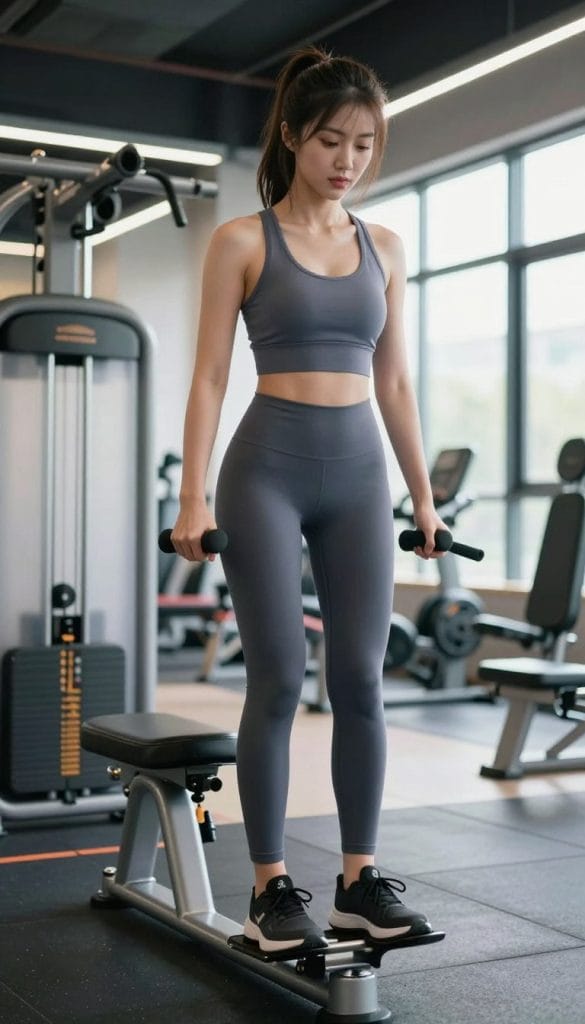
- Move through a full range of motion and allow a deep stretch at the bottom.
- Aim for 3–4 sets of 8–20 reps to build size and endurance.
- Use a machine or hold dumbbells to add weight and progressive overload.
Experiment with toes pointed straight, inward, or outward to shift emphasis across calf muscles. Maintain an upright position and brace your core so your balance and knee position stay steady.
| Focus | Key Cue | When to Use |
|---|---|---|
| Gastrocnemius | Full range, squeeze at top | Standing calf raise with weight |
| Slow control | Avoid bouncing | Higher reps for endurance |
| Variation | Toe angle alters tension | Rotate each session |
Consistency matters. Add calf work to your routine so your glutes, quads, and calves develop in proportion. Focus on control and the mind‑muscle connection to get the most from every rep.
How to Structure Your Weekly Leg Day Routine
Structure your weekly leg sessions so each day has a clear goal: strength, volume, or mobility.
Selecting Your Sets and Reps
Start sessions with heavy compound lifts such as the barbell squat or deadlift to maximize strength gains. Do 3–4 sets of 6–8 reps for these moves to build force and recruit major muscle groups.
Follow with moderate volume work for hypertrophy. Use 3 sets of 8–12 reps on accessory exercises like lunges, bulgarian split, and hamstring curls.
Finish with isolation and mobility to target glutes, calves, and movement quality. Lower the weight and increase reps when you focus on form and control.
- Prioritize form and starting position over heavy weight.
- Allow 90–180 seconds between heavy sets to recover.
- Track sets reps and weight so you can progress each week.
| Day Focus | Primary Exercises | Sets & Reps |
|---|---|---|
| Strength | Barbell squat, deadlift | 3–4 sets, 6–8 reps |
| Hypertrophy | Bulgarian split, lunges, machine leg press | 3 sets, 8–12 reps |
| Accessory & Mobility | Glute bridges, calf raises, band work | 2–4 sets, 12–20 reps |
Tips for Maintaining Proper Form and Safety
Make a habit of dialing in your starting position before increasing weight or intensity. This simple check reduces injury risk and improves each rep.
Always begin with lighter weight so you master the movement pattern. Do 2–3 warm-up sets of controlled reps before adding heavy plates.
Keep your back neutral and core braced during compound lifts. If you feel sharp pain in your knee or lower back, stop the exercise and reassess technique.

- Feet planted firmly on the floor give a stable base for every movement.
- Never sacrifice form for more weight; cleaner technique yields better results.
- Ask a trainer or partner to watch your form and cue your position when needed.
| Focus | Action | Why it matters |
|---|---|---|
| Starting Position | Set feet, check alignment | Ensures safe load transfer |
| Warm‑up Sets | 2–3 light sets | Prepares muscles and joints |
| Load Management | Progress weight gradually | Prevents overload and keeps you consistent |
The Importance of Rest and Recovery for Muscle Growth
Smart rest is the unseen work that turns hard sets into real muscle growth.
Rest days let your muscles repair the tiny tears caused by intense training. While you sleep and rest, tissue rebuilds stronger so your next session handles more weight and better form.
Cortisol rises and testosterone drops temporarily during hard sessions. Recovery helps restore that balance and keeps your hormones working for growth rather than against it.
- Aim for at least one or two rest days per week to avoid overuse injuries like strains or tendonitis.
- Light movement—walking or gentle stretching—boosts blood flow and speeds repair without taxing your legs.
- Plan your sets and heavy lifts so tough days are followed by true recovery in your training routine.
| Focus | Action | Benefit |
|---|---|---|
| Rest Days | 1–2 days weekly | Prevents chronic soreness and overuse injury |
| Active Recovery | Walking, mobility drills | Improves circulation and speeds muscle repair |
| Hormone Balance | Proper rest and sleep | Reduces cortisol and restores testosterone |
| Progression | Rotate heavy sets and lighter sessions | Maintains intensity without burnout |
Nutrition Strategies to Support Your Leg Day Goals
Timing carbs and protein around your session gives you consistent energy for lunges, deadlifts, and split squats.
Protein repairs the muscle tissue you stress during squats, barbell deadlifts, and single‑leg exercises. Aim for a protein source within two hours after training to help recovery.
Carbohydrates replenish glycogen so you can hit heavy sets and extra reps. A pre‑session snack with slow carbs supports energy for the full routine.
- Eat whole foods: lean meats, complex carbs, and healthy fats for steady calories.
- Hydrate before and after sets — even mild dehydration lowers strength and slows recovery.
- Match calories to your goals: maintain or add weight when training for stronger quads, glutes, and hamstrings.
| Focus | When | Tip |
|---|---|---|
| Protein | Post‑session | 20–40g to support muscle repair |
| Carbs | 1–2 hours pre/post | Fuel heavy squats and restore glycogen |
| Hydration | Throughout | Water + electrolytes after long, intense sessions |
Consistency makes the difference. Align meals with training time so every muscle group has the fuel to perform and recover.
Conclusion
Trackable steps—sets, reps, and small weight increases—turn effort into results. Build each session around compound lifts, then add isolation moves to refine shape and balance.
Consistency, clean form, and proper rest are the pillars that keep you progressing and reduce injury risk. Focus on quads, hamstrings, glutes, and calves to create a strong foundation that helps all movement.
Log your sets, reps, and weights so you can push growth safely. Pair training with solid nutrition and patience—gains come with steady work and smart recovery.
Stay attentive to how you feel, adjust when needed, and celebrate steady progress on your training journey.